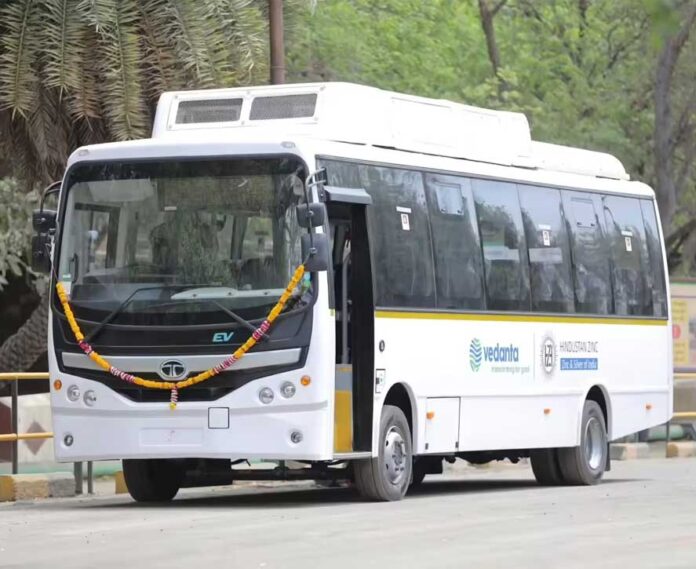
Hindustan Zinc Limited has launched Rajasthan’s first large-scale fleet of electric buses at its Debari Zinc Smelter in Udaipur, marking a significant step towards clean employee transportation in the state’s mining sector.
The company, in partnership with Enviro Wheels Mobility Pvt. Ltd. Ltd. flagged off the initial batch of electric buses as part of a broader plan to deploy 41 EV buses across its Rajasthan operations. The move replaces conventional diesel-powered buses traditionally used for staff commuting and is aimed at reducing indirect or Scope 3 emissions.
Supporting decarbonization goals
Commenting on the initiative, Arun Mishra said, “The introduction of electric buses for employee transportation is a step towards decarbonizing our value chain, furthering our net zero ambition for 2050 or earlier.”
According to the company, the transition to electric mobility is expected to reduce more than 11,000 tonnes of carbon dioxide equivalent (CO₂e) emissions during the contract period, which will significantly contribute to its sustainability roadmap.
Advancing clean mobility in the mining sector
This deployment marks a notable change in employee transportation within the mining industry, where diesel-powered buses have traditionally dominated fleet operations. By adopting electric buses, Hindustan Zinc aims to reduce emissions while improving environmental performance across its value chain.
The initiative also aligns with the company’s broader sustainability goals, which include:
Scope 3 Reducing emissions Promoting clean mobility solutions Supporting corporate net zero goals Improving sustainable employee transportation
Expanding Electric Fleet Deployment
The planned deployment of 41 electric buses in Rajasthan operations is expected to strengthen Hindustan Zinc’s commitment towards environmental responsibility while setting a benchmark for sustainable transportation in industrial operations.
With this rollout, Hindustan Zinc continues to integrate sustainability into its operating strategy, supporting India’s transition towards clean mobility and lower industrial emissions.
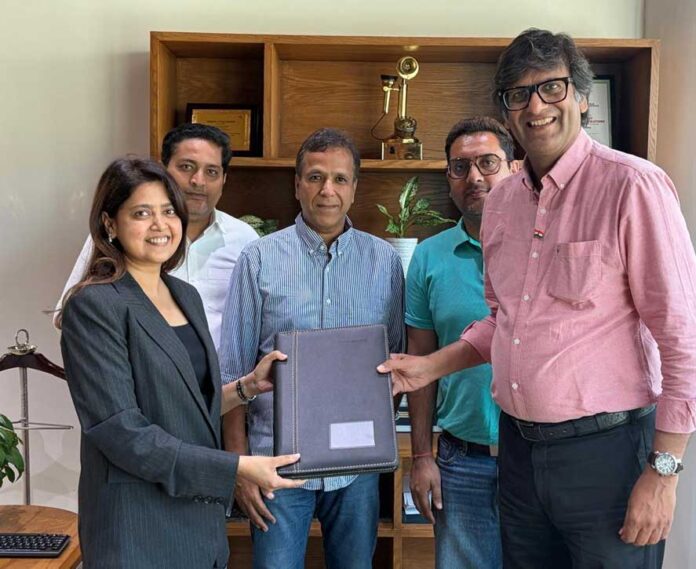
Driven, an EV leasing platform focused on heavy commercial fleets, has signed a Memorandum of Understanding (MoU) with Energy in Motion (EIM), an associate venture of Ravindra Energy Limited (REL), and a leading OEM of heavy-duty electric trucks with battery-swapping technology. The partnership aims to accelerate the deployment of electric heavy-duty trucks across India.
Under the agreement, both companies plan to deploy approximately 1,000 electric trucks over the next two years, leveraging Driven’s growing customer network. This collaboration is expected to support fleet electrification while addressing operational efficiency through advanced battery-swapping solutions.
This initiative reflects the shared commitment of both companies to promote sustainable logistics and reduce emissions in India’s commercial vehicle sector, especially in high-usage heavy-duty applications.
The collaboration will combine EIM’s vehicle and energy capabilities with Driven’s leasing, financing and operating models, with a focus on improving access and reducing entry barriers for fleet operators. This includes vehicle supply, financing structure, deployment planning, lifecycle management and energy support.
As part of the agreement, the companies will jointly identify deployment opportunities, align vehicle specifications, manage delivery timelines and provide after-sales support including maintenance and access to charging and battery-swapping solutions.
Commenting on the partnership, Manav Bansal, CEO and Co-Founder, Driven, said, “The expansion of electric trucks in India will depend on how well they perform as a commercial solution for fleet operators. While the intention to adopt is already there, the transformation will be driven by clear economics, consistent performance and reliable operations. This partnership with Energy in Motion brings together complementary strengths in vehicles, energy infrastructure and financing, allowing us to provide our customers with a more complete “And we believe this will help fleet operators move to electric with greater confidence and at a more meaningful scale.”
Alpana Jain, co-founder and chief business officer of Driven, said, “For most fleet operators, the transition to electric is still a business decision. It depends on how simple the process is, how predictable the costs are and how reliable the overall ecosystem seems. Through this collaboration, we are aligning vehicle supply, financing structures and lifecycle support in a way that minimizes complexity for the end user. Our focus is to make the transition easier to evaluate and implement, “Particularly for operators managing large and diverse fleets.”
Commenting on the announcement, Narendra M. Murkumbi, Managing Director and CEO of Energy in Motion Pvt Ltd, said, “This MoU is further validation of EIM’s vision to solve the entire EV challenge in heavy commercial vehicles and by selling vehicles without battery packs and offering charging service with swappable batteries.”
The partnership builds on Driven’s recent US$80 million commitment from Nomura and its ongoing MOU in the electric mobility ecosystem, supporting coordinated deployment across vehicles, energy and fleet operations.
With a stronger product line-up, advanced technology and sharper customer focus, Renault is entering a new phase in India – one that will help shape its global future.
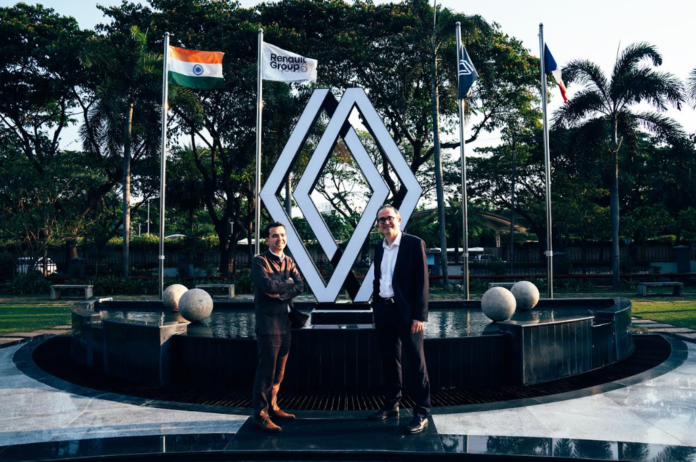
India is no longer just another market for Renault. It is quickly becoming the center of its global story. When Groupe Renault CEO Francois Provost spoke about the company’s new five-year plan ‘futuREady’, it was clear that India will drive the next phase of Renault’s growth. It is built on four pillars: “Growth Ready,” “Technology Ready,” “Excellence Ready” and “Trust Ready.” In all these respects, India is at the center of Renault’s future journey.
Growth from India
Renault is gearing up to launch 36 new cars globally and India is one of the biggest driving forces behind this expansion. The country already contributes significantly to growth in Renault’s key markets and is crucial to the company’s ambitions. On this basis, the multinational company is entering its biggest product expansion phase in India. By 2030, it plans to offer a portfolio of seven vehicles. With new product launches, the journey has begun dusterwhich aroused strong interest from customers.
Another important step is the Bridger concept – a compact SUV designed to support a variety of powertrains, including electric. Production is expected to start in India soon, marking the next phase of Renault’s product strategy.
Technology is built here
India also plays an important role in Renault’s technological journey. “Chennai, India, with 6,000 vehicle engineering and IS/IT engineers, is one of Renault’s important engineering centers globally. We want to go further!” emphasized Mr. Provost. The Center not only supports India; It is helping Renault develop solutions for global markets as well as vehicles, software and advanced systems.
Going forward, the company will launch new platforms in India that can support petrol, hybrid and electric options. This will allow the company to remain flexible and adapt to changing customer needs.
indian excellence
Renault’s Chennai plant is becoming a key pillar of its global operations. The factory is now fully owned by the company, reflecting its confidence in the Indian manufacturing ecosystem. The focus here is on speed, efficiency and quality with the aim of making India a strong export hub. “We want to integrate India more deeply into Groupe Renault’s global value chain, especially through the export of cars and parts. Our target is to reach exports of 2 billion euros per year by 2030,” Mr. Provost said.
Smart choices drive
As Renault intensifies its focus on India, the company is simplifying its strategy around customers. For Mr. Stéphane Deblaise, CEO of Groupe Renault India, this approach boils down to three ideas: value, impact and electrification.
Value means delivering the best features and technology for every rupee spent. Impact is about entering new, fast-growing market segments. Electrification aims to enable cleaner transportation, but in a way that is consistent with Indian realities.
two platform shapes
To support this strategy, Renault is building its future on two platforms – RGEP (Groupe Renault Entry Platform) and RGMP (Groupe Renault Modular Platform). RGEP focuses on affordable mobility and will power the next generation of entry-level vehicles. It builds on the success of Renault’s earlier cars like the Kwid, Kiger and Triber, while adding new features and improved technology.
RGMP, on the other hand, is designed for larger, more advanced vehicles. It supports multiple powertrain options and will be used in models such as the new Duster and the upcoming Bridger. Together, these platforms help Renault meet a wide range of customer needs.
The future of electricity
Renault’s electrification strategy in India is pragmatic and flexible. The company believes customers will switch to electric vehicles at varying rates, depending on usage, cost and infrastructure. That’s why its new platform is designed to support everything from gasoline and hybrid to fully electric options. He explained that the transition will begin gradually from 2026.
“Bridger will be a key part of this journey – a game-changer in the sub-4 meter SUV segment, with strong design features, class-leading space and ground-breaking infotainment solutions. At launch, it will be powered by a new 1.2-litre turbocharged engine; Bridger A few months after its launch, it will evolve into Groupe Renault’s first fully electric vehicle in India. This is our approach to electrification: progressive, practical and aligned with real customer adoption. With RGMP, Renault will be ready for every stage of India’s mobility transformation,” he clarified.
Ownership Made Simple
The automaker is also working to make ownership easier and more secure. Through Plan Renault Forever, the company aims to improve the overall customer experience. A key highlight is the 7-year warranty, giving you long-term peace of mind and providing better value over time. In addition to this, it aims to make every interaction from purchase to service simpler and more transparent.
India drives the future
All these efforts come together with a clear goal of making India one of Renault’s top three markets globally by 2030. With a stronger product range, increasing technological capabilities and an increased focus on customer needs, the OEM is entering a new phase in India. The future path is being shaped here and India will play a leading role in the company’s global journey.
Static has introduced a portable electric vehicle (EV) charger, designed to improve access to home and on-the-go charging, as EV adoption continues to expand across India.
The portable charger delivers 3.3 kW AC output and is compatible with the standard 16A three-pin socket, allowing users to charge their vehicles without the need for a dedicated installation. It also has adjustable current settings from 6A to 16A, enabling compatibility with various household electrical capacities. The device is priced at ₹14,999 under the introductory offer and will be available through the company’s online channels as well as leading e-commerce platforms.
According to company estimates, the launch comes at a time when home charging penetration in India is limited to about 55%. This gap is presenting challenges for EV owners, especially in urban residential environments where dedicated charging infrastructure is often unavailable.
The portable EV charger includes several safety features, including residual current protection and weather-resistant construction, making it suitable for both indoor and outdoor use. Additionally, it includes a built-in display that provides real-time charging data, as well as a timer function that allows users to schedule charging during off-peak hours.
Industry observers say portable EV charging solutions are gaining momentum as an interim option in markets where fixed charging infrastructure is still developing. These devices can act as either a primary charging option or a backup solution, especially for users who do not have access to private charging stations.
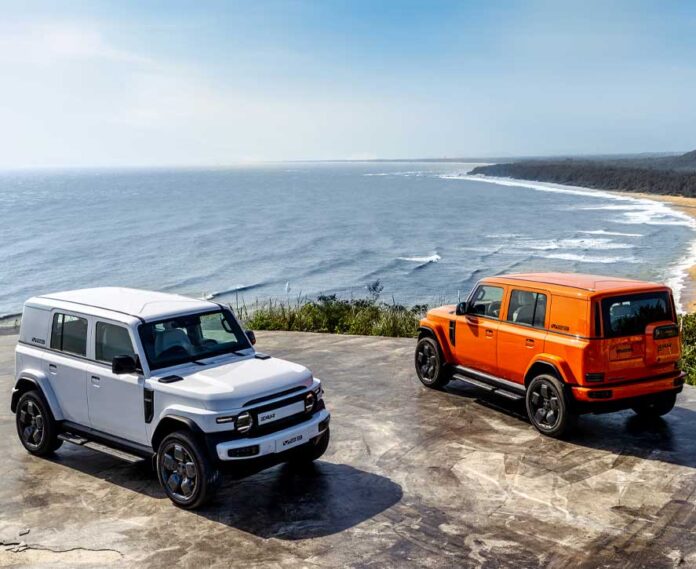
Since its global launch, iCAUR V23 from Cherry Group’s new energy strategic brand, iCAUR, has gained a strong foothold in international markets. With its distinctive boxy design and full capabilities, the V23 has increasingly become a popular choice in the new energy SUV segment. In Southeast Asia, the model has maintained strong momentum and consistently ranks among the best-selling vehicles in the region’s new energy boxy SUV category, highlighting its growing global appeal.
The success of V23 reflects its dual strength in both market performance and brand reputation in key Southeast Asian markets, including Thailand, Indonesia and Malaysia. In February, the model made its debut at the Indonesia International Motor Show, where it took home three major awards – Best APM Outdoor Activity, Favorite New Car Launch, and Favorite Newcomer Car Brand.
Further reinforcing its strong market reception, iCAUR V23 also generated over 300 blind pre-orders at launch, demonstrating significant consumer interest and establishing an immediate presence in the local market.
In the Thailand market, the V23 has delivered benchmark performance, with cumulative sales exceeding 4,000 units. It has held the No. 1 position in the boxy pure EV SUV segment for two consecutive months and has entered the top five EV models based on registrations in Thailand. At the 2026 Model of the Year Awards, it won Best Performance Compact SUV EV and Best Boxy Styling, achieving widespread recognition in both sales and prestige. In Malaysia, the V23 has also performed strongly, with over 1,800 units delivered since launch and receiving local positive recognition.
A model can remain a leader in foreign markets primarily because its product meets local driving requirements. Southeast Asia has complex terrain, with many mountains and unpaved roads. Off-road capability, practicality of location and daily commute use are also in high demand among local users. iCAUR V23 has been designed to match these key requirements. With a 43° approach angle, 41° departure angle and 210 mm of high ground clearance, the vehicle can handle both city commutes and outback trips with ease. Its 2,735 mm long wheelbase also offers a spacious cabin and cargo space, making it suitable for solo trips, family trips and other scenarios.
The V23’s solid performance in Southeast Asia is also supported by several official certifications. The model has received a five-star safety rating from ASEAN NCAP, becoming the first pure electric boxy SUV to achieve this result. Its cage body structure is made of 70% high-strength steel, with more than a dozen advanced driver assistance systems (ADAS), providing comprehensive safety protection for drivers and passengers. The V23 was also ranked No. 1 in the 2026 China New Energy Vehicle Automotive Performance for Mid-Size Pure Electric SUVs released by J.D. Power, proving its product strength in global markets.
A strong product base continues to open up new market opportunities and provide enhanced experiences for users. iCAUR V23 has developed a highly flexible modification ecosystem designed to meet diverse customer preferences across different regions, further strengthening its adaptability to global markets.
At the upcoming 2026 Beijing Auto Show and iCAUR International Business Summit, the brand will introduce several customized versions of the V23, highlighting its versatility and expanded use-case capability. Additionally, AIMOGA robots and robotic dogs are also set to be showcased at the iCAUR exhibition booth, providing visitors with a fascinating glimpse of the brand’s forward-looking innovation. Stay tuned for more updates.
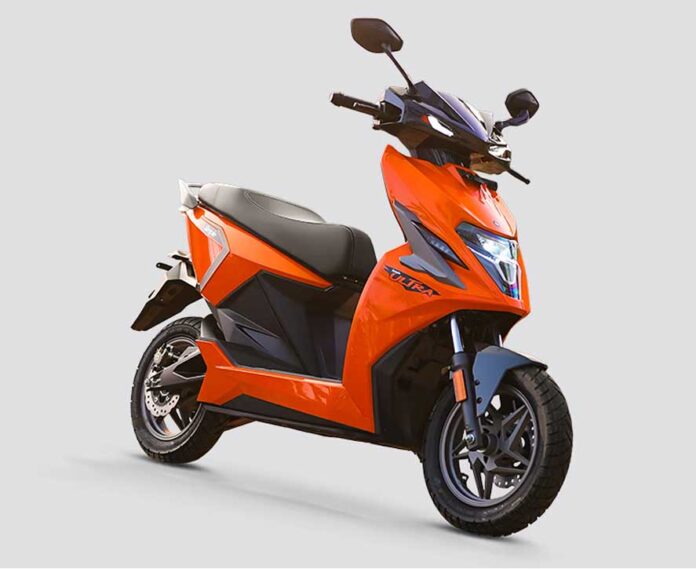
Simple Energy has announced the price of its latest electric scooter, the Simple Ultra, at ₹2.34 lakh (ex-showroom). Positioned as a premium long range electric scooter, the Simple Ultra is now available for purchase, with deliveries already underway in select cities.
The Simple Ultra is powered by a 6.5 kWh battery pack and claims an IDC range of 400 km, making it one of the longest range electric scooters currently available in India. The scooter delivers a top speed of 115 kmph and accelerates from 0-40 kmph in just 2.77 seconds, making it one of the fastest electric scooters in the segment.
In terms of features, the Simple Ultra is equipped with a seven-inch rider console that provides connectivity and essential riding information. It also features four levels of traction control to enhance stability and safety in different riding conditions.
Simple Energy continues to expand its retail and service footprint with approximately 70 touchpoints across cities including Bengaluru, Delhi, Hyderabad, Chennai, Kochi and Visakhapatnam. The company is also planning to expand in Nagpur, Ranchi and Bhubaneswar.
Earlier this year, Simple Energy introduced the second generation Simple One Gen 2 with a claimed IDC range of 236 km and 265 km, with the Simple One S Gen 2 offering a range of 190 km.
Commenting on the launch, Suhas Rajkumar said that the Simple Ultra is designed for riders seeking extreme range and performance, adding that the model aims to set a new benchmark in India’s electric two-wheeler market, while supporting worry-free mobility supported by an extended pan-India network.
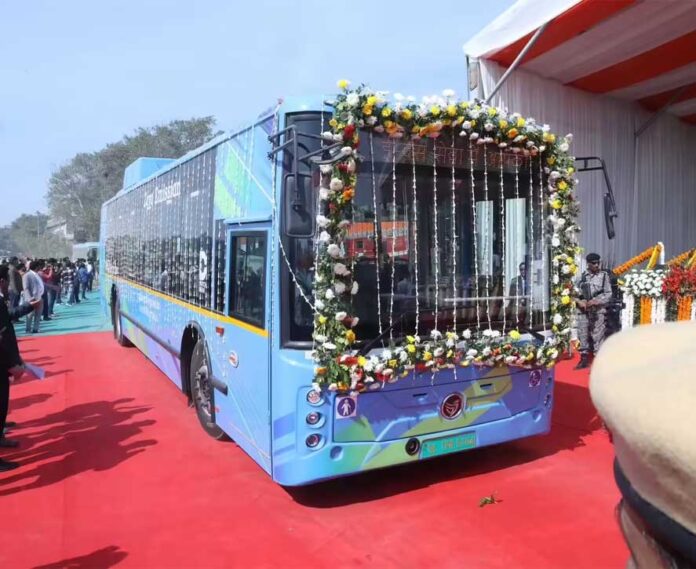
Delhi Chief Minister Rekha Gupta on Friday flagged off 200 new electric buses and launched an interstate EV bus service, further accelerating the shift towards clean and sustainable public transport in the city. This initiative is another step in the government’s comprehensive vision of building a “Green Delhi, Smart Delhi, Clean Delhi”.
Speaking at the rollout event, Gupta highlighted the continued growth of Delhi’s public transport network. He said, “Delhi government is continuously working towards making Delhi ‘Green Delhi, Smart Delhi, Clean Delhi’. Today, we have taken another step forward by adding 200 new EV buses to our transportation system.”
He said Delhi’s bus fleet continues to expand, with the total number of buses reaching 6,300. “I congratulate the people of Delhi as the city is strengthening its transport infrastructure. The introduction of EV buses will provide convenient and eco-friendly travel options for all,” she said.
In a post on social media platform X, Gupta said the government is working in mission mode to completely transform Delhi’s public transport into electric mobility. He revealed that the number of electric buses in the capital has already crossed 4,500, with a target to reach 7,000 EV buses by the end of 2026.
Along with the rollout, the government also launched a new interstate electric bus service connecting Delhi and Rohtak, inaugurated a new bus terminal at Madanpur Khadar, and opened a new administrative building at the DTC East Vinod Nagar depot.
The Chief Minister further emphasized that the government is encouraging the adoption of clean mobility through attractive subsidies under the new EV policy. According to reports, the current administration has inducted around 2,184 electric buses since taking charge, taking the total fleet count to around 6,300, which includes 1,759 CNG buses.
A structured and time bound fleet expansion program focused on electric mobility is also underway. Under this plan, Delhi’s total bus fleet is expected to increase to approximately 14,000 buses by FY 2028-29, strengthening the city’s leadership in sustainable urban transportation.
Last week, the Delhi government also introduced its draft EV Policy 2.0, which aims to accelerate the adoption of clean mobility through incentive and regulatory measures.
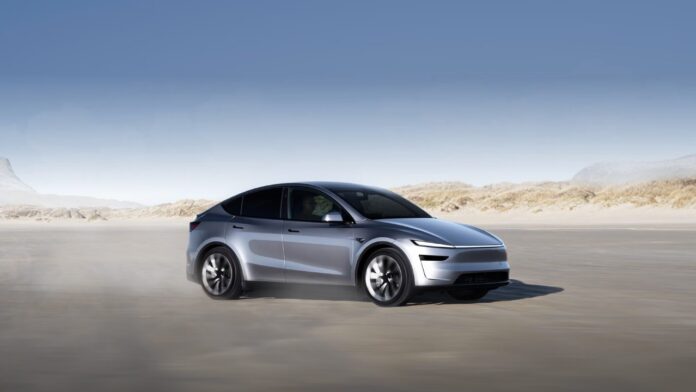
Tesla Model YL India: Tesla is now preparing to launch its new and bigger SUV in the Indian market. According to reports, the company may soon introduce its 6-seater electric SUV Tesla Model YL.
Updated On:
Apr 18, 2026 | 11:35 am
Tesla (Source. Tesla)
Tesla SUV Launch India: Electric car manufacturing giant Tesla is now preparing to launch its new and bigger SUV in the Indian market. According to reports, the company may soon introduce its 6-seater electric SUV Tesla Model YL. This will be a longer version of the existing Model Y, which will offer more space and three rows of seating.
Special design for family
The new SUV has been specially designed keeping in mind those customers who want a large and comfortable family car. It will have a seating layout of 2+2+2, which means 6 people will be able to travel comfortably. Captain seats will be provided in the second row, which will be heated and ventilated. The third row will also have the feature of heated seats, due to which the rear passengers will also get a premium experience.
Sales of the first model were weak
In India, Tesla is already selling the standard version of Tesla Model Y, which was launched in 2025. However, the company’s sales were not as expected. Only 227 units could be sold in the entire year, whereas the target was 2,500 units. Due to low demand, the company had to give a discount of up to ₹ 2 lakh.
related news
Will be imported from China
The new Tesla Model YL is currently being manufactured at the Shanghai plant in China and from there it will be imported to India. Due to high import duty, its price may remain high, which may affect sales. Nevertheless, the company hopes that the new variant will attract customers.
Strong range and tremendous speed
Talking about the features, this SUV will be provided with an 82 kWh battery, which can give a range of up to 751 kilometers on a single charge. It will have dual motor and all-wheel drive system, due to which this car can accelerate from 0 to 100 km/h in just 4.5 seconds. Its top speed is said to be around 201 km/hour.
Also read: If caste is written on the vehicle, the consequences will be heavy, challan of Rs 5,000 and even jail.
Tough competition from BYD
Tesla is facing tough competition in the global market. Especially the Chinese company BYD has moved ahead in terms of sales. In such a situation, Tesla is trying to strengthen its hold through new models and updates.
Competition will increase in SUV segment
If Tesla Model YL is launched in India, it will be Tesla’s second major offering. Especially in the large family SUV segment, the competition will become even more interesting.
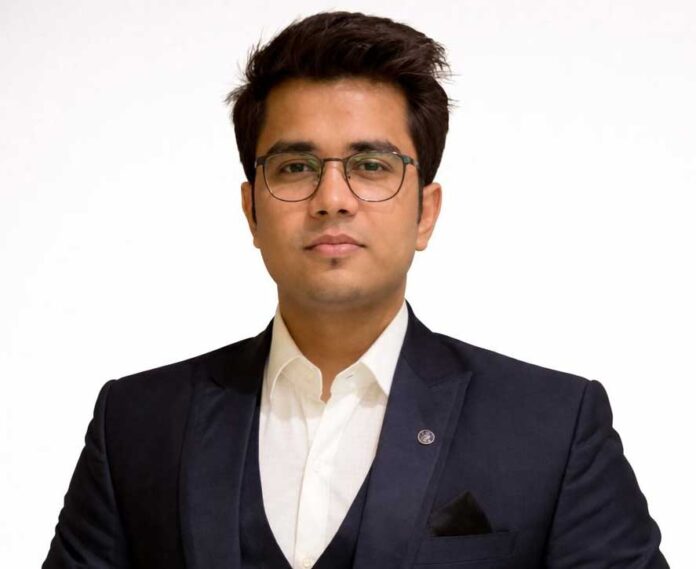
Zelio e-Mobility has announced the appointment of Divyanshu Agarwal as its Chief Executive Officer, effective April 15, 2026. The appointment is a strategic move by the fast-growing electric two-wheeler and three-wheeler maker as it strengthens leadership to support its nationwide expansion plans.
Divyanshu Aggarwal, a 26-year-old chartered accountant, has taken up the role following a resolution passed by the company’s board of directors based on the recommendation of the nomination and remuneration committee. His appointment comes at a time when Zelio e-Mobility is experiencing rapid growth, with the company doubling its performance year on year.
Before joining Zelio, Agarwal was with Navi Limited, founded by Sachin Bansal, where he worked since November 2021. During his tenure, he advanced from Finance Associate to Head of UPI Business and Growth in July 2025, leading efforts to scale operations, build strategic partnerships and enhance execution capabilities.
He also contributed to key organizational initiatives, including the DRHP process, private equity fundraising, and cross-functional projects involving finance, product, HR, and legal functions. Additionally, he worked closely with Founder and Chairman Sachin Bansal on strategic initiatives across the organization.
At Zelio e-Mobility, Agarwal will focus on strengthening operational execution and overseeing the development and scaling of new manufacturing facilities, including plants in Odisha and Coimbatore. His responsibilities will also include expanding market presence, enhancing distribution networks, strengthening partnerships, improving product-market fit and aligning growth with long-term business fundamentals.
Agarwal started his professional journey at Price Waterhouse Chartered Accountants in Kolkata, where he handled statutory audits of large listed companies. He holds a B.Com (Hons.) degree from St. Xavier’s College Kolkata and is a qualified Chartered Accountant.
With this appointment, Zelio e-Mobility aims to accelerate its growth strategy, expand manufacturing capacity and strengthen its position in India’s rapidly growing electric mobility market.
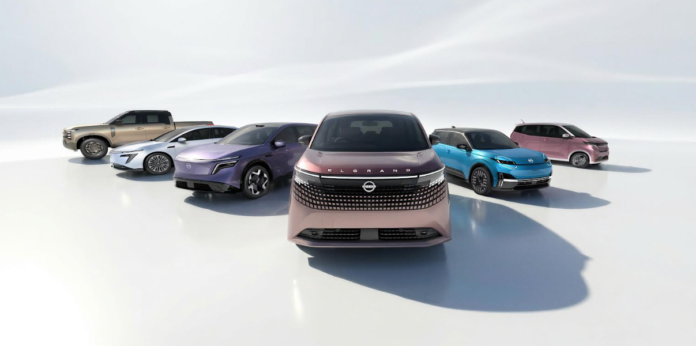
Nissan has unveiled a bold long-term vision to transform itself into a smarter, more agile, customer-centric mobility company. With a new direction of “Mobile Intelligence for Everyday Life,” the company is transcending the boundaries of traditional automobiles and integrating advanced technology, electrification, and digital intelligence into everyday mobility experiences.
At the heart of this vision is a clear shift in focus – from simply building vehicles to delivering a more intuitive, connected and value-driven customer experience. Nissan’s strategy reflects broader changes taking place in the global auto industry, where technology, software and user experience are becoming as important as engineering and performance.
A key pillar of this transformation is the development of artificial intelligence-defined vehicles (AIDV). Nissan plans to embed AI deeply into its vehicles, combining AI-driven safety systems with smart in-car experiences. Technologies like Nissan AI Drive and AI Partner are designed to not only improve driving safety but also make vehicles more responsive to everyday user needs. Over time, Nissan aims to deploy AI-driven features across 90% of its product line, marking a major shift toward software-led mobility.
Electrification remains central to Nissan’s roadmap. Rather than taking a one-size-fits-all approach, the company has a diversified strategy that includes hybrids, plug-in hybrids, range extenders and all-electric powertrains. Its e-POWER technology is positioned as a key bridge to deliver an electric-like driving experience without the need for external charging, while paving the way for wider EV adoption.
Beyond technology, Nissan is simplifying its product portfolio to improve efficiency and focus on growth. The company plans to reduce its global product line from 56 models to 45, while clearly defining the role of each model – whether as a core volume driver, a growth-focused product, or a brand-defining flagship. This approach is expected to increase scale, improve cost efficiencies and accelerate product development cycles.
Nissan is also rethinking the way it builds its cars. The company will move to an architecture-led development model, focusing on shared platforms, powertrains and software systems. The shift is expected to streamline manufacturing, improve quality and enable faster introduction of new technologies across multiple models.
Geographically, Nissan is strengthening its global strategy by clarifying its role in its key markets: Japan, the United States and China. Japan will serve as a technology hub, the United States will drive scale and profitability, and China will become a hub for cost efficiency and export growth. At the same time, emerging markets such as India are positioned as important contributors to future expansion, supporting the company’s broader global ambitions.
What stands out most about Nissan’s vision is its strong focus on balancing innovation and affordability, electrification and customer choice, global scale and local relevance. The company is not only preparing for the future of mobility but also actively reinventing its business model to remain competitive in a rapidly evolving environment.
As Nissan moves forward, its success will depend on how effectively it executes this transformation – combining advanced technology with real-world usability while putting customers at the center of everything it does.