Home Blog Page 3

India’s EV adoption rate reaches 8.5% in FY2025-26, growing 24% –

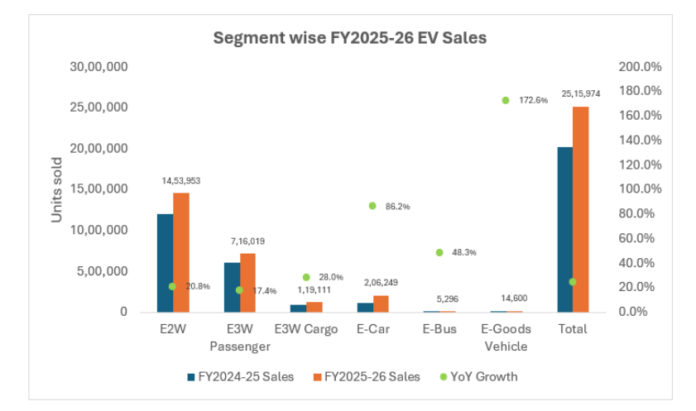
The Indian electric vehicle (EV) market performed strongly again in the financial year 2025-26, with total registrations exceeding 2.5 million units, a year-on-year growth of 24%. Electric vehicle penetration accounts for about 8.5% of total registrations, up from 7.7% in the previous fiscal year. While this reflects steadily strengthening EV adoption, the market remains below the government’s long-term target of 30% EV penetration by 2030.

Although the market is price sensitive, there are significant differences in growth drivers across segments:

• Electric two-wheelers (E-2W): remain the largest contributor accounting for nearly 58% of total EV sales.

• Electric Three-Wheeler – Passenger Transport (E-3W P): The passenger transport market peaked at 78,057 units in December 2025, with mandatory registration of e-rickshaws in West Bengal becoming the major driver. However, sales have slowed down after December 2025 due to exhaustion of PM E-DRIVE incentives for the L5 category.

• Electric Three-Wheeler – Cargo (E-3W C): The cargo category has seen steady growth, driven by the total cost of ownership (TCO) advantage of last-mile delivery fleets compared to the passenger segment.

• Passenger cars (electric vehicles): Becoming the fastest-growing market segment, with an impressive year-on-year growth of 86%. Notably, this growth is independent of PM E-DRIVE support, as electric vehicles are excluded from the scheme’s purchase incentives, suggesting strong organic demand.

• Electric Goods Vehicles (E-GVs): Comprising light, medium and heavy goods vehicles, this segment grew 172% year-on-year with an adoption rate of 1.4% (up from 0.6% in FY2024-25). Drivers of this surge include the first-ever inclusion of electric trucks (medium and heavy duty vans) under the PM E-DRIVE incentive, increased use of light vans in last-mile logistics, and large-scale fleet electrification by e-commerce players in line with corporate ESG goals.

Key market trends for financial year 2025-26

• Traditional OEMs gain share in electric two-wheeler segment: Traditional players such as TVS Motor, Bajaj Auto and Hero MotoCorp account for 61% of the E-2W market. Their success is driven by an extensive dealer network, strong after-sales ecosystem, improved product quality and strong brand equity.

• Passenger electric vehicle market becomes more competitive: Although Tata Motors maintained its leadership in electric vehicles, its market share fell sharply from about 57% in 2024-25 to about 39% in 2025-26. This is mainly due to increased competition from JSW MG Motor, Mahindra and Hyundai Motor, which have expanded their presence through new product launches and clearer positioning.

The entry of VinFast and Maruti Suzuki in the second half of FY 2025-26 has further intensified competition, especially in the Rs 12-25 lakh price band – a key segment driving demand for urban SUVs. At the same time, India’s charging ecosystem continues to expand, with the number of public charging stations set to exceed 27,000 by March 2026, enhancing the practicality of electric SUVs for urban and inter-city use.

• Record high in March 2026: Registrations in March 2026 hit an all-time high of 280,000. The surge was driven by a combination of year-end promotional pricing, expected price increases and increased purchasing activity by commercial fleet operators. Additionally, buyers are urged to accelerate their purchases before the E-2W and E-3W incentive deadlines to take advantage of the benefits of the PM E-DRIVE program.

Financial Year Outlook 2026-27

The strong performance in the 2025-26 financial year provides a strong foundation for the coming year. The Indian electric vehicle market is well positioned to achieve a penetration of 9.5% to 10% in the financial year 2026-27. This trajectory seems achievable as the PM E-DRIVE deadlines for electric two-wheelers and three-wheelers (L3 category) have been extended to July 31, 2026 and March 31, 2028 respectively.

However, continued momentum to achieve double-digit penetration will depend on continued expansion of charging infrastructure, deeper localization across the value chain, improved access to financing, and steady launch of new products.
Tesla expands business in India with Model YL, launches six-seater electric SUV –

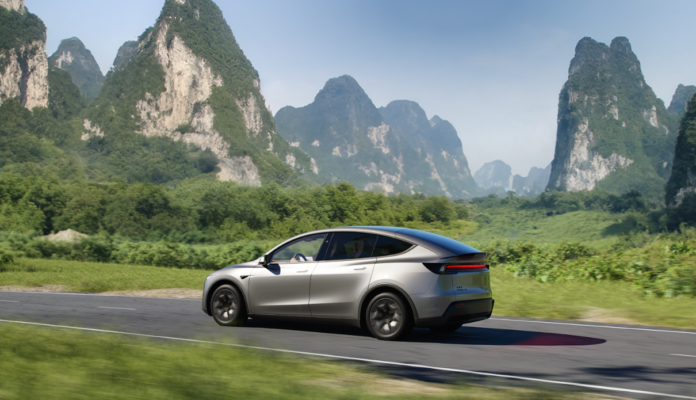
Tesla has launched its new six-seat electric SUV Model YL in India, marking an important step in its strategy to enter the country’s growing premium electric vehicle and home mobility segments.

The vehicle is on display at the Ballard Quay Town Center Experience Center and is available for online booking immediately. Customers can also experience Model YL at Tesla stores located at Bandra Kurla Complex in Mumbai, Aerocity in Delhi and Orchid Business Park in Gurgaon starting April 23, 2026.

Model YL is positioned as an electric SUV for families. It is said to have a cruising range of up to 681 kilometers (WLTP) and accelerates from 0 to 100 kilometers per hour in only 5.0 seconds. It features a three-row, six-seat layout designed to maximize space, comfort and versatility, with a cargo capacity of up to 2,539 liters.

The second row features captain’s chairs with power armrests, ventilation, heating and one-touch folding, while the third row offers power tilt, folding and dedicated climate control. Tesla is also focusing on improving ride comfort through acoustic glass, updated suspension systems, adaptive damping, and new 19-inch wheels designed to improve ride quality and handling in different road conditions.

Model YL also brings a highly connected in-car experience, including real-time traffic visualization, satellite maps, live camera views and access to streaming platforms such as Spotify, Apple Music, YouTube and Netflix.

Model YL is priced at Rs 61.99 lakh with monthly payment options starting at Rs 49,000 and is expected to be delivered across India starting June 2026.

In addition to launching vehicles, Tesla continues to expand its charging network in the country. The company currently operates five Supercharger stations with 20 Superchargers and 14 wall connectors, and plans to add seven more stations along major highway corridors connecting major cities such as Delhi, Chandigarh, Jaipur, Ahmedabad, Mumbai, Pune, Bengaluru, Hyderabad and Chennai.

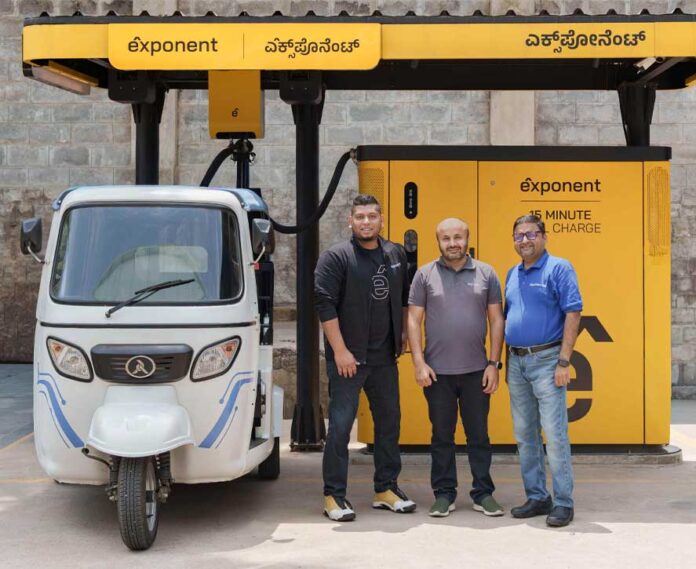
Atul Auto partners with Exponent Energy for fast-charging EV 3-wheelers in India

Atul Auto, one of India’s most established three-wheeler manufacturers, and Exponent Energy, a Bengaluru-based energy company building the world’s fastest charging energy ecosystem for commercial vehicles, have announced a strategic partnership to jointly develop and deploy fast-charging electric 3-wheelers. The companies have also committed to a minimum of 15,000 Exponent-powered 3-wheeler passenger vehicles over three years, representing one of the largest scale-up of fast-charging EVs in the segment. This is an important step towards bringing together Atul Auto’s decades-old heritage in three-wheeler manufacturing and Exponent Energy’s successful technology.

Under this collaboration, Atul Auto’s vehicles will be integrated with Exponent Energy’s OTO three-wheeler mobility platform – an integrated architecture that will bring together best-in-class battery technology, powertrain systems and vehicle software. Proven in retrofit deployment, the platform is now being extended to OEM-integrated new vehicles through this partnership. Beyond Exponent’s own 15-minute rapid charging network, the platform is interoperable and works seamlessly with standard public and home charging infrastructure, giving drivers the flexibility to choose where to charge on a daily basis.

Exponent’s proprietary technology enables fast charging in 15 minutes – the fastest globally for commercial vehicles, while providing consistent performance under intensive daily operations. The system is backed by a 2 lakh km warranty, which addresses key concerns regarding battery life and resale value in commercial EV deployment.

For Atul Auto customers, this translates into greater freedom and flexibility with better earnings due to faster turnaround time, higher vehicle availability and lower operating costs compared to conventional electric three-wheelers.

Exponent Energy recently announced Exponent One, an EV financing platform led by Sandeep Divakaran, which will also support financing for this variant. These offerings will include embedded insurance and structured buyback options, aimed at reducing barriers to ownership and improving affordability.

Commenting on the partnership, Arun Vinayak, CEO and Founder, Exponent Energy, said, “With Atul Auto, we are bringing together fast charging, financing access and proven vehicle platform technology at scale. Our mission is to make electric the better choice, which means addressing the real barriers to adoption. Atul Auto’s strong manufacturing heritage and deep understanding of the three-wheeler market make them a natural partner as we expand our mobility platform into OEM-integrated vehicles and at much larger scale.” But enable adoption.”

Speaking on the announcement, Neeraj Chandra, Managing Director, Atul Auto, said, “Atul Auto has built a strong legacy of delivering reliable and high-quality three-wheelers to customers across India. This partnership with Exponent Energy allows us to bring cutting-edge rapid charging technology to our portfolio, accelerating our transition towards electric mobility as well as enabling a significantly enhanced value proposition for our customers.”

Atul Auto and Exponent Energy aim to accelerate the adoption of electric mobility in one of India’s fastest growing commercial vehicle sectors by combining reliable manufacturing scale with charging technology.

Rocklink India sets up lithium-ion battery recycling plant in Uttar Pradesh.

Rocklink India Pvt. Ltd., a wholly owned subsidiary of Rocklink, has announced the establishment of its first integrated recycling facility in India. Located at the UPSIDC Industrial Area in Secunderabad, Uttar Pradesh, the plant is designed to strengthen the country’s capabilities in critical materials recovery and support the development of circular supply chains.

The facility is equipped with lithium-ion battery recycling, rare earth magnet dismantling and processing of metal-containing industrial waste. It will play an important role in enabling sustainable resource management, especially in the context of India’s growing electric mobility ecosystem.

In its initial phase, the plant will have a lithium-ion battery recycling capacity of 10,000 tonnes per year. Additionally, it will process rare earth magnets at a capacity of 60 tonnes per month.

Further enhancing its capabilities, the company is set to commission a rare earth chloride processing line with an annual production capacity of 1,500 tonnes by the first quarter of 2026. This expansion is expected to significantly boost Rocklink India’s contribution to the domestic rare earth value chain.

Commenting on the development, Leonard Alexander Ansorge, Director, Rocklink India Pvt. Ltd. Ltd. said, “The establishment of this facility is an important step in building advanced recycling infrastructure for critical materials in India. With capabilities to process lithium-ion batteries and rare earth magnets, we aim to support the development of a circular ecosystem for critical raw materials that are required for electric mobility, renewable energy systems and advanced manufacturing.”

Rocklink India’s EPR-registered lithium-ion battery recycling plant is designed to process 95 different types of pre- and post-consumer battery scrap materials. The company has completed the commissioning phase of its self-developed lithium-ion recycling technology (R2), which safely processes battery scrap into valuable components while removing hazardous volatile organic compounds.

The technology enables the facility to process multiple battery formats, sizes and cell chemistries while capturing volatile organic compounds through an encapsulated process and advanced waste gas treatment systems. The recycling process achieves over 98 percent recovery efficiency for metals such as aluminium, copper and iron, while producing high purity black mass suitable for further refining.

In addition to recycling, the company plans to integrate battery refurbishing operations into the facility. This will enable the safe reuse of viable battery cells through international standards for testing, balancing and pack manufacturing, extending battery life cycles and improving resource efficiency.

The facility also includes dedicated capabilities for rare earth magnet recycling, including permanent magnet alloys such as NdFeB, SmCo and AlNiCo, which are commonly used in electric motors, generators and industrial equipment. Semi-automatic dismantling lines will process magnet-containing assemblies in homogeneous batches, improving traceability and recycling efficiency.

Rocklink India is also expanding its MagCycle™ reverse logistics model into the Indian market, which was previously implemented in Europe since 2018. The system enables structured collection of magnet scrap and routing into appropriate recycling channels while strengthening circular material flows.

The company follows a “Know Your Materials (KYM)” approach, supported by in-house laboratory testing and grading systems that analyze elemental composition and surface oxidation to determine the most appropriate recycling route. Materials not suitable for direct recycling routes will be processed into rare earth chlorides in the upcoming facility’s processing unit, which operates a 22-metre direct-heated rotary kiln for the safe calcination of metal-bearing industrial waste.

Through collaboration with technology startups, research institutes and government stakeholders, Rocklink India aims to advance dismantling automation, improve material recovery efficiency and contribute to India’s long-term efforts to strengthen domestic supply chains for critical raw materials.

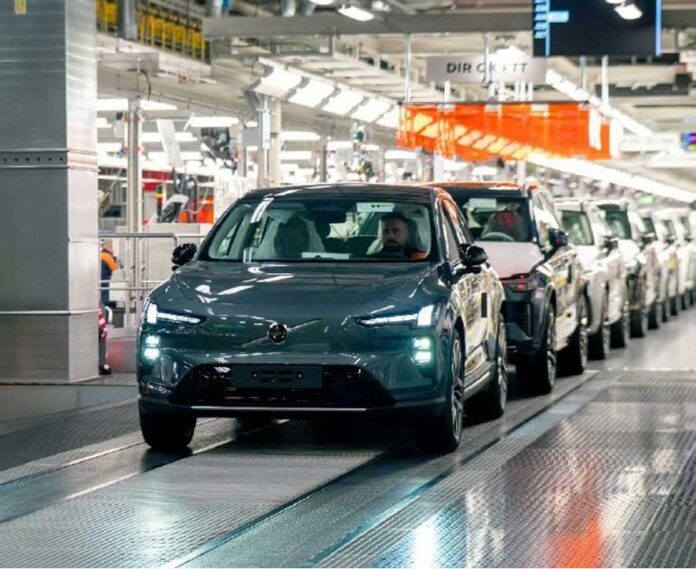
Volvo Cars begins production of game-changing EX60 electric SUV

Volvo Cars has begun production of the all-new EX60 electric SUV, marking a significant milestone in the brand’s electrification journey. The fully electric mid-size SUV is being manufactured at Volvo Cars’ plant in Torslanda, located just outside the company’s headquarters in Gothenburg.

Volvo Cars recently announced plans to increase production volumes of the EX60 for 2026 due to strong early demand for the upcoming electric SUV. The move reflects growing interest in premium electric vehicles and Volvo’s expanding electric product portfolio.

The EX60 also marks a significant milestone for the company, becoming the first fully electric vehicle to be designed, developed and manufactured entirely in Sweden. This underlines Volvo Cars’ long-term commitment to Sweden as a leading center for premium electric vehicle development and manufacturing.

The EX60 will also help boost Gothenburg and the Swedish economy, as Volvo Cars’ future volume ambitions for the EX60 make it one of Sweden’s largest export products in terms of value.

Thus, the EX60 supports economic growth and underlines the position of the Western Sweden region as an automotive development and manufacturing hub.

“Today marks an important milestone for our company and for all of Sweden, as we start manufacturing the first EX60 customer cars,” said Håkan Samuelsson, CEO of Volvo Cars. “We are now focused on the continued ramp-up of high-quality EX60 production, ensuring that this game-changing car will be a profitable growth driver for years to come.”

The decision to increase production volumes for 2026 follows strong initial customer demand for the car in key markets such as Sweden and Germany, as well as retail orders that significantly exceeded internal forecasts in almost all major European markets.

After such strong orders in Europe – and the order book for the US and Asian markets opening later this spring – Volvo Cars decided to build more EX60s in 2026. The aim is to keep the Torslanda plant open for an additional week this summer, which would be the first time in its history.

Showcased to universal acclaim in January, the EX60 is designed to be a game changer for Volvo Cars and its customers. It offers a class-leading range of up to 810 km, charges from 10-80 percent in 16 minutes, and is priced in line with the company’s best-selling XC60 plug-in hybrid.

The Torslanda plant has been heavily upgraded in recent years in preparation for production of the EX60 and other next-generation electric cars. As part of a significant investment of approximately SEC 10 billion, Volvo Cars has introduced mega casting capabilities, a new battery assembly plant as well as a completely renovated paint shop and final assembly at the Torslanda site.

small print

Range figures are preliminary and based on WLTP test standards achieved under specific test conditions for the Volvo EX60. Actual range may vary depending on charge level, car specification, external temperature, battery temperature, weather, topography, driving style and car speed. Charging time may vary and depends on various factors such as external temperature, battery condition and car condition. Charging time is based on testing at 400 kW charging facilities.

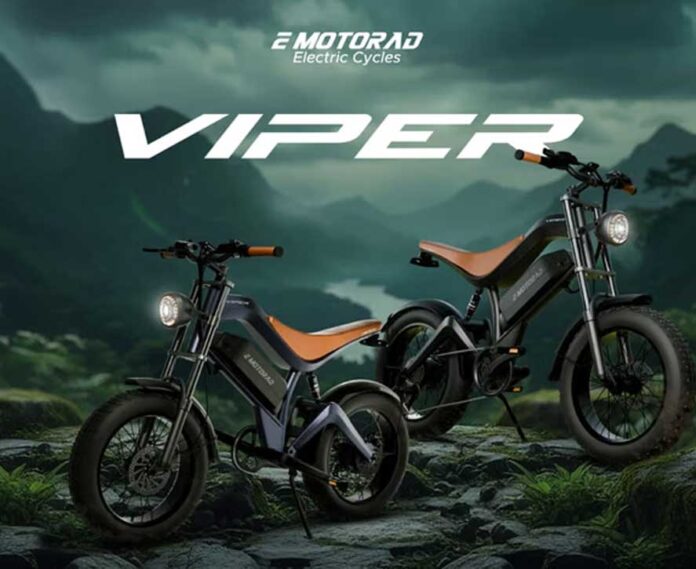
EMotorad launches Viper electric bicycle with 85 km range in India for ₹66,999.

EMotorad has launched Viper electric bicycle in India, expanding its portfolio in the country’s growing personal electric mobility segment. The new model targets urban commuters and recreational riders looking for a feature-rich electric bicycle designed for both city streets and light off-road use.

Priced at ₹66,999, the EMotorad Viper is powered by a 48V 250W rear hub motor paired with a removable 48V 15.6Ah battery. The company claims that the electric bicycle can offer a range of up to 85 km with pedal assist, while the throttle mode offers a range of around 70 km. This places the Viper in the mid-range category in the electric bicycle market in India.

The Viper is equipped with front and rear suspension, hydraulic disc brakes and wide tyres, reflecting a design focused on comfort and stability in various riding conditions. The electric bicycle also features a SHIMANO 7-speed drivetrain and is designed to support riders weighing up to 110 kg.

A notable highlight of the Viper is the NFC-based unlocking system, which allows riders to access the electric bicycle without a physical key. Additional features include a digital display, multiple pedal-assist modes and integrated lighting to enhance visibility and usability during the daily commute.

The launch comes at a time when electric bicycles are gaining popularity in India due to the demand for affordable and convenient short-range mobility solutions that do not require registration or driving license. Manufacturers are increasingly introducing connected features and higher capacity batteries to differentiate their offerings in the competitive market.

eMotorrad said the Viper electric bicycle will be available across its dealership network across India as well as online platform.

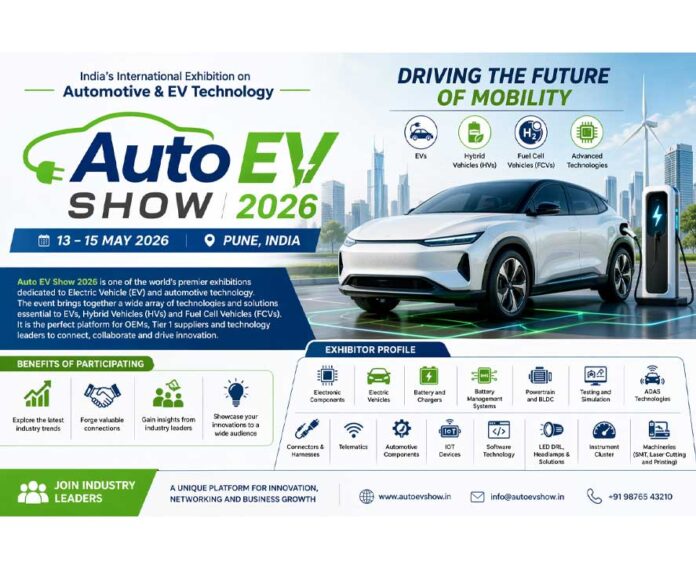
Auto EV Show 2026: India’s international exhibition on automotive and EV technology to be held in Pune.

auto ev show 2026One of India’s leading international exhibitions focused on automotive and electric vehicle technology, is scheduled to take place in Pune from 13-15 May 2026. The event will bring together industry leaders, innovators and technology providers from the global automotive and EV ecosystem.

Recognized as a premier platform for electric vehicles (EV), hybrid vehicles (HV) and fuel cell vehicles (FCV), the Auto EV Show 2026 will showcase a wide range of advanced technologies and solutions. These include components and modules, semiconductors, electric motors, inverters, rechargeable batteries, charging infrastructure, lightweight materials, test equipment and more – all essential for the future of mobility.

The exhibition will serve as a major networking hub for automotive Original Equipment Manufacturers (OEMs), Tier 1 suppliers, technology providers and startups. Participants will have the opportunity to connect with potential partners, explore new business opportunities and present their latest innovations to a highly targeted audience.

Visitors attending the Auto EV Show 2026 can expect to gain valuable insights into the emerging trends, technological advancements and future mobility solutions shaping the automotive industry. The event also provides a comprehensive overview of new products, services and developments in the rapidly evolving EV ecosystem.

benefits of participating

Explore the latest automotive and EV industry trends, form valuable business connections and partnerships, gain insight from industry leaders and experts, showcase products and innovations to a wide audience, discover new technologies and market opportunities.

Exhibitor Profile

The Auto EV Show 2026 will feature exhibitors from multiple automotive and EV technology sectors, including:

Electronic Components Electric Vehicle Batteries & Chargers Battery Management Systems Powertrains & BLDC Motors Test & Simulation Solutions ADAS Technologies Connectors & Wiring Harnesses Telematics Solutions Automotive Components IoT Devices Software Technologies LED DRL, Headlamp & Lighting Solutions Equipment Cluster Machinery (SMT, Laser Cutting, Printing Equipment)

The Auto EV Show 2026 aims to accelerate innovation and collaboration while supporting the transition towards sustainable and intelligent mobility solutions.

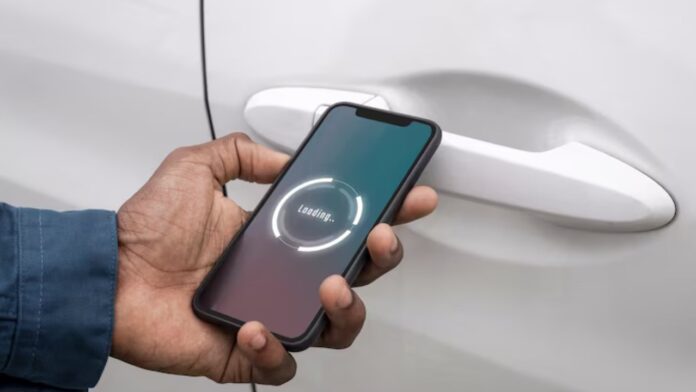
Now you will not have to search for keys, Tata EV will open with iPhone, all work will be done with one phone.

No Need For Keys Anymore Your Tata Ev Will Unlock With An Iphone Apple Car Key

Hindi News »

automobile »

No Need For Keys Anymore Your Tata Ev Will Unlock With An Iphone Apple Car Key

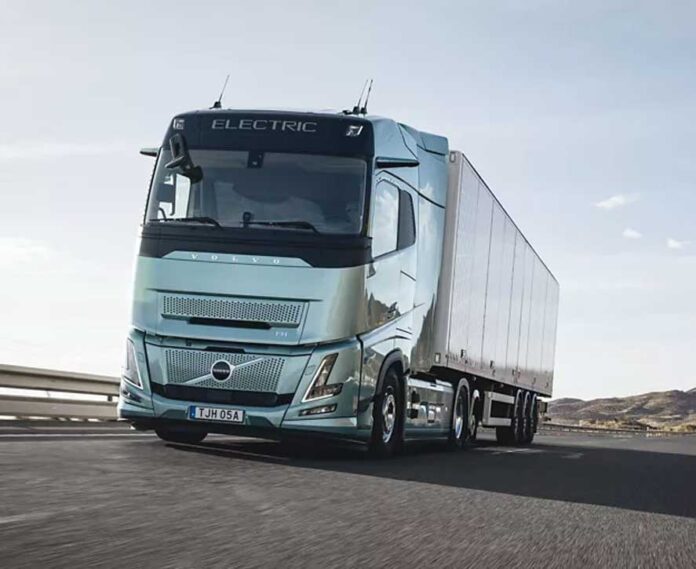
Volvo launches new electric trucks with a range of up to 700 km.

Volvo Trucks has expanded its electric vehicle portfolio with the launch of a new generation of electric trucks, offering better performance, greater flexibility and a driving range of up to 700 km. This development marks a major milestone in the development of heavy-duty electric transportation and sets a new standard for long-haul electric trucking.

Leading the announcement is the new long-range FH Aero Electric with extended range, capable of traveling up to 700 km on a single charge. This breakthrough addresses one of the biggest challenges in electric heavy-duty transportation – long-distance operations – making electric trucks a viable option for demanding logistics applications.

Along with the FH Aero Electric, Volvo has also introduced next-generation versions of its FH, FM and FMX electric trucks. These updated models bring significant improvements in operational flexibility, productivity and driver comfort. With a driving range of up to 470 km, the new truck fleet enables operators to transition to electric power across a variety of transportation tasks.

The expanded lineup reinforces Volvo Trucks’ leadership in the electric truck segment, where the company already offers one of the industry’s widest electric portfolios. The latest updates are designed to help businesses replace diesel-powered trucks with zero-emission alternatives more efficiently.

Roger Elam, president of Volvo Trucks, said the company is strengthening its electric offering to meet the growing needs of customers. He emphasized that the broad lineup and extended range make it easier than ever for transportation operators to switch from diesel to electric trucks.

He further added that Volvo Trucks is confident that electric vehicles will play an important role in the future of global truck transportation, adding that the performance of the new models demonstrates the increasing capability and practicality of electric heavy-duty solutions.

Volvo Trucks New Electric Truck – Key Features

Long Range Electric Truck: Volvo FH Aero Electric

Range: Up to 700 km on a single charge Technology: New e-axle driveline makes room for larger battery capacity Charging: Megawatt Charging System (MCS): 20-80% in ~50 mins 350 kW CCS: 20-80% in ~85 mins Power Output: Up to 460 kW (623 hp) Payload: Up to 28 tonnes Gross Combination Weight (GCW): Up to 48 tonnes Special Features: Electric power take-off for refrigerated units (no diesel generator required) Use case: long distance, hub-to-hub and two-shift operations

This truck is designed to match diesel-truck productivity with long range, fast charging and high payload capacity.

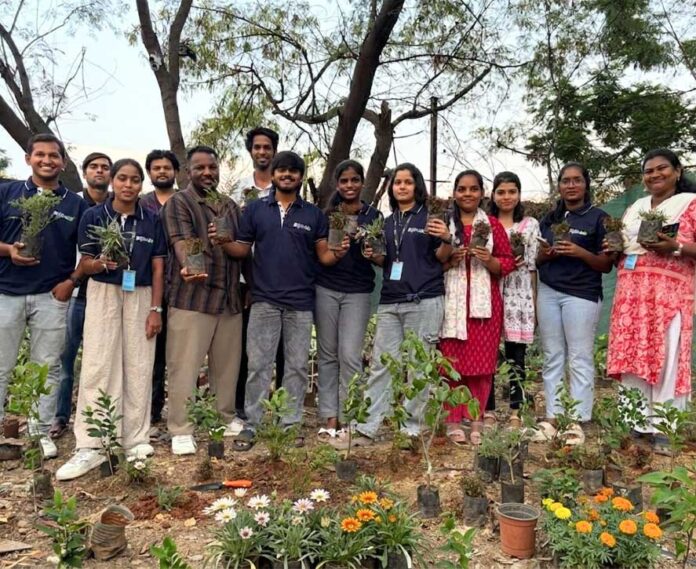
Bijliride celebrates Earth Day with tree planting campaign, strengthening commitment to sustainability.

On the occasion of World Earth Day, celebrated globally on April 22, Bijliride, an emerging player in sustainable urban mobility, announced a tree planting campaign as part of its ongoing efforts to promote environmental responsibility and support a green future.

This initiative highlights Bijliride’s broader vision of going beyond electric mobility by actively contributing to environmental protection. With urban areas facing challenges such as rising levels of pollution, traffic congestion and diminishing green spaces, the company stressed the importance of taking meaningful steps towards sustainable development.

This Earth Day, Bizliride is linking its business impact with environmental action through a unique concept. For each week of vehicle rental, the company contributes to its tree-planting mission, turning an everyday ride into a meaningful step forward for the planet.

Adding strength to the campaign, all Bijliride employees are coming together to participate in the tree planting campaign, demonstrating the company’s shared commitment towards sustainability and collective responsibility.

As part of the campaign, the team aims to plant over 500 trees, creating a long-term positive impact for future generations through stronger green cover, cleaner air and a healthy ecosystem.

Bizliride has built its identity around making eco-friendly transportation accessible and practical. By offering electric mobility solutions designed for daily commutes, the brand is helping reduce dependence on traditional fuel-based travel while promoting smart and clean alternatives.

Speaking about the initiative, Mr. Vishal Vikram, CMO, BijliRide, said, “At BijliRide, sustainability is not limited to the vehicles we provide; it is part of the mindset we want to inspire. This Earth Day, our tree planting campaign is a step towards giving back to nature and creating a positive environmental impact for future generations. Every ride can make a difference, and every tree planted brings us closer to a greener tomorrow.”

The tree planting campaign also serves as a reminder that every action counts. Every electric ride contributes to lower emissions, and every tree planted contributes to cleaner air, improved biodiversity and a more sustainable urban environment.

As the world comes together to celebrate Earth Day on April 22, Bizliride’s initiative is an example of how businesses can combine innovation with responsibility. By integrating mobility solutions with environmental action, the company continues to strengthen its role as a purpose-driven brand for the future.

With a focus on sustainability, accessibility and community impact, Bizliride is committed to driving change on the roads and beyond.