
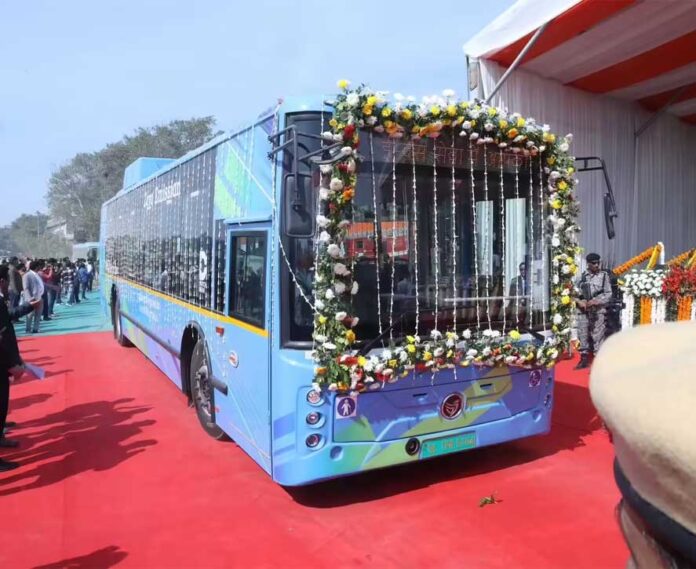

Delhi Chief Minister Rekha Gupta on Friday flagged off 200 new electric buses and launched an interstate EV bus service, further accelerating the shift towards clean and sustainable public transport in the city. This initiative is another step in the government’s comprehensive vision of building a “Green Delhi, Smart Delhi, Clean Delhi”.
Speaking at the rollout event, Gupta highlighted the continued growth of Delhi’s public transport network. He said, “Delhi government is continuously working towards making Delhi ‘Green Delhi, Smart Delhi, Clean Delhi’. Today, we have taken another step forward by adding 200 new EV buses to our transportation system.”
He said Delhi’s bus fleet continues to expand, with the total number of buses reaching 6,300. “I congratulate the people of Delhi as the city is strengthening its transport infrastructure. The introduction of EV buses will provide convenient and eco-friendly travel options for all,” she said.
In a post on social media platform X, Gupta said the government is working in mission mode to completely transform Delhi’s public transport into electric mobility. He revealed that the number of electric buses in the capital has already crossed 4,500, with a target to reach 7,000 EV buses by the end of 2026.
Along with the rollout, the government also launched a new interstate electric bus service connecting Delhi and Rohtak, inaugurated a new bus terminal at Madanpur Khadar, and opened a new administrative building at the DTC East Vinod Nagar depot.
The Chief Minister further emphasized that the government is encouraging the adoption of clean mobility through attractive subsidies under the new EV policy. According to reports, the current administration has inducted around 2,184 electric buses since taking charge, taking the total fleet count to around 6,300, which includes 1,759 CNG buses.
A structured and time bound fleet expansion program focused on electric mobility is also underway. Under this plan, Delhi’s total bus fleet is expected to increase to approximately 14,000 buses by FY 2028-29, strengthening the city’s leadership in sustainable urban transportation.
Last week, the Delhi government also introduced its draft EV Policy 2.0, which aims to accelerate the adoption of clean mobility through incentive and regulatory measures.