Home Blog Page 6

Green SM platform expands to Indonesia and Philippines to promote electric mobility

Green and Smart Mobility Joint Stock Company (GSM) has announced the launch of its shared business platform, Green SM Platform, in Indonesia and the Philippines, marking an important milestone in the company’s international expansion strategy.

The rollout follows more than two years of overseas development and aims to create new income opportunities for drivers and vehicle owners in Southeast Asia’s major urban centers while strengthening GSM’s presence in the region’s growing electric mobility ecosystem.

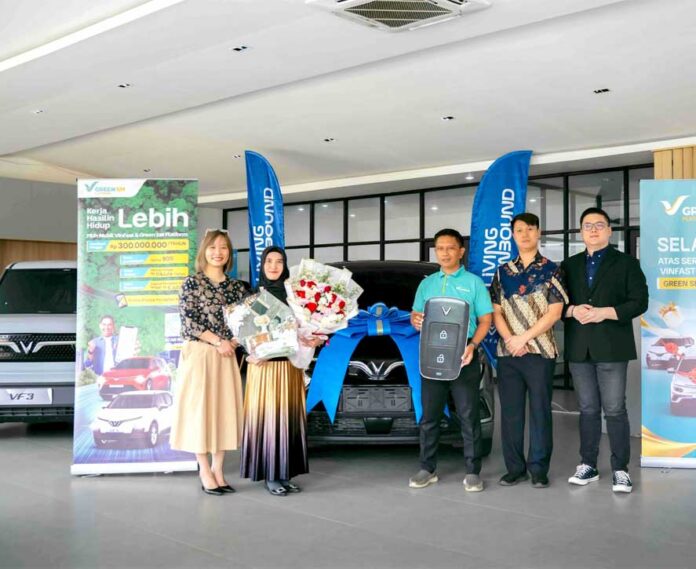
Starting April 13, 2026, owners and renters of VinFast electric vehicles in Indonesia and the Philippines can register as service partners on the Green SM platform. This initiative is designed to increase driver availability and vehicle supply while maintaining consistent service quality.

Developed within GSM’s fully electric mobility ecosystem, the platform is focused on providing standardized, professional services across all markets. By integrating drivers, vehicles and technology under one integrated system, GSM aims to accelerate the adoption of electric mobility while expanding its multi-service offerings in Southeast Asia.

The launch reflects GSM’s broader strategy to enhance sustainable transportation solutions and build a comprehensive electric mobility network in international markets.

Upon successful registration, Driver Partners will undergo structured training programs covering operational procedures and service standards to ensure a consistent and high quality customer experience. The platform offers performance-based incentive plans as well as a competitive revenue-sharing model of up to 90%, enabling driver partners to maintain stable income and pursue long-term growth opportunities.

In parallel, Green SM Indonesia and Green GSM Philippines are introducing comprehensive support policies to help partners more easily access vehicles through the VinFast electric vehicle purchase and rental programs. These initiatives lower barriers to entry and accelerate the expansion of the driver network.

In Indonesia, partners can register for the program and gain immediate access to VinFast electric vehicle models such as the VF5, VF E34, VF6 and Limo Green, allowing them to begin operations immediately following the required procedures. have been completed. This model does not require any loans or significant upfront investment, enabling drivers to generate a steady income stream.

In the Philippines, Green GSM is launching the program with the VF5 and Limo Green models, backed by comprehensive policies covering registration, insurance and operation. This enables drivers to easily join the platform and gradually build stable operations with income potential tailored to local market conditions and business needs.

Notably, drivers driving VinFast electric vehicles will continue to benefit from free charging policies until March 31, 2029, which will significantly reduce operating costs and improve revenue efficiency.

Mr. Nguyen Van Thanh, Global CEO of GSM, said: “The Green SM platform is not only a step forward in service expansion, but also a solution to accelerate the transition to green mobility across Southeast Asia. By creating an open platform with high service standards, we aim to rapidly increase the number of electric vehicles in operation while providing a sustainable, modern and reliable mobility experience for the community. This is a strategic step towards shaping a comprehensive green transportation ecosystem across the region.”

Amidst the growing demand for flexible employment in major cities, the Green SM platform enables workers to quickly access vehicles, start earning, and generate stable income without large upfront investments or complicated financing plans. The platform rollout in Indonesia and the Philippines not only strengthens Green SM’s regional presence, but also helps shape a sustainable urban mobility model, where technology, environmental responsibility and livelihoods can grow in parallel.
BMW Group India sales hit record high in first quarter –

The OEM’s first-quarter results reflect strong demand across segments, growing acceptance of electric vehicles in the luxury segment, and a comprehensive product strategy that continues to resonate with Indian customers.

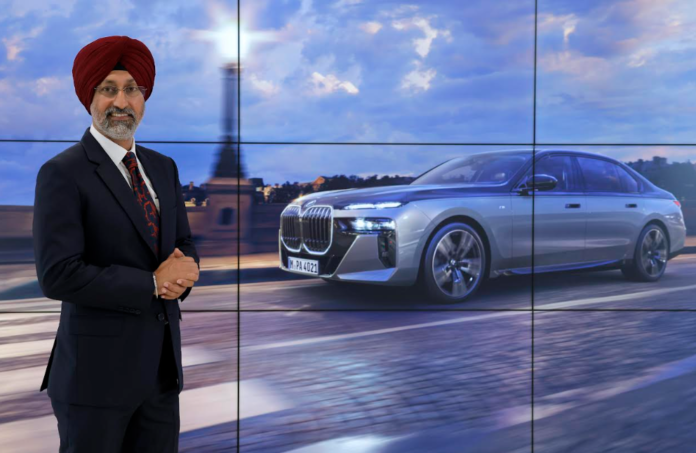
BMW Group India has started 2026 on a strong note with record sales in the first quarter of 4,567 vehicles sold, a year-on-year growth of 17% despite relatively mild market conditions. The company maintained its consistent momentum, posting record results every month of the quarter.

Driving this growth is the company’s strong positioning in the luxury electric vehicle segment. In the first quarter, sales of electric vehicles from the BMW and MINI brands reached 1,185 units, an impressive increase of 83%. Electric vehicles currently account for 26% of total sales, and a quarter of BMW cars sold in India are electric vehicles. Backed by a strong ecosystem, including extensive charging infrastructure and customer-centric initiatives, the company continues to dominate the luxury electric vehicle segment with over 70% market share.

BMW’s product portfolio also played a key role in its performance. Long-wheelbase models, known for their comfort and luxury, contributed more than 50% of total sales, a year-on-year increase of 23%. Meanwhile, sports utility vehicles (SAVs) remained a strong growth driver, growing 38% and accounting for 65% of total sales, reflecting rising customer preference for high-end SUVs.

The MINI brand also performed strongly, growing 42% to 213 vehicles, thanks to the launch of new products and the expanding appeal of its product line. BMW Motorrad added to this momentum by selling 1,216 motorcycles in the quarter, driven by demand for performance and adventure models.

Looking ahead, BMW Group India is preparing to launch an aggressive product offensive in 2026, with plans to launch 27 products across the BMW, MINI and Motorrad product portfolios. The company is also strengthening its retail and customer engagement strategies, including expanding its network coverage and enhancing the ownership experience.

Mr. Hardeep Singh Brar, President and CEO of BMW Group India, said: “BMW Group India is looking to We are extremely well positioned for the year. Despite macroeconomic and geopolitical headwinds, we achieved our highest ever first quarter sales and achieved solid double-digit growth. Our leadership in the Indian luxury electric vehicle segment has continued as our valued customers place great trust in our electric products in terms of performance, electric vehicle ecosystem and technology. We are well-positioned to face a dynamic market.” In 2026, we will launch our most ambitious product offensive, with the launch of products, and 23 more products will be launched. To maintain this momentum of long-term success, our unwavering focus on customer experience, after-sales and brand connect will be taken to the next level and we aim to bring joy to every new vehicle and realize this success story for BMW Group India. “

Surge in high-end luxury cars drives Mercedes-Benz to record fiscal year sales in India –

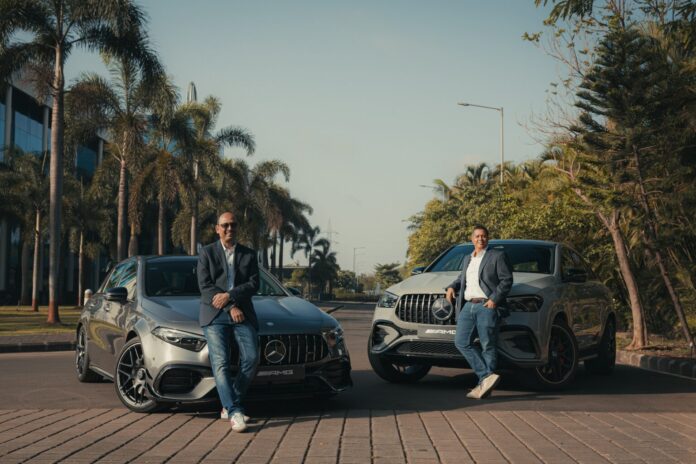
Mercedes-Benz India reported its highest ever financial sales with retail sales of 19,363 units in FY 2025-26, a steady increase from the previous year. The strong momentum continued into the January-March 2026 quarter, with sales rising 7% year-on-year to 5,131 units, reflecting continued demand in key segments.

The top performer was the premium luxury segment, which continues to drive the brand’s growth. Strong interest in models such as the S-Class, Mercedes-Maybach range, EQS SUV and AMG portfolio drove the segment to grow by 16% throughout the financial year and 25% in the first quarter of 2026. Notably, this segment accounts for 27% of total sales, and flagship models such as the AMG G 63 have a waiting period of up to a year.

The core segment also remains a strong pillar, with continued growth in demand for models such as the C-Class, E-Class Long Wheelbase, GLC and GLE SUVs. The E-Class LWB maintains its position as the highest-selling luxury car in India, underscoring customer preference for comfort-led premium products.

In contrast, the entry-level luxury market declined 18% as the market tilted towards price-driven products. However, Mercedes-Benz continues to focus on value-rich products, prioritizing brand aspirations and product quality over aggressive volume expansion.

Electric vehicles are accelerating across the product portfolio, especially at the premium end of the market. Pure electric vehicles currently account for 20% of high-end luxury car sales, with the growth rate of high-end electric vehicles reaching an impressive 85%. The upcoming CLA BEV is expected to further strengthen the brand’s electric roadmap in India. Going forward, Mercedes-Benz India will expand its retail presence under its ‘Go to Customer’ strategy with plans to open over 20 new luxury stores in emerging and mature markets. Backed by investments of over Rs 450 crore from franchise partners, the expansion will focus on enhancing customer experience through modern retail formats and advanced technology.

Mr. Santosh Iyer, Managing Director and CEO, Mercedes-Benz India, said, “Mercedes-Benz continues to be India’s most popular luxury brand, driven by strong customer loyalty towards our new and existing products. We are extremely pleased with the strong demand for our premium luxury product portfolio, which sets new benchmarks for exclusivity and personalization in the luxury segment. Similarly, sustained demand in the ‘core’ segment underscores the customer appetite for winning C-Class, LWB and unwavering trust in other products.” In 2026, we will continue to launch the E-Class sedan and the GLC and GLE SUVs, launching two new AMGs for performance enthusiasts. We are excited about the overwhelming response to new products such as the GLS Maybach, V-Class and CLA BEV, and customers can look forward to more desirable product launches planned in the remaining quarters to deliver on superior product content and customer demand, reinforcing our value-driven volume growth strategy. desire. “

Safest car under Rs 10 lakh, know which car will save your life.


Safest Car List For Family: Amidst the increasing traffic and road accidents, people now focus most on safety. Everyone wants a car that can protect the family in case of an accident.

Updated On:
Apr 13, 2026 | 02:44 pm

Car Safety In Indian Market: In today’s era, buying a car is no longer limited to just style, mileage or features. Amidst the increasing traffic and road accidents, people now focus most on safety. Everyone wants a car that can protect the family in case of an accident. Earlier there was a perception that safe cars were available only in expensive budgets, but now there are many options available in the market which offer great safety features at a price around Rs 10 lakh or less.

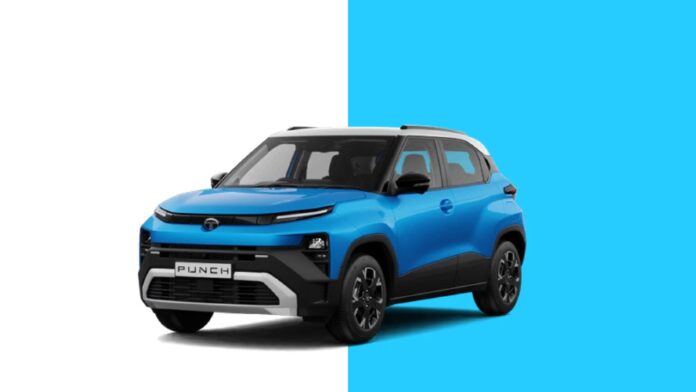
Tata Punch: Small but strong like a tank

If your budget is low and you want a compact but safe car, then Tata Punch can be a great option. Despite being small in size, its build quality is quite strong, hence it is called a tank-like car. This car is very convenient for driving in the city and is considered reliable in terms of safety. Its starting ex-showroom price is around Rs 5.64 lakh. The features and price together make it the safest car.

related news

Tata Punch

Tata Nexon: Combination of reliability and safety

In terms of safety, the name of Tata Nexon comes at the top. This car is known for its strong body and excellent crash test rating. It has got excellent scores in tests like Global NCAP and Bharat NCAP. It has advanced features like 6 airbags, ABS, ESP and ISOFIX, which make it a perfect choice for the family. Its starting price is Rs 7.32 lakh.

Tata Nexon

Mahindra XUV 3XO: Both power and safety

Mahindra XUV 3XO is a new generation compact SUV, which comes with a 5-star safety rating. It has features like electronic stability control and multiple airbags along with a strong body structure. This car is great for those who want power and advanced technology along with safety. Its ex-showroom price starts from Rs 13.66 lakh.

Mahindra XUV 3XO

Also read: Car parked overnight, still battery down, this is why electric vehicle faces problems

Skoda Kylaq: Confidence of European strength

Skoda Kylaq is known for its strong European build quality and great design. This car maintains good balance even on bad roads and is also reliable in terms of safety. If you want a stronger car with a different brand, this could be a good option. Its price starts from around Rs 7.59 lakh. This will be the safest car for the smallest and eldest member of the family.

Skoda Kylaq

You can get a safe car even in low budget

In today’s time, there are such cars available even in low budget which take full care of the safety of you and your family. With the right information and understanding, you can choose a strong and safe car in your budget. At the same time, by having the safest car in the house, the family can also be saved from future accidents.

Luxury car market expected to double by 2036, marking new era of transformation –

Nearly $26 billion in new opportunities are emerging, driven by innovation in products, technology and customer engagement.

The global luxury car market is entering a new phase – tradition is no longer enough. For decades, luxury cars have been defined by brand heritage, craftsmanship and performance. But today, the definition is evolving. Technology, electrification and changing customer expectations are quietly reshaping the true meaning of luxury.

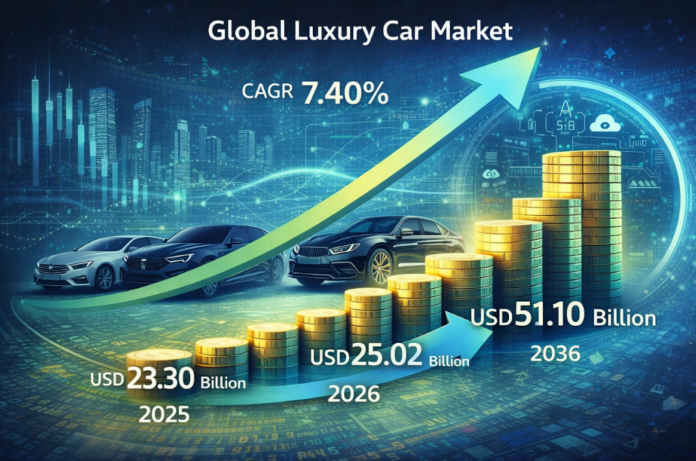
The numbers clearly reflect this shift. The market will be worth approximately $23.3 billion in 2025 and is expected to grow steadily to $51.1 billion by 2036, according to the latest analysis from Future Market Insights, a leading provider of market intelligence and advisory services serving clients in more than 150 countries. This growth, at a CAGR of 7.4%, is more than just volume growth, it signals a deeper transformation.

The luxury car market is evolving beyond traditional definitions of prestige and performance. Electrification, connectivity and personalized ownership experiences are redefining what luxury means in the modern automotive era. The report points out that as competition intensifies and consumer expectations rise, the ability to innovate in technology, distribution and design will determine long-term success.

At the heart of this change is electrification. Nearly every major luxury automaker is now accelerating its electric vehicle plans. This is no longer a strategy for the future, but a necessity of the present. The rise of local players in electric vehicles and increasing regulatory pressure are pushing legacy brands to rethink their product portfolios. Today, luxury is not only about design and driving dynamics, but also about quiet performance, smart software and sustainability.

major changes

Another big shift comes in the way cars are sold. Automakers are getting closer to customers through direct-to-consumer models. This allows them to control the buying experience, build stronger relationships and protect profits. This change becomes critical in a segment where experience is as important as product.

At the same time, competition is increasing, especially from China. As the world’s largest luxury car market, China is no longer just a demand center; it is also becoming a source of fierce competition. Domestic brands are rapidly improving in terms of technology and price, challenging internationally renowned brands locally.

Despite these changes, some traditional trends remain strong. Driven by executive demand and traditional appeal, sedans continue to dominate, accounting for nearly 47% share. Gasoline powertrains remain at the forefront, backed by infrastructure and performance preferences. However, this balance is slowly changing. SUVs and electric vehicles are steadily gaining popularity, especially in fast-growing markets.

Regionally, growth is driven by emerging economies. China continues to lead with strong momentum, while India is rapidly emerging as a major market, supported by increasing affluence and urbanization. Future Market Insights highlights that Germany remains a hub for innovation, while markets such as the US, UK and France offer stable, mature growth.

In this ever-changing landscape, the playing field is a combination of tradition and innovation. Brands such as BMW, Mercedes-Benz, Porsche, Rolls-Royce, Ferrari and Bentley continue to define this segment, but the rules of competition are changing. Today, success depends not only on tradition, but also on how well brands integrate technology, offer personalized services, and adapt to new mobile trends.

For automakers, the message is to invest in electric platforms, enhance digital capabilities and build closer customer relationships. For dealers, the shift to hybrid and direct sales models has become inevitable. For investors, the focus is increasingly on companies leading in electric vehicle innovation and digital ecosystems.

The significance of this moment is that the luxury car market is no longer just growing, it’s transforming. The concept of luxury goods is moving beyond ownership to experience, beyond performance to intelligence, and beyond tradition to innovation.

The report concludes that for forward-looking stakeholders, the luxury car market represents not only steady growth but also a shift towards a more digital, sustainable and experience-driven mobility future.

Delhi proposes road tax exemption for electric cars below ₹30 lakh in new EV policy 2026-2030

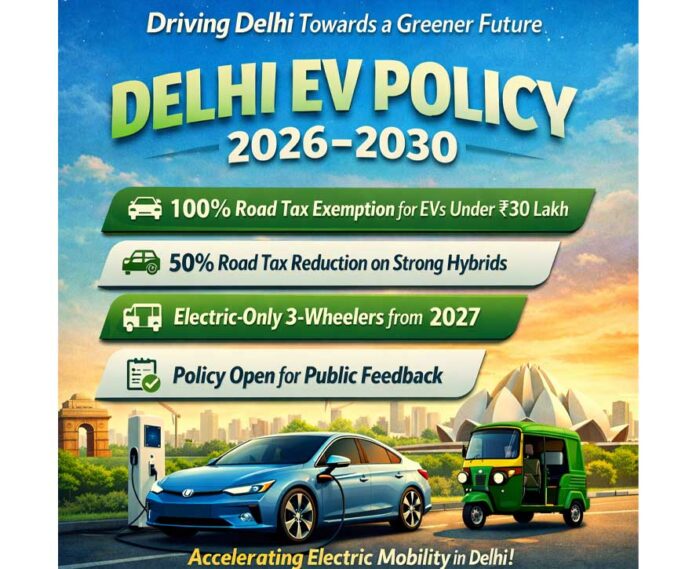
The Delhi government has proposed a new set of incentives to accelerate electric vehicle adoption under its draft Delhi Electric Vehicle Policy 2026-2030, including 100 per cent waiver on road tax and registration fees for electric cars priced up to ₹30 lakh.

According to the draft policy, the incentives will be applicable on eligible electric cars registered in Delhi till March 31, 2030. However, electric vehicles priced above ₹30 lakh will not be eligible for these discounts. The proposal also includes a 50 per cent reduction in road tax and registration fees for hybrid hybrid vehicles, aimed at encouraging wider adoption of clean mobility solutions.

In a major effort for last mile electrification, the draft policy proposes that from January 1, 2027, registration of all new three-wheelers in Delhi will be limited to electric models only. The move is expected to significantly accelerate the transition to electric mobility in the city’s commercial transportation sector.

The draft policy aims to build on the progress made under the previous Delhi Electric Vehicle Policy 2020, which was introduced in August 2020 to address vehicle pollution and promote EV adoption. While the original policy was initially set for three years and was to expire in August 2023, it has since been extended several times.

The Delhi government has opened the draft policy for public consultation, inviting feedback and suggestions in the next 30 days before finalizing the new framework. The updated policy is expected to further strengthen the electric mobility ecosystem, improve air quality and accelerate EV adoption in the national capital.

BEML unveils India’s first 35-ton electric dump truck with 300 kWh battery.

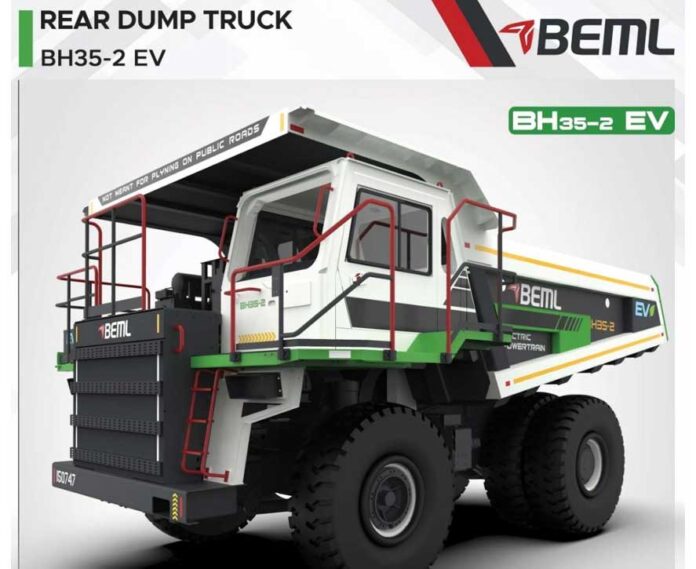
BEML Limited has unveiled India’s first indigenously designed 35-tonne electric dump truck at its Mysore complex, marking a significant milestone in sustainable mining and heavy equipment electrification.

The electric dump truck was flagged off by Shantanu Roy in the presence of senior business unit head Sanjay Som and officials from technology partner Medha.

Completely designed and developed in India, the 35-tonne electric dump truck is built as per global standards and is in line with India’s broader ESG goals, particularly in reducing carbon emissions in heavy industries and mining operations.

The electric dump truck is powered by a high-efficiency permanent magnet synchronous motor (PMSM) and offers a payload capacity of 35 tonnes with a gross vehicle weight of approximately 60 tonnes. Its electric drivetrain provides 85-90 percent energy efficiency, which is significantly higher than conventional diesel-powered dump trucks.

The vehicle also features a Regenerative Braking System (RBS), which captures and reuses energy during braking, making it particularly effective for downhill mining operations. Additionally, the truck is equipped with an advanced Battery Thermal Management System (BTMS) with liquid cooling to ensure battery performance, safety and longevity.

Powering the truck is a 300 kWh lithium-ion battery designed to handle the stop-start duty cycles typical of mining environments.

According to BEML, the electric dump truck can save 60-70 per cent in energy costs and reduce operating costs by 40-60 per cent compared to conventional diesel-powered alternatives, making it a cost-efficient and environmentally sustainable solution for mining operations.

Delhi EV Policy 2026: Delhi government released new EV vehicle policy, know what benefit it will give to the general public.

Delhi Ev Policy 2026 Target 30 Percent Electric Buses By 2030 – Delhi EV Policy 2026: Delhi government released new EV vehicle policy, know what benefit it will give to the general public.

Hindi News »

Delhi »

Delhi Ev Policy 2026 Target 30 Percent Electric Buses By 2030

LEPAS accelerates global expansion at 2026 International Business Summit |

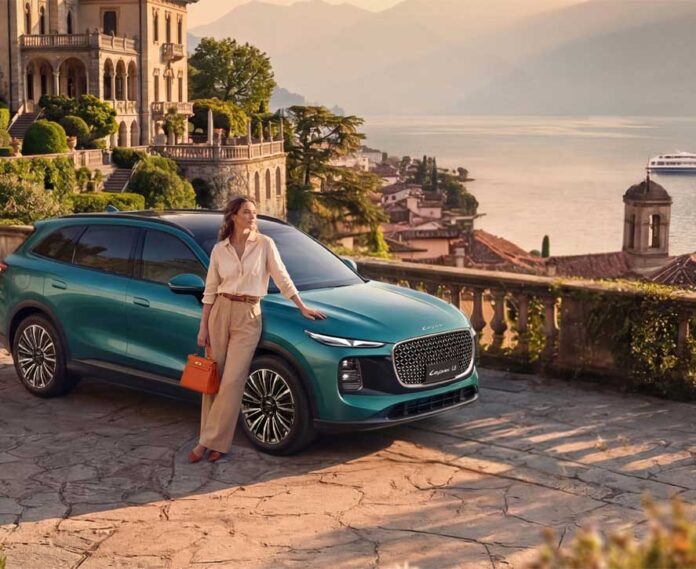
LEPAS is set to accelerate its global expansion at the 2026 International Business Summit. Held under the theme “Elegance Moves the World”, the summit will serve as an important platform for the brand to advance its international strategy, marking an important milestone in the global rollout of LEPAS.

Often in an area defined by numbers, LEPAS chooses a different language. Not loud, but more refined. Over the coming month, the brand will articulate its vision through a three-part progression—showcase, validation, and co-creation—that will offer thoughtful answers to a fundamental question: how elegance evolves from a concept to a lived-in mobility experience.

The first movement will begin at the upcoming Beijing Auto Show, where LEPAS will unveil its NEV strategy along with the world premiere of the L6 BEV and LEPAS L4 BEV. Rooted in leopard aesthetics, classy space and elegant driving, the brand offers not just product, but a class-defining NEV portfolio – a streamlined yet confident start to its first NEV product offensive.

From unveiling to proof, the story continues. After the show, the LEPAS Global Journey of Elegant Driving will begin. Over long distances and in real-world conditions, the LEPAS L6 will be experienced not as a specification sheet, but as a presence – measured, sure and naturally refined.

Additionally, LEPAS extends its vision beyond the vehicle. During the summit, the inaugural LEPAS Global Partners Conference will be held, bringing together the global network of distributors, suppliers and ecosystem partners. Here, the first group of Global Elegant Lifestyle Partners will be formally recognized. It marks a significant leap from brand expression to elegant ecosystem co-creation.

An equally important manifestation appears in space. The upgraded LEPAS Elegant Lifestyle House will open for the first time with a curated LEPAS Garden Gathering. Conceived as an immersive environment, it presents a concrete interpretation of the brand’s world – where product, design and lifestyle converge into a singular experience. It is here that the LEPAS philosophy – elegant, exquisite, confident – ​​is not just described, but felt.

The trajectory of LEPAS is inseparable from the foundation of Chery Group. Positioned as the preferred brand for an elegant mobility life and guided by Drive Your Elegance, LEPAS draws strength from a global system defined by depth and consistency. Today, Chery Group operates in more than 130 countries and regions and has maintained its position as China’s leading passenger vehicle exporter for 23 consecutive years. With a cumulative global user base of over 19 million, this scale provides not only reach but also flexibility – a sustainable platform for LEPAS’s global journey.

Additionally, AIMOGA will make a special appearance, offering a glimpse into the future of human AI assistants. Subtle but visionary, it adds a new layer of intelligence to the growing LEPAS ecosystem.

At IBS 2026, LEPAS will bring brands, products, channels and ecosystems into a coherent whole – completing an important step from global expansion to integrated realization. This is not a sudden acceleration, but a deliberate unfolding – introducing a more streamlined, more sustainable expression of elegance to the global NEV landscape.

Simple Energy expands retail business with five new stores in Delhi, Nashik, Aurangabad and Siliguri AutoguideIndia

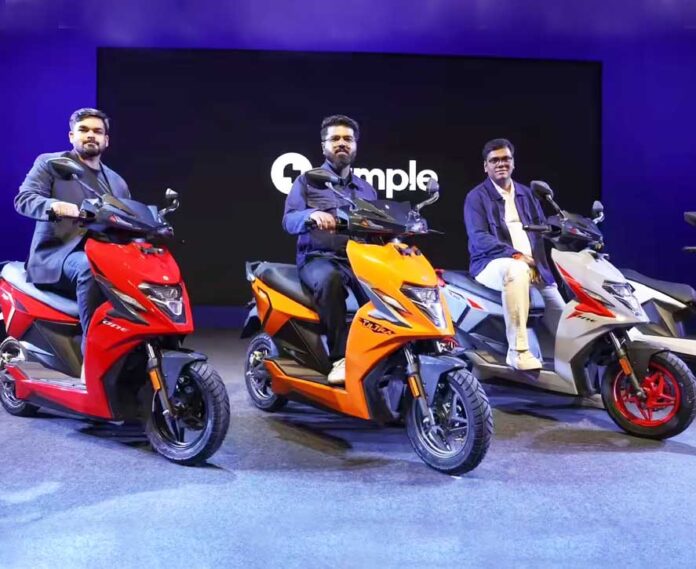
Simple Energy has expanded its retail footprint with the launch of five new ‘Simple Store’ outlets in Delhi, Nashik, Aurangabad and Siliguri, strengthening its presence in North, East and Western India.

The Bengaluru-based electric two-wheeler maker said the expansion is aimed at enhancing customer reach while building a stronger after-sales network as the company expands its pan-India operations.

Delhi gets two new simple stores

Simple Energy has opened two new outlets in Delhi – Pandav Nagar (East Delhi) and Dwarka in partnership with A&A Autocraft and Shri Radhe Motors respectively.

The Pandav Nagar showroom is spread over 800 sq. ft. and is supported by a 650 sq. ft. service center located approximately 5.5 km away. Meanwhile, the Dwarka outlet is spread over 900 sq ft and is supported by a 600 sq ft service facility located behind the showroom.

Maharashtra Extension: Nashik and Aurangabad

Simple Energy has entered the cities of both Nashik and Aurangabad with its first retail outlets.

Launched in partnership with Shahane Autovolt, the Nashik store is spread over 765 sq ft and is supported by a 1,000 sq ft service center located approximately 1.3 km away.

In Aurangabad, the store was launched with PSP Technocad Ancillaries Pvt. Ltd. Ltd. covers 914 sq. ft. and is supported by a 1,000 sq. ft. service facility located within 500 metres.

First 3S facility in Siliguri

In Eastern India, Simple Energy has opened its first outlet in Siliguri in partnership with CTA Connect. The 2,400 sq ft facility will serve as a 3S outlet – sales, service and spares – enhancing customer support and ownership experience in the region.

Showcasing the latest electric scooters

According to Suhas Rajkumar, this expansion is an important step towards strengthening the company’s pan-India presence and improving service reach.

The new outlets will showcase the company’s latest electric scooters, including the Simple One Gen 2 available in 4.5 kWh and 5 kWh battery options, offering a claimed IDC range of 236 km and 265 km respectively.

Customers will also be able to explore the simple OneS Gen 2, which offers a claimed IDC range of 190 km with accessories.

Nationwide presence growing

Simple Energy currently operates around 70 outlets in over 38 cities including Bengaluru, Delhi, Patna, Bhopal, Agra, Goa, Vijayawada, Hyderabad, Visakhapatnam, Kochi and Chennai.

The company plans to expand to additional cities such as Nagpur, Ranchi and Bhubaneswar in the coming months, as it continues to strengthen its national retail and service network.