Home Blog Page 12

Xiaomi unveils new generation SU7 electric sedan with advanced performance and technology

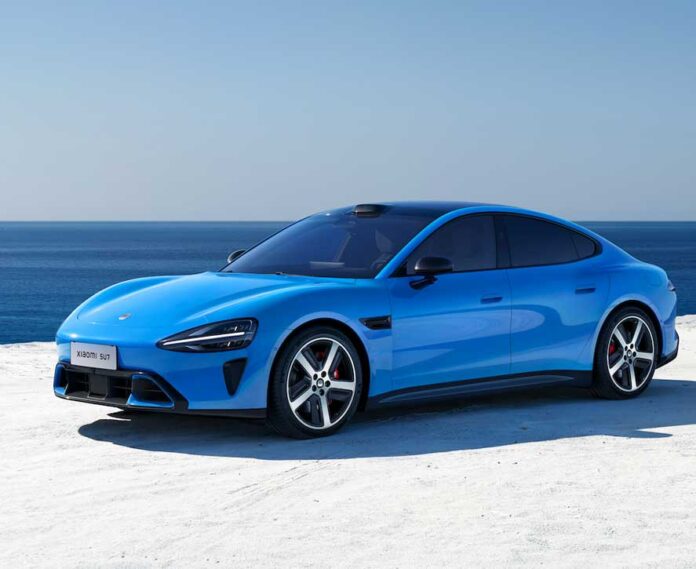
Xiaomi has officially introduced the new generation Xiaomi SU7, touting it as a “driver’s car for the new era.” The fully electric sedan is offered in three variants – Standard, Pro and Max, which are priced at RMB 219,900, RMB 249,900 and RMB 303,900 respectively.

The updated SU7 brings significant improvements in safety, driving dynamics, connectivity and overall quality. With a focus on refined design, better driving performance, better technology and stronger safety, the new model aims to provide a more complete premium EV experience.

Maintaining its distinctive identity, the SU7 continues with its signature proportions, measuring almost 5 meters in length and featuring a 3-metre wheelbase, placing it firmly in the luxury C-segment sedan category. Iconic design elements such as the waterdrop headlights and halo taillights have been retained, reinforcing its recognizable styling.

The latest iteration also offers notable exterior enhancements, notably new color options and improved craftsmanship details, offering customers greater scope for personalization while enhancing the premium appeal of the sedan.

The new generation Xiaomi SU7 is available in a wide palette of nine exterior color options. Four of the most popular finishes from the original Xiaomi SU7 – Mineral Grey, Pearl White, Brilliant Magenta and Radiant Purple – are back, as well as two popular colors from other Xiaomi models: Obsidian Black from the Xiaomi SU7 Ultra and Dawn Pink from the Xiaomi YU7. These include three brand new colors: Coastal Blue, Blazing Red and Viridian Green.

Coastal Blue is a fresh, pure and distinctive premium shade of blue formulated from blue aluminum flakes and nano pigments.

Blazing Red is bold and expressive – bringing the Xiaomi SU7’s first true red to life like the bright glow of daylight with a unique glow that changes as it catches the light, giving the red a vivid, three-dimensional and energetic appearance.

Deep in tone and restrained in luxury, Viridian Green is enriched with natural malachite pearl particles and a bamboo-charcoal black base layer, which creates a beautiful transition from dark green to blue-green depending on the angle of observation, conveying a cool, restrained look of luxury.

Apart from the new colors, the most visible upgrade on the new generation Xiaomi SU7 is the brand new air intake grille design. Cleaner and sportier, the new design features a wide C-shaped decorative surround and wider brake-cooling ducts, while 4D millimeter-wave radar is now integrated within the grille, enhancing both aerodynamics and intelligent sensing capabilities.

There are six wheel options available in the new generation Xiaomi SU7 lineup, including three brand new designs that expand personalization for all styles and tastes. New wheel options include 19″ Diamond Cut Rims, 20″ Blade Rims and 21″ Forged Dual Plum Blossom Rims. Of these, the 21″ Forged Dual Plum Blossom rims feature an intricate dual layer construction that undergoes thirteen hours of precision machining. Using 22 special single-crystal diamond tools, the wheel is continuously ground for six hours to carve an intricate dragon-scale texture, resulting in a seamless glossy finish with exceptionally clear details. In addition to these options, classic options including 20″ Plum Blossom rims, 20″ Mi‑shaped rims and 21″ Sport rims are also available.

Continuing this premium look, the new generation Xiaomi SU7 series brings an electric front trunk to the entire lineup. Featuring a 105‑litre capacity and sized enough to accommodate a standard 20″ carry‑on suitcase, the trunk supports eight different opening methods, including external physical button, central display, Xiaomi EV App, Xiaomi EV App Widget, remote key fob, UWB proximity control, in‑car XiaoAI voice command and external XiaoAI voice command for unparalleled convenience.

Xiaomi has significantly upgraded the Xiaomi SU7 with a comprehensive makeover focused on luxury, performance, intelligence and security.

The cabin gets a major redesign with premium materials, soft-touch surfaces, ambient lighting and improved seat comfort including ventilated, heated and highly adjustable seats. Rear seat comfort and overall cabin quietness have also improved with features like acoustic glass, advanced insulation and a more immersive experience in the car.

A major improvement in performance has been seen with the new HyperEngine V6S Plus motor, delivering a acceleration time of 3.08 seconds (0-100 km/h), a top speed of 265 km/h and a class-leading range of up to 902 km (CLTC). With fast charging, a distance of up to 670 km can be covered in just 15 minutes.

Driving dynamics have been enhanced with the new Smart Chassis 2.0, which includes adaptive suspension, improved steering precision, advanced braking and AI-powered road detection for better stability and control.

On the technology front, the SU7 features a powerful computing platform with dual flagship chips, a smart HyperOS-based cabin, advanced voice assistants, multi-device connectivity and an advanced assisted driving system based on the new XLA architecture with 360° perception.

Safety has been further strengthened with high-strength body structure, advanced battery protection, 9 airbags and advanced crash and thermal protection systems, ensuring top-tier passenger and vehicle safety.

The Xiaomi SU7 series is not for sale outside the Chinese Mainland.
Polestar 4 wins AutoBest SmartBest 2026 for Google Maps Live Lane Guidance integration

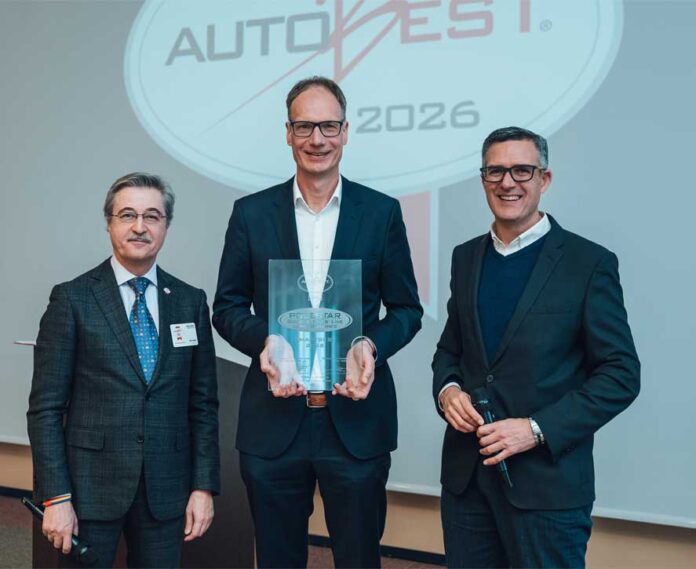
Polestar has been awarded the prestigious AutoBest SmartBest 2026 for the integration of Google Maps’ live lane guidance feature into the driver display of the Polestar 4. This recognition comes from the Autobest Jury, an independent panel of automotive journalists representing 32 European countries.

The jury praised the innovation, saying the award marked “an important step forward in intelligent onboard navigation and driver assistance technology.”

Accepting the award at a ceremony in Vienna on March 19, CEO Michael Loeschler highlighted the achievement as evidence of the company’s software-first approach and its long-term collaboration with Google.

Polestar is the first automotive manufacturer to integrate Google Maps’ live lane guidance directly into the driver display of a production vehicle. Designed for cars with Google built-in, this feature enhances navigation by helping drivers stay in the correct lane, especially in complex highway scenarios and dense traffic situations.

The system combines the advanced navigation capabilities of Google Maps with AI-powered insights to deliver real-time visual and audio prompts. A redesigned interface displays all available lanes for a given route while clearly indicating the vehicle’s current position.

Live Lane Guidance operates via a forward-facing camera that analyzes road elements such as lane markings and traffic signals using Google’s AI technology. This enables timely signaling for lane changes, improving both convenience and driving safety.

This feature is displayed on the Polestar 4’s 10.2-inch driver screen, providing a more intuitive and immersive navigation experience.

As part of Polestar’s over-the-air (OTA) update strategy, this innovation underscores the brand’s commitment to continuously enhancing its vehicles with new software-driven capabilities. The feature will roll out to Polestar 4 models in the United States and Sweden in 2026, with plans to expand to additional markets and road types in the future.

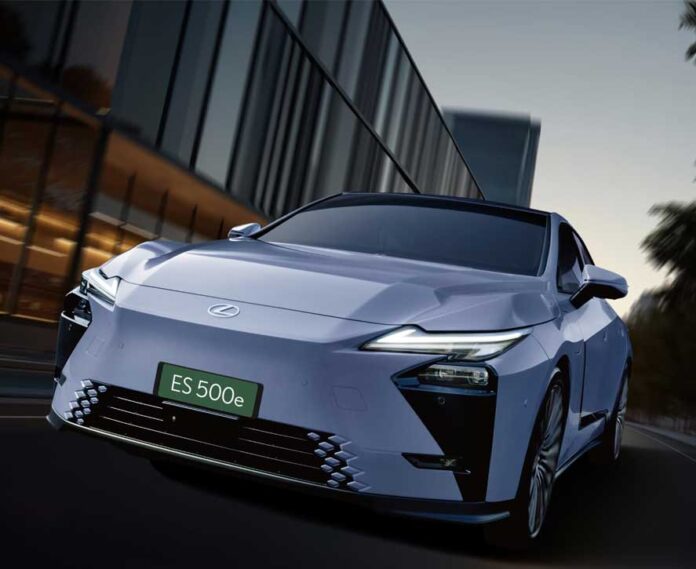
Lexus India enters the BEV era with the all-new ES500e.

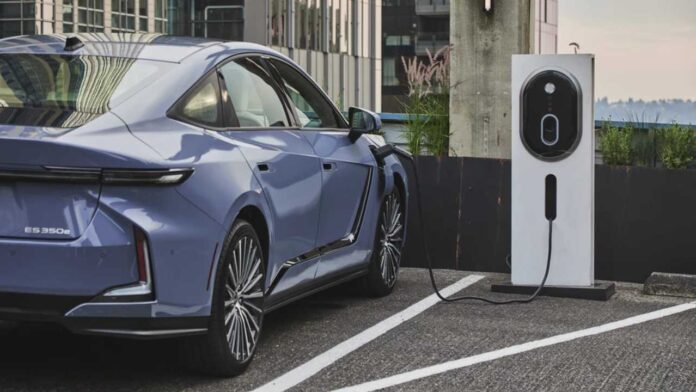
Lexus India has launched the all-new Lexus ES 500e in India, marking a major milestone in the brand’s electrification journey. This model becomes Lexus’ first battery electric vehicle (BEV) introduced for the Indian market.

Originally unveiled at the Japan Mobility Show 2025, the new ES embodies Lexus’ core philosophy of “Discover” – an approach focused on creating better products, enhanced services and more meaningful experiences.

Through this approach, Lexus aims to help customers find new value in their lifestyle while furthering its commitment to sustainable and electrified mobility.

Launched in 1989 with the flagship LS, the ES has been a flagship model at Lexus, earning global praise for its quietness, ride comfort and spacious interior. This model has been sold in more than 80 countries around the world. Since the launch of the RX 400h in 2005, Lexus has consistently led the way in electrification while pursuing both dynamic performance and environmental responsibility. With a continued focus on HEVs, PHEVs and BEVs, Lexus is working towards realizing a carbon-neutral society while responding to the increasingly diverse needs of guests and markets. Lexus is committed to delivering unique brand experiences by advancing core vehicle performance through electrification. This movement will focus on engineering that will redefine the future of mobility while providing services that enrich modern lifestyles.

The all-new ES is inspired by Lexus’ multi-pathway approach developed under the concept of Experience Elegance and Electrified Sedan, the model aspires to provide a refined driving experience that enhances quietness and ride comfort while staying in tune with the needs of guests. In pursuit of carbon neutrality through a multi-path approach, both BEVs and HEVs are offered to meet a variety of mobility demands. Today, the ES BEV has been launched in India, and ES HEV details will be announced in due course in the latter half of the year.

Present at the launch, Kohei Chiashi, Chief Engineer, Lexus International, said, “The ES has long been one of the most popular models in the Lexus lineup for the Indian market, and today we are delighted to launch the all-new ES500e. This feature-rich vehicle is designed for guests who value driving performance, comfort and safety while aspiring to be a part of the new ES family. The sedan features key features such as high body rigidity and low center of gravity. The new ES sedan further enhances the experience, contributing to exceptional ride comfort, handling stability and quietness. Built on the newly developed TNGA GA-K platform, the model expands Lexus’ electrified vehicle options while contributing to the reduction of carbon emissions, ultimately delivering a fresh and unprecedented sedan experience.

Speaking on the occasion, Hikaru Ikeuchi, President, Lexus India, said, “The all-new Lexus ES500e represents our vision for the future of luxury mobility in India. With the launch of our first BEV for the Indian market, we reinforce our multi-pronged approach to electrification and our commitment to advancing sustainable mobility in the country. Inspired by Lexus’ core values of refinement and the Japanese spirit of Omotenashi, a deeply True to the guest-centric philosophy, the ES seamlessly blends innovation with luxury, comfort and performance. As India moves towards a more sustainable mobility ecosystem, we are dedicated to providing our guests with solutions that harmonize luxury and advanced technologies. We are confident that the new ES will further redefine the Lexus experience.

The all-new Lexus ES 500e features a refined design with improved sedan proportions, aerodynamic styling and a minimalist, spacious interior focused on comfort and visibility. Built on an advanced platform, it offers superior ride quality, structural rigidity and precise driving dynamics supported by AWD and advanced suspension.

Operating as a fully electric model, it offers strong performance with a range of 580 km and fast-charging capability, combining luxury with efficiency.

The cabin features advanced technology including a large 14-inch multimedia display, digital driver cluster, premium audio system and innovative responsive hidden switches, providing a clean and intuitive user experience.

Safety is enhanced with the latest Lexus Safety System+, which offers features like collision prevention, lane keep assist, adaptive cruise control and 360-degree monitoring.

Additionally, the ES 500e offers connected features, remote functions and comprehensive ownership benefits, including longer warranty coverage, charging solutions and roadside assistance – ensuring a premium and hassle-free ownership experience.

EMO Energy Report: EV batteries retain 85% health after 75,000 km AutoguideIndia

EMO Energy has released insights from over four years of real-world electric fleet operations, highlighting how big-scale data is reshaping the understanding of battery performance and intelligence.

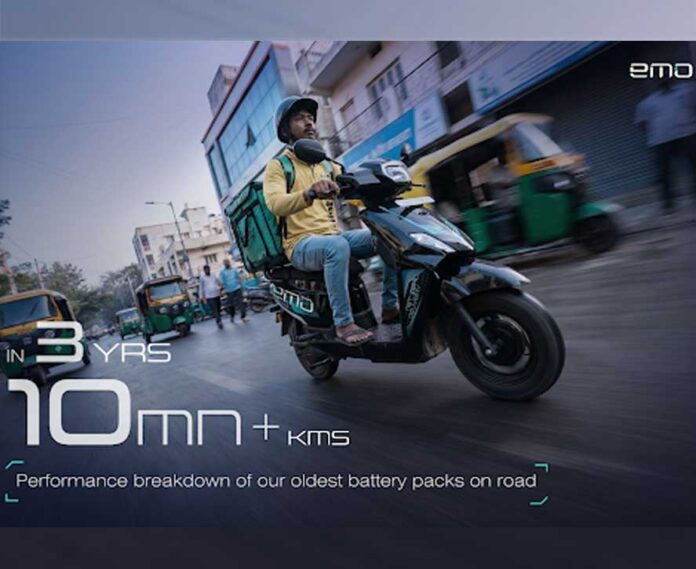
During this period, the company has developed and deployed battery systems designed for high-usage electric fleets. Some of its initial battery packs have been in operation for nearly three years, powering delivery vehicles in cities like Bengaluru and Gurugram. These vehicles operate under tough conditions, particularly in fast-commerce applications, often covering ranges of around 100 kilometers per day, relying on several short fast-charging cycles to remain operational.

A segment of these batteries has crossed 75,000 kilometers of real-world use, largely dependent on fast charging. This comprehensive dataset provides valuable operational insights into how EV batteries perform under continuous fleet use in Indian conditions – an area where the industry still lacks sufficient depth of understanding.

At the core of this analysis is SENS, EMO Energy’s proprietary battery health prediction and optimization platform, which captures and processes performance data in real-time. The findings challenge the traditional view of EV batteries as consumable components, instead positioning them as predictive, intelligent infrastructure capable of predicting aging patterns and performance over time.

Commenting on the findings, Shitanshu Tyagi, CEO of EMO Energy, said that battery performance in fleet operations depends not only on chemistry, but also on usage patterns, charging behaviour, thermal management and long-term ageing. He emphasized that a holistic approach is necessary to design battery systems that can meet the demands of modern electric mobility.

A dataset built under difficult circumstances

The dataset comes from 100 EMO battery packs deployed in commercial delivery fleets operating in Bangalore and Gurgaon. These vehicles operate in the toughest conditions for EV batteries: high daily usage, frequent fast charging, and frequent climate exposure in Indian summers, monsoons and winters. In Delhi summer conditions, the ambient temperature can cross 45 °C, which typically increases thermal stress during charging and discharging.

Unlike passenger EVs, which largely rely on overnight charging, these fleet vehicles charge multiple times a day to maximize uptime. The typical pattern involves four to five charging sessions per day, about five minutes per session, adding up to a total charging time of about twenty minutes per day. The battery capacity is 2 kWh, the fast charging power is 3.3 kWh, and the 0-80% charge time is about twenty minutes. Under conventional assumptions, such frequent fast charging is expected to accelerate the degradation. EMO’s long-term field data shows that results can vary materially when the system is designed for this exact use case.

What changes after 75,000 kilometers

In the dataset, the oldest packs have crossed approximately 75,000 kilometers. The EMO reports a relatively gradual decline in health conditions. After 20,000 km, the packs sit around 96-98% health condition. After 50,000 km, they are around 90-92%. At 75,000 km, they remain about 85-88%. In practice, this corresponds to about 15% degradation after 75,000 kilometers of real-world operation.

What makes this remarkable is the comparison to the typical degradation pattern in a conventional EV pack operating under repeated fast charging. In many such systems, a drop of 25–30% by 75,000 kilometers is not unusual, with health conditions often falling in the range of 70–75% at that distance. In the EMO deployment monitored via SENS, the PACS retained approximately 85% of original capacity while operating under the same high utilization pattern. The difference is not only in the last number. This is the ability to manage battery aging in a more controlled, predictable manner.

Why do EV batteries need intelligence, not just monitoring?

There is rarely a single cause of battery failure. It is the result of many small stresses that add up over time. Charging the battery too quickly when it is cold, operating in high ambient temperatures, frequent deep discharge, and hundreds of cycles under inconsistent conditions all affect the way the battery ages.

Traditional battery management systems are primarily designed for safety at this point. They monitor temperature, voltage and current, and intervene if something crosses limits. This is necessary, but it doesn’t answer the question that concerns fleet operators most: how this battery will hold up after months and years of intensive use.

This is where predictive battery intelligence becomes important. SENS continuously analyzes telemetry from charging sessions, temperature profiles, cycle history and usage patterns to determine how each battery is aging. The intention is not only to react when the battery is under stress, but to anticipate how degradation is likely to unfold and adjust charging behavior and operating parameters before long-term wear accelerates. This transforms the battery from a passive component into a predictable energy asset.

Intelligence layer and what it does

SENS acts as an intelligence layer in EMO deployment. It analyzes telemetry such as cell voltage behavior, charge and discharge profiles, temperature distribution, cycle history and usage patterns in the fleet. Using this, it creates predictive models of battery health performance.

The outputs are practical. It can predict degradation trajectories, detect early signs of abnormal behavior, optimize charging profiles for longevity and maintain performance consistency across the fleet. For an operator managing thousands of vehicles, this kind of predictability matters more than dramatic specifications on paper. This helps eliminate surprises, minimize downtime, and plan asset life with greater confidence.

Thermal architecture still matters

Predictive intelligence can’t compensate for poor battery design. EMO batteries use a patented immersion cooling system where the cells are surrounded by a proprietary dielectric coolant circulating throughout the pack. The aim is to achieve uniform thermal management across all cells, including faster charging.

In real-world operation, EMO reports that it keeps the cell temperature between 24°C and 28°C during fast charging. Maintaining a narrow thermal range reduces the electrochemical stress that typically induces rapid degradation. EMO reports zero cases of thermal runaway in the entire dataset even under high ambient temperatures.

What this means for rapid commerce fleets

For accelerated commerce companies, electrifying the delivery fleet is a sustainability as well as an operational decision. These fleets often travel 80–120 km per day, charge multiple times throughout the day, and have minimal tolerance for downtime. Two concerns generally slow adoption: degradation under repeated fast charging and uncertainty about long-term battery health.

Field data from EMO deployments shows that this risk can be significantly reduced when batteries are designed for high-frequency fleet environments and supported by predictive intelligence. The vehicles operating in Bengaluru and Gurgaon, many of which are charged four to five times a day, have clocked over 75,000 kilometers while maintaining more than 85% health. For fleet operators, the question changes. It becomes less about whether EV batteries can survive heavy use and more about how fast fleets can grow when batteries behave like reliable infrastructure.

big takeaway

Much of the EV conversation focuses on vehicles and charging networks. But as fleets electrify in scale and age, it becomes clear that batteries must be treated as long-term assets that require both robust thermal architectures and intelligent systems around them. EMO’s long-term dataset, monitored via SENS, offers a view of what is possible when battery design, fast charging infrastructure and energy intelligence work together.

Because the future of electric mobility will not be defined by batteries alone. It will be defined by the energy systems built around them.

PPS Motors opens India’s largest BYD showroom in Delhi –

BYD India, a subsidiary of BYD, the world’s largest NEV (new energy vehicle) manufacturer, announced the completion of its 48th showroom in India and its sixth showroom in Moti Nagar, National Capital Region of Delhi. The new facility is BYD’s largest showroom in India and was launched in partnership with PPS Motors Pvt. Ltd., marks the sixth BYD showroom operated by PPS Motors in addition to its four service workshops across 3 states in India, further strengthening the brand’s retail presence in the region.

The newly opened stores strengthen BYD India’s business expansion in Delhi NCR, one of the fastest growing and most dynamic electric vehicle markets in India. The expansion reflects the brand’s commitment to making advanced electric mobility solutions more accessible to customers in the region.

Spread across 9,000 sq ft, the Moti Nagar facility is designed to provide customers with an expansive and immersive retail experience. The showroom will showcase BYD’s advanced electric passenger vehicles while allowing customers to explore the brand’s cutting-edge technology, design concepts and sustainable mobility innovations.

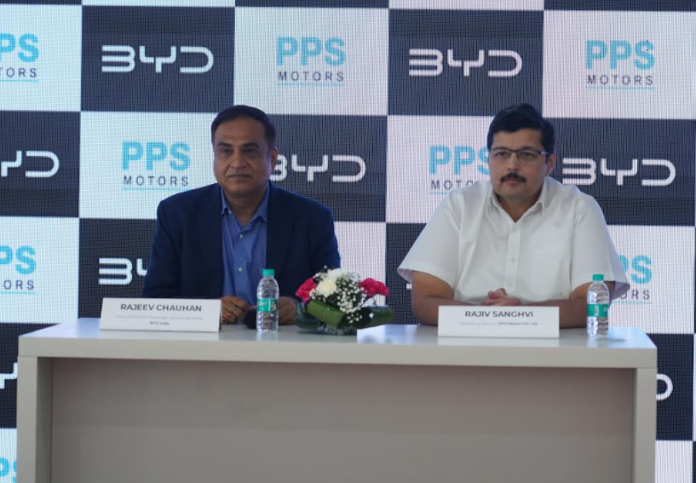
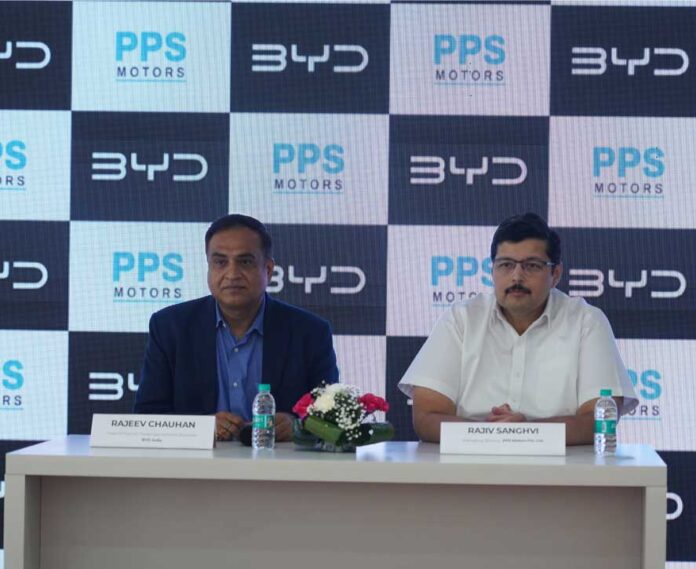
Mr. Rajeev Chauhan, Head, Electric Passenger Vehicles Business, BYD India, said, “The inauguration of our 48th showroom in India and sixth showroom with PPS BYD in Delhi NCR at Moti Nagar marks another important milestone in strengthening BYD’s retail presence in India. Delhi NCR remains one of the most dynamic EV markets in India, supported by rising consumer awareness and adoption of sustainable mobility solutions. With our valued partner PPS Motors Together, we look forward to bringing BYD’s advanced electric vehicles closer to customers in the region and contributing to India’s transition to clean transportation.”

Mr. Rajiv Sanghvi, PPS Motors Pvt. Managing Director Ltd. said, “We are proud to further strengthen our partnership with BYD with the inauguration of India’s largest showroom, which is an important milestone in our strategic expansion in North India. As BYD’s largest sales and after-sales partner with 10 touch points in India, This reflects our shared commitment to accelerating the adoption of sustainable electric vehicle solutions, powered by BYD’s technologically advanced products, customer-centric approach and our deep understanding of customer needs, to deliver a premium and seamless ownership experience to our customers in the Delhi region.”

With the addition of this showroom, BYD India’s nationwide electric passenger vehicle distribution network has expanded to 48 showrooms in 40 cities with 18 dealer partners, reflecting the company’s ongoing efforts to enhance accessibility and support the growing popularity of electric vehicles across India. BYD’s product portfolio in India reflects the company’s commitment to innovation, performance and environmental responsibility. The current product lineup includes BYD SEALION 7, BYD SEAL premium sedan, BYD ATTO 3 eSUV and BYD eMAX 7 eMPV, providing customers with diversified advanced electric travel solutions.

The company continues to drive India’s transformation towards clean transportation through its range of premium electric passenger vehicles and cutting-edge battery technology. As of January 31, 2026, BYD has sold more than 15 million new energy vehicles globally, helping to reduce more than 129.2 billion kilograms of carbon dioxide emissions, equivalent to the carbon dioxide emissions absorbed by nearly 2.14 billion trees. BYD has been ranked among Kantar BrandZ’s top ten most valuable automobile brands in the world for many years in a row, and ranked 91st among the Fortune Global 500 in 2025 with a brand value of US$14.4 billion, reflecting its growing leadership in the global electric vehicle market.

Bizliride adds 6 new Hyderabad franchises, plans to expand to 25+ cities.

Bizliride has announced the addition of six new franchise partners in Hyderabad, marking a significant step in its expansion strategy to drive electric two-wheeler mobility across India.

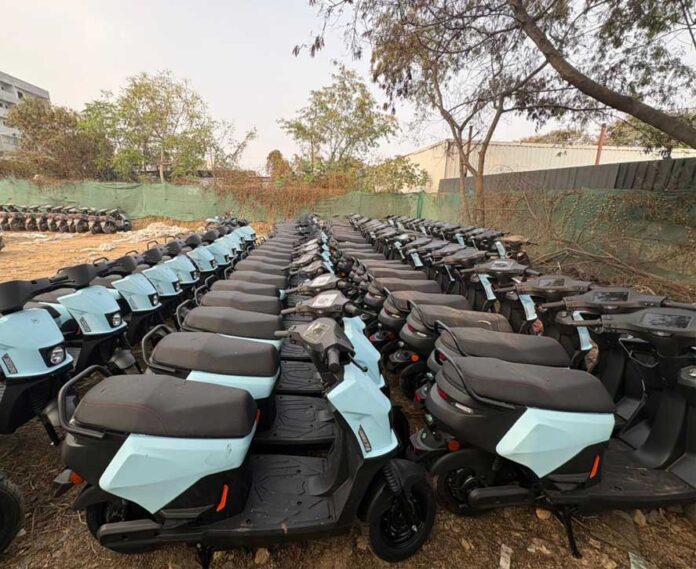
The company is strengthening its franchise network under the Franchise Owner-Franchise Operated (FOFO) model, with plans to expand to more than 25 high-growth cities. Bizliride is targeting to grow its electric vehicle fleet to 10,000 to 15,000 two-wheelers in the next 12-18 months as well as have a network of 30 franchise partners by March 2027.

Through this expansion, the company aims to achieve approximately 150% growth in fleet operations and overall business scale within the next 12 to 18 months. The initiative focuses on collaborating with local entrepreneurs, enabling them to build and manage EV fleets in their respective markets, strengthening BijliRide’s presence in India’s rapidly growing electric mobility ecosystem.

As part of its next phase, Bizliride plans to expand operations to urban agglomerations around Hyderabad as well as several high-potential cities including Chennai, Bengaluru, Mumbai, Delhi NCR, Jaipur, Patna, Visakhapatnam, Indore, Bhopal, Bhubaneswar, Kolkata, Lucknow, Kanpur, Prayagraj, Nagpur, Ranchi, Surat, Ahmedabad, Goa, Kochi, Warangal, Nizamabad, Mysore, Puducherry, Actively evaluating the markets.

These locations have been identified based on the growing demand from logistics operators, gig economy platforms and urban commuters seeking cost-effective and sustainable mobility solutions.

This expansion strategy will allow BijliRide to grow its electric mobility footprint while maintaining local operational efficiency through franchise partners who understand their regional markets and demand dynamics.

Through the FOFO structure, franchise partners will own and operate their local fleet, while Bizliride provides the centralized technology infrastructure and operational framework needed to run the business efficiently. The company’s platform provides real-time vehicle tracking, fleet performance analytics, rental management systems, battery management protocols and standardized servicing processes, ensuring consistency and operational reliability across all markets.

A typical entry-level franchise fleet consists of around 50 electric two-wheelers, with an estimated investment of Rs 14-16 lakh, depending on vehicle specifications and market conditions. Under stable usage conditions, the model is designed to reach break-even within approximately 12-15 months, while generating recurring revenues through fleet rental and enterprise mobility partnerships.

Commenting on the expansion, Shivam Sisodia, CEO and co-founder of Bizliride, said: “Demand for electric mobility is growing rapidly in India, especially among gig workers and last-mile delivery operators. At this stage, our focus is on disciplined scale. The FOFO model allows us to grow responsibly by partnering with local entrepreneurs who understand their markets while leveraging our technology platform and operational systems. This structure will help us scale faster. “Enables and ensures that the fleet on the ground is managed efficiently.”

In addition to operational systems, Bizliride supports franchise partners with driver onboarding, demand generation and marketing assistance, helping to maintain strong fleet utilization. The company also connects franchise fleets with gig platforms, logistics operators and on-demand local delivery businesses.

Over the next 12-18 months, Bizliride aims to expand its fleet to over 10,000 electric two-wheelers across key urban and logistics markets, while continuing to strengthen its technology platform and operational support ecosystem for franchise partners. The company’s long-term vision is to build a scalable electric mobility network that supports both entrepreneurs and riders across India.

Now there will be no tension of petrol, Lexus’ first electric car launched in India, range and features are special.

Lexus’s first electric car launched in India featuring exceptional range and features – Now there will be no tension of petrol, Lexus’s first electric car launched in India, range and features are special.

Hindi News »

automobile »

Lexus’s First Electric Car Launched In India Featuring Exceptional Range And Features

EV users should pay attention, having to charge 100% again and again can be costly, save thousands of rupees in this way.

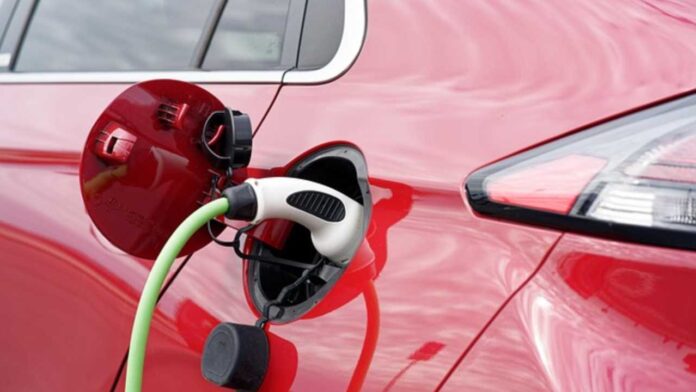
Repeatedly Charging To 100 Could Prove Costly Avoid Losses Worth Thousands – EV users should pay attention, repeatedly charging to 100% could prove costly, avoid losses worth thousands in this way.

Hindi News »

automobile »

Repeatedly Charging To 100 Could Prove Costly Avoid Losses Worth Thousands

BYD India expands network to 48; PPS Motors opens India’s largest BYD showroom in Delhi.

BYD India has expanded its national footprint to 48 showrooms with the inauguration of its largest facility in the country located in Moti Nagar, Delhi. The new outlet, launched in partnership with PPS Motors Pvt. Ltd. Ltd., is also BYD India’s sixth showroom in the Delhi NCR region.

This milestone further strengthens BYD India’s retail presence, with PPS Motors now operating six showrooms and four service workshops across three states, strengthening the brand’s growing reach in India’s electric mobility market.

The newly inaugurated outlet reinforces BYD India’s growing presence in Delhi NCR, one of the fastest growing and most dynamic electric vehicle markets in the country. This expansion reflects the brand’s commitment to making advanced electric mobility solutions more accessible to customers in the region.

Spread over 9,000 square feet, the Moti Nagar facility is designed to offer customers an elaborate and comprehensive retail experience. The showroom will showcase BYD’s advanced electric passenger vehicles, as well as enable customers to explore the brand’s cutting-edge technology, design philosophy and sustainable mobility innovations.

Mr. Rajeev Chauhan, Head of Electric Passenger Vehicle Business, BYD India, said, “The opening of our 48th showroom in India with PPS BYD in Moti Nagar and sixth showroom in Delhi NCR represents another important milestone in strengthening BYD India’s retail footprint. Delhi NCR continues to be one of the most dynamic EV markets in the country, supported by growing consumer awareness and adoption of sustainable mobility solutions. Along with our valued partner PPS Motors, we Look forward to bringing BYD’s advanced electric.” The vehicles are closer to customers in the region and are contributing to India’s transition towards clean transportation.”

Mr. Rajeev Sanghvi, Managing Director, PPS Motors Pvt. Ltd. said, “We are proud to further strengthen our partnership with BYD through the inauguration of India’s largest showroom, which marks an important milestone in our strategic expansion in Northern India. Being BYD’s largest spread sales and after-sales partner in India with 10 touch points, it reflects our shared commitment to accelerate the adoption of sustainable electric mobility solutions. BYD’s technologically advanced products, customer-centric approach as well as customer needs “With our deep understanding of , we strive to provide a premium and seamless ownership experience to our customers in the Delhi region.”

With the addition of this showroom, BYD India’s national electric passenger vehicle dealership network expands to 48 showrooms across 40 cities with 18 dealer partners, reflecting the company’s continued efforts to support the growing adoption of electric mobility and strengthen reach across India. The BYD portfolio in India symbolizes the company’s commitment towards innovation, performance and environmental responsibility. The current lineup includes BYD Sealion 7, BYD Seal Premium Sedan, BYD ATTO 3 eSUVand this BYD eMAX 7 EMPVOffering customers a diverse range of advanced electric mobility solutions.

Through its range of premium electric passenger vehicles and cutting-edge battery technology, the company is driving India’s transition towards clean transportation. Globally, BYD has sold more than 15 million NEVs, reducing more than 129.2 billion kilograms of CO₂ emissions by January 31, 2026, which is equivalent to the CO₂ emissions absorbed by approximately 2.14 billion trees. BYD’s consistent ranking among the top 10 most valuable global automotive brands by Kantar Brands, as well as the #91 position in the 2025 Fortune Global 500 with a brand value of USD 14.4 billion, reflects its growing leadership in the global EV market.

As BYD India continues to expand its network, the company is focused on accelerating EV adoption, strengthening its customer ecosystem, and supporting India’s broader shift towards sustainable mobility.

AI meets motorcycling: Matter reveals future-ready performance vision

Ahmedabad-based electric mobility and energy technology company Matter took center stage at a closed-door leadership roundtable in New Delhi, establishing itself as a leading voice in the emerging tech-driven mobility landscape.

The roundtable on “Managing Digital Transformation in the Evolving Technological Era” brought together founders, CTOs and senior technology leaders from across the automotive and mobility ecosystem. Discussions focused on the rapid shift towards software-defined vehicles, digitally integrated engineering platforms and next-generation manufacturing systems.

Representing Matter, Founder and Group CEO Mohal Lalbhai shared insights on how emerging electric mobility platforms are redefining product architecture, engineering practices and the overall ride experience with an emphasis on performance and profitability.

Commenting on the ongoing transformation in the automotive sector, Mohal Lalbhai said, “The automotive industry is moving from mechanically defined vehicles to electrically defined platforms and now software-defined mobility. What this really means is that intelligence is moving towards centralized computation, where the vehicle becomes a connected, constantly evolving system rather than a fixed mechanical product.”

Lalbhai also outlined Matter’s vision of what he describes as AI-defined vehicles (AI.DV), where software, sensors and onboard intelligence work on a centralized compute architecture to continuously evolve the vehicle experience. According to Lalbhai, such an approach could significantly simplify hardware complexity while enabling over-the-air upgrades, data-based services and new post-purchase value streams. Over time, he said, this model could allow mobility companies to optimize cost structures while unlocking higher margins through software-driven capabilities.

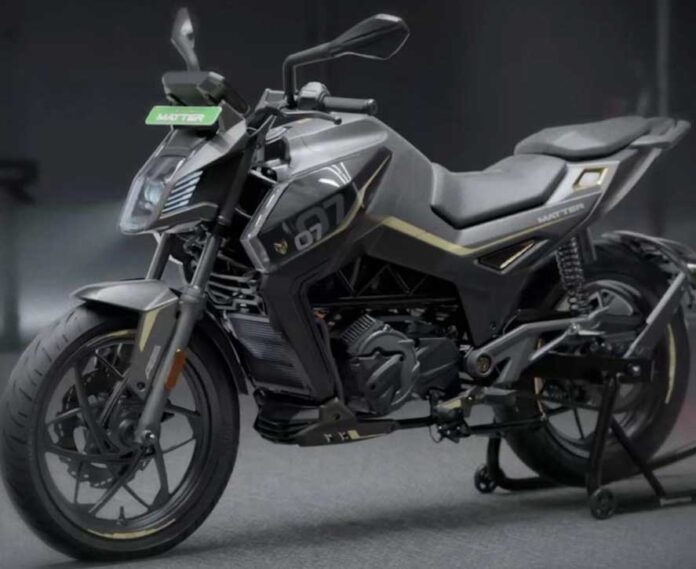
During the discussion, MATTER’s innovation-based approach to electric mobility attracted considerable interest from industry participants, especially in the context of its flagship product AERA, India’s first geared electric motorcycle. As the sector undergoes a fundamental shift from traditional mechanical vehicles to digitally integrated mobility platforms, MATTER’s emphasis on building deeply engineered electric products with proprietary technologies has become an example of how new-age mobility companies are thinking about the future of vehicle design.

Participants discussed how the convergence of advanced powertrain technologies, software intelligence and connected ecosystems is redefining both vehicle capabilities and user expectations.

Reflecting on MATTER’s vision for electric motorcycling, Lalbhai said, “For us, the starting point is always first-principles engineering. The hardware must be strong, because that is the foundation upon which all software innovation sits. With AERA, our goal was to combine that engineering depth with a new generation of intelligent features while preserving the rider engagement that defines motorcycling.”

The roundtable also examined the broader transformation underway across the automotive value chain, including the growing role of digital engineering platforms, model-based design, and industrial IoT in enabling faster product development cycles. Within this emerging landscape, MATTER’s vertically integrated technology stack, spanning proprietary motors, transmission systems, battery management platforms and connected vehicle interfaces, reflects a shift toward building mobility platforms that combine performance engineering with digital intelligence.

The company’s introduction of a geared electric motorcycle demonstrates how traditional motorcycle mobility can be re-imagined through the lens of electric technology and modern vehicle architecture.

Speaking about the role of data and intelligent systems in shaping the future of mobility, Lalbhai said, “Vehicles are increasingly becoming intelligent systems. When software, sensors and data start working together, the vehicle can understand how it is being used, optimize its performance and even anticipate maintenance needs. This shift will redefine how mobility platforms will evolve over the next decade.”

This roundtable serves as a platform for senior industry leaders to explore how automotive organizations can navigate the ongoing shift toward a digital-first mobility ecosystem. MATTER’s participation highlights the growing role of technology-driven mobility companies in shaping the future of the industry, where engineering innovation, software integration and rider-centric design are increasingly coming together to define the next era of electric motorcycling.