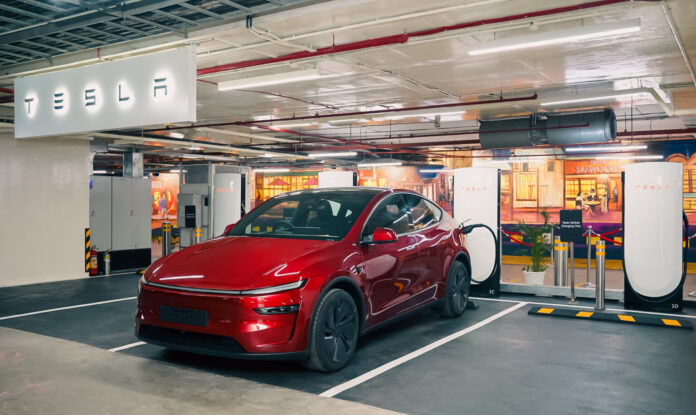
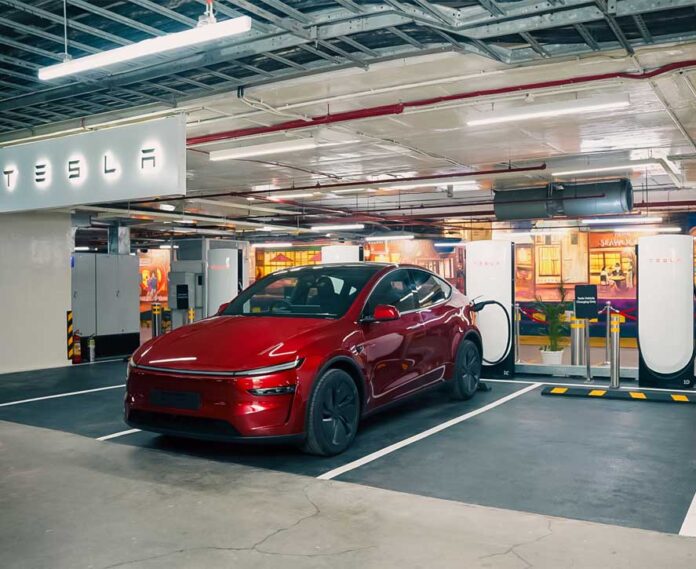
Tesla has strengthened its presence in India with the launch of its first in-store charging facility at Nexus Seawoods Mall in Navi Mumbai, marking a new step in building convenient and accessible electric vehicle infrastructure in the country.
The new charging station is located in the B1 parking lot of the mall and has a total of eight chargers, including four V4 super chargers that provide up to 250 kW fast DC charging and four destination chargers that provide 11 kW AC charging. This setup allows Tesla owners to choose between a quick top-up or a longer charge while shopping or at the mall.
The company says its superchargers can give Model Y a range of 275 kilometers in just 15 minutes, making long-distance travel more practical. Tesla’s integrated app ecosystem further enhances the experience by allowing users to seamlessly locate the charger, monitor charging progress and complete payment.
On this basis, Tesla currently operates four charging stations in India, with a total of 20 Superchargers and 14 destination charging stations. The move is part of Tesla’s broader strategy to expand its charging network in high-traffic locations such as shopping malls, highways and rest stops.
In addition to the charging stations, Tesla has opened a pop-up store in the mall’s main atrium, offering visitors the opportunity to explore its vehicles through guided tours, test drives and interactive product experiences.
The company said the move reinforces its commitment to making electric mobility more accessible in India. Tesla Model Y is currently available in India with a starting price of INR 59.89 lakh and comes with a home charging solution for a seamless ownership experience.
Tesla has announced the launch of its first in-mall charging station in India at Nexus Seawoods Mall, expanding its charging infrastructure in the country. The new facility, inaugurated on April 6, 2026, has a total of eight chargers, providing convenient charging access for Tesla owners in the Navi Mumbai area.
Located on the B1 parking level of the mall, the site includes four V4 Superchargers offering DC fast charging with a maximum speed of up to 250 kW, as well as four destination chargers offering 11 kW AC charging. This combination allows Tesla owners to choose between quick top-ups and long-term charging while shopping or spending time at the mall.
Using Tesla’s Supercharger network, the Tesla Model Y can achieve up to 275 km of driving range in approximately 15 minutes, enabling convenient intercity travel, including round trips between Navi Mumbai and Pune. Tesla’s “Plug in, Charge and Go” experience, backed by 99.95% uptime, aims to ensure seamless long-distance travel and everyday usability.
Through the Tesla app, users can navigate to charging locations, pre-condition the vehicle’s battery, check charger availability in real-time, monitor charging progress, receive completion notifications and make payments all within a single integrated platform.
With the Navi Mumbai facility, Tesla now operates four charging locations across India, collectively offering 20 Superchargers and 14 destination chargers:
In addition to the charging infrastructure, Tesla has also opened a pop-up experience store in the main atrium of Nexus Seawoods Mall. The pop-up allows visitors to explore Tesla vehicles through guided walkthroughs, in-depth product experiences and test drive opportunities. Customers can also learn more about Tesla’s electric vehicle technology, safety systems, performance capabilities and design philosophy.
This latest development reinforces Tesla’s commitment to building a strong EV charging ecosystem across India while expanding access to sustainable mobility in key retail destinations. Tesla Model Y is currently available in India at a starting price of ₹59,89,000, with home charging support provided to ensure a seamless ownership experience.
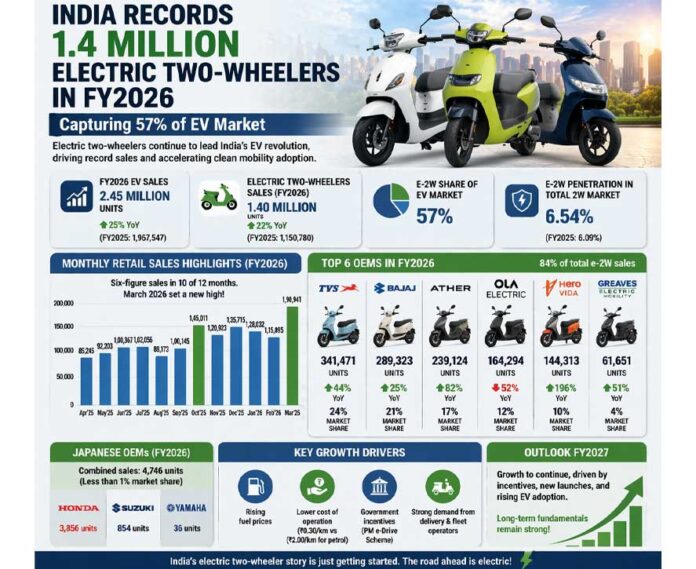
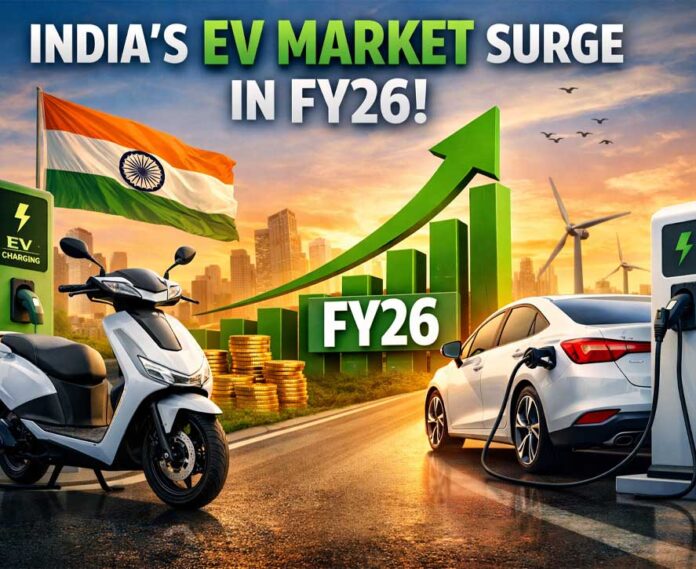
FY2026 has emerged as a landmark year for India’s electric vehicle industry with total EV retail sales crossing 2.45 million units, showing a 25% year-on-year growth as compared to 1.97 million units in FY2025. This surge was primarily driven by the electric two-wheeler (e-2W) segment, which has dominated India’s EV landscape.
According to Vahan portal data (April 1, 2026), 1.40 million electric two-wheelers were sold during FY2026, showing a growth of 22% from 1.15 million units in FY2025. This performance gave electric two-wheelers a 57% share of India’s total EV market, cementing their position as the backbone of India’s electric mobility transition.
Despite the price gap between petrol and electric two-wheelers narrowing after the GST transition in September 2025, demand remains resilient. The penetration of electric two-wheelers in India’s total two-wheeler market increased to 6.54% in FY2026 from 6.09% in FY2025. Rising petrol prices, low operating costs and increasing model availability continued to attract buyers.
The segment also benefited from growing demand in last-mile delivery, e-commerce and fleet operations, where low total cost of ownership (TCO) makes EVs particularly attractive. In particular, fleet operators are accelerating the adoption of electric vehicles due to their operational efficiency.
Top Electric Two-Wheeler OEMs in FY2026
The Indian e-2W market remained concentrated, with five manufacturers accounting for 84% of total sales. Among them:
TVS Motor took the lead
TVS Motor emerged as the new market leader in FY26, selling 341,471 units, up 44% year-on-year and capturing 24% market share. Strong demand for the iCube and Orbiter models along with the introduction of Battery-as-a-Service (BaaS) helped drive growth.
Bajaj Auto reaches number 2
Bajaj Auto took second position with 25% YoY growth to 289,323 units and 21% market share. The launch of Chetak C2501 contributed to its continued growth.
Ather Energy records fastest growth
Ather Energy recorded 239,124 units, marking 82% year-on-year growth and 17% market share. The Rizta family of scooters, which accounted for about 70% of sales, played a major role in the company’s expansion.
Ola Electric is seeing a huge decline
Former market leader Ola Electric experienced a significant decline, selling 164,294 units, down 52% year-on-year, reducing its market share to 12% and slipping to fourth place.
Hero MotoCorp’s Vida surge
Hero MotoCorp’s Vida brand posted 144,313 units, representing 196% year-on-year growth and capturing 10% market share. Strong demand for Vida VX2 drove this growth.
Greaves maintains electric mobility position
Greaves Electric Mobility ranked sixth with 61,651 units, up 51% year-on-year, supported by new product launches and growing demand.
Japanese OEMs are struggling to gain popularity
Japanese manufacturers Honda, Suzuki and Yamaha together sold only 4,746 electric scooters in FY26, highlighting the dominance of Indian manufacturers. Late entry, limited availability, and premium pricing contributed to its modest adoption.
Growth drivers in FY2026
Several factors accelerated the adoption of electric two-wheelers:
PM e-Drive scheme incentives, rising petrol prices, expansion of charging infrastructure, growing fleet and delivery demand, wide product portfolio across all price segments, low operating and maintenance costs
Electric two-wheelers typically cost ₹30 per kilometre, while petrol vehicles cost ₹2 per kilometre, making them increasingly attractive for both personal and business use.
FY2027 Outlook
While FY2026 has set a new benchmark, FY2027 growth will depend on:
Extension or withdrawal of government incentives, global oil price trends, new product launches, expansion into tier-2 and tier-3 markets.
Despite the uncertainties, strong fundamentals of low ownership costs, environmental benefits and growing consumer awareness suggest continued growth for India’s electric two-wheeler market.
India’s E-2W industry has demonstrated flexibility and momentum and firmly established electric mobility as a mainstream transportation option in the coming years.
For Tata Motors Passenger Cars, fiscal 2025-26 was not just another year, it was also one where everything seemed to be on track, with the company ending the year with an all-time high of over 640,000 units, a year-on-year growth of about 15%. This shows that the company is not just growing. It picked up speed, hit new highs, and solidified its position in a rapidly changing market.
But even more remarkable is how the year progressed. Like the broader industry, OEMs got off to a slow start in the first half. Subsequently, with the help of holiday demand and policy support, the company rebounded strongly in the second half of the year and quickly regained momentum. By the end of the year, it had become the second largest player in the market in the second half of the year, which shows how strong its comeback is.
Q4: The strongest thrust
The final quarter sealed the milestone, with the company recording its highest-ever quarterly sales of more than 200,000 units, a 37% year-over-year increase. Strong growth was seen in March alone, with total passenger car sales increasing by nearly 29%.
Central to its success lies its SUV range. Models like the Nexon and Punch emerged as the best-selling models, especially in the second half of the year. Their popularity shows a clear shift among Indian buyers towards SUVs. At the same time, it is also seeing good demand for its hatchback, proving that it still connects well with a wide range of customers. The launch of new products such as Sierra, updated Punch and petrol versions of Harrier and Safari have already attracted attention, adding to future growth potential.
Electric vehicles: a clear growth engine
If there is one area where Tata truly stands out, it is in electric vehicles, with sales of electric vehicles exceeding 92,000 units in fiscal 2026, an increase of 43%. In the fourth quarter alone, electric vehicle sales reached approximately 27,000 units, an increase of 69%. This suggests that EV adoption is no longer slow or uncertain. Customers are now more confident and Tata continues to lead the field.
CNG and multi-powertrain strategies pay off
In addition to electric vehicles, Tata CNG vehicles also experienced strong growth, with sales exceeding 170,000 units. This highlights an important shift – today’s customers want choice. Be it petrol, diesel, CNG or electric vehicles, Tata’s multi-powertrain strategy helps it maintain its leadership position in various segments.
beyond india
Another important development is Tata’s international business. Thanks to the company’s return to markets such as South Africa, sales exceeded 10,000 units. While still small compared to domestic sales, it signals future global ambitions.
Mr. Shailesh Chandra, Managing Director and CEO, Tata Motors Passenger Vehicles Ltd. said, “FY26 was a landmark year for Tata Motors Passenger Vehicles with multiple milestones. We achieved an all-time high annual sales of over 6.40 lakh units, achieved year-on-year growth of 15% and ended the year with strong positive momentum, as per second half Vahan registrations, becoming the second largest player in the industry. We also recorded strong international business volumes, driven by our re-entry into South Africa, with industry-leading performance in the CNG segment for our emissions-friendly powertrains, with sales of over 17 million units (up 24% year-over-year), and in electric vehicles, we further solidified our leadership position through our continued focus on strengthening our value proposition and comprehensively addressing adoption barriers, which resulted in our electric vehicle sales increasing 43% year-over-year to an all-time high of more than 92,000 units. In the fourth quarter of fiscal 2026, we achieved our highest quarterly sales ever, surpassing 200,000 units and achieving 37% Strong year-over-year growth also marked our highest ever electric vehicle sales, with sales of approximately 27,000 units, a significant year-over-year increase of 69%.”
The road ahead
Looking ahead, the outlook remains positive. The industry is expected to continue growing, driven by demand for SUVs, CNG and EVs. Tata Motors, with its strong product line-up and strategy, is well-positioned to build on the current momentum. However, there are concerns – not least the global uncertainty that could impact supply chains.
Rising fuel costs due to geopolitical tensions in the Middle East are accelerating electric vehicle (EV) adoption across the Asia-Pacific region, as consumers and businesses look for alternatives to petrol and diesel vehicles.
The ongoing US-Israeli conflict involving Iran has largely disrupted shipments through the Strait of Hormuz, a key global energy corridor that typically carries about a fifth of the world’s crude oil and liquefied natural gas. According to the International Energy Agency, the disruption is one of the largest supply shocks in recent history.
With more than 80 percent of crude oil destined for Asia passing through the strait, countries in the Asia-Pacific region are among the most affected, prompting governments, businesses and consumers to seek electric mobility solutions to manage rising fuel costs.
Australia sees rapid growth in EV interest
Australia has seen significant growth in demand for EVs. According to National Australia Bank (NAB), the country recorded a 100 per cent increase in EV loan applications in March, with an 88 per cent increase in EV-related loan inquiries from businesses.
Shane Ditcham, business banking executive at NAB, said businesses are increasingly looking to electrification to manage operating costs and hedge against fuel price volatility. Rising energy costs are expected to further accelerate EV adoption across Australia, where long-distance transport relies heavily on fuel-powered vehicles.
According to local reports, searches for EVs on major automotive websites in Australia have tripled in the past month, with more than half of Australians now considering purchasing an electric vehicle. Australian Prime Minister Anthony Albanese also highlighted growing consumer confidence in EV ownership.
Japan EV adoption picks up pace
Japan is also experiencing new momentum in EV adoption. Analysts say rising fuel prices, coupled with increased government subsidies, are encouraging consumers to move toward electric mobility.
The Japanese government has increased EV subsidies to 1.3 million yen per vehicle from January 2026. Additionally, Tesla CEO Elon Musk recently announced plans to expand Tesla’s service network and Supercharger infrastructure in Japan.
Despite this, battery electric vehicles currently account for less than 2 percent of total vehicle sales in Japan, partly due to the country’s strong hybrid vehicle adoption led by domestic automakers. However, analysts expect this trend to change as fuel prices continue to rise.
Record increase in EV registrations in New Zealand and South Korea
New Zealand recorded more than 1,000 EV registrations during the week ending March 22, almost double the previous week, the highest weekly registrations since the end of 2023.
South Korea has also seen a significant surge in EV adoption, with registrations more than doubling in March compared to last year. Increasing competition from global EV brands, rising fuel prices and government incentives are driving consumer interest.
Dealerships across South Korea have reported an increase in showroom visits and test drives as consumers consider switching to electric vehicles amid fuel price uncertainty.
Chinese EV makers benefit from regional demand
The growing demand for EVs across Asia-Pacific is proving beneficial for Chinese electric vehicle manufacturers looking to expand into export markets.
In China, electric and hybrid vehicles already account for more than 50 percent of total vehicle sales. Meanwhile, Chinese automaker BYD reported that overseas sales last year were 22.7 percent of total volume, rising to nearly 50 percent in the first two months of 2026.
BYD’s Malaysian distributor also reported increased inquiries in March, launching a targeted campaign for corporate and government buyers to boost access.
Thailand motor show highlights growing EV interest
The Bangkok International Motor Show also saw strong consumer interest in EVs, as fuel shortages and long queues at petrol stations prompted buyers to look for alternatives.
Visitors to the event cited rising fuel costs and ongoing geopolitical tensions as key reasons to consider electric vehicles, reflecting a broader shift in consumer sentiment across the region.
EV adoption accelerates amid uncertainty
Although the duration of the fuel crisis remains uncertain, analysts believe sustained high oil prices could further accelerate EV adoption in the Asia-Pacific region.
With governments increasing subsidies, automakers expanding EV line-ups, and consumers demanding lower operating costs, the current energy crisis could act as a turning point in the region’s transition toward electric mobility.
EV Charging Station Delhi: There is news of great relief for those driving electric vehicles in Delhi NCR. National Capital Region Transport Corporation has done this in Delhi-Meerut Namo Bharat Corridor.
Updated On:
Apr 04, 2026 | 11:51 AM
EV Charging (Source. Pixabay)
Namo Bharat Corridor: There is news of great relief for those driving electric vehicles in Delhi-NCR. National Capital Region Transport Corporation has started the country’s largest fast EV charging station at Anand Vihar station of Delhi-Meerut Namo Bharat Corridor. The objective of this initiative is to provide better facilities to the people and rapidly promote clean mobility.
10 vehicles will be fully charged simultaneously
The biggest feature of this new charging station is its capacity. 10 high-voltage charging units have been installed here, each with a capacity of 480 kilowatts. This means that now 10 electric cars can be easily charged at one time.
According to NCRTC, with the help of fast charger, the electric car can be charged up to 80 percent in just 30 minutes. The special thing is that here charging facility has been provided not only for cars but also for heavy commercial vehicles.
related news
The entire process will be easier with the mobile app
To use this facility, users will have to take help of ‘ElectreeFi’ mobile app. Through this app, every facility related to charging has become digital.
Users through the app:
You can book charging slots, do real time monitoring, and make digital payments.
However, for this, registration on the app will be necessary.
Facility now available at 8 stations
After the addition of this new facility, now EV charging facility is available at a total of 8 stations on the entire corridor. These include Sahibabad, Guldhar, Duhai, Muradnagar, Modinagar South, Modinagar North, Meerut South and Anand Vihar. Both fast and standard charging infrastructure has been created at all these places, which will provide more options to the users.
Also read: New Volkswagen Taigun will be launched, big reveal will be on April 9, equipped with great features
Direct benefit to middle class and passengers
Middle class families and those who travel daily will benefit the most from this initiative. Especially those people who use their electric vehicles to reach the station. With the availability of better charging facilities, people’s inclination towards EV will increase further, which will reduce the expenditure on petrol and diesel and will also benefit the environment.
Big step towards clean energy
NCRTC says it is continuously working to promote clean energy and sustainable urban transportation. In this direction, there is a plan to further strengthen the EV charging infrastructure along the corridor.
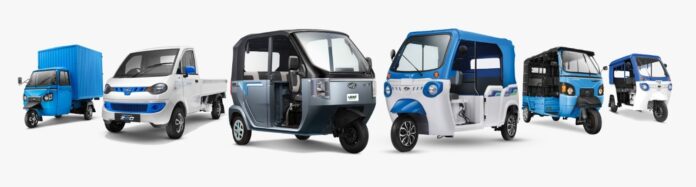
Mahindra Last Mile Mobility Limited (MLMML), India’s leading electric commercial vehicle manufacturer, continued its strong market leadership in FY26, consolidating its position as India’s number one electric commercial vehicle manufacturer for the fourth consecutive fiscal year.
This milestone reflects the trust of the many drivers and fleet owners who have chosen to embark on their entrepreneurial journey with MLMML. The company also crossed the milestone of 100,000 electric vehicle sales in a financial year. To date, MLMML has sold more than 340,000 electric vehicles.
MLMML has a strong presence in the L5 category with a market share of 39.7%. The company achieved several notable milestones in FY26, including:
• Electric vehicle sales exceeded 100,000 units in FY26, becoming the first commercial vehicle manufacturer to achieve this milestone • Completed over 6 billion kilometers cumulatively, reducing carbon emissions by approximately 240 metric tons, supporting India’s sustainable development goals
In FY26, MLMML expanded its product portfolio with the launch of the new Mahindra UDO. Developed based on customer insights, UDO features segment-first innovative features such as reverse throttle, aerodynamic design and a real-world driving range of 200 kilometers.
MLMML’s continued focus on innovation, reliability and sustainability puts it at the forefront of India’s last-mile electric mobility transformation.
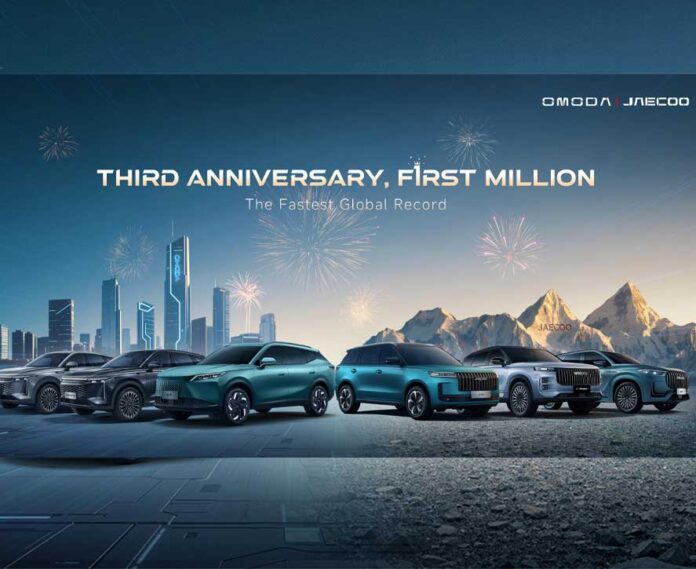
The global automotive industry is undergoing a major transformation, driven by advances in vehicle intelligence and the rapid shift toward new energy vehicles. Amid this changing landscape, OMODA and JAECOO – brands under the Chery Group – have emerged as one of the fastest growing global automotive players.
In less than three years, OMODA and JAECOO have expanded from a single market to 64 international markets, achieving cumulative global sales of more than 900,000 vehicles. This rapid expansion has established the brands as outstanding performers in the global automotive industry.
In April 2026, at the Beijing Auto Show, the brand is set to celebrate its third anniversary, as well as approaching a major milestone of one million global vehicle sales. The achievement highlights what the company describes as its “new momentum” growth strategy, driven by innovation, electrification and global market expansion.
This milestone underlines OMODA and JAECOO’s growing presence in the new energy and intelligent mobility sector, as the brands continue to strengthen their footprint in key global markets.
Technology at the Core: The Foundation of Global Core Capability
Covering 64 markets in less than three years required an exceptionally high level of product localization capability. OMODA and JAECOO’s confidence stems from the support of Chery Group’s global R&D system and core technological assets. Take the SHS super hybrid system as an example: the system has two main technology routes, PHEV and HEV, which provide three major strengths: super high power, super low efficiency, super long combined range. It can flexibly adapt to the regulations and usage scenarios of different markets, including Europe, Southeast Asia and Latin America. At present, it has been mass-produced and installed into a series of core models, providing efficient new energy solutions for global users.
Global Growth Pace: Million-Unit Acceleration Validated in Europe’s High-Barrier Markets
Actual growth momentum should be tested in the most competitive markets. In Europe, OMODA & JAECOO established its presence in 16 countries in just 2 years, and surpassed sales of 220,000 cumulative units. With the industry’s highest growth rates, the brand has become one of the fastest growing automotive brands in the European market. In the UK market, the pace is even more astonishing: the brand surpassed 2% market share in just nine months and reached the top ten in sales rankings within 17 months. Currently, the brand is set to enter key European markets such as France and Germany, achieving full coverage across the European market. From Europe to the world, every step of this “path to one million units” has been validated in markets with tight regulatory constraints. From Europe to around the world, the brand is entering the million-unit era with unstoppable momentum.
Partner Trust: Building a “Community of Shared Destiny” with global partners
This aggressive expansion is based not only on class-leading products and technology, but also on the deep trust built with global customers and partners. In less than three years, OMODA and JAECOO have built a global supply chain and service network, collaborating with local partners to establish a comprehensive operating system. According to official research in Spain (VCON 2025), OMODA & JAECOO is ranked as the most recognized brand among local dealers, earning a dealer satisfaction score of 9.9 out of 10. This achievement is based on dealer profit margins of 3.4% (double the market average), a local after-sales network covering 96% of the population and product competitiveness driven by the SHS hybrid system. It is dealers’ willingness to run with the brand that provides lasting support for this momentum.
Social Values: Balancing Business Growth with Social Responsibility
Amidst their tremendous growth, OMODA and JAECOO have proven through concrete action that rapid expansion and responsible management can go hand in hand. Upholding the corporate philosophy of “Being somewhere, for somewhere”, OMODA and JAECOO have launched a series of ESG initiatives to promote mutual prosperity with local communities. In Europe, the brand has partnered with the NGO “Plant a Tree” on tree planting projects, supported Lifegate’s “Water Guardians Alliance” in Italy, and collaborated with IUCN to protect Mediterranean Posidonia seagrass beds in Spain – a series of initiatives that create a systematic blueprint for environmental restoration and ecological health in the European market.
Rapid transformation: from automotive brand to technology enterprise
By continuously investing in R&D and pursuing the practical application of technological innovations, OMODA and JAECOO have long surpassed the scope of traditional vehicle manufacturers. In 2025, leveraging Chery Group’s technological foundation, brands made multiple breakthroughs in areas such as intelligent driving, smart cockpit, and new energy; The humanoid robot “Mornin” has been deployed in more than 30 countries and territories around the world, serving a wide range of settings including car dealerships, exhibition halls and commercial venues. It has multimodal interaction capabilities like narration, sales, guidance and quiz – a cutting-edge initiative jointly driven by OMODA & JAECOO and AiMOGA team. As the brand approaches the million-unit sales milestone, economies of scale are now fueling deep technological innovation, allowing the brand to evolve into a global, full-stack, self-developed technology enterprise.
From April 24 to 28, 2026, the Chery Global Partner Business Summit will kick off during the Beijing Auto Show, bringing together more than 3,000 industry partners, global dealers and supply chain elites. A series of third anniversary events at the summit – including the Beijing Auto Show Press Conference, New Million Strategy Launch and O4 Roll-Off Ceremony, HEV Long-Duration Test Marathon, Ecosystem Theme Summit and OMODA Night Music Festival – will all revolve around the same theme: After three years and one million units, where will the next wave of development come from?
This is not only an industry standout event for OMODA and JAECOO, but also a systematic demonstration of the logic behind “the world’s fastest growth rate”. A new era, a new leap. Join us at the Beijing Auto Show in April 2026 to witness this historic moment.
According to VAHAN portal data, India’s electric vehicle (EV) market witnessed strong growth in FY 2025-26, which got a significant push towards the end of the year along with strong demand in both electric two-wheelers (e2W) and electric four-wheelers (e4W).
Registrations of electric four-wheelers almost doubled, up 91.3 per cent year-on-year, to 1,93,633 units in FY2026, compared to 1,01,205 units in FY2025. The segment has seen steady growth over the past three years, registering 80,495 units in FY24. Meanwhile, electric two-wheelers recorded a healthy growth of 21.8 per cent, reaching 1.40 million units in FY2026, up from 1.15 million units in FY2025 and 9,48,586 units in FY24.
The pace of growth accelerated in the last quarter of the financial year. Between February and March 2026, sales of electric four-wheelers grew by 53.2 percent month-on-month, reaching 21,716 units from 14,177 units. Electric two-wheelers also registered a strong surge, growing 70.1 per cent from 1,08,357 units in February to 1,84,300 units in March. A strong base had already been established with sales of 18,875 e4W and 1,19,195 e2W in January, indicating sustained demand throughout the quarter before a sharp uptick in March.
Industry experts attribute the surge in FY26 to several structural factors. The expansion of charging infrastructure, increasing availability of feature-rich models across all price segments and improved supply chains enabling faster deliveries played a significant role. Additionally, better financing options, falling battery costs, and increasing localization efforts helped make EVs more affordable. Year-end dispatches and dealer-level incentives in Q4 supported higher volumes.
This increase coincides with growing global uncertainties, particularly tensions in West Asia, which contributed to price volatility and encouraged consumers to seek electric mobility options.
According to Anurag Singh, Managing Director, Primus Partners, the electric two-wheeler market is entering a more mature phase. He said that despite the gradual reduction in subsidies, e2W market share reached about 9 per cent in FY26, from about 6.3 per cent in FY25. He also highlighted the improved production capacity and better engineered models entering the market.
Rajat Mahajan, partner, Deloitte India, said the EV sector gained strong momentum in FY2026 due to rising demand for feature-rich vehicles, improving infrastructure and consistent product launches by original equipment manufacturers. Disruptions in fossil fuel supplies also encouraged customers to move toward electric vehicles, he said.
Policy support also played an important role in sustaining growth. These include continued low GST rates for EVs, improved financing access and extension of the PM e‑Drive scheme for electric two-wheelers till July 31, 2026.
Looking to the future, experts expect the penetration of EVs to continue to grow alongside petrol-powered vehicles. However, fluctuations in crude oil prices can affect demand patterns, as higher oil prices strengthen the case for electrification but can also increase logistics and input costs in the supply chain.
As FY27 begins, industry stakeholders remain optimistic, although the pace of demand growth will depend on fuel prices, policy continuity, infrastructure expansion and new product launches.
TSUYO Manufacturing has appointed Naveen Kumar Amar, former CFO of SpiceXpress, as Senior Vice President – Finance with effect from April 1, 2026.
This appointment brings an experienced global finance leader with extensive expertise in financial strategy, business transformation and operational excellence. TSUYO said Amar’s leadership will be instrumental in strengthening its financial operations as the company accelerates growth in the electric mobility and powertrain solutions sector.
With a strong background in financial planning, corporate governance and operational efficiency, Amar has over two decades of experience in capital-intensive industries. Before joining TSUYO, he served as the Chief Financial Officer at SpiceExpress, the cargo and logistics arm of SpiceJet, where he played a key role in financial restructuring, cost optimization and business expansion in a highly competitive market.
During his tenure, Amar also led several domestic and international fundraising initiatives in equity and debt instruments. He led digital transformation initiatives, leveraging technology to streamline operations and improve financial and operational efficiency across the organization.
Commenting on his appointment, Naveen Kumar Amar, Senior Vice President – Finance, Tsuyo, said: “I am excited to join Tsuyo at a key moment in its growth journey, as the company grows its manufacturing capabilities and strengthens its position in India’s evolving electric mobility ecosystem. With experience across diverse, capital-intensive sectors, I see immense opportunity in building a financially disciplined, execution-focused organization that can sustain high growth over the long term.” The focus on deep convergence of technology, localization and large-scale manufacturing presents a unique platform to create sustainable value. I look forward to partnering with the leadership team to enable Tsuyo’s ambition to become a globally acclaimed EV powertrain company.
At Tsuyo, Amar will be responsible for leading the financial planning, capital allocation and governance framework as the company continues to grow its manufacturing capabilities and deepen investments in EV powertrain technologies. The appointment comes as a strategic development as Tsuyo accelerates its growth plans, which include investment in advanced manufacturing infrastructure and localization of key EV components, to position itself within India’s evolving electric mobility supply chain.
Tsuyo’s leadership team welcomed Naveen Kumar Amar and said his appointment strengthens his ability to align capital strategy with long-term business objectives.
As part of its ongoing expansion and scale-up journey, Tsuyo has recently received single window clearance approval from the Government of Karnataka for a proposed 20-acre EV powertrain manufacturing and verification complex in the Dharwad-Hubli region.
This upcoming facility will serve as a key hub for design, development, testing and large-scale manufacturing of EV powertrain components, reinforcing Tsuyo’s commitment to strengthening India’s domestic EV ecosystem and reducing dependence on imports.
Last month, the company also announced the launch of next-generation electric motor and powertrain technologies with improved performance and efficiency, giving a big boost to India’s electric light commercial vehicle markets. The new portfolio highlights TSUYO’s emphasis on superior performance, modular product design, intensive engineering and Make-in-India innovation.