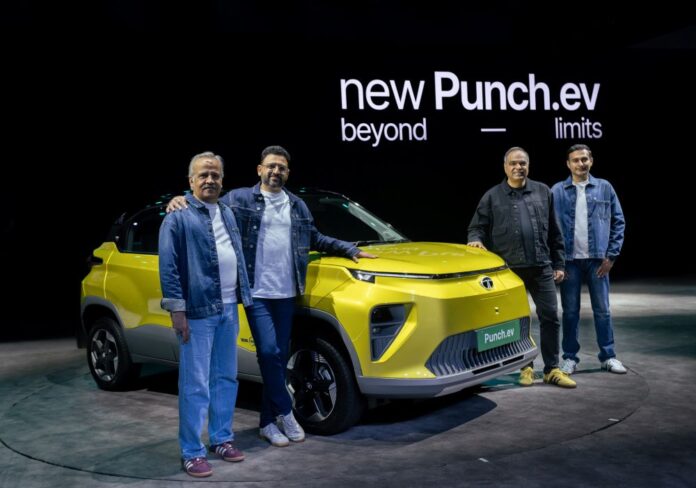
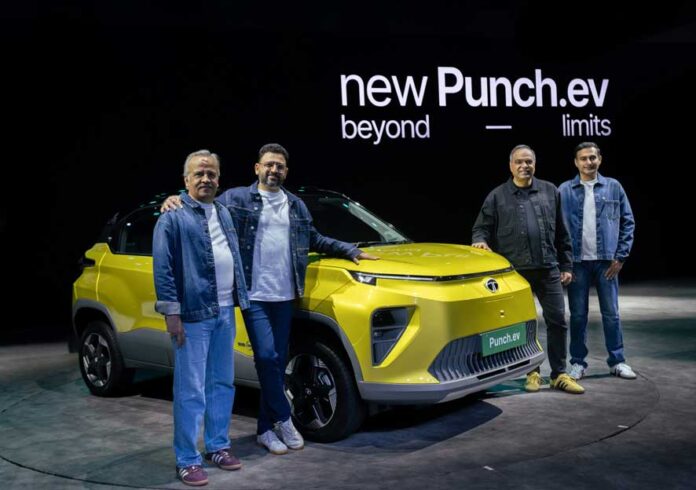
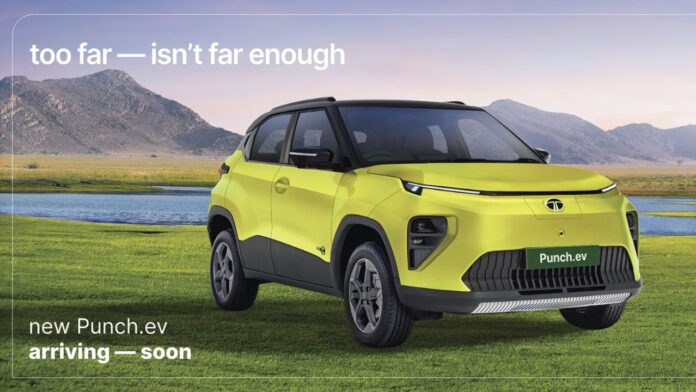
TATA.ev, India’s leading zero-emission mobility brand, today launched the new Punch.ev, a comprehensive upgrade of its popular electric SUV. Positioned as a breakthrough in entry-level electric vehicles, the new Punch.ev directly addresses the four major barriers to mainstream EV ownership: affordability, practical range, charging convenience and long-term battery guarantee.
The new Punch.ev is built on Tata’s advanced acti.ev architecture, reinforcing the company’s leadership in the compact electric SUV segment. Not only is it designed to be an ideal first electric car for new adopters, but it is also a compelling first family car for Indian families. This model continues Punch’s long tradition of pioneering the subcompact SUV category.
At the heart of the upgrade is a larger 40 kWh LFP prismatic battery pack that delivers approximately 355 kilometers of actual C75 range and 468 kilometers of ARAI-certified combined (P1 + P2) range. Tata will also offer a 30 kWh battery option to provide customers with flexibility based on usage. Together, these options are designed to ease the transition from internal combustion engine vehicles by delivering lower running costs, smoother performance and reliable long-distance capability on a single charge.
Charging performance has also taken a significant leap forward. With fast charging support, the battery can be charged from 20% to 80% in just 26 minutes. A quick 15-minute top-up adds around 135 kilometers of real-world range – ideal for short breaks during motorway journeys.
The new Punch.ev solves one of the biggest concerns about first-time electric car buyers and also comes with a lifetime high-voltage battery warranty (unlimited kilometers), giving long-term peace of mind on the vehicle’s most critical components.
TATA.ev’s rapidly expanding charging ecosystem continues to enhance Punch.ev’s appeal. The brand currently supports more than 230,000 charging points in 1,500 cities, including more than 30,000 public charging points aggregated through 30 charging point operators. The IRA.ev app provides real-time charger availability and payments, while the curated “.ev Verified” network provides high reliability to more than 2,500 fast chargers in 500 cities. Tata’s mega charging centers now have more than 450 ultra-fast charging points on 80 highways, with a target of 800 by FY26.
Punch.ev is priced at an introductory price of Rs 9.69 lakh (ex-showroom, Mumbai) and also offers a battery-as-a-service option starting at Rs 6.49 lakh. With a battery EMI of Rs 2.6/km, the cost of ownership is close to that of its ICE counterparts in the small car segment.
Speaking at the launch, Mr. Shailesh Chandra, Managing Director, Tata Motors Passenger Vehicles Ltd. and Tata Passenger Electric Vehicles Ltd. said, “The new Punch.ev makes electric vehicles truly accessible, practical and hassle-free for every home. With an actual range of approximately 355 km, fast charging capability, high-voltage battery lifetime warranty and a highly accessible price point, it addresses the core issues that have hitherto prevented customers from choosing entry-level electric vehicles as their primary vehicle. The new Punch.ev Bringing together all the needs of customers for their favorite cars for daily and long-distance journeys, it marks a major leap in the democratization of electric mobility in India.”
According to MathWorks, bidirectional charging is transforming electric vehicles into flexible energy assets, allowing power to flow in and out of the vehicle. As renewable energy expands, this capability helps the grid store surplus power and intelligently release it when demand peaks.
For years, electric car batteries had only one job: to move the vehicle. Once the vehicle is parked, the powerful battery sits idle. Today, that’s starting to change.
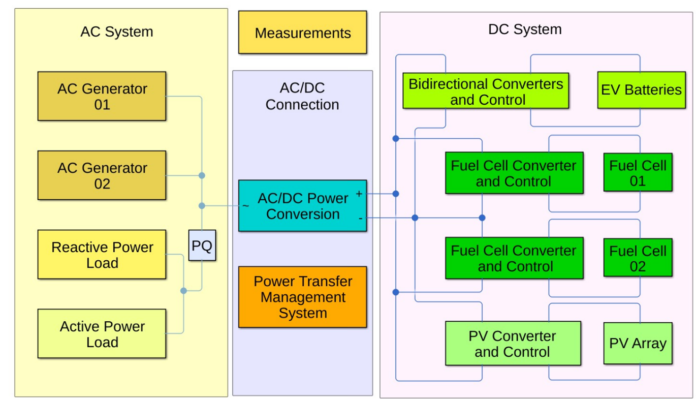
Bidirectional charging is transforming electric vehicles into flexible energy assets. It allows electricity to flow not only into vehicles, but back into homes, buildings, and even the grid. This is important because renewable energy is growing rapidly and the grid needs smart ways to store and release power when demand increases. Graham Dudgeon, senior principal product manager for electrical technology at MathWorks, said electric vehicle batteries can help smooth peak loads, stabilize the grid and even provide emergency backup during power outages.
Mr Dudgeon told the publication that stationary EV batteries were “an unused asset that has real value”. Bidirectional chargers unlock this value by allowing energy to flow in both directions—charging the battery when it’s full and sending it back when it’s needed most. This simple switch transforms chargers into key enablers of vehicle-to-grid systems, accelerating the adoption of clean energy while redefining the uses of electric vehicles beyond the road.
Balancing the grid without delaying drivers
A common concern about vehicle-to-grid systems is simple: What if the car releases too much power and isn’t ready when the driver needs it? After all, people want enough power for short city trips as well as long-distance trips.
This is where scale and intelligent control change the game. When millions of electric vehicles are connected, they act like a virtual power plant. “The goal is not to deplete individual vehicles, but to optimize the system. Power can be fed back to the grid to reduce peak demand, while still ensuring each vehicle is fully charged when unplugged. This balance is achieved through optimization rules built into the charging system, benefiting both the grid and the driver,” he explains.
This is where MathWorks plays a key role. Its strength lies in model-based design, which introduces simulation into the development process from the beginning. Whether engineers are designing a bidirectional charger or managing thousands of electric vehicles as a system, simulation can help answer critical questions early. With system modeling, control design, optimization, and statistical tools, MathWorks enables automakers, power equipment companies, and utilities to intelligently orchestrate electric vehicles and transform complexity into viable, reliable energy solutions.
Designing for India’s real-world grid
Markets like India present a unique set of challenges for bidirectional charging. Grid quality varies from state to state, policies are still evolving, and power parameters such as frequency and voltage must be kept within tight limits to ensure stability. Even small deviations can affect power quality for everyone connected to the grid.
This broad combination of conditions is what engineers call a design space—the real-life environment in which the technology must work. Grid frequency, voltage tolerances, policy rules and infrastructure maturity all become part of this space. “From a global perspective, the design space can look very different in different countries,” and India is at the more complex end of the spectrum, he explains.
This is where MathWorks comes in. Its simulation tools help engineers explore these variables early in the design phase and test how systems behave under different grid conditions. The goal is simple: build confidence that the design will meet power quality requirements and still work reliably in areas with unbalanced infrastructure.
business economics
The same thinking extends to the business side. Investing in bidirectional charging is not just an engineering decision but a techno-economic one. Automakers, charger suppliers, utilities and public stakeholders all need to be involved in this process. Engineers can combine technical models with economic assumptions and use optimization tools to evaluate performance and returns together, rather than guessing at returns. The result, he noted, is not a one-size-fits-all answer, but rather a specific view of the system that works best technically and financially for a given market.
Does bidirectional charging make sense in a multi-fuel future?
India’s electrification story is very different from many global markets. Two-wheelers and three-wheelers are electrifying quickly, while cars will take longer. At the same time, automakers are not betting on one solution. They are developing multiple fuel pathways in parallel – electricity, LNG, biofuels, hydrogen and more – all with one goal: lower emissions.
In this combination, bidirectional charging cannot be viewed in isolation. According to him, from an energy systems perspective, it becomes part of a larger puzzle. Utility and infrastructure planners have to ask not just whether charging can help, but whether it still makes sense in combination with many other technologies. It’s a layered issue, with each technology situated within a broader energy pyramid and having to prove its value alongside other technologies.
Another key issue is battery life. Using EV batteries to support the grid means more charge and discharge cycles, which shortens battery life. But biking is only one factor. Batteries also age with time and heat. This turns the problem into a battery management challenge rather than a deal-breaker, he observed.
With the right controls, impacts can be managed. How much energy is consumed, how quickly it is consumed, and how well the battery cools—these are all important. These variables can be adjusted using optimization methods and smart battery management strategies. MathWorks’ tools allow engineers to study these trade-offs and reduce degradation, ensuring batteries provide value to the grid and users without compromising long-term reliability.
Save time, cost and risk with simulation
Mr Dudgeon said that in complex technologies such as bi-directional charging, errors caught late could be very costly. This, he adds, is a significant advantage of MathWorks. Its core strength is model-based design—introducing simulation into the process from the first stages of development and using simulation throughout. Engineers build a simulation model early and then refine it as the system becomes more complex. The model becomes a shared reference across teams, reducing deviations and rework; because design issues are discovered in simulation, many are resolved before any hardware is built. MathWorks also supports control system development and automatic code generation, allowing tested algorithms to be deployed directly to real processors. The result is faster development, lower costs and lower risk, giving engineers confidence that the system they deliver is the best version possible.
build confidence
The core value of MathWorks is to help engineers make the right decisions early. By using model-based design, simulation becomes the foundation of development rather than an afterthought. A single, evolving model can guide teams from concept to deployment, helping them catch errors before hardware is built, coordinate across functions, and reduce costly late-stage changes.
With support for control design and automatic code generation, ideas tested in simulation can be smoothly transferred to real systems. For companies working on complex technologies like bidirectional charging, this approach can save time, reduce costs, reduce risk and, most importantly, build confidence that the final system will work as expected in the real world.
TATA.ev, the electric mobility arm of Tata Motors, has unveiled the new avatar of punch.ev, marking a significant step towards mass adoption of electric vehicles in India. Designed to democratize entry-level electric mobility, the updated Punch.EV addresses key customer concerns regarding affordability, range confidence, charging accessibility and battery assurance.
Offered at an attractive starting price of ₹9.69 lakh (ex-showroom, Mumbai), the new Punch.EV aims to bring EV ownership in the entry-level small car segment closer to price parity with internal combustion engine (ICE) vehicles. Customers will also have an optional Battery-as-a-Service (BaaS) financing option available, starting at ₹6.49 lakh, with battery subscription cost at ₹2.6 per kilometre.
Commenting on the launch, Shailesh Chandra, Managing Director, Tata Motors Passenger Vehicles Limited and Tata Passenger Electric Mobility Limited, said that the new Punch.EV makes electric mobility more accessible and worry-free for households. With an estimated real-world driving range of approximately 355 km, fast charging capability and lifetime high-voltage battery warranty, the vehicle aims to eliminate the major barriers preventing customers from choosing EVs as their primary cars.
Built on advanced EV architecture
Developed on Tata’s acti.ev platform, punch.ev strengthens the brand’s electric SUV portfolio, building on the popularity of the Punch nameplate in the sub-compact SUV category. The vehicle targets first-time EV buyers as well as families seeking a practical and affordable electric mobility solution.
Better range and battery options
The new Punch.EV features a larger 40 kWh LFP prismatic battery pack that delivers an estimated real-world C75 range of approximately 355 km and an ARAI-certified range of 468 km under combined test conditions. The model will also be available with a new 30 kWh battery pack option, providing customers with greater flexibility based on driving needs and budget.
Designed for both daily urban commutes and intercity travel, the extended battery options aim to reduce charging frequency while providing lower running and maintenance costs than conventional vehicles.
Fast Charging and Ownership Assurance
Supporting fast-charging capability, the battery can charge from 20% to 80% in about 26 minutes under tested conditions. A quick 15-minute charge can add about 135km of driving range in the real world, providing convenient long-distance travel breaks.
To further enhance ownership confidence, the 40 kWh variant comes with a lifetime high-voltage battery warranty of unlimited kilometers for the first owner, providing long-term assurance about battery performance and durability.
Expanding charging ecosystem
TATA.ev continues to strengthen charging infrastructure across the country, with access to over 2.3 lakh charging points across 1,500 cities through home, community and public charging partnerships. The company has aggregated over 30,000 public chargers in collaboration with over 30 charge point operators.
Customers can monitor charger availability in real-time and complete end-to-end payments through the IRA.ev app. The brand’s curated “.ev Verified” network includes over 2,500 fast and reliable charging points across 500 cities and towns. Additionally, India’s largest superfast EV charging network established by TATA.ev currently spans over 450 charging points across 130 mega charging hubs across 80 highways, with plans to expand to 800 charging points by FY26.
Available in three variants – Smart, Adventure and Empowered – the new Punch.EV combines practicality, technology and affordability, reinforcing Tata’s ambition to make electric mobility a mainstream choice for Indian consumers.
Long Range Suv In A Low Budget New Tata Punch Ev Facelift Launched For ₹ 969 Lakh Now With A Range Of Up To 468km – Long Range Suv In A Low Budget, New Tata Punch Ev Facelift Launched For ₹ 9.69 Lakh, Will Now Run Up To 468KM
Hindi News »
automobile »
Long Range Suv In A Low Budget New Tata Punch Ev Facelift Launched For ₹969 Lakh Now With A Range Of Up To 468km
The car demonstrates how thoughtful engineering can deliver more without going overboard, while keeping ownership costs under control.
The story of the new Punch.ev. is really a narrative of clever, practical engineering—the kind that solves real problems without making the car heavier, more expensive, or less safe.
Customers want greater range, faster charging and better everyday efficiency. Mr Anand Kulkarni, Chief Product Officer, High Voltage Projects and Customer Care, Tata Passenger Electric Vehicles, told this publication that the engineering team went back to the drawing board and a quiet but steady transformation ensued.
According to him, the first requirement was simple: give the car more range. Therefore, the team added approximately 6.5kWh of additional battery capacity. It chose LFP chemistry for clear reasons: It offers long life, strong thermal stability and high safety without increasing cost. Then came the rethinking of packaging. By optimizing the arrangement of the cells, engineers increased energy density by 10% and usable capacity by 15%, enough to accommodate a 40 kWh battery pack without significantly increasing weight.
This is made possible by the shift to prismatic cells, allowing for tighter integration and better space utilization. The cooling system has also been redesigned. A plate cooling system now maintains uniform temperatures throughout the battery pack, while a segment-first electronically controlled thermostatic expansion valve (ETXV) fine-tunes refrigerant flow for more precise and efficient thermal control. Together, these changes enable the battery to maintain full fast-charging capability even when outdoor temperatures reach 45°C, an essential feature in real-world conditions in India.
Generally, a higher capacity battery should make the car heavier. But instead, it maintains the same weight because “we redesigned the electric drive unit, the core of the electric car. We integrated the motor, controller, gearbox and several other components into a compact unit – the acti.ev architecture. This single change saved nearly 50 kilograms, freed up valuable space and made the electric car significantly more efficient,” he said. This weight reduction offsets the additional battery weight, so the overall weight of the car remains the same. Additionally, the vehicle achieves an efficient battery size-to-footprint ratio thanks to smart battery packaging and rigorously optimized floor integration, explained Mr. Kulkarni.
A giant leap in real-world driving distance “So the E-drive itself is about 5% more efficient; plus the extra capacity of the battery, we’re able to achieve a real-life improvement of almost 20%,” he said. The cruising range of early models was about 280-290 kilometers. The upgraded version now has a cruising range of about 335-355 kilometers. He said this is enough to meet about 95% of daily driving needs in India without any need to worry.
Despite the upgrades, what’s really important is how it feels on the road. The new 40 kWh battery pack is currently tested for a range of 468 kilometers. Even the smaller battery benefits from these improvements, with a range of 365 kilometers on the P1/P2 cycle and 265-280 kilometers usable in real-world conditions, making both versions more versatile than before.
For those rare long trips, fast charging has also been improved. In just 15 minutes, the car can travel about 130-135 kilometers. After a short rest, “you can even complete a 500-kilometer trip easily,” he said.
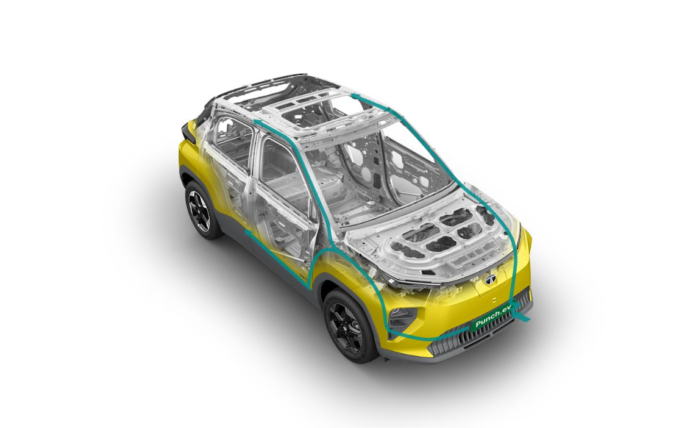
Even with all the changes, the car is still as safe as ever. This is due to enhanced structural safety through reinforced crush areas, engineered energy absorption paths, and strong electrical isolation throughout the battery system. Early models received a 5-star BNCAP rating, and newer versions have achieved the same standard. He noted that since the weight and structure remain stable, “rigidity or crash performance will not be affected.”
Advanced engineering, not higher costs
Today’s customers expect more power, longer range and more cabin space, all without a significant increase in cost. Achieving this balance is obviously a complex engineering and business challenge – achieving all these improvements without making the car expensive.
Mr. Kulkarni said: “The equation of capability has to be achieved at lower cost. Because the equation of getting more capability for more money is simple, but what is the disruption in it? So to achieve this, we made changes to the battery and electric drive.” The team achieved this through smarter battery design, integrated drive units and targeted cost optimization of non-battery components. Additionally, past experience helped refine several elements while keeping structural safety and rigidity intact. “It all adds up to a car that’s a great value but doesn’t cost a lot,” he explains.
“When the Punch EV debuted more than two years ago, it was built on one of the most structurally stiff platforms in its class – with levels of stiffness comparable to what you’d typically see in a luxury car,” he said. This inherent stiffness gives the vehicle a planted, confident feel, filtering out road disturbances and ensuring remarkable stability. In the latest upgrade, the redistribution of weight changes the balance by just 1%, leaving it almost at a 50:50 balance. As a result, no major structural changes or additional protective components are required, a fact further confirmed by the new BNCAP five-star certification, he said.
Get ready for the future of driver assistance The updated model also has improved ADAS functionality, making it behave more like a calm, helpful co-pilot rather than an aggressive one. Mr. Kulkarni concluded that the system reflects the authentic Indian driving style, which is the first thing customers appreciate in the Harrier EV.
For decades, automakers have competed over engines, performance and design. Today, the real battleground is software—each OEM’s new signature.
A seismic shift is quietly taking place in the automotive world, with Dr. Arunkumar Sampath, principal consultant and global head of SDV and eVTOL, aircraft, TCS, calling it one of the biggest shifts the industry has ever seen. Cars are no longer designed to be just mechanical machines, they are becoming software-driven products that can learn, upgrade and evolve long after they leave the factory.
For years, automakers have competed on engines, performance and design. Today, software is becoming a real differentiator, he said. Global brands already make money from on-demand features, and at events like CES, nearly every new car shown is built around a digital experience. Dr Sampath pointed out that while markets like the US and Europe are growing rapidly, India – currently the world’s third-largest auto market – faces its own unique software challenges with its mix of two-wheelers, three-wheelers and passenger cars.
new architecture
To adapt to this shift, the industry is witnessing “an evolution of ecosystems, from a vertical top-down approach to a so-called collaborative approach,” he said. OEMs and suppliers now work side by side, sometimes as partners rather than in traditional hierarchies. Car electrical systems are also changing – instead of dozens of small control units scattered throughout, hybrid architecture combines on-board computing with cloud-based systems. He noted that this is critical for speed, performance and security.
Some companies want complete control, building their own operating systems and cloud environments. Others prefer a more open, shared platform approach. But regardless of strategy, everyone is moving toward service-oriented architecture—software that can be updated, reused, and deployed anywhere in the world while still meeting regional needs.
Artificial intelligence is everywhere
“If you are building a software-defined vehicle (SDV), obviously you need someone to work on smart cockpits, ADAS systems, hyper-personalization, regulatory standards, software, bill of materials, etc. This is actually where AI agents help. In fact, TCS has come up with a number of different agents as well. We work closely with different automotive players; we showcased some of these solutions at the recently concluded CES. So, what you notice here is basically that you can define AI agents to perform specific tasks,” he noted.
Dr. Sampath said artificial intelligence is becoming the backbone of this new automotive world. Professional AI agents manage everything from cockpit functions to ADAS, safety, compliance and driver behavior. Multi-agent systems allow different AI modules to work together to quickly learn and handle complex traffic situations – which is especially important in a country like India where road behavior changes rapidly.
The industry is also “exploring the idea of using humanoid drivers as in-car surrogates to replicate human behavior and collect real-world road data. There is also growing interest in using humanoid robots to collect real-world driving data for autonomous training. Through (large language model) LLM-driven interfaces, vehicles will understand the world around them like humans do, helping them react better in chaotic traffic,” clarifies.
Build faster and with better quality
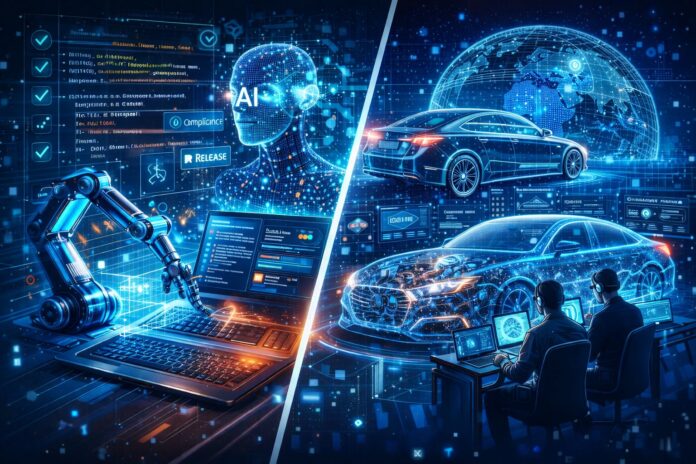
To keep up with the pace of innovation, automotive development processes are now highly automated. AI can generate code, check compliance, fix bugs and speed up the release process. Digital twins – virtual replicas of components or complete vehicles – allow teams around the world to test, refine and validate systems without having to wait months for a prototype.
This also enables predictive maintenance, allowing the vehicle to monitor its own health like a fitness tracker. Federated learning helps personalize vehicle behavior without exposing private data, making it easier for fleet customers and shared mobility providers to safely optimize performance.
Software Bill of Materials (SBoM) ensures that every line of code is traceable. He said that in a complex global ecosystem, such transparency helps in diagnosing problems immediately, just like how ISRO recovers quickly from an aborted rocket launch as every component is digitally traceable.
what happens next
The shift to software-defined vehicles is now permanent and accelerating. Artificial intelligence, digital twins, new software architectures and data-driven development are rewriting how cars are made and how they behave.
The future is even more transformative: connected cars, deeper vehicle-to-vehicle communications, real-time safety networks, and national records for unifying data to enable faster development and safer mobility. He noted that India’s own digital infrastructure – from the Vahan database to the upcoming battery passport – will play an important role in this evolution.
In this new era, cars are no longer just machines. He concluded that they will be intelligent digital systems – always learning, always updating, always connected.
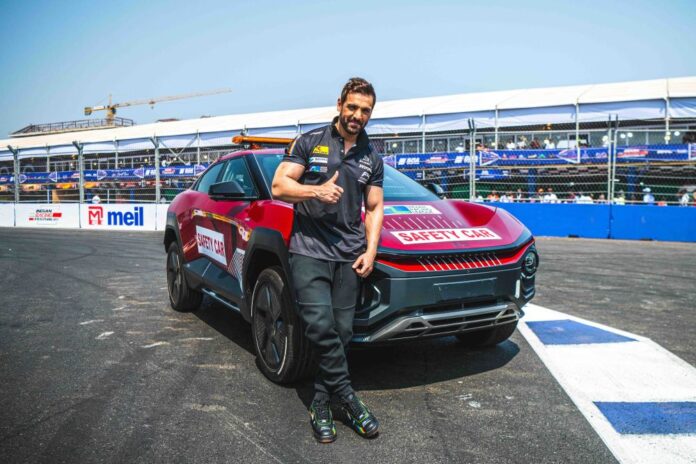
Mahindra BE 6 Formula E Edition serves as the official safety car for the IRL Goa Street Race (Round 4 of the 2025-26 season), marking the league’s first street circuit in Goa.
Based on Mahindra’s INGLO platform and inspired by Mahindra’s ABB FIA Formula E World Championship journey, the BE 6 Formula E Edition blends racing styling, precision engineering and advanced electric vehicle technology to truly embody its philosophy: inspired by the track. Built for the city.
The safety car is equipped with a 79 kWh battery pack with a claimed range of over 680 kilometers (MIDC), delivering 282 hp and 380 Nm of torque.
John Abraham, owner of Aces JA Racing in Goa, experienced a lap of the car and appreciated its performance and Race to Road vision.
The BE 6’s IRL debut comes amid a strong performance by Mahindra Racing in the ongoing Formula E season.
As India’s electric commercial vehicle ecosystem gains momentum, localization and supply chain flexibility are emerging as decisive differentiators for long-term competitiveness. In this exclusive email conversation with Autoguide, Gaurav Kumar, Head of Supply Chain and Manufacturing and Director on the Board of Euler Motors, shares insights on how the company is building a deeply localised, future-ready EV supply chain.
From achieving 95% vehicle-level localization to developing one of India’s most affordable 1-tonne electric commercial vehicles, Kumar explains how strategic supplier partnerships, in-house engineering and disciplined manufacturing processes are enabling Euler Motors to balance cost competitiveness with performance and safety. They also discussed the emerging EV supply chain landscape, alignment with government initiatives and what lies ahead for India’s electric commercial mobility ecosystem.
Euler Motors has often highlighted deep localization as a cornerstone of its growth strategy. How has this approach helped you achieve cost competitiveness while maintaining performance and safety standards?
Localization is not just a strategy for us; This is a core belief. From day one, we have partnered with local suppliers, sharing knowledge and technical expertise to co-manufacture finished components for electric vehicles. Today, 95% of our vehicle components and 90% of battery packs are locally sourced. This significantly reduces the risk of import dependence, logistics costs and global supply chain instability, enabling stronger cost competitiveness at scale.
Also, it allows us to engineer vehicles that are built for Indian operating conditions. For example, our recently launched Turbo EV 1000, a 1 tonne 4W ECV, is one of the most deeply localized electric commercial vehicles in its category, which is not only assembled in India but actually engineered and manufactured here. The battery system is designed to last longer than EMIs, improving total cost of ownership and higher returns for fleet operators, while magnet-free motor technology reduces reliance on rare-earth materials, ensuring cost sustainability without compromising efficiency or durability.
By building critical systems in-house and localizing manufacturing, we have developed commercial EVs that match ICE vehicles in performance, payload capacity and safety standards while remaining commercially competitive.
What were the key challenges in developing a strong domestic supplier base for electric commercial vehicles and how did Euler Motors overcome them?
One of the initial challenges in building a domestic supply base for commercial EVs was that many advanced components were not originally developed in India. Many suppliers had adopted technology from abroad, and EV-specific manufacturing capabilities were still developing. This led to a decrease in initial quality and consistency of the process as localization began.
To address this, we worked closely with suppliers and co-created most of the designs rather than sourcing standard off-the-shelf parts. We supported them in manufacturing these components in-house. To ensure quality and reliability, we implemented structured processes such as DFMEA (Design Failure Mode and Effects Analysis) and PPAP (Production Part Approval Process) along with digital verification and process efficiency checks at supplier facilities. We also adopted a controlled deployment approach, testing components in limited initial production batches to identify problems and resolve them quickly before scaling. Over time, this structured and collaborative approach has helped us build a resilient domestic ecosystem of over 300 local partners who have grown with us, creating a stable and scalable EV supply chain.
Creating the world’s most economical 1 tonne electric mini truck is a significant milestone. What design, sourcing or manufacturing decision played the most important role in achieving this?
The Turbo EV 1000 is a confluence of deep engineering innovation and the practical needs of India’s logistics industry. From a design perspective, one of the most important choices was the chassis architecture. Instead of traditional pressed sheet metal, we adopted a tubular box-section frame, which provides high rigidity and torsional strength, allowing the vehicle to carry a one-tonne payload with an additional 200-300 kg of battery weight without compromising stability or safety. The use of front leaf suspension further improves loadability and serviceability for Indian operating conditions.
It was equally important to build the vehicle from the ground-up rather than retrofit the ICE model. Almost all key systems including battery pack, battery management system, motor controller, vehicle control unit and telematics are designed and manufactured in India. This level of localization and vertical integration enables tight cost control and integration in engineering and production, allowing us to achieve price parity with diesel vehicles while maintaining strength, durability and performance.
How aligned is Euler Motors’ localization roadmap with the Make in India and PLI initiatives of the Government of India for advanced automotive technologies?
Our localization roadmap is completely in line with Make in India and PLI objectives. With approximately 95 percent localization at the vehicle level and approximately 90 percent localization at the battery pack level excluding cells, we have already met and exceeded the current localization threshold. These initiatives encourage exactly the kind of supplier collaboration, in-house capacity building and advanced manufacturing that we have focused on from day one. Policy support has helped accelerate ecosystem development, enable scale, improve supplier maturity and strengthen the long-term competitiveness of India’s EV industry.
How does the EV supply chain differ from traditional ICE commercial vehicles, particularly in areas such as power electronics, batteries and drivetrains?
The EV supply chain differs significantly from traditional ICE commercial vehicles in both component architecture and technical complexity. While ICE supply chains are centered around mechanical systems such as engines, transmissions, fuel systems and exhaust assemblies built over decades, EV supply chains are far more electronics and software-driven.
In EVs, the battery pack becomes the most important and high-value component, integrating cells, battery management system, thermal management and power electronics. The drivetrain shifts from complex mechanical assemblies to electric motors, motor controllers, inverters and vehicle control units. Additionally, EVs demand tighter hardware-software integration and more rigorous safety verification, especially around battery performance and thermal management. As a result, the EV ecosystem requires new supplier capabilities, deeper R&D collaboration, and stronger quality control frameworks than traditional ICE manufacturing.
How does Euler Motors work with suppliers to ensure quality, innovation and long-term capability building rather than just cost optimization?
At Euler Motors, we view suppliers as long-term partners rather than mere vendors. We carefully select suppliers that meet our high standards and work closely with them from the beginning, ensuring alignment on technical requirements. Beyond selection, we implement structured quality frameworks such as DFMEA and PPAP along with digital verification and on-site process audits to maintain high standards of safety and performance.
Throughout production, we rigorously test critical systems such as batteries and power electronics to ensure reliability. Our relationship with suppliers is built on ongoing collaboration, sharing feedback and working together on improvements. This not only ensures high quality components but also long-term reliability and performance in our EVs.
As volumes increase, what strategies are you adopting to balance increasing production with cost control and supply chain stability?
Our focus is on disciplined, phased scaling up rather than sudden surges in capacity. Data-driven demand forecasting enables accurate production planning and prevents inventory stress. Deep localization and in-house development of critical systems gives us tight control over costs and reduces the risk of global supply disruptions as we scale.
On the supply chain side, we strengthen long-term partnerships, implement dual sourcing for critical components where necessary, and closely monitor supplier capacity and quality metrics. At the manufacturing level, automation and process standardization improve efficiency and reduce high volume variability. By combining structured capacity planning, localization, supplier alignment and manufacturing discipline, we ensure that scaling does not compromise cost control, delivery reliability or product performance.
In addition to zero tailpipe emissions, what steps is Euler Motors taking to make its manufacturing and supply chain operations more sustainable?
At Euler Motors, sustainability is more than a goal, it is our responsibility. Our manufacturing plant includes a structured waste management system, a sewage treatment plant and a circular groundwater recharge system to reduce water discharge and improve resource efficiency. We also follow ISO-certified environmental and safety standards to ensure sustainability practices are measurable and continuously monitored.
Our deep localization strategy, with more than 95% of components sourced domestically, helps reduce transportation-related emissions and reduce overall logistics intensity. We also design our battery systems for long life through advanced thermal systems and predictive diagnostics. Once batteries reach the end of their automotive life, we enable second life applications such as stationary energy use. This not only reduces waste but also maximizes battery capacity.
Based on Euler Motors’ journey so far, what key lessons would you share with emerging EV startups aiming to localize and expand in India?
For domestic EV manufacturing, building a strong, collaborative ecosystem is important. Working closely with component manufacturers, identifying parts for localization and ensuring consistent quality standards are important steps. Early supplier engagement and cross-functional teamwork spanning finance, engineering, supply chain and manufacturing ensures smooth operations. Sharing knowledge and technology with suppliers further strengthens local manufacturing capabilities, making the process more efficient and cost-effective.
How do you see India’s electric commercial vehicle supply chain evolving over the next five years, and what role do you expect Euler Motors to play in shaping it?
Over the next five years, India’s electric commercial vehicle supply chain is expected to deepen significantly, with greater localization of batteries, power electronics and drivetrains. As domestic cell manufacturing scale and semiconductor capacity is strengthened, dependence on imports will gradually reduce. We will also see supplier capabilities mature with higher quality standards, better process automation and greater integration between design and manufacturing. This development will make the ecosystem more cost-competitive and resilient.
We are committed to deepening localization and strengthening domestic supplier capabilities, as well as demonstrating that locally manufactured electric commercial vehicles can outperform ICE vehicles in terms of cost, performance and sustainability.
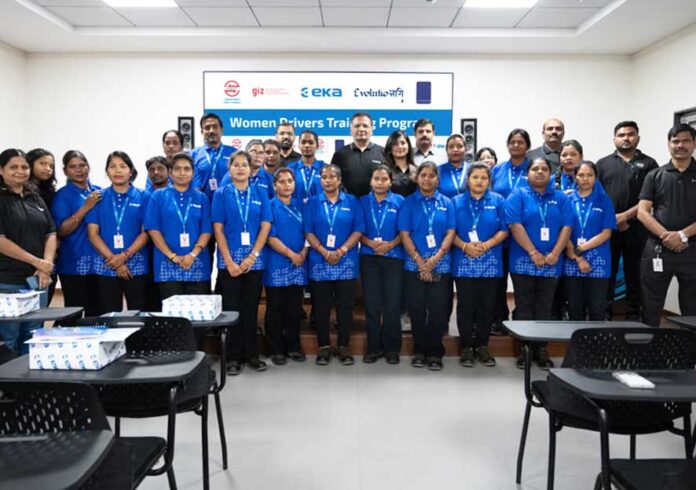
A collaborative initiative between EKA Mobility, Capital Region Urban Transport (CRUT), Deutsche Gesellschaft für Internationale Zusammenarbeit (GIZ) and training partner Travel Time has successfully completed a two-week e-bus driver skill development program for 20 women from Odisha. The initiative is designed to rapidly include women drivers in India’s expanding electric public transport ecosystem.
The training was conducted at EKA Mobility’s manufacturing facility in Chakan, Pune with financial assistance from GIZ under the CSR framework. This program aligns with CRUT’s larger objective of increasing female participation in its operational fleet while supporting Odisha’s transition to electric mobility.
Extensive curriculum and practical experience
The program combined practical driving sessions on EKA’s electric buses with classroom-based technical modules led by the company’s engineering team. The participants also visited assembly lines, quality testing units and charging infrastructure to gain insight into end-to-end EV bus operations.
The training modules covered regenerative braking, heavy vehicle handling, EV control systems, battery management, charging protocols, high-voltage safety procedures, start-up and shutdown operations, energy optimization and daily vehicle inspection practices.
Safety remained a central focus with sessions on defensive driving, road safety norms, passenger safety management and emergency response protocols. Soft skills training in communication, customer service and professional conduct ensured that drivers are prepared for the public-facing responsibilities of city bus services.
Operational Readiness and Industry Impact
All 20 participants successfully completed the program and were assessed as operationally ready to join CRUT’s electric bus fleet. Organizers describe the initiative as a scalable model that links skills development with sustainable mobility goals while creating meaningful career pathways for women in the transportation sector.
Ritika Mehta, Group President, EKA Mobility, said the program reflects the company’s belief that sustainable mobility must also be inclusive, emphasizing the importance of building confidence and expanding opportunities for women in public transport.
Vivek Kalkar, Director, Travel Time, highlighted the structured approach of the programme, noting that intensive on-road training, safety exercises and scenario-based learning have equipped participants with strong driving discipline, hazard awareness and passenger-centric service capabilities.
This initiative is part of a broader effort by state and national stakeholders to promote gender inclusion along with the rapid expansion of electric mobility. CRUT, GIZ, EKA Mobility and Travel Time have indicated that the training framework can be adapted and replicated in other states and public transport operators in India.
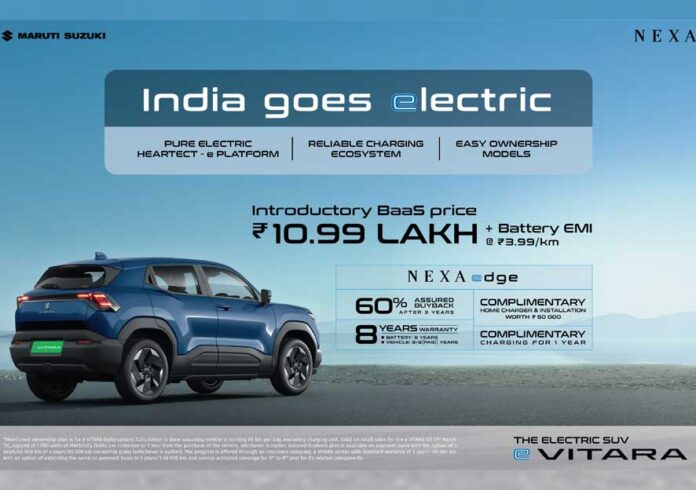
Maruti Suzuki India Limited has officially started the deliveries of its first all-electric SUV, the e Vitara, marking a major milestone in the company’s electric mobility journey. The SUV is being offered with battery-as-a-service (BaaS) pricing starting at ₹10.99 lakh along with battery usage cost of ₹3.99 per kilometre. This special offer is valid till 31 March 2026.
Nexa Edge Package for Beginner Customers
The e Vitara comes with an exclusive Nexa Ownership Package designed to enhance convenience and confidence for EV buyers. Main attractions include:
Home Charging Convenience: Customers get a complimentary 7.4 kW AC wall box charger with installation, enabling uninterrupted home charging. Public Charging Access: Early adopters get one year of complimentary charging at Maruti Suzuki dealer locations through the ‘E for Me’ app. Assured Buyback: 3-Year Ownership Plan offers up to 60% assured buyback value, strengthening long-term ownership confidence. Warranty Coverage: The SUV is available with 61 kWh and 49 kWh battery options, backed by a battery warranty of 8 years or 1,60,000 km (whichever is earlier). The vehicle has a standard warranty of 3 years, which can be extended up to 8 years at additional cost.
Battery options and driving range
The e Vitara is offered with two battery pack options – 61 kWh and 49 kWh – claiming a driving range of up to 543 km. It is backed by one of India’s largest fast-charging networks, which can be accessed through the ‘E for Me’ app, which enables searching for chargers, scheduling and digital payments for a hassle-free experience.
Flexible Ownership Plans
To make EV ownership more accessible, Maruti Suzuki has introduced several financing options:
Battery-as-a-Service (BaaS): A dual-credit structure that reduces upfront costs by separating battery expenses, starting from ₹10.99 lakh to ₹3.99/km of battery usage. ‘E Flex’ scheme: Allows customers to upgrade to the E Vitara with an EMI equal to their existing vehicle. Assured Buyback Plans: 3 years/45,000 km – up to 60% of buyback value 4 years/60,000 km – 50% of buyback value
Reckless EV Ownership
The company has equipped the e Vitara with strong warranty support and a nationwide EV-ready service ecosystem that includes over 1,500 service centres, trained Nexa EV relationship managers and dedicated charging managers.
Advanced Security and Technology
Features of Electric SUV:
Level 2 ADAS with adaptive cruise control, lane keep assist, blind spot monitoring and automatic emergency braking. Seven airbags, including driver-side knee airbag as standard. Next-gen Suzuki Connect with over 60 connected features. Built on the HEARTECT-e platform using over 60% high-tensile and ultra-high-tensile steel with a 5-star India NCAP safety rating, an advanced battery protection system.
Customers can book the e Vitara at NEXA showrooms or online through the NEXA website with a starting payment of ₹21,000.
With the launch of e Vitara, Maruti Suzuki aims to firmly establish itself in India’s fast-growing electric SUV segment by combining long driving range, flexible ownership, comprehensive service support and advanced safety technologies.