BYD, the world’s leading manufacturer of New Energy Vehicles (NEVs), has officially delivered an exclusive fleet of electric cars to FC Internazionale Milano (Inter) as part of its three-year global partnership with the legendary football club. This milestone also marks the world premiere of the new BYD SEALION 7 EDITION INTER, a limited-edition model designed in collaboration with Inter to celebrate the perfect fusion of cutting-edge technology and elite sporting prowess.
At a special handover ceremony in Milan, Inter stars Lautaro Martínez, Marcus Thuram and Louis Henrique received their personal BYD vehicles. The event symbolizes the shared values of innovation, performance and sustainability that unite BYD and Inter.
BYD SEALION 7 INTER EDITION reflects the Nerazzurri spirit with a bold metallic-black exterior and luxurious full-black interior with Inter’s signature blue highlights. Special details include the club’s official logo integrated into the wireless charging base and handmade light gray embroidery on the headrest – a beautiful tribute to Inter’s heritage and identity.
This collaboration underlines BYD’s commitment to combining advanced electric mobility with world-class design, strengthening its strategic role as the Global Automotive Partner of FC Internazionale Milano.
The blue stitching running across the dashboard, steering wheel, center tunnel, door panels, seats and dedicated floor mats echoes Inter’s iconic colours, enhanced by a black and blue central band and blue brake calipers on each seat.
The new models also get special alloy wheels – 21-inch items for the Excellence AWD version and 20-inch for the Comfort RWD – and in another distinctive touch, welcome the dedicated Inter graphics driver when the infotainment system is turned on.
The SEALION 7 INTER EDITION retains all the BYD technology that has made the model a benchmark among the new generation electric SUVs. Smooth performance, extended range, fast charging and intelligent driver-assistance systems combine with premium onboard comfort for a driving experience that is a blend of excitement and innovation.
The new SEALION 7 Inter Edition will be available in two configurations: Comfort RWD Edition and Excellence AWD. In addition, there will be a special offer for Inter Club members, showcasing BYD’s strong relationship with the club and its supporters. Available through the official BYD network, the special series consists of 250 unique models, with the possibility of increasing production depending on demand from Nerazzurri fans.
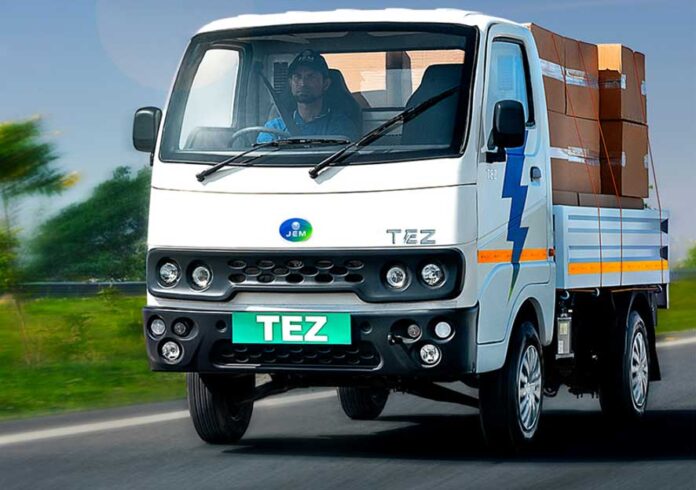
Jupiter Electric Mobility Pvt. Ltd. (GEM) has strengthened its presence in the electric commercial vehicle segment by opening five new showrooms across major Indian cities, bringing its flagship JEM TEZ electric light commercial vehicle closer to customers across the country.
The expansion campaign, which ran from November 3-7, 2025, introduced showrooms in New Delhi, Ghaziabad, Trivandrum, Ahmedabad and Pune, which was attended by local dignitaries and GEM leadership, including Jupiter Group Deputy Managing Director Vikas Lohia.
Strategic expansion in key markets
The new showrooms are strategically located to serve diverse regional markets:
Delhi and Ghaziabad: Targeting logistics operators under Delhi’s EV Policy 2.0, which aims to achieve 95% electric vehicle adoption by 2027. Pune and Ahmedabad: Located in the industrial corridors of Maharashtra and Gujarat, account for 22.1% of India’s commercial vehicle market. Trivandrum: Strengthening GeM’s presence in Kerala, where over 235,000 electric vehicles are registered, representing 11.33% market share.
JEM TEZ – designed for modern logistics
Each showroom offers personal consultation, test drives and expert guidance from trained product experts. JEM TEZ, a 1.05-tonne electric light commercial vehicle, boasts:
Certified Range: Over 300 km per charge Peak Motor Power: 80 kW Gradeability: 23% Ideal for intra-city freight, last-mile delivery and distribution operations, the vehicle is tailored to suit the needs of fleet operators and logistics companies.
Vivek Lohia, Managing Director, Jupiter Group, said, “Our national expansion reflects GEM’s commitment to building a strong presence in the electric commercial vehicle sector.” “The selected cities meet diverse logistics requirements and policy environments that support EV adoption.”
Strong manufacturing and partnerships
Backed by parent company Jupiter Wagons Limited, GEM Railways leverages decades of expertise in goods wagon production. Every JEM TEZ vehicle undergoes rigorous testing to meet Indian commercial operating standards.
To create a comprehensive EV ecosystem, GEM has partnered with Porter, Pulse Energy, Batwheel, Automobil and Tapfin, offering customers:
Charging infrastructure access Financing solutions After sales service Business support through GEM Udan program
National footprint and future plans
With the five new additions, JEM now operates seven showrooms across the country in Bangalore, Hyderabad, New Delhi, Ghaziabad, Pune, Ahmedabad and Thiruvananthapuram. Plans are underway to further expand to Chennai, Kolkata and Mumbai.
JEM is a subsidiary of Jupiter Wagons Limited, a mobility solutions provider with operations in freight wagons, locomotives, commercial vehicles and components, supported by manufacturing facilities in Kolkata, Jamshedpur, Indore, Jabalpur and Aurangabad with global partnerships across Europe.
Fleet operators and logistics companies interested in JEM TEZ can visit the showroom during operating hours or contact the company jupiterelectricmobile.com,
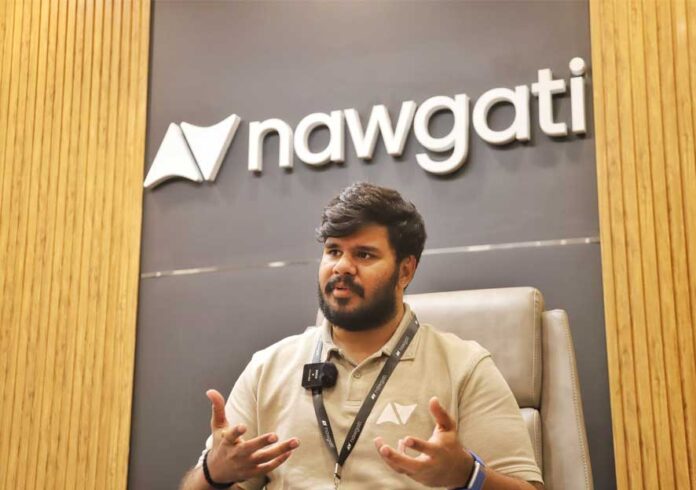
As the global mobility landscape shifts towards electric vehicles and sustainable fuels, the need for adaptable and forward-thinking solutions has never been greater. Navgati, which started its journey with CNG, has transformed itself into a fuel-agnostic platform, designed to tackle inefficiencies at fuel stations and streamline operations across energy types. In an exclusive interaction, CEO and Co-Founder Mr. Vaibhav Kaushik explained how this flexible approach enables the company and its partners to be future-ready, ensuring seamless integration with emerging technologies without constant reinvestment.
Navgati started its journey with CNG, but today, you call yourself a fuel-agnostic platform. In a world rapidly moving toward EVs and sustainable fuels, how does this approach help you prepare for the future?
When we started with CNG, our focus was never limited to one type of fuel. The mission was always about solving the huge problem of inefficiency, congestion and lack of visibility at fuel stations. Be it CNG, petrol, diesel, or EV charging, the core operational and customer challenges remain the same: long queues, unpredictable wait times, and absence of real-time data.
The technology we designed can adapt to any energy source, meaning we can adapt our algorithms that power a CNG station today to easily integrate with an EV charger or hydrogen dispenser tomorrow. This flexibility is allowing us to make fuel smarter and more efficient now, and will help our partners and customers stay ready and agile for the next phase of mobility without having to reinvest in new technology every few years.
At the pace we are growing, with millions of vehicles sold a year, being fuel-agnostic will not be an added advantage; Rather, it will make us relevant and indispensable in the future.
Your partnership with MGL is seen as one of the first startup collaborations in fuel retail digitalization. What are the biggest lessons from this experience, and how might it inspire similar alliances in EV charging or other clean fuels?
Our collaboration with Mahanagar Gas Limited (MGL) has been one of the most defining chapters in our journey. This is one of the first large-scale efforts to digitally transform fuel retail in Maharashtra, bringing together the agility and scale of startups. We started with a pilot project at MGL’s Khopat CNG station in Thane in 2022, where we tested whether the technology could bring real-time visibility into fuel retail, tracking queues, attendants and transactions, as well as allowing fleet operators to book their slots in advance and refuel at a time of their choice. The pilot was successful and gave us confidence to move forward.
The biggest learning during this project was building trust through collaboration. Working with MGL means ensuring that our solutions not only deliver technological innovation but also meet the highest standards of safety, compliance and reliability. Together, we achieved tangible results, reducing congestion at outlets, improving customer flow and enabling real-time station monitoring.
This experience also sets a precedent for how such collaborations can shape the next generation of clean energy infrastructure. As India moves towards EVs and hydrogen, this model of co-production can accelerate the digital transformation in clean fuels as well.
There is a lot of discussion about AI and IoT in mobility. How exactly is Navgati using these technologies to transform fueling and charging stations into smarter, more connected hubs?
At Navgati, our core focus is to drive real-world change through technology, and we have integrated our platforms with IoT sensors, data analytics and connected systems to gather live data from stations, vehicle flow, queue length, delivery speed and idle time. Our AI models then analyze this data to provide predictive insights, such as predicting congestion or detecting unusual patterns in operations.
For retailers and station operators, this means they can make informed decisions in real time, whether it’s deploying more staff, optimizing dispenser usage, or predicting peak-hour demand. For consumers, this results in a seamless experience, which means less wait, transparent updates and smart routing to the nearest available station.
We are experimenting with various features and technologies that will enable us to support load balancing at EV chargers, predictive maintenance and energy forecasting as the energy mix diversifies, turning every station into a smart, connected hub in the broader mobility ecosystem.
Digital transformation often feels like it’s designed for the big players. How are you ensuring that Navgati’s solutions remain practical and accessible to small operators as well as everyday consumers?
One of the core beliefs that drives us is that digitalization should be inclusive, not exclusive. Our products, be it Aveg for station operators or the innovative fueling app for consumers, are designed to be scalable, easy to implement and user-friendly.
We’re building technology that can be used by small or single-operator businesses without having to improve their infrastructure or hire technical staff to go digital. Aveg can integrate with minimal setup and start providing insights from day one, monitoring queues, resource allocation and customer flow in real-time. On the consumer side, our app lets people find the nearest station without having to navigate complex interfaces.
When it comes to refueling or charging, for most people things like trust, reliability and transparency matter as much as convenience. How is innovation reshaping that day-to-day experience for users?
We realized early on that the refueling experience in India is often unpredictable, and customers never know how long they will have to wait outside the pump or whether a station is even operational (especially on highways). We are addressing this uncertainty by bringing transparency and predictability to the process by including fuel stations on our platform. To date, we have onboarded 1500+ fuel stations on our platform, and we are currently onboarding stations in tier 2 and tier 3 cities.
Through the Navgati Fueling app, users can locate nearby stations, check real-time queue status and view the facilities available at each station before stopping. They can also make secure digital payments with Navgati Billing App, reducing physical contact and improving efficiency.
This end-to-end visibility is helping us build trust not only between customers and stations, but across the entire fuel ecosystem. Over time, we want refueling to feel as seamless, transparent and reliable as ordering a cab or food delivery online.
India’s clean mobility journey will not be just about EVs – it will include CNG, EVs, hydrogen and other vehicles that will co-exist over the years. How does your platform support this type of layered transition rather than taking a one-track approach?
India’s energy transition will be layered and gradual, not a sudden change, and we can see it today. CNG, EV, petrol, diesel and LPG will all co-exist in the near future, with the entry of hydrogen and biofuels into the ecosystem, and each will have its own challenges. We have created a platform keeping this reality in mind.
We are continuously onboarding petrol, diesel, CNG outlets to ensure that users find what they are looking for, and are in the process of onboarding EV charging stations for the growing EV penetration in the country. We want to ensure that we provide an integrated digital framework that supports multi-fuel operations. This approach allows fuel retailers to diversify their energy offerings without having to connect multiple systems.
Additionally, it can also benefit policymakers, energy providers, and other relevant stakeholders who can view cross-fuel data and demand patterns through a single lens. In short, we are helping India transition smoothly, not by forcing a shift to one energy type, but by enabling a connected ecosystem where all can co-exist and grow together.
As cities become smarter, mobility data is becoming part of larger urban planning and energy conversations. Where do you see Navgati fitting into this larger smart city ecosystem?
We believe we will become a key enabler in India’s smart city framework, because the data we generate at the ground level, be it traffic flow in stations, maximum refueling hours or energy demand distribution, can all provide valuable insights for urban mobility planning, traffic congestion reduction and energy grid management.
As cities evolve, mobility data will increasingly influence decisions related to road infrastructure, public transportation, and even energy zoning. Our connected platform will make this possible by converting fuel data into actionable intelligence.
We envision a future where every fuel or charging station will become a node in a connected city, communicating with vehicles and public systems in real time. This is how we see ourselves contributing, not just as a platform for stations, but as an integral part of the smart, data-driven cities of tomorrow.
Additionally, smart cities only become smart when people work together with the government, and our platforms, the innovative Fueling App and Aveg, will empower anyone who wants to make smart, efficient choices while contributing to the smart city ecosystem.
Unlike many western countries, which are only pushing for EV adoption, India is moving towards multi-fuel models. Do you think the Navgati story can become a blueprint for other emerging economies to follow the same path?
We are a country with a diverse economic background, and moving towards full EV adoption would be financially unviable for the public. Therefore, the government is encouraging people to choose EVs along with cleaner fuels like CNG and ensuring their last mile access.
Furthermore, emerging economies like ours, Indonesia, and Nigeria share similar characteristics: diverse vehicle mix, inconsistent infrastructure, and coexistence of multiple fuels. An EV-only model is not immediately practical for these markets.
The innovation provides a scalable, adaptive framework that modernizes the existing fuel ecosystem while making room for new energy types. It’s about building digital infrastructure that keeps pace with the market rather than dictating it.
Our journey shows that innovation does not mean replacement; This could mean change. And this is a lesson that many other developing countries can learn from India’s mobility developments.
Looking ahead, what is your long-term vision for the role of innovation in shaping the next decade of India’s clean, connected and fuel-agnostic mobility ecosystem?
We are growing faster than ever before and with it the need for comfort and convenience is also increasing. Therefore, the next decade will be about redefining the way India refuels, charges and operates. In this, our role will be to connect the dots between stations, fleets, consumers and energy suppliers to create a single, intelligent layer that powers every refueling or charging interaction.
We envision a future where every station, regardless of location or fuel type, is connected, predictive and digitally optimized. Through partnerships, technology and data, we want to make refueling as seamless and transparent as possible for every Indian, while also helping operators run more sustainably and profitably.
Ultimately, Navgati’s vision is to become the digital backbone of India’s energy transformation, connecting today’s traditional fuel networks with tomorrow’s clean and connected mobility infrastructure.
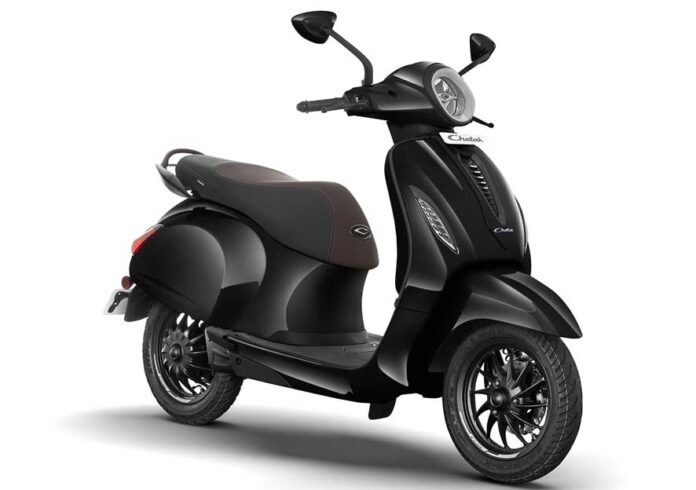
Following the resolution of last year’s rare-earth supply challenges, Bajaj Auto’s iconic electric scooter brand, Chetak, has returned to the No. 1 spot in VAHAN registrations in October. The company has also confirmed plans to launch an all-new Chetak model early next year with an aim to consolidate its leadership in India’s growing electric two-wheeler market.
Supply chain challenges overcome
During the Q2 FY26 analyst call, Rakesh Sharma, executive director, Bajaj Auto, revealed that the production disruptions earlier this year were caused by the shortage of heavy rare-earth (HRE) magnets, which affected the production of the high-demand Chetak 35 series.
“We experienced a reduction of about 50% compared to our plan due to rare-earth constraints,” Sharma said.
To counter this, Bajaj Auto diversified sourcing to secure lightweight rare-earth components and spread supplies across multiple geographies. By October, the supply chain was fully restored, enabling Chetak to regain its top position within a matter of weeks.
Strong retail presence supports growth
Bajaj Auto’s strong network – 390 exclusive stores and over 4,000 retail points across 800 cities – has strengthened Chetak’s market position. Sharma highlighted that the upcoming model will leverage this wider retail footprint to maintain the leadership momentum.
Expanding EV portfolio and profitability
The revival of Chetak is part of Bajaj Auto’s broader electric mobility strategy, which also includes the electric three-wheeler and the Yulu partnership. The EV business now accounts for about 20% of domestic revenues, delivering double-digit EBITDA margins, reflecting both scale and operational efficiency.
“With the supply chain stable and a new model on the horizon, we are confident of maintaining our leadership in the electric two-wheeler segment,” Sharma said.
The launch of the new Chetak model is set to further strengthen Bajaj Auto’s dominance in India’s EV market, offering consumers advanced features and an expanded electric mobility ecosystem.
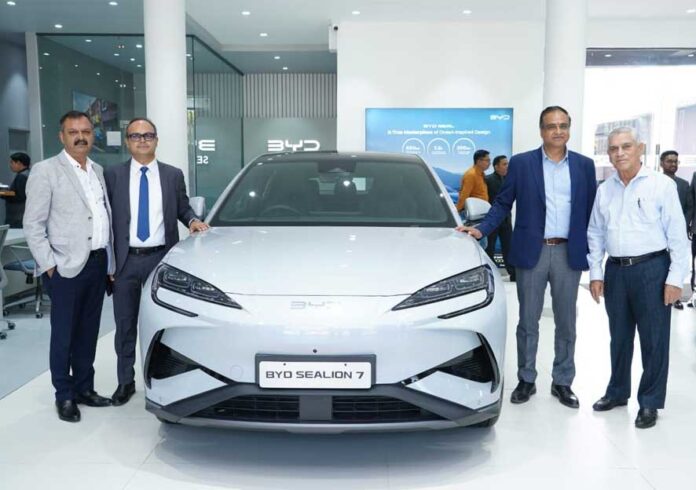
BYD India, a subsidiary of global No. 1 NEV (New Energy Vehicle) manufacturer BYD, has strengthened its presence in Northern India with the inauguration of its 47th showroom in Hisar, Haryana. This new outlet, opened in partnership with SAMTA BYD, Karnal (M/s SAMTA Greentech LLP), is the dealer partner’s third BYD showroom in the state.
Strategically located on Delhi Road, Hisar, the 2,800 sq. ft showroom is designed as per BYD’s global retail standards, offering an immersive and modern electric vehicle (EV) buying experience. Customers can explore the full range of BYD electric vehicles, benefit from expert product consultation and experience detailed vehicle demonstrations.
The Hisar showroom reinforces BYD India’s commitment to accelerate EV adoption in India’s growing electric vehicle market and make advanced electric mobility more accessible.
Mr. Rajeev Chauhan, Head of Electric Passenger Vehicle Business at BYD India, said, “The opening of our new showroom in Hisar represents much more than an expansion of our retail footprint; it reinforces our long-term vision to accelerate India’s transition towards sustainable mobility. Haryana has emerged as a dynamic market for electric vehicles, and Hisar is at the center of this transformation. With our trusted partner SAMTA Greentech, we look forward to setting new standards as well as bringing BYD’s global innovation and innovation to more customers. The products are confident of bringing excellence in electric mobility.”
Mr. Bhupesh Sahni (Director) and Mr. Bhanu Khetarpal (Director) of SAMTA BYD said, “This milestone reflects our continued confidence in BYD’s vision and our commitment to serve customers in the region. This is the third showroom by SAMTA for BYD. Hisar is an emerging market with growing EV awareness, and through this new facility, we look forward to providing customers with the highest quality sales and service experience.”
The BYD portfolio in India symbolizes BYD’s commitment to innovation, performance and environmental responsibility. This comprehensive EV portfolio includes BYD SEALION 7, BYD ATTO 3, BYD eMAX 7 and BYD SEAL.
With this inauguration, BYD India’s national retail network now reaches 47 showrooms across 40 cities, operated through 18 dealer partners. This expansion underlines BYD’s focus on strengthening its presence in both metros and emerging markets.
Through its range of premium electric passenger vehicles and cutting-edge battery technology, the company is driving India’s transition towards clean transportation. Globally, BYD has sold more than 14 million NEVs, reducing more than 114.4 billion kilograms of CO₂ emissions, which is equivalent to the emissions absorbed by approximately 1.90 billion trees. BYD’s consistent ranking among the top 10 most valuable global automotive brands by Kantar Brands, and rank of #91 in the 2025 Fortune Global 500 with a brand value of USD 14.4 billion, reflects its growing leadership in the global EV market.
As BYD India moves forward, the company is dedicated to driving EV adoption, reducing environmental impact and ensuring customers remain at the center of its operations.
Numeros Motors, one of India’s fastest growing electric mobility innovators, has launched its second electric two-wheeler, ‘N-First’, in Bengaluru. Designed to break traditional boundaries, the N-First combines the stability of a motorcycle with the practicality of a scooter.
Available at a starting price of ₹64,999 for the first 1,000 buyers, the N-First promises to be a game-changer in affordable electric mobility. With its bold tagline, ‘Change Your Vibe’, the vehicle is the epitome of clean, accessible and stylish urban transportation. Developed in collaboration with Italian design house Wheelab, the N-first blends global design aesthetics with made-in-India engineering excellence, redefining everyday electric travel.
“This is not just another vehicle; it is a vision realized. It is a fresh, elegant statement in urban mobility,” said Mr. Shreyas Shibulal, Founder and CEO, Numeros Motors at the launch event held in Bengaluru.
In his launch speech, Shreyas highlighted the company’s core philosophy of addressing the challenge of widespread EV adoption without compromising safety and reliability.
Shreyas said, “At Numeros, we believe that reliable and sustainable electric mobility solutions do not need to be a luxury. This is our absolute promise. N-First is the most reliable, accessible EV solution for the growing urban youth segment – especially women, who are increasingly driving the future of our market.”
Sleek, Smart and Secure:
The N-First is available in five variants and two colours: Traffic Red and Pure White. The top variant 3kWh i-Max+ offers 109 km IDC range, while the 2.5kWh variants (Max and i-Max) feature a liquid immersion-cooled Li-ion battery with an IDC range of up to 91 km.
At its core, the N-First is powered by a PMSM mid-drive motor with a chain transmission, providing smooth acceleration and high energy efficiency. A full charge from 0-100 takes approximately 5-6 hours (2.5 kWh) and 7-8 hours (3.0 kWh), supported by over-the-air (OTA) updates for continuous performance optimization.
highlight
• Stability: Defined 16-inch wheels provide greater stability and control than traditional scooters.
• Rigorous Testing: The N-First platform is built on a foundation of durability, rigorously tested in India’s most extreme conditions – from the scorching heat of Jaisalmer to the harsh cold of Manali. It was put through its paces even in city driving conditions.
• Zero range anxiety: The vehicle claims a certified IDC range of 109 kms, ensuring freedom from range anxiety for daily urban commuting.
• Smart Connectivity: Its IoT platform and app offers users a host of security features, including theft and tow detection for instant alerts, remote locking, geo-fencing, an advanced thermal management system, live location tracking, and data-backed ride insights.
Founded five years ago with a mission to accelerate EV adoption, Numeros Motors has rapidly scaled up its operations. The N-First comes close to Numeros’ EV 2-wheeler, the Diplos Max+, which was launched less than two months ago.
Numeros has partnered with several distributors and dealers and is gradually expanding its network to Bengaluru, Chennai, Kochi, Thrissur and other cities in South India.
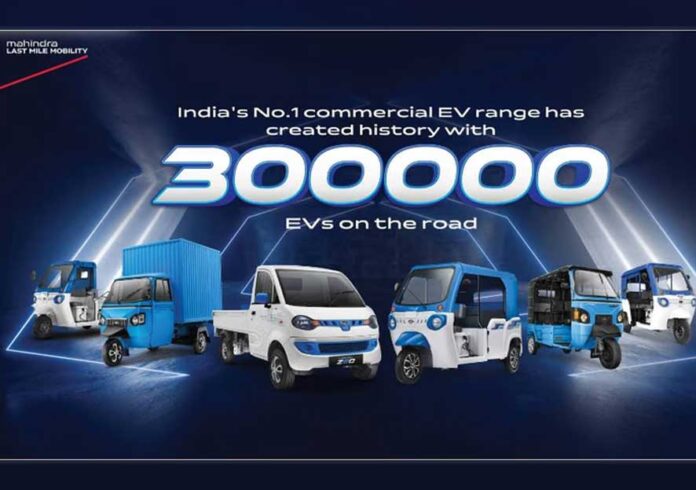
Mahindra Last Mile Mobility Limited (MLMML) has become India’s first OEM to cross 300,000 electric vehicle sales, cementing its leadership as the country’s top electric commercial vehicle manufacturer. The company achieved its latest 100,000 EV sales in just 12 months, reflecting the accelerating adoption of electric vehicles in India’s commercial transportation sector.
MLMML’s electric fleet has collectively traveled more than 5 billion kilometers, offsetting more than 185,000 metric tons of CO₂ emissions, equivalent to planting 4.3 million trees. This milestone highlights the growing demand for sustainable last-mile mobility solutions in India.
Comprehensive Electric Vehicle Portfolio
Mahindra’s EV lineup includes the Treo series, Zor Grand, e-Alpha three-wheeler and Mahindra ZEO four-wheeler, catering to both passenger and cargo transportation needs. Recent upgrades like Treo Plus Sheet Metal, e-Alpha Plus, Zor Grand Range Plus and Mahindra ZEO reflect the company’s focus on customer feedback-driven product development.
Advanced Digital Platform for Fleet Management
To celebrate the 3 lakh milestone, MLMML launched an updated NEMO platform on iOS, Android and web. The platform enables drivers and fleet managers to monitor multiple vehicles, track locations, book services, access roadside assistance and view charging network information.
Drivers and commitment to sustainable mobility
Building on its Uday NXT program at the 200,000 vehicle milestone – which provided drivers with benefits such as ₹20 lakh accident insurance coverage and financial counseling – MLMML continues to empower drivers and promote sustainable livelihoods.
“Achieving the 3 lakh EV milestone is a proud moment in our journey towards sustainable mobility,” said Suman Mishra, MD and CEO, Mahindra Last Mile Mobility. “At Mahindra Last Mile Mobility, we are not just manufacturing EVs – we are enabling livelihoods and shaping a cleaner future.”
MLMML, a subsidiary of Mahindra & Mahindra Limited, manufactures electric, petrol, CNG and diesel vehicles for last mile mobility and actively develops the EV ecosystem through strategic partnerships, thereby increasing its adoption in India’s commercial transportation sector.
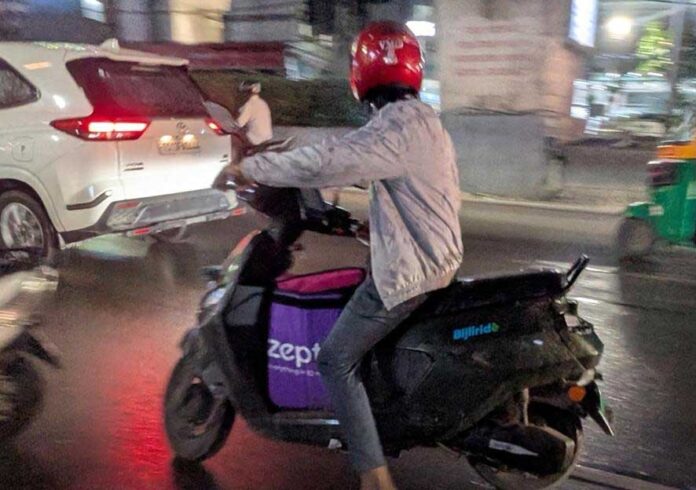
During the festive season of 2025, Bizliride, India’s fastest growing EV rental and mobility-tech startup, supports sustainable transportation in Hyderabad. Its electric two-wheeler fleet collectively covered more than 20 million green kilometers and offset approximately 80 tonnes of CO₂ emissions in the delivery and daily commute network, reinforcing BizliRide’s commitment to eco-friendly mobility and a clean urban environment.
Amid record vehicle sales and heavy traffic in Indian cities, BejliRide stood out as a leader in promoting clean mobility. Its growing fleet of electric vehicles ensured smooth and eco-friendly transportation across Hyderabad, helping reduce the city’s carbon footprint at a time when pollution levels were at their peak.
With its seamless service ecosystem including battery swapping, 24×7 roadside assistance and doorstep battery delivery, Bizliride ensures seamless rides during the festive rush. The company’s focus on technology and sustainability demonstrates how green mobility can be both practical and impactful in tackling India’s urban environmental challenges.
“The 2025 festive season really showcased how much of a difference Bizliride is making on the ground,” said Shivam Sisodia, CEO and co-founder of Bizliride. “Offsetting nearly 80 tonnes of CO₂ and completing 2 crore green kilometers in one season confirms that electric mobility is no longer a distant dream. It is a movement that is gaining real momentum, and our mission is to make sustainable transport accessible and meaningful to every Indian city.”
As concerns grow over rising emissions and air pollution, the success story of BezliRide in Hyderabad reinforces how innovation in electric mobility can drive tangible change and lay the foundation for a cleaner, more responsible future of transportation.
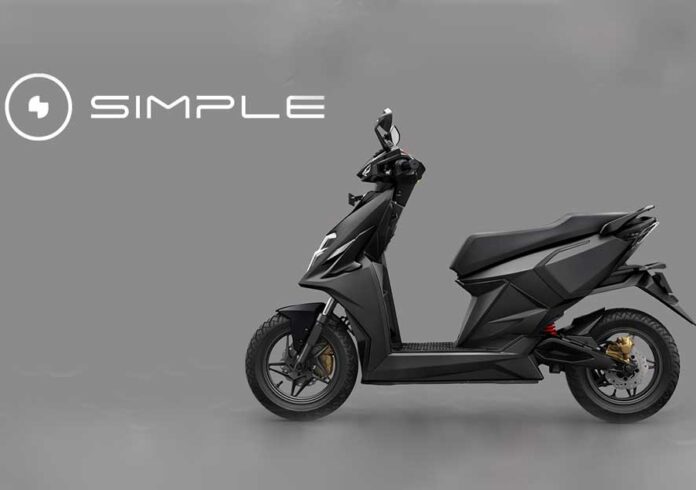
Bengaluru-based electric two-wheeler maker, Simple Energy has achieved notable growth milestones, growing its FY 2024-25 revenue by over 125% by October 2025. The surge is due to strong delivery numbers and the company’s expansion across India.
In October alone, Simple Energy recorded sales of 1,050 units, of which 974 units were registered through the Vahan portal (except Telangana) and 76 units were sold in Telangana, its strongest month ever. To meet the growing demand, the company has increased production by 40% at its 2,00,000 sq ft Hosur facility in Tamil Nadu. Additionally, the marketing team has expanded to over 40 professionals to support the aggressive pan-India plan, targeting 150 retail stores and service centers by March 2026.
The company’s flagship scooters, Simple One Gen 1.5 and Simple OneS, launched in January 2025, have quickly gained traction in the market. With IDC ranges of 248 km and 181 km respectively, both the models have impressed customers with their performance, design and reliability, contributing significantly to the company’s strong growth.
These milestones reflect Simple Energy’s commitment to scale operations, strengthen its retail network and accelerate the adoption of electric mobility across India.
Commenting on this achievement, Suhas Rajkumar, Founder and CEO of Simple Energy, said, “Exceeding last year’s revenue by more than 125% in just seven months and crossing the 1,000 unit sales mark reflects the strong trust customers have in Simple Energy. Every milestone – from increasing production and expanding our team to broadening the footprint of our stores and service centers – is a step towards strengthening the company and better serving our customers. This is part of a well thought out plan. As we move towards 150 stores and service centers by March 2026, we are focused on driving growth through innovation, reach and trust.”
In September 2025, Simple Energy achieved another milestone by becoming the first original equipment manufacturer (OEM) in the country to commercially manufacture heavy rare-earth-free motors. The new motor line offers similar performance and torque-rich character while eliminating dependence on heavy rare-earth elements.
Simple Energy has built a strong retail presence with 61 outlets across major cities including Bengaluru, Goa, Vijayawada, Hyderabad, Visakhapatnam, Kochi, Chennai, Agra and Jaipur. Strengthening its pan-India expansion, the company is now preparing to enter new markets such as Delhi, Bhopal, Patna, Ranchi and Bhubaneswar in the coming months.
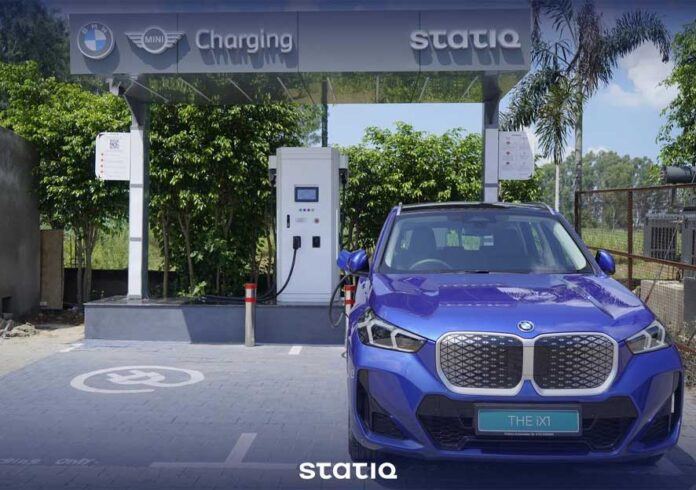
Static, one of India’s leading EV charging network providers, has announced a strategic partnership with BMW Group India to accelerate the country’s transition towards electric mobility. The collaboration focuses on electrifying key driving corridors across the country, with at least 120 kW high-power charging stations installed every 300-350 kilometres. This initiative is designed to make long distance EV travel more convenient and accessible.
Static and BMW Group India have together developed a comprehensive charging corridor spanning 4,000 kilometers from Jammu in the north to Madurai in the south. Strategically located fast chargers on major highways and public hubs ensure that EV owners, regardless of vehicle brand, have access to reliable charging options. The network aims to reduce border anxiety and promote widespread adoption of sustainable transportation.
Additionally, BMW customers can easily find and access these chargers through the myBMW app, increasing convenience and confidence for EV drivers across India.
Mr. Akshit Bansal, Founder and CEO of Static, said, “The partnership with BMW Group India is a defining moment for India’s EV ecosystem. By enabling high-power charging every 300-350 km, we are addressing the core challenge of range anxiety and providing the confidence needed for long-distance electric mobility. Our core mission at Static has always been to make EV charging easy, accessible and reliable for everyone, and this corridor will make India greener. firmly on the global map.”
Mr. Hardeep Singh Brar, President and CEO, BMW Group India, said, “BMW Group India is extremely proud to be the first luxury car manufacturer to cross the notable milestone of 5,000 electric vehicle deliveries. We are pleased to partner with Static and an additional EV charging operator to expand our charging infrastructure. The chargers strategically located across the country will provide charging capacities ranging from 120 kW to 720 kW. We have planned to make the experience customer friendly. Placing chargers near cafes, restaurants and public places where drivers can rest while recharging their vehicles, we are continuously working towards creating a great travel experience with peace of mind for all electric mobility consumers.
Mr. Raghav Arora, Co-Founder and CTO, Static, said, “This partnership underlines the power of advanced technology and cross-industry collaboration in driving growth in EV adoption. By integrating seamless digital experiences with a vast network of high-performance chargers, we are ensuring that India’s highways are future-ready. We are committed to supporting both urban and intercity e-mobility with reliable, scalable infrastructure.”
Static has built a fast-growing, user-friendly charging network across India. Its infrastructure now includes more than 8,000 chargers in more than 70 cities, ranging from highways and shopping malls to hotels, fuel stations and popular residential and commercial destinations. Through a smart platform that supports search, booking and contactless payments, the brand enables EV drivers to charge conveniently and reliably wherever they are. Static has also integrated its platform with other leading EV charging providers such as e-Fill, Sunfuel and Glida to expand usability and reach.
With clear plans to install 20,000 charging points by 2026 and foster partnerships with state governments, automotive OEMs and real estate developers, Static is leading the way towards building a strong, inclusive EV infrastructure ecosystem. The company continues to align itself with India’s sustainability goals, actively supporting clean transportation and reducing dependence on fossil fuels.