Home Blog Page 28

SANY India launches hybrid 100-ton mining dump truck SKT130S –

Sany Heavy Industry, a leading manufacturer of construction, mining, logistics and energy equipment, today launched India’s first locally manufactured hybrid off-highway 100-tonne mining dump truck product at its Pune plant. This cutting-edge product in Sany’s mining equipment range marks an important step towards my country’s self-reliance in manufacturing next-generation mining machinery with world-leading technology.

Designed to deliver exceptional power, efficiency and operator safety, the SKT130S is equipped with a high-performance engine rated at 925 kW, producing an impressive 3200 Nm of torque, ensuring exceptional durability in challenging mining environments. Designed for heavy-duty applications, the truck has a payload capacity of 100 tonnes and a stowage capacity of 61 CuM, making it a powerful asset for the mining industry.

Commenting on the launch, Mr. Deepak Garg, Vice Chairman and Managing Director of SANY India and South Asia, said: “The launch of SKT130S is a remarkable achievement in our drive to promote innovation and self-reliance in the Indian mining industry. As India’s first 100-ton diesel-electric hybrid mining truck, SKT130S This focus on localization not only supports India’s manufacturing vision but also ensures that we bring cutting-edge technology to enhance the productivity of mining operations.”

Compared with traditional mining trucks, the SKT130S is expected to save 20%-25% in fuel. Its main feature is a regenerative braking system that recharges the high-voltage battery when driving downhill.

Designed to deliver optimal performance, the SKT130S features an intelligent control module that ensures seamless operation and a 10-inch central control screen that enhances navigation and safety. With a strong focus on operator safety, the truck cab is equipped with FOPS/ROPS certification to ensure compliance with global safety standards while maintaining strength and agility.

SANY India has reiterated its commitment to the Indian government’s “Make in India” initiative, has localized the SKT130S, and is actively working to further localize major components.

The introduction of the SKT130S puts Sany at the forefront of technological advancement in the mining industry. Looking forward, Sany Heavy Industry will continue to focus on increasing localization efforts and launching innovative solutions to improve the industry’s operational efficiency and sustainability.
BLive EZY expands to Chennai to electrify last-mile delivery with 5,000 electric vehicles –

BLive EZY, India’s leading electric vehicle platform, has announced its entry into Chennai with an ambitious plan to deploy 5,000 electric vehicles (EVs) in the city over the next 36 months. Having achieved great success with over 3,000 electric vehicles deployed in Bengaluru and with over 30 active franchise partners, BLive EZY is now bringing its proven, profitable electric vehicle franchise model to the capital city of Tamil Nadu.

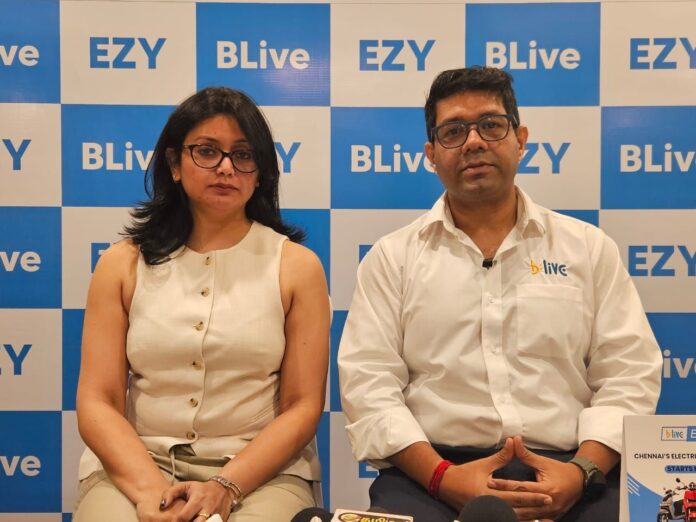
Pooja Mukherjee (VP Growth & Marketing) and Sandeep Mukherjee (CEO & Co-Founder, BLive)

With the dramatic growth in e-commerce, express commerce and hyper-local delivery, Chennai’s logistics ecosystem is ripe for a clean-tech transformation. The addition of BLive EZY marks the city’s strategic push to accelerate green delivery and promote sustainable livelihoods.

Franchise model with high return on investment

Central to BLive EZY’s success lies in its franchise-driven model, BLive EZY, which enables local entrepreneurs to invest in electric vehicles and earn guaranteed monthly rental payments through BLive EZY’s strong corporate partnerships. With an investment starting from Rs 25 lakh, franchise partners can deploy their fleet to major delivery brands like Zomato, Zepto, BigBasket, Blinkit and others. Backed by ongoing demand and operational support, the model offers potential returns of up to 200% over time.

BLive EZY offers end-to-end solutions – from EV procurement to deployment, maintenance, insurance, trained riders and technology – making it one of the most comprehensive EV mobility platforms in India.

We are delighted to bring BLive EZY to Chennai – a city with the energy and vision to lead India’s transformation towards sustainable mobility. With this launch, we are providing franchise opportunities to aspiring entrepreneurs to build future-proof, purpose-driven businesses. Our model enables partners to not only obtain stable returns, but also helps build a cleaner and greener logistics ecosystem. If you have been waiting to be a part of India’s electric vehicle revolution, now is the time – Chennai is where it starts.

— Sandeep Mukherjee, CEO and Co-Founder, BLive

Comprehensive platform for enterprises and individuals

In addition to franchise opportunities, BLive EZY offers electric vehicle rentals to businesses and individual riders. The solution includes smart fleet technology that tracks vehicles, driver performance, delivery efficiency and operational KPIs in real time, helping businesses operate more efficiently while reducing their carbon footprint.

Key OEM and delivery partners

BLive EZY partners with leading EV OEMs such as TVS, Ampere, Bounce and OLA to ensure a reliable and diverse fleet. On the demand side, its customer base spans food delivery, grocery delivery, e-commerce logistics and express aggregators.

Success in Bangalore

• More than 3,000 electric vehicles deployed in 18 months

• 30+ active franchisees

• 10+ million green delivery miles

• Saved more than 1,000 tons of CO2 emissions

BLive EZY’s expansion into Chennai is part of its larger vision to electrify India’s last-mile delivery landscape while promoting entrepreneurship through a sustainable and technology-enabled franchise model.

Sales of electric cars set a new record in November 2025, these companies became engines of growth.

Electric Car Sales Set A New Record In November 2025 With These Companies Becoming The Engine Of Growth – Electric Car Sales Set A New Record In November 2025 With These Companies Becoming The Engine Of Growth.

Hindi News »

automobile »

Electric Car Sales Set A New Record In November 2025 With These Companies Becoming The Engine Of Growth

Mahindra’s large SUV strategy: One strategy, per segment, maximum impact –

The OEM’s multi-tiered strategy is clear: from value-for-money family SUVs to luxury, technology-rich flagships, the brand now offers a vehicle for every kind of buyer, and often delivers beyond expectations.

Author: T. Mulally

Mahindra is rewriting the rules of the SUV game with a clear and bold strategy: to enter every major price range of the “core SUV” market with powerful products, richer features and sharp pricing. Rather than limiting itself to the premium segment, Mahindra has built a product portfolio that spans customer needs, from value seekers to luxury buyers, while ensuring that every product is a step above its competitors.

Mr. Nalinikanth Gollagunta, CEO, Automotive Division, Mahindra & Mahindra Ltd. and Executive Director, Mahindra Electric Automobile Ltd., said the company is targeting the core of India’s SUV demand: vehicles over 4 meters in length and priced above Rs 20 lakh alone account for 30 per cent of the UV market, or nearly 70,000 units per month.

Within this segment, the biggest impact was in the Rs 20 lakh to Rs 24 lakh segment, which accounted for 45% of buyers. Another 25% of customers are in the bracket of Rs 24 lakh and Rs 28 lakh, while the top 30% spend more than Rs 28 lakh. Mahindra’s plan is simple – have all three, Mr. Goragonta explained.

“What stands out about this strategy is the range of features Mahindra offers from the base model. Even the entry-level model comes with a panoramic sunroof, three 12.3-inch screens (with the option to add two more screens in the second row), a seven-seat layout with sliding second-row seats, a huge 150-litre front storage bin, class-leading torque and 180 kW fast charging for select battery options that can jump from 20 to 80 per cent in just 20 seconds. These features are usually reserved for rival SUVs The higher configurations in the range are retained and form the basis for the entire variant range.”

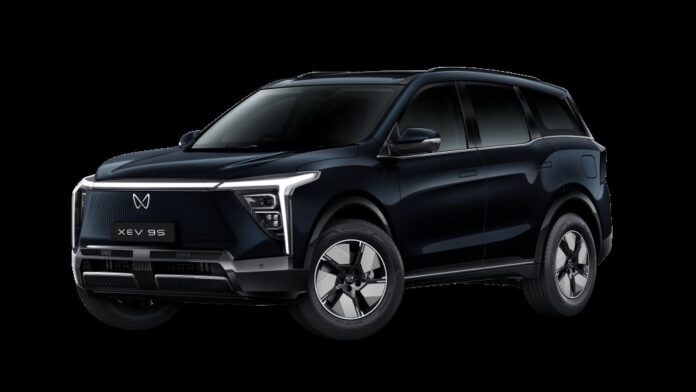
In line with this strategy, the company launched four variants of the XEV 9S. Targeting the Rs 20 lakh to Rs 24 lakh segment, the Pack One variant is designed as a ‘chocolate chunk’ of value – dense, rich and generously loaded. It retains all standard features and has a larger battery capacity than the typical 59 kW or 79 kW competitors. He pointed out that in comparison, a similar MPV in Maharashtra is priced at close to Rs 23.40 lakh, making Mahindra’s package extremely attractive.

Two steps into the Rs 24-28 lakh range, it is designed for buyers who want more comfort and technology. This variant adds premium touches like alloy wheels, a 16-speaker Harman Kardon system, electrically adjustable ventilated seats, and a Level 2 ADAS setup with a single radar. He mentioned that it has also launched a new 70 kW battery option, giving customers more choice and range flexibility.

The third pack enters the premium segment worth over Rs 28 lakh and is designed for those who prefer chauffeur-driven driving. Luxury moves to the second row with features like Boss mode, second-row ventilated seats, ambient lighting, advanced ADAS with five radars, AQI control, VR filter and adaptive suspension.

Above it is the Pack Three Below variant, an ultra-premium offering designed to compete with SUVs priced up to Rs 80 lakh. The series comes with autonomous parking, 360-degree cameras, haptic touch controls, AR heads-up display and driver-facing monitoring system, all powered by the Snapdragon 8295 chip. He said that the model is priced at Rs 29.45 lakh and has been carefully designed for a psychological price point of less than Rs 30 lakh.

With this layered strategy, Mahindra is sending a clear message: Whether buyers want an affordable family SUV, a feature-packed mid-range model, a luxury chauffeur-driven model or a tech-heavy flagship, the company has a vehicle that meets and often exceeds expectations. By offering premium features as standard and ensuring competitive pricing at every step, Mahindra is positioning itself to take on the established E-SUVs, E-MPVs and hybrids head-on and reshape customer expectations across the SUV segment, he added.

SUN Mobility conducts heavy-duty electric vehicle battery replacement workshop for bus operators in Chennai –

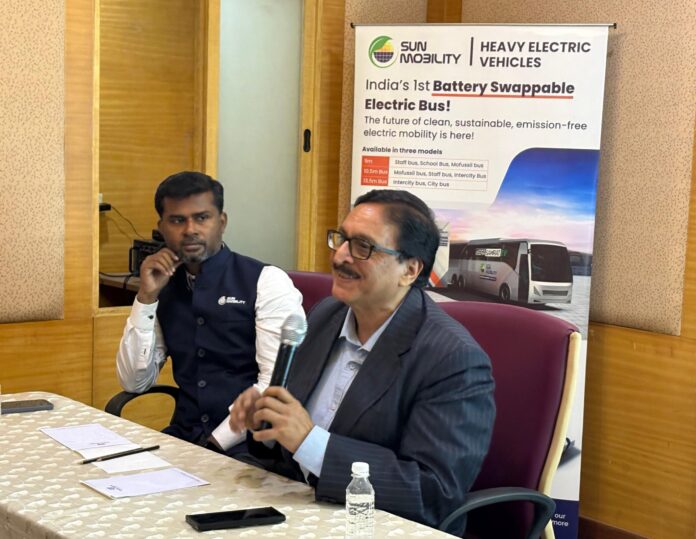
SUN Mobility, a leading provider of electric vehicle (EV) energy infrastructure and services, showcased India’s first modular battery swapping technology for heavy-duty electric vehicles (HEVs) at an event in Chennai. More than 100 private bus operators and operator associations from across Tamil Nadu participated in the event.

SUN Mobility, in partnership with leading bus manufacturer Veera Vahana, recently showcased a fully integrated mobility solution aimed at electrifying bus and truck fleets at Prawaas 4.0, an international conference organized by Bus and Automobile Operators Confederation of India (BOCI). This technology solution highlights the urgent need to electrify commercial fleets, especially heavy-duty vehicles, which is critical to reducing emissions, improving air quality and increasing the overall efficiency of the transportation sector. The event attracted over 10,000 inquiries for buses and subsequent workshops were mainly targeted at bus operators in Tamil Nadu. At the seminar, details of SUN Mobility’s products and cost-benefit analysis were highlighted. Additionally, it is discussed how this solution meets bus operators’ expectations to move to cleaner fuels with a similar cost structure and refueling experience to existing diesel buses.

During the event, SUN Mobility signed a memorandum of understanding with several of the region’s leading bus operators, highlighting the game-changing potential of battery swapping technology in the electrification of heavy vehicles.

Ashok Agarwal, CEO of SUN Mobility HEV, said: “SUN Mobility transforms HEV by solving key challenges faced by bus operators, including high cost of ownership, limited financing options, extended downtime due to long charging times and the burden of deploying charging infrastructure. Our modular switching technology provides a practical, cost-effective solution that improves operator efficiency and reduces operating costs.”

The battery replacement will reduce the upfront cost of the buses by 40%, making them comparable to the upfront costs of traditional ICE buses, which, coupled with easy access to financing, will break down barriers to entry for fleet owners to adopt electric vehicles. Additionally, it can reduce operating costs for fleet operators by up to 20%, while increasing bus uptime and higher utilization due to a quick swapping process within three minutes. The mofussil operation has a unique use case in Tamil Nadu where the trip frequency is very high with buses making 6 to 8 trips in 1 day (16 hours of operation) where there is a gap of 2 to 10 minutes between buses traveling on a route. This type of operation is not possible for stationary battery vehicles that require at least 3 hours of charging. Battery swapping can provide the right solution for these operations. The battery is compact and lightweight, ensuring higher payload capacity.

Today, buses and trucks account for about 5% of the vehicle fleet but account for about 50% of tailpipe emissions. 90% of the commercial vehicle sector is privately owned and given the cost sensitivity of the sector, battery replacement can boost the adoption of electric vehicles and play a vital role in the widespread adoption of electric buses.

Since its inception in 2017, SUN Mobility has carried more than 26,000 vehicles in the two-wheel, three-wheel and small four-wheel fleet segments. The company has more than 650 battery swap stations across the country, drives approximately 1.6 million kilometers every day, and replaces batteries 60,000 times. Usage has increased by an impressive 84% compared to last year. Through its recent strategic joint venture with IndianOil, SUN Mobility brings together the power of IndianOil’s nationwide network of over 37,000 petrol stations and equips them with SUN Mobility’s unparalleled battery swapping technology, making it as convenient as traditional petrol stations. As such, it will simplify customers’ EV experience by conveniently delivering Battery as a Service (BaaS) across the country and alleviate concerns around battery costs, battery end-of-life, maintenance, replacement and charging times.

Oben Electric launches Rorr EZ Sigma electric motorcycle –

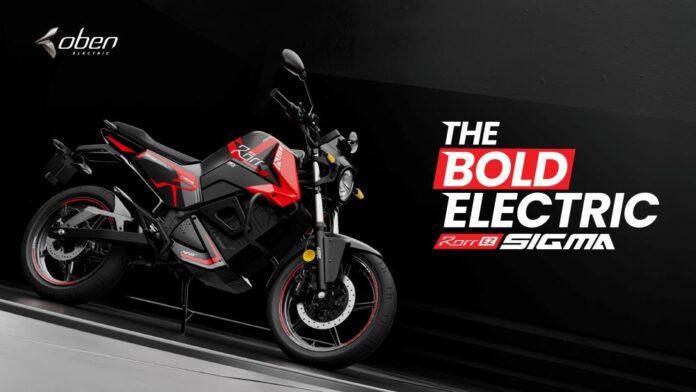
Homegrown electric motorcycle manufacturer Oben Electric has announced the launch of Rorr EZ Sigma, a bold next-generation electric commuter motorcycle at a limited-time sale starting at Rs 1.27 lakh. Designed to redefine urban commuting for the modern Indian rider, the Rorr EZ Sigma builds on the strong commuter-first DNA that has made the Rorr EZ a success, introducing key hardware and software upgrades to enhance the experience and usability.

Newly added features include reverse mode for easy maneuvering in tight urban spaces, while a 5-inch TFT color display enhances dashboard interaction with built-in navigation, trip meter and real-time alerts for calls, messages and music. Ergonomically redesigned seats improve comfort on long commutes, while bolder design graphics and a new Electric Red color add new vibrancy to the existing color palette (Photon White, Electric Amber and Surge Teal).

Rorr EZ Sigma is available in two battery variants and its launch price is Rs 1.27 lakh for the 3.4 kWh model and Rs 1.37 lakh for the 4.4 kWh model. The prices after the sale period will be Rs 1.47 lakh and Rs 1.55 lakh respectively. With EMI prices starting as low as Rs 2,999, the Rorr EZ Sigma provides customers with easy entry into the world of electric motorcycles.

Rorr EZ Sigma customers will also receive a free one-year subscription to the upgraded Oben Electric app. The connected app enables riders to track ride details, locate their motorcycle using Find My Rorr with built-in GPS and geofencing, access remote diagnostics, receive smart alerts, locate charging stations across 68,000+ networks, and activate anti-theft protection via remote lock, providing complete visibility and control from their smartphone.

At its core, Rorr EZ Sigma is powered by Oben Electric’s high-performance LFP patented battery technology, which provides 50% higher temperature resistance, twice the service life and unparalleled reliability in India’s diverse climatic conditions. Both models of the Rorr EZ Sigma have a top speed of 95 km/h and accelerate from 0 to 40 km/h in just 3.3 seconds. The bike has a class-leading 52 Nm of torque, ensuring fast acceleration and a smooth, exciting ride, making it ideal for urban traffic. The Rorr EZ Sigma has an IDC range of up to 175 kilometers and offers three riding modes (Eco, City and Havoc) for adaptive power delivery, giving urban riders the freedom to commute confidently without frequent charging interruptions. In addition, Rorr EZ Sigma is also equipped with a fast charging function that can charge from 0% to 80% in just 1.5 hours.

Commenting on the launch, Madhumita Agrawal, Founder and CEO, Oben Electric said, “The launch of Rorr EZ Sigma represents a decisive step on our path to shaping the future of urban commuting. With this next-generation model, we go beyond incremental upgrades and incorporate intelligence, comfort and reliability into a purpose-built motorcycle that meets the deeper expectations of today’s commuters. Rorr EZ Sigma Demonstrating our ongoing commitment to designing electric motorcycles that are technologically advanced yet meaningfully aligned with real-world use and aspirations.”

The Rorr EZ Sigma is built on Oben’s indigenous ARX frame and is specially tuned for Indian roads. It offers a high ground clearance of 200 mm and a 7-level adjustable rear mono-shock suspension to provide a stable and comfortable ride in different urban terrains. It has been designed with rider safety in mind, featuring Unified Brake Assist (UBA) that provides precise braking force and a Driver Alert System (DAS) that signals when the vehicle is started. Safety is further enhanced by 130/70-17 wide tires for superior grip and road stability, a 230mm wading depth for reliable performance on flooded roads, and smart security features such as geofencing-based anti-theft protection, battery anti-theft lock and patented vandal protection.

The Rorr EZ Sigma is now available for booking at a price of Rs 2,999 for test drives at Auburn showrooms across the country, with deliveries to customers starting from August 15, 2025. Backed by Auburn’s integrated in-house manufacturing and streamlined distribution network, Auburn ensures fast fulfillment, eliminates long wait times and provides a seamless buy-to-ride experience. Additionally, customers can purchase the Rorr EZ Sigma on Amazon.

To further enhance long-term ownership value, Oben is offering Battery Protection 8/80 plan on Rorr EZ Sigma at just Rs 9,999 with a transferable 8-year or 80,000 km battery warranty designed to enhance long-term ownership value and enhance resale confidence.

Electric Two-Wheeler Sales November 2025: TVS wins, leads the market due to strong demand of iQube.

TVS Becomes India Number One Ev Brand Surpassed Ola And Bajaj In Electric Scooter Sales Check Details – Electric Two-Wheeler Sales November 2025: TVS wins, leads the market due to strong demand of iQube.

Hindi News »

automobile »

Tvs Becomes India Number One Ev Brand Surpassed Ola And Bajaj In Electric Scooter Sales Check Details

Electric Two-Wheeler Sales November 2025: TVS wins, leads the market due to strong demand of iQube.

TVS Becomes India Number One Ev Brand Surpassed Ola And Bajaj In Electric Scooter Sales Check Details – Electric Two-Wheeler Sales November 2025: TVS wins, leads the market due to strong demand of iQube.

Hindi News »

automobile »

Tvs Becomes India Number One Ev Brand Surpassed Ola And Bajaj In Electric Scooter Sales Check Details

Mahindra sets sights on segment value leadership: Rajesh Jejurikar –

Backed by deep investments in products, people and infrastructure, the company is building a future-proof portfolio designed to compete with confidence on the global stage.

Author: T. Mulally

Mahindra is undergoing a major transformation from its traditional mass market image to a brand that can play comfortably in value-driven and premium segments. The shift is largely driven by its electric vehicle strategy, where products like the XUV9 launched in Bengaluru on November 27 showcase a new and aspirational design and technology direction, even as popular brands like Bolero continue to serve core rural and semi-urban customers.

Speaking at the roundtable, Rajesh Jejurikar, Executive Director and CEO of Mahindra & Mahindra Ltd, said that at the core of this evolution is the company’s belief in providing the right value proposition for each segment. Its electric vehicle journey has not only reshaped its product vision, but also strengthened its internal capabilities – growing its electric vehicle team from 1,000 people to more than 6,000 people in just three years, largely through internal training. He said this rapid expansion reflects both the company’s commitment and the depth of Indian engineering talent that is driving the development of its future-proof platform.

While the EV market is grappling with issues like range anxiety, Mahindra noted that real-world customer behavior tells a different story. Nearly a third of its 30,000 electric vehicle users drive 400 kilometers a day, and its models often have an actual range of more than 500 kilometers. Even the seven-seater XUV9 retains this range – a configuration that the OEM believes is in line with Indian preferences for flexibility and ‘just in case’ seating.

Talking about charging infrastructure, Mr. Nalinikanth Gollagunta, CEO, Automotive Division of Mahindra Ltd. and Executive Director, Mahindra Electric Vehicles Ltd., said that the company has set up two 180 kW fast charging stations with an average charging time of 18 minutes. By 2027, the company plans to deploy 1,000 chargers on 65 busy highways, complete with dining and rest facilities. The stations will be open to all electric vehicles and have real-time status integrated into Mahindra’s app to address the visibility gap that has frustrated many urban users.

Mahindra’s approach to product development is increasingly insights-driven. Jejurikar said Batman Special Edition, born out of social media ears and launched in just three months, has been a success and the company is redoubling its efforts to connect consumer sentiment with rapid product innovation. He also emphasized that the obsolescence of electric vehicles is often exaggerated: while software develops quickly, core hardware such as batteries and motors change slowly, making OTA updates and strong processing power even more important.

On the operational front, Mahindra is gearing up for the entire life cycle of electric vehicle ownership. Backed by its experience with three-wheelers, the company is actively establishing a battery recycling process and continues to offer India’s first battery lifetime warranty.

With electric vehicles already accounting for 8.7% of its SUV sales (Q2FY26), higher than the industry average of 5.5%, Mahindra expects this to rise to 20-25% by 2027 or 2028. Its electric SUV manufacturing capacity is expected to increase to 8,000 units per month by March 2026. Meanwhile, combustion engine vehicles with both powertrains will remain a key pillar, based on the coexistence of customer preferences and regulatory dynamics, he said.

Mahindra is also protecting its supply chain through proprietary de-risking strategies for batteries and rare earth materials, ensuring stable production amid global uncertainty. Its pricing philosophy remains transparent – growth will only be driven by real input cost rises rather than profit expansion, especially as the company acknowledges the government’s GST support for electric vehicles.

To support growth, Mahindra is expanding its sales and service network at a rate of 15-20% annually, Mr. Gollagunta said. While integrated showrooms for internal combustion and electric vehicles remain the preferred method of keeping customers within the brand, dedicated pure electric vehicle stores may be piloted in selected markets. In essence, Mahindra is not just preparing for an electric future, but building it. Mr. Jejurikar added that with significant investments in products, people, infrastructure and processes, the company is building a portfolio designed to compete confidently on the global stage, driven by innovation, agility and deep understanding of Indian customers.

Tata Motors secures another order for 148 electric buses from BMTC –

Tata Motors has secured an additional order for 148 electric buses from Bangalore Metropolitan Transport Corporation (BMTC). TML Smart City Mobility Solutions Ltd., a wholly-owned subsidiary of Tata Motors, will be responsible for the supply, operation and maintenance of Tata Starbus EV 12-meter low-floor electric buses for 12 years. This order is in addition to BMTC’s previous order of 921 electric buses, most of which have been delivered and are running successfully with over 95% uptime.

Tata Starbus EV offers superior design and best-in-class features for a sustainable and comfortable commuting experience. Developed using next-generation architecture and powered by advanced battery systems, these zero-emission electric buses provide safe, comfortable and convenient intra-city commuting in Bengaluru city.

Commenting on the news, Ramachandran R., IAS, MD, BMTC, said, “We are delighted to further strengthen our partnership with Tata Motors with the addition of 148 electric buses to modernize our fleet. The performance of the existing Tata electric buses is excellent and fully in line with our commitment to sustainable and efficient public transportation. A larger electric bus fleet will significantly enhance our ability to provide environmentally friendly, comfortable and reliable services to the citizens of Bengaluru.”

Asim Kumar Mukhopadhyay, CEO and Managing Director, TML Smart City Mobility Solutions Ltd. said, “We are deeply honored by BMTC’s continued trust in our electric mobility solutions. This additional order of 148 buses is a testament to the success of our Starbus electric vehicles and operational excellence in the Bengaluru urban environment. We remain committed to providing innovative solutions that benefit the community and environment.”

To date, Tata Motors’ electric buses have traveled more than 250 million kilometers in Bengaluru alone. This significantly reduces tailpipe emissions, saving approximately 14,000 tons of carbon dioxide. The success of Tata Motors’ electric buses in Bengaluru is a testament to the company’s commitment to innovation, sustainability and improving urban living through advanced mobility solutions.