Home Blog Page 26

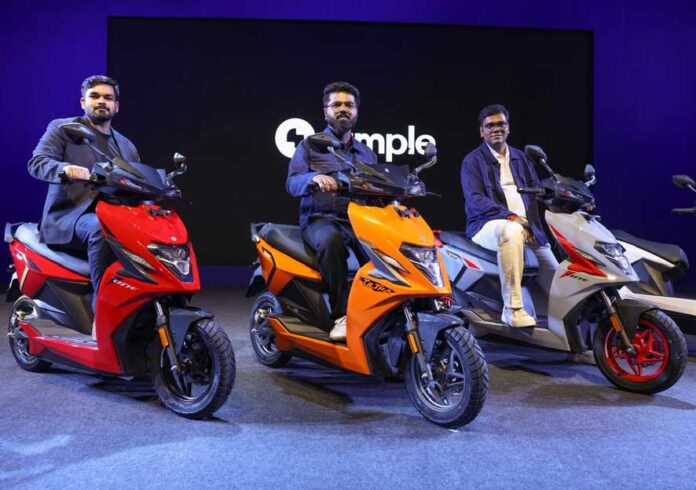
Simple Energy launches Gen 2 Simple One scooter, unveils 400km IDC Simple Ultra

Bengaluru-based electric two-wheeler manufacturer Simple Energy, known for its in-house R&D and first-principles engineering approach, has expanded its product portfolio with the launch of Gen 2 variants of the Simple One and Simple OneS as well as the introduction of India’s longest range electric scooter Simple Ultra.

The newly introduced Simple Ultra becomes the first electric scooter in India to offer an IDC-certified range of 400 km, removing one of the biggest barriers to EV adoption – range anxiety. Powered by a 6.5 kWh battery, the largest ever fitted to an electric scooter in India, the Simple Ultra has set a new benchmark in the electric two-wheeler segment.

Apart from its class-leading range, the Simple Ultra offers strong performance credentials, delivering a top speed of 115 kmph and 0-40 kmph acceleration in just 2.77 seconds. The scooter is positioned as the second fastest electric scooter in India, second only to the Simply One, combining extreme range with real-world riding performance.

The SimpleOneS Gen 2 now offers an improved IDC range of 190 km and is priced at Rs 1,49,999 (ex-showroom, Bengaluru). Meanwhile, the Simple One Gen 2 is now available in two battery configurations. The 4.5 kWh variant offers an IDC-certified range of 236 km, priced starting at Rs 1,69,999, while the 5 kWh variant increases the range to 265 km IDC, priced at Rs 1,77,999 (ex-showroom, Bengaluru).

As part of a limited-time introductory offer, the Gen 2 lineup starts at Rs 1,39,999, making the new range more accessible to early adopters. The Simple One (4.5 kWh), Simple One (5 kWh), and Simple OneS are available for immediate purchase.

The Gen 2 scooters are now on sale across 61+ Simple Energy showrooms across major cities including Bengaluru, Goa, Pune, Vijayawada, Hyderabad, Visakhapatnam, Kochi, Jaipur and Mangalore. Customers can also buy the scooter online through Amazon and Flipkart. The newly unveiled Simple Ultra will be available for pre-booking at Simple Energy showrooms.

With this launch, Simple Energy now offers four distinct electric scooter models, each designed to serve clearly defined rider segments, further strengthening the company’s focus on reducing range anxiety and accelerating electric mobility adoption in India.

Launching the variants, Suhas Rajkumar, Founder and CEO, Simple Energy, said, “At Simple Energy, we engineer with intention. Our Gen 2 portfolio reflects a well-thought-out, innovation-first approach – offering differentiated products as per range and performance requirements, all built for real-world reliability. One size does not fit all for Indian commuters, and a growing segment clearly demanding extreme range and performance without compromise. Simple Ultra is built precisely for that customer. Backed by over four years of in-house R&D, it offers an IDC range of 400 km for the first time in the industry. From day one, we are not just launching scooters – we are providing confidence, freedom and truly worry-free electric mobility.

Built on Simple Energy’s advanced in-house engineering architecture, the expanded portfolio delivers enhanced range, performance and long-term durability. For the first time in the industry, Simple Energy has also introduced lifetime warranty on motor and battery in its vehicle portfolio. Strengthening its engineering confidence, the home charger also includes 3 years/30,000 km vehicle warranty and 3 years/20,000 km charger warranty. All Simple Energy scooters support home charging via a portable 750W charger.

Simple One Gen 2 variants

Upgrade from Generation 1.5 to Generation 2: The Simple One Generation 2 offers meaningful upgrades in design, performance and everyday usability. The scooter features a refreshed design with a 1-litre glove box and a dedicated charging port for on-the-go convenience, as well as a redesigned, more minimalist dashboard and rider-centric controls. The Gen 2 also includes advanced features including traction control, four-level regenerative braking and cruise control. On the performance front, the scooter is now 8 kg lighter, with curb weight coming down to 129 kg, while peak motor power has increased to 8.8 kW. Underseat storage has been increased to 35 liters and seat height has been lowered to 780 mm for better rider comfort.

Variant Details: The 4.5 kWh variant of the Simple One Gen 2 offers a peak power of 6.4 kW and torque of 52 Nm. It has a top speed of 90 kmph and accelerates from 0 to 40 kmph in 3.3 seconds. The 5 kWh battery variant of the Simple One Gen 2 offers a maximum power of 8.8 kWh and torque of 72 Nm. It reaches a top speed of 115 kmph and accelerates from 0 to 40 kmph in 2.55 seconds. Both variants of the Simple One Gen 2 offer six riding modes including Eco X, Eco, Ride, Air, Sonic and Sonic X. Designed for everyday comfort, the scooter features a 780mm seat height and 35L of underseat storage. Both variants are equipped with CBS disc brakes on both wheels, supported by a four-stage advanced regenerative braking system. The portfolio is available in five single-tone finishes, Brazen Black, Aero Grey, Grace White, Azure Blue and Sonic Red as well as four dual-tone options, Lite X, Aero X, Brazen X and Asphalt X.

Simple OneS Gen 2: Simple OneS Gen 2 has been upgraded to improve range and riding performance. The IDC-range of the scooter has increased by 9 km, and its weight has reduced by 118 kg. Powered by a 3.7 kWh battery, it produces a maximum power output of 6.5 kWh and 52 Nm of torque, with a top speed of 90 kmph and acceleration of 0-40 kmph in 3 seconds. Braking performance has been improved, braking distance has been reduced to 18.49 meters. Along with this, the scooter offers 35 liters of underseat storage and a seat height of 780 mm, ensuring a comfortable riding experience.

Providing a connected riding experience: Built for a connected riding experience, the Simple One Gen 2 scooter features a 7-inch touchscreen dashboard, while the Simple One Gen 2 comes with a non-touch display. Both models are powered by 5G e-SIM with LTE connectivity and Bluetooth, enabling seamless call management on the go. The interface supports app integration, customizable themes, and over-the-air updates. The Simple One Gen 2 offers in-built map navigation, while the Simple One Gen 2 offers turn-by-turn navigation. Safety and control features include Find My Vehicle, TPMS, Intelligent Regenerative Braking and Park Assist with forward and reverse movement for easy operation. Running on Android 12, the system is supported by 32GB of storage on the Simple One Gen 2 and 8GB of storage on the Simple One Gen 2. IP65-rated protection ensures reliable performance in various weather and road conditions.

As Simple Energy strengthens its product portfolio, the company is moving ahead with its pan-India expansion, targeting around 150 dealerships and 200 service centers by March 2026. The company is preparing for an IPO in Q2-Q3 FY27, with a target to raise around US$350 million. It also aims to achieve EBITDA positivity before the end of FY26 and full net profitability before listing. To date, Simple Energy has raised US$51 million from a strong base of investors and HNIs, including the Family Office of Dr. Arokiaswamy Velumani, Balamurugan Arumugam, Haran Family Office, Desai Family Office (promoters of Apar Industries) and Vasavi Family Office.

Ather Energy appoints Surabhi Loshali as Chief Human Resources Officer.

Ather Energy Limited, one of India’s leading electric two-wheeler manufacturers, has announced the appointment of Surbhi Loshali as its Chief Human Resources Officer (CHRO) with immediate effect.

In her new role, Loshali will lead Ather Energy’s end-to-end HR function, covering talent acquisition, leadership and capability development, organization design, employee experience, diversity and inclusion, HR technology and people analytics.

Loshali has over two decades of HR leadership experience in sectors including pharmaceuticals, life sciences, manufacturing, technology and financial services. Before joining Ather, he served as Group CHRO at Strides Pharma Science Ltd., where he led global people initiatives across multiple geographies.

His expertise spans people strategy, organization development, talent management, large-scale change, people analytics and culture building. He holds a Post Graduate Diploma in Management (HR) from XLRI Jamshedpur and a bachelor’s degree in Polymer Science and Chemical Engineering from Delhi College of Engineering.

Commenting on the appointment, Tarun Mehta, Executive Director and CEO, Ather Energy, said organization building remains a strategic priority for the company. He added that as Ather grows in products, markets and capabilities, it is important to have a strong focus on building future-ready teams and systems. Mehta said Loshali’s experience in strengthening people systems while preserving organizational culture will be valuable in Ather’s next phase of growth.

Expressing his enthusiasm, Loshali said that he is excited to join Ather at this important phase of its journey. He said his focus will be on deepening leadership capabilities, building future-ready skills and enhancing people systems while protecting the culture that defines Ather.

The appointment comes as Ather Energy continues its expansion in India’s electric two-wheeler market. Founded in 2013 by Tarun Mehta and Swapnil Jain, the company currently offers two product lines – the Ather 450 performance scooter series and the Ather Rizta family scooter range, which is slated to be launched in 2024 – which together include nine variants.

Ather also operates India’s most extensive two-wheeler fast-charging network, Ather Grid. By September 30, 2025, the company had installed 4,322 fast and neighborhood chargers globally, including 4,282 in India and 40 in Nepal and Sri Lanka.

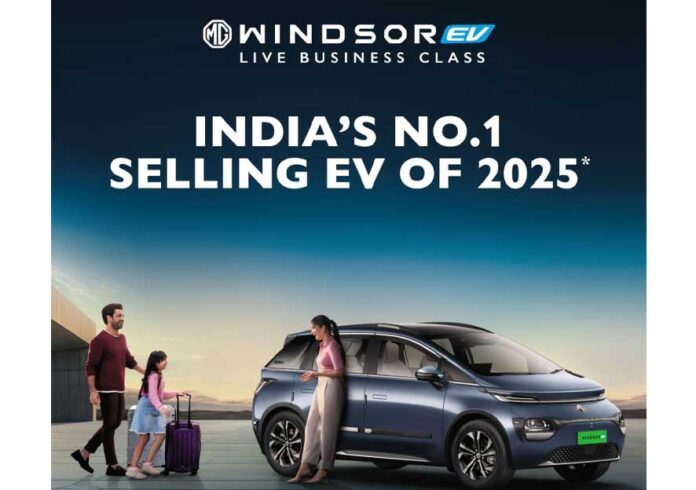
MG Windsor emerges as India’s best-selling electric vehicle in 2025

JSW MG Motor India has announced that MG Windsor has achieved a major milestone by becoming India’s best-selling electric vehicle in 2025. With retail sales of 46,735 units during the year, MG Windsor has set a new benchmark in India’s four-wheeler EV segment, a feat unmatched by any other OEM in the country to date.

The success of MG Windsor has been driven by its strong appeal among Indian families, generous cabin space, superior comfort and feature-rich interiors with a refined and engaging driving experience. The model has emerged not only as a market leader but also one of India’s most respected and widely loved electric vehicles.

Speaking on the occasion, Anurag Mehrotra, Managing Director, JSW MG Motor India, said, “Windsor epitomizes a contemporary automotive marvel that has redefined the EV segment with its practicality, technology and futuristic design. It has succeeded in accelerating EV adoption and made EV owners proud and is definitely a trendsetter within India’s EV revolution. With Windsor, we have transformed customers into brand advocates. I am extremely happy to see it become India’s number 1 selling EV in 2025, and we look forward to making 2026 even more memorable.

The carmaker ended CY2025 with an overall growth of 19% and recorded a significant growth of 111% in its EV sales compared to CY2024. The consistent demand for MG EVs is evident not only in Tier I cities but also in non-metros and emerging markets, indicating India’s readiness to adopt sustainable mobility solutions.

MG Windsor, India’s first intelligent CUV, combines the spaciousness of a sedan and the versatility of an SUV. It is offered with a starting BaaS price of INR 9.99L + INR 3.9/km*, and produces 100 KW (136ps) of power and 200Nm of torque. MG Windsor offers two battery pack options for added versatility: a 38 kWh pack with a range of 332 km# and its PRO variant, a 52.9 kWh pack, offering an impressive range of 449 km#.

The MG Windsor goes beyond the traditional split concept, with a futuristic ‘aeroglide’ design language. Inside, the car is offered with business-class comfort with ‘Aero Lounge’ seats that recline up to 135 degrees, providing utmost comfort. Additionally, the huge 15.6” Grandview Touch Display on the center console provides an intuitive driving experience.

Electric scooters will be launched in India in 2026, Ola-Ather will get tough competition.

Electric Scooters Will Be Launched In India In 2026 Ola Ather Will Face Tough Competition – Electric scooters will be launched in India in 2026, Ola-Ather will face tough competition.

Hindi News »

automobile »

Electric Scooters Will Be Launched In India In 2026 Ola Ather Will Face Tough Competition

Important tips to save range and performance of electric vehicle in cold, don’t forget these things.

Winter Tips For Electric Car Owners Battery And Perdormance Will Be Down Not Follow – Important tips to save the range and performance of electric vehicle in winter, do not forget this.

Hindi News »

automobile »

Winter Tips For Electric Car Owners Battery And Perdormance Will Be Down Not Follow

Cellestial E-Mobility to launch electric vehicles –

Hyderabad-based startup Cellestial E-Mobility is gearing up to enter the promising next-generation electric vehicle market. The company is in the advanced stages of developing electric tractors with the longest battery life on the market.

The Hyderabad-based company launched its business operations in May this year with an initial capital of $200,000. The first round of investment came from angel investor Meka Sudhakar Reddy, a Singapore-based NRI with over 18 years of expertise in logistics spacing.

“We are ready to launch the first prototype in the next one month,” said Siddhartha Durairajan, founder promoter of Cellestial E-Mobility. Explaining the characteristics of the tractor, Siddhartha pointed out that the electric vehicle invention is a zero-emission ecological tractor suitable for gardening or greenhouse work or moving goods in factories, as well as a vehicle for hauling luggage at airports.

The startup is optimistic about the market potential as the EV transition offers unmet opportunities to Indian manufacturers as all major cities are already facing severe traffic congestion and rising pollution levels. India needs to leverage new mobility solutions and electric vehicles will be an important part of this mobility revolution. It is also attractive for many ecological reasons.

Cellestial has the capacity to manufacture 100 electric heavy-duty vehicles and has the ability to create more production if consumption of its products grows.

The market is further stimulated by the government’s eagerness to launch electric vehicles, rapidly reducing battery costs, advancements in technology, charging infrastructure, innovative business models, influx of smart digital technologies, and green policies and subsidies.

According to industry forecasts, by 2030, as many as 40% (about 24 million vehicles) of new cars sold in India will be battery-powered. The number of electric vehicles sold in India in 2030 is expected to exceed the total number of cars sold in India in 2016 (approximately 22 million vehicles).

The leadership team of Cellestial E-Mobility includes Siddhartha Durairajan with engineering design expertise of over 20 years of new age industry experience, Syed Mubasheer Ali with 16 years of battery manufacturing expertise, Vinod Moudgil with over 30 years of tractor manufacturing expertise and Midhun Kumar with over 15 years of casting, machining and manufacturing expertise.

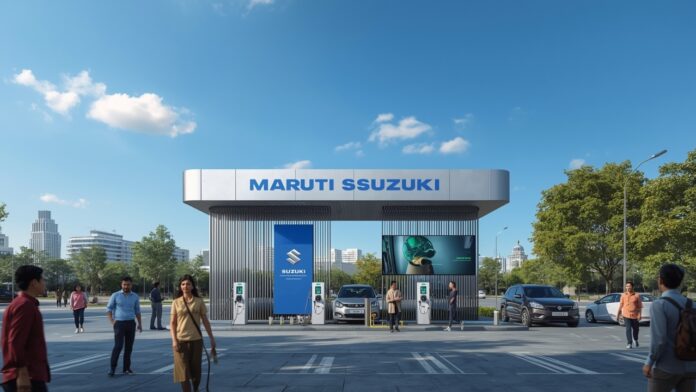
Maruti Suzuki’s big announcement: 1 lakh EV charging stations will open across the country.

Maruti Suzuki To Open 1 Lakh Ev Charging Stations Across India Announced Before E Vitara Launch – Maruti Suzuki’s big announcement: 1 Lakh EV charging stations will open across the country.

Hindi News »

automobile »

Maruti Suzuki To Open 1 Lakh EV Charging Stations Across India Announced Before E Vitara Launch

Zoomlion launches world’s first all-electric vehicle crane –

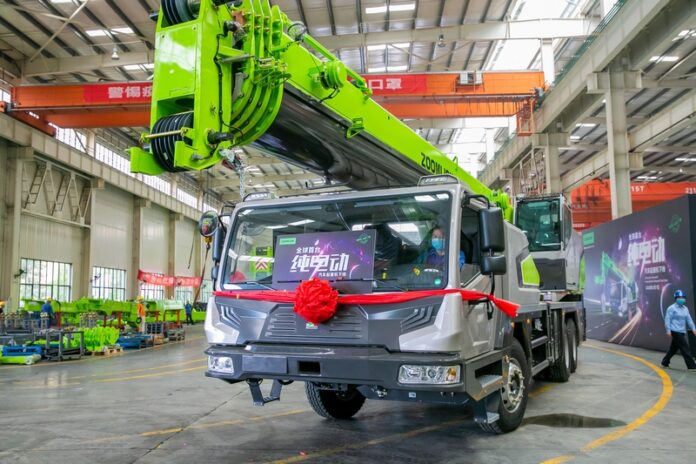
According to the Chinese manufacturer, the 25-ton ZTC250N-EV battery electric vehicle crane can reduce energy costs by 35% compared with traditional truck cranes of the same level.

Zoomlion’s ZTC250N-EV 25-ton electric vehicle crane has a driving range of 260 kilometers.

In order to promote emission reduction and sustainable development in the heavy equipment industry, China Zoomlion has developed the world’s first zero-emission truck crane. Earlier this month, the 25-ton ZTC250N-EV rolled off the company’s assembly line in Quantang Industrial Park, Changsha, China.

Electric truck cranes look no different than diesel truck cranes. Zoomlion claims it strikes the right balance of dynamic performance and frugality while also being more environmentally friendly than other similar machines. It has a top speed of 90 km/h and a gradeability of up to 50%. The company claims the truck crane has a range of 260 kilometers (160 miles), which is sufficient to meet the requirements of most operators.

In addition, the crane is equipped with standard charging plugs and industrial sockets commonly used on construction sites. In this way, the machine becomes user-friendly in terms of charging without affecting practicality and performance. The intelligent control system can accurately control the vehicle, and the sound of the crane when traveling or operating does not exceed 65 decibels.

Wang Qitao, technical director of Zoomlion Engineering Crane Branch, said: “We have cooperated with the world’s leading green energy parts supplier to customize the truck crane’s usage scenarios and working conditions, and equipped the truck crane with the world’s safest high energy storage density lithium iron phosphate battery.” The body and chassis adopt the ZIC intelligent collaborative control strategy, which perfectly combines the TCEMS high-efficiency energy management system and the BMS battery management system.

He also said that Zoomlion established a professional team composed of personnel from R&D, engineering, manufacturing and quality control departments in 2018 and completed the production of truck cranes within two years. He said that the product is in line with the company’s concept of energy conservation, emission reduction and sustainable development.

Source: Zoomlion

Big EV for less money! Know which is the most affordable 5-seater electric car in India.

Cheapest 5 Seater Electric Car In India Tata Tiago Not Eva And Mg Comet Ev – Big EV for less money! Know which is the most affordable 5-seater electric car in India.

Hindi News »

automobile »

Cheapest 5 Seater Electric Car In India Tata Tiago Not Eva And Mg Comet Ev

Sany Heavy Industry launches battery electric concrete mixer truck –


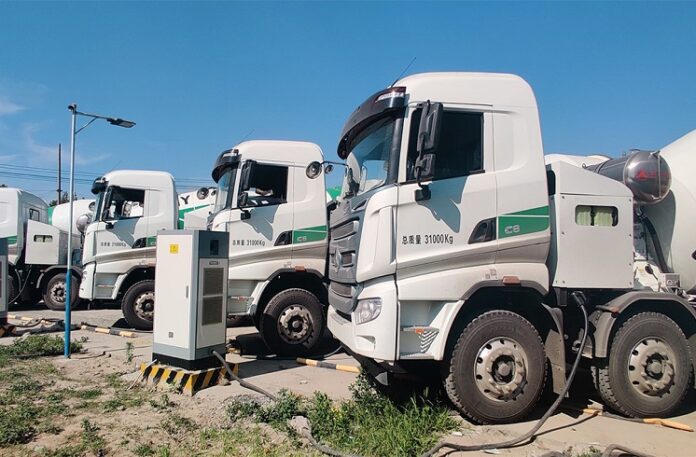
The electric mixer truck has a maximum power of 350 kW, a torque of 2,800 Nm, and a cruising range of 250 kilometers, which is superior to diesel-powered mixer trucks.

Chinese heavy equipment manufacturer Sany Heavy Industry recently launched a pure electric truck mixer for construction applications. These electric trucks will be officially launched at the upcoming Bauma China 2020 in late November this year. The company claims that these trucks are not just prototypes but have been delivered to and commissioned by its strategic partners in China. Sany’s battery-powered solutions will support customers in building confidence in dealing with increasingly stringent emissions regulations, it added.

Lightweight design, equipped with a permanent magnet synchronous motor, with a maximum power of 350kW and a peak torque of 2800Nm, which is significantly better than diesel vehicles. The high energy density lithium iron phosphate battery provides sufficient energy source for the vehicle’s sports and hybrid activities, enabling the NEDC rated driving range to reach 250 kilometers.

What’s more important is the safety design of the vehicle. Sany claims to have worked with the world’s leading battery suppliers to enhance the power source through thermal management technology, anti-rollover structures and fire prevention systems.

Other features of the electric vehicle include self-heating in low-temperature environments and an advanced cooling system in high-temperature conditions, giving the vehicle versatility in a wide range of operating conditions. In addition, Sany Automobile’s dedicated IoT platform Truck Line also provides real-time monitoring, performance analysis, remote diagnosis and other productivity-improving functions.

Source: Sany Heavy Industry