

The segment climbed to 6.6% in May 2026 from 6.1% in April 2026 and 4.5% in May 2025, a steady and encouraging upward trend that reflects growing consumer confidence in electric vehicles
India’s electric passenger vehicle sector performed strongly in May 2026, with total retail registrations reaching 26,682 units, a year-on-year increase of 81.20% from 14,725 units in May 2025, and a month-on-month increase of 2% from 26,160 units in April 2026.
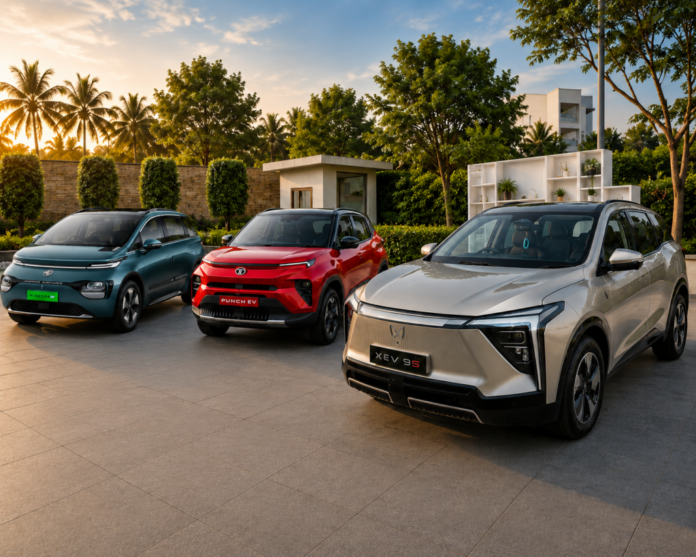
Tata Motors maintained its lead with sales of 10,340 units in May 2026, an increase of 11.16% from 9,302 units in April and a year-on-year growth of 103.42% from 5,083 units in May 2025. The figures confirm Tata’s enduring dominance in the Indian EV space, backed by a broad product portfolio and an expanding charging ecosystem.
Mahindra’s sales in May 2026 were 6,210 units, an increase of 6.66% from 5,822 units in the previous month, and a year-on-year increase of 114.80% from 2,891 units in May 2025. Mahindra has now firmly established itself as the second largest EV player in the passenger car segment, with its BE and XEV range clearly resonating strongly with buyers. This trajectory shows that Mahindra is not only participating in the EV market but also actively reshaping it.
JSW MG Motor’s sales in May 2026 were 4,984 units, down 8.04% from 5,420 units in April, but still up 8.37% year-on-year from 4,599 units in May 2025. The sequential decline after a strong performance in April suggests a slowdown in demand or supply-side factors, but the company’s continued sales above the 4,500-unit mark underscores its relevance. The third largest electric vehicle manufacturer in the field.
By May 2026, Maruti Suzuki has sold 1,591 units, up 19.53% from 1,331 units in April, making steady progress in the electric vehicle segment. The company has no comparable year-over-year data from May 2025, suggesting it only entered electric passenger vehicle retail in the second half of fiscal 2026. The continued quarter-on-quarter growth suggests that the e-Vitara is finding its audience, and Maruti’s vast dealer network provides it with significant long-term advantages.
VinFast’s sales in May 2026 were 1,238 units, a slight decrease of 4.11% from 1,291 units in April. There is no comparable year-on-year data. For a brand that recently entered India, maintaining sales above 1,200 units is a reasonable starting point. The next few months will be critical in determining whether VinFast can maintain and grow this foundation.
BYD’s sales in May 2026 were 686 vehicles, a strong increase of 25.41% from 547 vehicles in April, and a year-on-year increase of 10.47% from 621 vehicles in May 2025. The sequential growth is eye-catching and may reflect growing acceptance of BYD’s premium EV products, especially as the company prepares to launch its DM-i hybrid technology in India.
Hyundai Motor’s sales in May 2026 were 460 units, a month-on-month decrease of 17.56% from 558 units in April, and a significant year-on-year decrease of 36.02% from 719 units in May 2025. The sustained decline in both periods is worrying for the brand that once had a strong position in India’s electric vehicle space. With Tata and Mahindra consolidating their lead and new players emerging, Hyundai will need to refresh its EV portfolio to regain lost momentum.
BMW’s sales in May 2026 were 352 vehicles, which was basically the same as the 348 vehicles in April, but compared with 201 vehicles in May 2025, a strong year-on-year increase of 75.12%. In the high-end EV segment, BMW is holding its own, with year-on-year growth reflecting real demand expansion in the luxury EV segment.
Kia sold 349 units in May 2026, down 13.40% from 403 units in April, but the year-over-year performance was extraordinary – a 751.22% jump from 41 units in May 2025. The figures reflect the momentum of Kia’s success with the EV6 and EV9, as well as the broader expansion of its electric portfolio in India. A monthly decline following a strong performance in April isn’t unusual and doesn’t detract from the larger growth story.
Mercedes-Benz launched 208 vehicles in May 2026, an increase of 76.27% from 118 vehicles in April and an increase of 70.49% from 122 vehicles in May 2025. The sequential sharp recovery points to strong order fulfillment in the ultra-premium segment, reinforcing that demand for luxury electric vehicles in India remains strong and growing.
Tesla’s sales in May 2026 were 35 vehicles, a decrease of 18.60% from 43 vehicles in April, and there is no comparable year-on-year data. For a globally recognized brand like Tesla, sales are still modest, reflecting the early stages of its India operations. Pricing, localization strategy and service network expansion will be key factors that determine the speed of Tesla’s expansion in the Indian market.
Volvo sold 29 cars in May 2026, down 34.09% from the 44 cars sold in April, and down 19.44% from the 36 cars sold in May 2025. As a niche premium brand, Volvo’s sales are inherently volatile and order-driven, but the consecutive declines suggest the brand needs to reignite interest in its electric vehicle lineup.
Stellantis sales in May 2026 were only 22 units, a month-on-month decrease of 26.67% from 30 units in April, and a significant year-on-year decrease of 82.95% from 129 units in May 2025. The sharp year-on-year decline raises questions about the brand’s EV strategy in India – be it portfolio rationalization, product transformation or market share challenges that need to be addressed.
The bigger picture
The Indian electric passenger car market is clearly past the early adoption stage. With total sales increasing by 81% year-on-year and electric vehicle penetration exceeding 6.6%, the segment is entering a new chapter of mainstream adoption. The market remains concentrated at the top – Tata Motors and Mahindra together accounted for more than 61% of the May total – but the meteoric rise of Maruti Suzuki and VinFast suggests the competitive landscape is broadening. As more affordable electric options enter the market and charging infrastructure expands, the milestone of 10% EV penetration in passenger vehicles looks increasingly likely to be achieved within the next 12 to 18 months.