BYD, the world’s leading manufacturer of new energy vehicles, is gearing up to make a strong mark at the India Mobility Global Expo 2025. BYD India plans to introduce its globally acclaimed models alongside its current lineup, highlighting its expertise in innovative new energy vehicle technology. And cutting-edge design.
India Mobility Global Expo provides an important platform to showcase the latest advancements in the automotive industry on a global platform. BYD India’s participation underlines its commitment to bring world-class new energy mobility solutions to the Indian market. Visitors to the BYD Pavilion at Hall 6 Booth 08 will have the opportunity to experience first-hand the innovative technology and superior performance that have earned BYD vehicles international recognition. BYD has also achieved the milestone of 10 million sales globally. This year’s showcase will highlight BYD’s dedication to providing Indian consumers with cutting-edge new energy vehicles that meet global standards of quality, performance and sustainability. BYD is committed to supporting India’s transition towards sustainable transportation and contributing to the development of the country’s EV ecosystem.
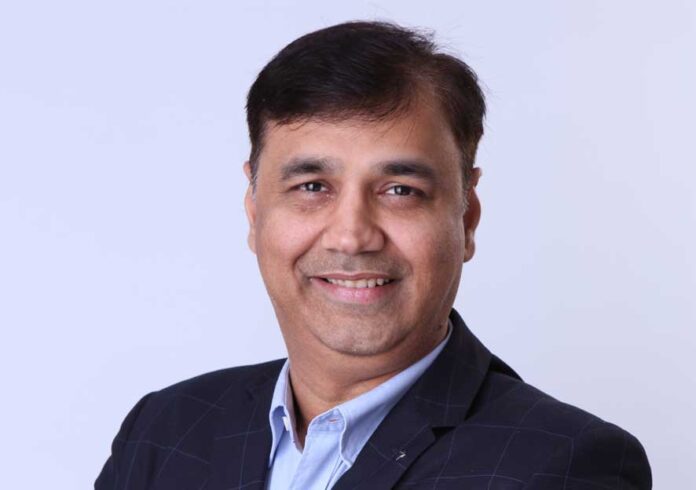
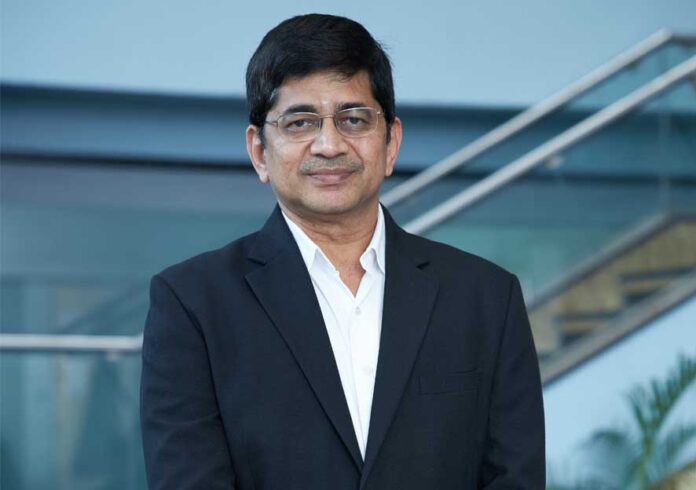
Mr. Rajiv Chauhan, Head of Electric Passenger Vehicles (EPV) Business at BYD India, says, “We believe that events like the Bharat Mobility Global Expo 2025 are important to accelerate the adoption of electric vehicles in India. The event brings together key players in the automotive industry, and BYD is proud to be a part of this important event. We first participated in the previous edition of the Auto Expo in 2023 and this year our participation in the India Mobility Global Expo 2025 reinforces our dedication to providing cutting-edge EV solutions that contribute to a clean environment and green future for India .
BYD India currently offers three exciting models in the Indian market: India’s first 6/7 seater electric MPV – BYD eMAX 7, the technologically advanced BYD SEAL sedan and the versatile BYD ATTO 3 electric SUV. In India, BYD SEAL won the Times Network Award for EV Sedan of the Year and the Best Battery Technology Award. It was also awarded the Autocar Award for Premium EV of the Year. BYD SEAL also received the Jagran Hitech Award for 2024 Premium Car of the Year (Editor’s Choice) and the AutoX Best of 2024: 4W Award. On the international stage, BYD SEAL received the prestigious iF Design Award and was selected among the top three finalists for “World Car of the Year” at the World Car Awards at the 2024 Geneva Motor Show. These vehicles symbolize BYD’s commitment towards innovation, performance and environmental responsibility and will also be showcased at the BYD India Pavilion at the India Mobility Global Expo 2025. Additionally, the showcase will also feature models from BYD’s global portfolio, some never seen before in India and some of the most significant. Technology designed to increase efficiency and stability.
Visit BYD India Pavilion in Hall 6-08 at India Mobility Global Expo ’25 to experience the future of mobility.
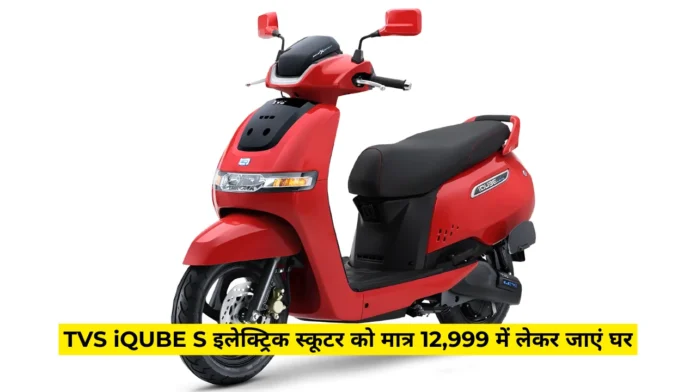
TVS iQUBE S: Electric Scooter, Electric Scooter, Electric Scooter Whichever company you look at, the same company is preparing to launch its new EV scooter. But no one is paying attention to reducing the price of these scooters. Keeping this in mind, TVS has released a new finance plan for its scooter. In which you can earn for yourself even on minimum budget. iQUBE You can bring the scooter home.
This electric two wheeler makes your daily tasks easier. With this scooter you can go to your office, market or any time to visit your friends’ square in your city. Now you can bring this scooter to your poor family with a down payment of only Rs 13,999. So let us know the further process.
EMI plan of TVS iQUBE S
TVS iQUBE S
If you come from a low-income family and have a little budget constraint, then there is no need for you to worry because you can bring this TVS electric scooter to your home after making a down payment of just Rs 13,999. After which the showroom staff will get you a loan of the remaining amount, after which you will have to pay a monthly EMI of Rs 3,385 for 3 years at an interest rate of 9.7 percent.
Also read:- Buy KTM Duke 250 today at Rs 25,000 off on Year End Sale offer.
Battery performance of TVS iQUBE S
To contribute to the best performance of this scooter in doing your work, a 3.2 kilo watt battery pack has been included in it which is equipped with Lithium Ion. Because of which this EV scooter gives a tremendous performance. To charge this scooter, it also has a quick fast charger which charges the scooter from 0 to 100% in 2.4 hours. After that this electric scooter gives you a range of 100 km and that too at a top speed of 90 km.
Also read:- Know how much advanced features and power is there in Kia Syros
TVS iQUBE S price
If we talk about the price of this electric scooter, then it comes to you in the Indian market for Rs 79,999 ex-showroom. Which is slightly cheaper than electric scooters of companies like Ola, Bajaj and TVS.
Also read:- Bring home Royal Enfield Classic 350 bike at a price of just Rs 9,999
Features of TVS iQUBE S
TVS has equipped this electric scooter with many advanced features. In which smart LED head light with DRLs light, 7 inch multi functional touch screen console in which music player, navigation, map tracking and other information of the scooter can be seen. Apart from this, it includes features like HMI control, 32 liters of boot space, disc brake with R12 tube less tyre, in rare case also drum brake with R12 tube less tyre.
Also read:- Bajaj Chetak 3501 vs Ola S1 Pro: Know which has more power and range
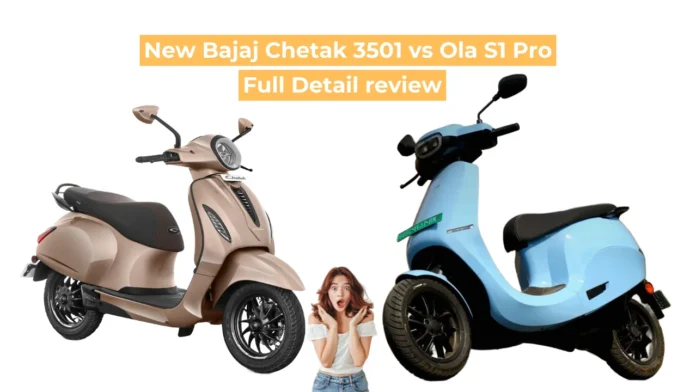
Bajaj Chetak 3501 vs Ola S1 Pro: Hello friends, if you are planning to buy an electric two-wheeler with powerful features and amazing range at a low price on the auspicious occasion of arrival of 2025, then Bajaj’s new model launch is for you. Chetak 3501 and Ola’s S1 Pro Could be a good option. So today we have brought this comparison for you so that you can get color as to which is more economical for you and how.
Price of Bajaj Chetak 3501 vs Ola S1 Pro
If you belong to a low-income family in India and you want to get an electric scooter for yourself so that you can hang out with your friends or complete any other work easily, then both of these EV scooters can prove to be great for you. Are. If we discuss about its price, then Chetak 3501 is available for Rs 1,27,245 ex-showroom in the Indian market, while Ola S1 Pro is available for Rs 1,28,999 ex-showroom in the Indian market.
New Bajaj Chetak 3501
Also read:- Honda changed the map of its 125 cc bike, new features will be hard to believe
Stylish features of Bajaj Chetak 3501 vs Ola S1 Pro
Both these electric scooters are the scooters that come with the most futuristic features in India. In Chetak 3501, you get TFT digital display in which you will be able to enjoy Google Map, GPS tracking, phone connectivity, music system, apart from this it has 35 liter boot space under the seat, 5 liter boot space near the front foot, LED projector. Features like DRLs with head light, LED tail light at the back, self start button are available.
Also read:- Simple Energy One brings down Ola’s shares with 212 Km range and 105 Km top speed
In Ola S1 Pro, you get features like voice calling system, music player, cruiser control system, reverse mode, hill hold function, tech connectivity system, auto unlock system. Which reduces the hard work of your journey.
Also read:- India’s most affordable car: Want to buy a luxury car that comes at a cheap price, see this amazing option.
Battery pack and range of Bajaj Chetak 3501 vs Ola S1 Pro
Along with the features, many modern features have also been included in both these electric scooters. If you talk about which, in 3501 you get a 3.5 kilo watt battery pack. With the help of which this electric scooter gives you a range of up to 153 km.
If you talk about Ola, then you are offered a single battery pack of 3.92 kilo watt. Which gives you power of 11.5 Ps and torque of 58 Nm. With the help of which this EV scooter gives you a range of up to 181 km with a top speed of 115 km.
Also read:- Bajaj Chetak 3501 vs Ather Rizta Z: Know which is best and economical for you!
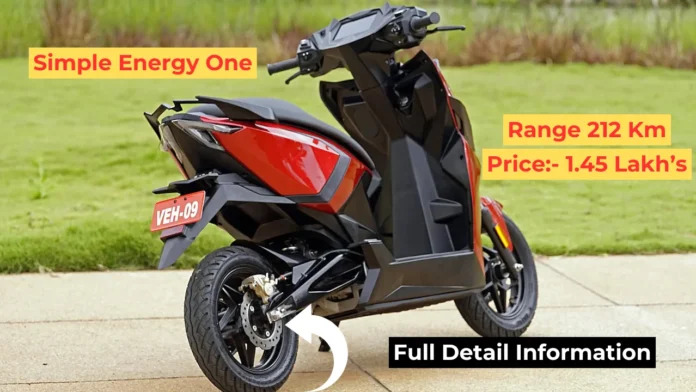
Simple Energy One: Now in India people prefer buying an electric scooter more than petrol and diesel scooters. Keeping this in view, Simple has decided to launch its new advanced scooter in the market. In which you get many new and exciting features. Ola has suffered the most loss due to the arrival of this scooter in the Indian market, the reason being its price and range. So now let us know some interesting information about it.
Simple Energy One Battery Pack
If you talk about the battery pack of this electric scooter, then the company offers a 5 kilo watt battery pack with which it also has a powerful and fast charging port. Due to which this scooter gets charged from 0 to 100% in just a few hours.
Simple Energy One range
Simple Energy One
This simple electric scooter Once the 5 kW battery pack is charged from 0 to 100 percent, this scooter gives you an excellent range of 212 km. So that you can have fun with your friends from morning till evening without any problem.
Also read:- Yamaha Aerox Alpha scooter coming with 155 cc powerful engine and stylish design
Price of Simple Energy One
If you go from one city to another for work every day and are looking for an electric scooter with more range. So that you can enjoy traveling at a low cost. So this scooter proves to be perfect for you, the price of which has been fixed at Rs 1.45 lakh ex-showroom in the Indian market.
Also read:- Now Made In India will ring. Land Rover launches its first Range Rover Sport.
Futuristic features of Simple Energy One
Simple has not limited this scooter to just powerful battery and range. In this you get LED projector head light with LED DRLs, rear suspension, mono shock suspension at the front, full touch screen which shows GPS navigation, range, battery charge, and time.
Also read:- Bajaj Chetak 3501 vs Ather Rizta Z: Know which is best and economical for you!
Apart from this, it has self start button, single split seat, 30 liters of boot space, you also get to see mobile control system in it, through which you can control this scooter from your mobile in just one click. Features like are given to you in it. Due to which your journey becomes more efficient and comfortable.
Compared to Simple Energy One
This scooter is going to compete with scooters like Ola’s S1 X, Bajaj Chetak 35 Series and Yamaha Aerox Alpha in the Indian market. Please tell us your thoughts on this in the comments.
Also read:- India’s most affordable car: Want to buy a luxury car that comes at a cheap price, see this amazing option.
The electric two-wheeler market in India has experienced significant growth in recent years, emerging as a key driver of the country’s EV revolution. These agile and innovative vehicles now account for about 55% of all EV sales, outpacing the growth of electric three-wheelers and four-wheelers. According to recent data, around 0.94 million electric two-wheelers were sold in FY24, a growth of 30% over the previous year. This surge underlines the growing popularity of these eco-friendly mobility solutions.
The key factors driving this growth include increased environmental awareness, rising consumer preferences and increasing urban congestion. Additionally, government initiatives such as FAME-II and Electric Mobility Promotion Scheme (EMPS) have played a significant role in driving this trend. These visionary policies have promoted awareness and encouraged adoption through incentives such as tax benefits and subsidies, thereby contributing significantly to the impressive performance of the sector.
The electric two-wheeler market is booming, with many companies offering a diverse range of scooters and motorcycles to suit different consumer segments. This rapid growth has led to an increase in the number of new startups in the industry, while established players are pushing the boundaries of innovation to maintain a competitive edge. Key advancements focus on battery technology, extended vehicle ranges and advanced features, designed to provide consumers with affordable and efficient options.
Additionally, significant investments in the sector are enabling companies to expand operations, expand product portfolios and explore cutting-edge technologies. Collaboration between vehicle manufacturers and technology companies is accelerating the development of the necessary charging infrastructure, which is critical to the continued expansion of the sector. These dynamic developments are propelling the industry forward, setting the stage for an exciting future in the electric two-wheeler sector.
Having reached this remarkable milestone, it is important that we strategically plan the journey ahead. A critical issue that demands immediate attention is the lack of EV charging infrastructure, especially in tier-2 and tier-3 cities. The lack of easily accessible charging stations is hindering consumers in these cities from switching from conventional petrol-powered two-wheelers to electric vehicles. With their significant population density and widespread use of two-wheelers, these cities hold immense potential to drive the next wave of growth in the electric two-wheeler industry. Thus, the opportunity to make a big difference is right here, and it is important to address this need urgently.
While sales of electric two-wheelers have seen a significant rise in many tier-2 markets in recent months, tier-3 cities need more attention and financial support. It is important for manufacturers to focus on expanding their sales and dealership networks in these regions. By partnering with local distributors and setting up service centers in smaller towns and rural areas, companies can increase accessibility and convenience for customers. This strategic expansion will not only boost sales but also contribute to job creation and economic growth in deprived areas.
Furthermore, giving greater encouragement to domestic manufacturing of these vehicles is important for the growth of the industry. The PLI scheme of the government has played an important role in this regard, but more support and encouragement is needed to take this sector forward. Reports suggest that penetration of EV two-wheelers is set to grow by 10-15%, with sales estimated to reach 3-4 million units by FY26, thanks to schemes to boost manufacturing like the PLI scheme. However, some challenges such as long funding window for the PLI scheme etc. need to be addressed.
Improving consumer awareness is also important for the advancement of the industry. Many Indian consumers and small manufacturers are still unaware of the government policies and incentives available to them, resulting in hindrances in the production and sales of EV two-wheelers. Furthermore, many consumers are unaware of the benefits of electric two-wheelers and may not even consider them a viable option. This consumer perception needs to be changed urgently, which can be done through collaborative efforts of manufacturers, policy makers and stakeholders to increase awareness. Promotional campaigns, targeted marketing strategies and incentives can help increase awareness and adoption of electric two-wheelers in India.
The challenges mentioned earlier are not significant hurdles but rather minor hurdles that can be easily addressed to further drive the growth of the Indian electric two-wheeler market. The future looks bright, with the adoption of electric two-wheelers expected to continue its progress in the coming years. The market share is estimated to exceed 13% by 2026-27, with India setting an ambitious target of achieving 80% market share for electric two-wheelers by 2030. Given the progress made so far, this goal seems within reach, reflecting the vision towards which the nation is steadily moving forward.
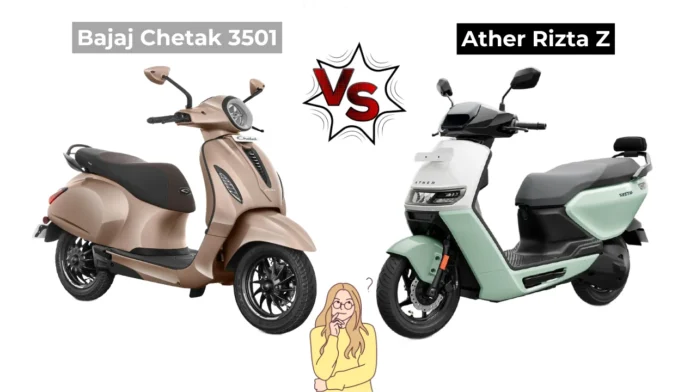
Bajaj Chetak 3501 vs Ather Rizta Z: In India, buying a scooter becomes a big deal for people earning less money, but to make it much easier, Bajaj and Ather have launched their new electric scooters in the Indian market. .
In which you get many modern technological facilities and safe battery pack, due to which this scooter makes your daily work even easier. That scooter is none other than Bajaj’s new launch. Chetak 3501 and the other Rizta Z of Ather There are electric scooters. So let us know about its other great features.
Bajaj Chetak 3501 vs Ather Rizta Z price
If you want to buy a powerful electric scooter that comes at a low price, then there are two such electric scooters available in the market for you. Which comes with design as per your choice and features as per your choice. The first Bajaj Chetak 3501 comes in the Indian market at a price of Rs 1,27,243 ex-showroom, but if you buy its top two variants, the price increases.
New Bajaj Chetak 3501 vs Ather Rizta Z
Also read:- Bajaj Chetak 35 Series scooter launched in the market with standard design and classy features
Second Ather Rizta Z whose ex-showroom price in India is Rs 1,46,499 ex-showroom. If reports are to be believed, we may see an increase of Rs 10 to 15 thousand in the price of this scooter from January 1, 2025. So if you want to buy it then book it now otherwise you will have to pay up to Rs 15,000 more for it.
Battery pack of Bajaj Chetak 3501 vs Ather Rizta Z
If we talk about the battery pack of both these amazing electric scooters, then in Chetak you get a big 3.5 kilo watt battery pack. To charge it, you get a 950 kW quick fast charging port. Due to which this scooter saves your time and charges from 0 to 80% in just 180 minutes. After which you can comfortably proceed towards your destination.
Also read:- Yamaha Aerox Alpha scooter coming with 155 cc powerful engine and stylish design
In the same Rizata Z, you get a strong and safe battery pack of 3.7 kilo watt from the company. With which a fast charging port is also offered in it. With the help of which this scooter gets charged from 0 to 100% in just 6.7 hours. After which you can start your journey with this scooter at a top speed of 80 km/h.
Also read:- Skoda Kylaq vs Kia Syros Let us know who wins your heart in terms of features and power.
Range of Bajaj Chetak 3501 vs Ather Rizta Z
As you must have read further, how much safer and powerful battery pack is offered in both of them. So let us now know the range of these two electric scooters. With the help of full charge of its battery pack, Chetak can travel up to 153 km without any problem, that is, the range of Chetak is a little more than 150 km.
If you talk about the range of Rizta Z after charging its battery pack, then this electric scooter gives you a range of 159 km. That means Rizta Z EV scooter has more range than Chetak.
Also read:- Kia Syros SUV is bringing the spirit of Creta with glass sunroof and black dark gray color.
Stylish and advanced features of Bajaj Chetak 3501 vs Ather Rizta Z
If you talk about the price and features of these two stylish electric scooters in India, then in Chetak 3501 you get TFT digital display which includes phone connectivity system, application control system, full Google map navigation, full LED light setup, single split seat, emergency. Features like brake alert system are available in it.
Also read:- Hero Xpulse 200 4V Pro Dakar Edition comes with 3 ABS modes and LCD display
In the same Rizta Z, you get features like TFT digital display, cruise control system, sporty handle bar, self start button, LED head light with LED DRLs, red stop light with LED back light, GPS navigation, horn button, etc. Helps you in making the ride easier.
Also read:- Bring Yamaha R15 sports bike to your home today by paying only Rs 499
The 21st edition of the EV Expo began at Hall No. 1 & 2 of Pragati Maidan, celebrating a decade of innovation and growth in the electric vehicle (EV) industry. The three-day event has begun with great enthusiasm, attended by stakeholders, innovators and enthusiasts from across India and abroad.
The expo was inaugurated by Shri Harsh Malhotra, Minister of State for Road Transport & Highways and Corporate Affairs. Mr Malhotra stressed the important role of electric vehicles (EVs) in combating global warming and reducing carbon emissions. While alternative fuels like ethanol have their merits, he highlighted EVs as the best option available today. He praised the EV Expo for serving as an excellent platform to interact with stakeholders in the EV industry and promote sustainable mobility. Expressing his excitement he mentioned the presence of an e-tractor at the event. Mr. Malhotra reaffirmed his belief that EVs will play a vital role in achieving the vision of Honorable Prime Minister Shri Narendra Modi to make India a carbon-neutral nation by 2070.
Shri Ajay Tamta, Minister of State in the Ministry of Road Transport and Highways and Ms. Meenakshi Lekhi, former Minister of State for External Affairs of India were among the other dignitaries who visited the Expo today.
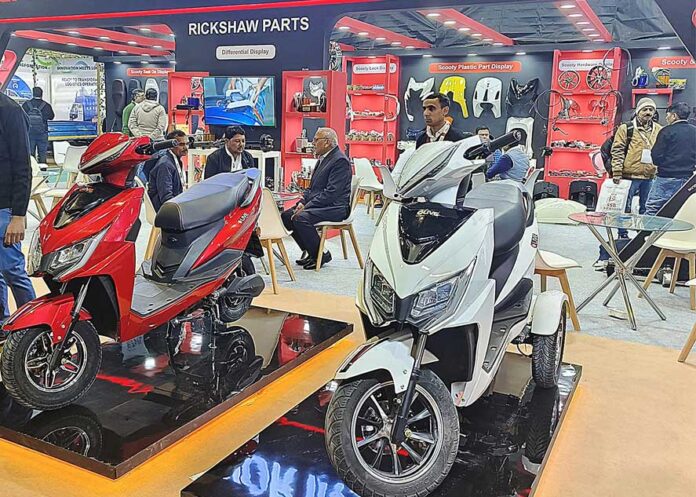
With the participation of nearly 200 exhibitors, EV Expo 2024 is showcasing a wide range of electric mobility solutions. From personal to passenger and utility vehicles, visitors can explore state-of-the-art 2-, 3- and 4-wheeler vehicles, including e-scooters, bikes, e-rickshaws, autos, loaders, tractors, cars and food carts etc. Are. The event also serves as a platform for companies specializing in EV components, batteries, charging solutions, accessories and services to showcase their latest technologies and advancements.
Mr. Rajiv Arora, Organizer of the 21st EV Expo 2024, said, “This year’s EV Expo celebrates a decade of dedication to the EV sector.” Sustainable mobility. The overwhelming response from exhibitors and attendees confirms the importance of this event in shaping the future of electric transportation.
Mr. Anuj Sharma, President, Electric Vehicle Federation and Co-Organizer of EV Expo 2024 said, “As we celebrate 10 years of this incredible journey, it is heartening to see the progress made by the EV industry. The event not only showcases cutting-edge technologies but also reflects a collective vision of a greener, more sustainable future. We are honored to provide a platform where ideas are implemented, thereby driving the EV revolution forward.
Key Features and New Launches at EV Expo 2024:
Khalsa EV launches two L5 models (3+1 and 6+1) with 203 km range, 230AH-11.7 KWH battery, 5 years warranty and IOT tracking, priced at ₹4 lakh. Citius unveiled two e-tractors (Balraj ET 207 and ET 250) with 20 HP and 50 HP, offering a range of 80-280 km, along with a 2-wheeler with 16-seater capacity, Kitchen e -CART and RTV are also included. Terra Motors (Japan) introduced D+3 L5 auto e-rickshaw with 150 km range and 50-55 km/hr speed, priced at ₹3.75 lakh and ₹3 lakh loan option. Maxim E Vehicles (Haryana) showcased handicapped accessible two-wheelers, e-scooters and loaders, including lead or lithium battery options. EVEY Electric Bikes launches Vespa Prime scooty, priced at ₹56,000, with 50-60 km range and lead-acid or lithium battery options. Mercury EV Tech Ltd introduces Mushak pickup/loader vehicle with 1,000 kg load capacity, 200 km range and hydraulic lift.
BYD, Khalsa EV, Terra Motors, Citius, Lohia Auto and other leading companies participated in the event. EV Expo 2024 highlights India’s commitment to lead sustainable mobility and drive innovation in the EV sector.
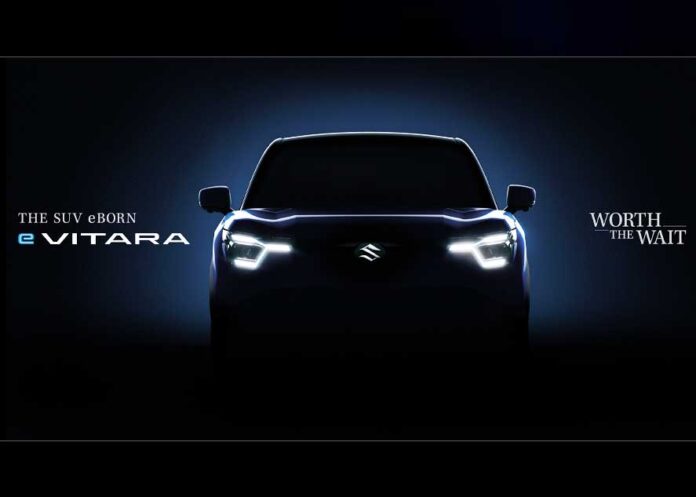
Maruti Suzuki India Limited (MSIL), the country’s largest passenger vehicle manufacturer, is all set to revolutionize electric mobility in India. The company will debut its production-ready eBorn SUV, eVITARA, at the Bharat Mobility Global Expo 2025. eVITRA, a global model manufactured in India for international markets, was recently unveiled by Suzuki Motor Corporation in Milan, Italy.
Speaking on the announcement, Partho Banerjee, Senior Executive Officer, Marketing and Sales, Maruti Suzuki India Limited said, “The eVitra is a testament to our unwavering commitment towards sustainable mobility and technological innovation. With decades of automotive expertise, we have combined advanced electric technology with a customer-first approach to deliver something truly transformative. At Maruti Suzuki, we have always believed that to boost EV adoption, we need to create a holistic ecosystem that simplifies the battery electric vehicle ownership journey of customers.
He further added, “A significant barrier to EV adoption is the lack of accessible charging. To tackle this issue, we are committed to introducing the e Vitara as well as a reliable and comprehensive EV ecosystem. This will include home charging solutions as well as a nationwide network of fast chargers available at Maruti Suzuki dealerships and service touchpoints. Our aim is to make EVs accessible, convenient and attractive to a wider range of customers and that is what we aim to achieve with the e Vitara.”
Inspired by the concept of “Emotional Versatile Cruiser”, the e Vitara seamlessly blends advanced technology with a contemporary design. Strategically designed to meet the emerging market requirements and customer needs, the e Vitara will introduce new age EV performance in the Indian automotive market.
The 21st EV Expo 2024 began with the 8th Catalyst Conference on EV Industry Sustainability at Pragati Maidan, New Delhi. The event, organized in partnership with the International Center for Automotive Technology (ICAT), brought together industry leaders, regulatory authorities and entrepreneurs to discuss the future of electric mobility.
Honorable Minister of Road Transport and Highways Shri Nitin Gadkari inaugurated the conference through video link from Nagpur. In his address, he highlighted India’s commitment to reducing pollution and curbing its ₹22 lakh crore annual fossil fuel import bill. He reaffirmed the government’s focus on converting mass transportation systems to electric vehicles and achieving carbon neutrality by 2070.
Highlights of Shri Gadkari’s address:
Market Growth: In 2023-24, India registered 30 lakh EVs, leading to a 45% growth in sales with a market penetration of 6.4%. Notably, 56% of total two-wheeler sales were electric, driven by over 400 startups in the EV sector. Future projections: By 2030, the Indian EV market is expected to reach ₹20 lakh crore, creating 5 crore jobs. Hybrids and EVs are estimated to account for 8% of the market by 2028, with the EV finance market size estimated at ₹4 lakh crore. Lithium reserves: India’s 6 million tonnes of lithium reserves in Jammu and Kashmir represent 6% of the global stock, enough to support the production of 60 crore EVs. Efforts are underway to accelerate the utilization of these reserves. Cost Reduction: The lifecycle cost of lithium-ion batteries is currently $115 per kilowatt-hour, which is expected to fall below $100 within six months. Recycling Opportunities: Lithium-ion battery recycling market is estimated to reach ₹50,000 crore by 2030. Potential to become a world leader in EVs: Shri Gadkari urged industry leaders to seize the opportunity to increase production tenfold and establish India as a global leader. EV market. He emphasized that the Indian EV industry must compete effectively with countries like China by leveraging superior technology and uncompromising quality standards. He underlined the importance of proven technology, economic feasibility, availability of raw materials and marketability as key principles of success.
He concluded by envisioning India’s automobile industry becoming the world’s largest within five years with significant contribution from the EV sector.
Industry Participation and Panel Discussions:
Prominent attendees included Shri Saurabh Dalela, Director, ICAT; Shri Balraj Bhanot, former Chairman of TED Committee, BIS; Mr. Yashpal Sachar, Vice President of Corporate Affairs at Ashok Leyland; Shri Anuj Sharma, President of Electric Vehicle Federation; And Mr. Rajeev Arora, Organizer of EV Expo. The conference featured several panel discussions on the sustainability and future of the EV industry.
Highlights of the Exhibition:
Celebrating a decade of success, the 21st EV Expo 2024 will run from December 20-22 at Hall No. 1 & 2 of Pragati Maidan. The event showcases cutting-edge innovations, industry collaborations and evolving technologies with the participation of approximately 200 exhibitors from India and abroad. The expo serves as a platform for entrepreneurs, startups, industry leaders and EV enthusiasts to engage in transformative discussions shaping the future of mobility.
Supporting Organization:
The 21st EV Expo 2024 is supported by:
Ministry of Road Transport and Highways, Government of India Pradhan Mantri Kaushal Vikas Yojana (PMKVY) Micro, Small and Medium Enterprises (MSME) International Center for Automotive Technology (ICAT)
As India moves towards sustainable transportation, electric three-wheelers are becoming a game-changer not only for their environmental benefits but also for their adaptability in both urban and semi-urban areas. From congested metro cities battling congestion and pollution to small towns in need of affordable and efficient transportation, electric three-wheelers (3W EVs) are perfectly suited to meet the diverse mobility demands of the country.
Supported by government incentives, increased industry investment, and technological advancements, India’s 3W EV sector is redefining last-mile delivery, increasing passenger transportation, and leading the country toward a greener, more sustainable economy. Used to be.
Rise of 3-wheeler EVs in India’s transportation ecosystem
The Indian electric three-wheeler market is experiencing significant growth. According to the Society of Manufacturers of Electric Vehicles (SMEV), the segment is expected to see a growth of 40% from 2022 to 2023 due to supportive policies and rising consumer demand. With low upfront costs, minimal operating expenses and subsidies through the FAME-II scheme, electric three-wheelers have become the preferred option for last-mile delivery and urban mobility, especially in congested cities and underserved areas.
This growth is not limited to major metro areas; Electric three-wheelers are gaining popularity across India, from busy cities like Mumbai and Delhi to smaller towns where affordable and reliable public transportation is important.
Boosting instant commerce in urban India with 3W EVs
India’s fast-growing instant commerce sector is flourishing with the adoption of electric three-wheelers (3W EVs). Major e-commerce players like Amazon, Flipkart and BigBasket, along with delivery platforms like Swiggy Instamart and Blinkit, are adding these electric vehicles to their fleets to meet the demand for faster deliveries. The advantage of 3W EVs is obvious: their compact size allows them to navigate narrow urban roads efficiently, enabling quick deliveries while cutting costs and emissions.
NITI Aayog’s 2024 report shows that last-mile delivery contributes to almost 50% of logistics costs in India. The transition to electric three-wheelers, along with a 60% reduction in carbon emissions compared to conventional internal combustion engine vehicles, could significantly reduce these costs. This shift is in line with India’s climate goals, while also reducing the environmental footprint of the booming instant commerce industry in urban areas.
For drivers, driving an electric three-wheeler offers the benefits of lower fuel costs, less maintenance and lighter financial burden. The move is in line with the broader objective of making expedited commerce logistics more affordable and sustainable for all stakeholders.
Revolutionizing transportation in Tier-2 and Tier-3 cities with 3W EVs
While electric vehicles (EVs) are often associated with metro cities, electric three-wheelers are now reshaping transportation in India’s tier-2 and tier-3 cities as well. In cities like Gwalior, Aligarh and Hubli, electric three-wheelers are rapidly replacing traditional rickshaws, providing a cleaner, more reliable alternative to the daily commute. In cities where public transportation infrastructure is limited, 3W EVs provide an affordable and efficient option for residents.
Government initiatives at the regional level are driving this change. States like Madhya Pradesh and Uttar Pradesh have introduced subsidies and tax incentives, making it easier for drivers to adopt EVs. This support is paying off: A 2023 survey by India’s Transport Research Wing found that smaller cities with a strong presence of electric three-wheelers have seen an 8% improvement in air quality over the past two years.
The rise of electric three-wheelers is also stimulating local economic growth. As more drivers are switching to EVs, the demand for service centres, battery swapping stations and new jobs is increasing in semi-urban areas. Many small-town dealerships are reporting strong sales, while local battery manufacturers and charging infrastructure providers are taking advantage of new opportunities for expansion, supporting India’s transition to an electric vehicle ecosystem even in less populated areas. Is.
Addressing traffic congestion and pollution in metro cities
In India’s bustling metro areas, three-wheeler electric vehicles (EVs) are proving to be game-changers in tackling both traffic congestion and air pollution. Cities like Delhi, Mumbai and Bengaluru are plagued by high levels of vehicular emissions, with transport contributing 40% of Delhi’s air pollution. A 2023 report by the Center for Science and Environment (CSE) suggests that increasing the use of electric three-wheelers could reduce urban air pollution by up to 12% in major Indian cities.
Apart from reducing pollution, three-wheeler EVs help reduce traffic congestion in densely populated areas. Unlike traditional four-wheel delivery trucks and vans, which often contribute to gridlock, three-wheel electric vehicles can easily navigate narrow roads and congested streets, helping to clear traffic and optimize urban space. Get help. Many cities are also considering the implementation of dedicated lanes for EVs, which will further streamline traffic flow.
The shift to electric three-wheelers supports national initiatives aimed at improving urban air quality. For example, the Delhi government has launched the “Switch Delhi” campaign to electrify auto rickshaws as part of its clean air strategy. Similarly, Maharashtra’s EV policy provides incentives including purchase subsidy to encourage the adoption of three-wheelers and urges fleet owners to transition to electric vehicles by 2025.
Expansion of electric three-wheelers to pilgrimage centers and tourist destinations
Electric three-wheelers (3W EVs) are becoming an increasingly popular and eco-friendly transportation option in pilgrimage centers and tourist destinations in India. With an increasing focus on sustainable travel and reducing carbon emissions, these vehicles provide an efficient option for both locals and tourists. Their compact design makes them perfect for moving in congested areas, and their operating costs are significantly lower than traditional fossil-fuel-powered vehicles. As India moves towards green mobility solutions, 3W EVs are helping to create eco-friendly travel experiences, improve accessibility and encourage responsible tourism in some of the most iconic locations in the country.
While battery life and charging infrastructure remain challenges to widespread adoption of electric vehicles, 3W EVs in India are benefiting from emerging battery-swapping technology. This innovation allows drivers to quickly replace fully charged batteries at designated stations, significantly reducing downtime. Companies like SUN Mobility and Battery Smart have launched battery-swapping stations in cities like Delhi, Mumbai and Bengaluru, where drivers can swap batteries in under five minutes.
The battery-swapping model is especially beneficial for three-wheeler EV drivers, who often work long hours. With the ability to quickly “refuel,” they can work almost around the clock, increasing productivity and earning potential. Additionally, the Battery-as-a-Service (BaaS) model eliminates the need for drivers to invest in expensive batteries, making 3W EVs a more affordable option for many.
Overcoming challenges on the path to widespread adoption
While the advantages of 3W EVs in India are clear, their development faces several challenges. A significant hurdle is the limited charging infrastructure in rural and small urban areas. While battery swapping offers a viable solution in metro cities, many smaller cities lack both charging and swapping stations, which could slow down the widespread adoption of 3W EVs outside major urban centres.
To tackle this issue, the Indian government, along with private sector stakeholders, is working to expand charging infrastructure across the country. The Ministry of Heavy Industries has earmarked significant funds for setting up charging stations, especially on major national highways, with the goal of ensuring widespread access by 2025.
Another challenge is affordability. Despite government subsidies, the initial cost of 3W EVs remains a barrier for some drivers. Introducing innovative financing options such as low-interest loans for EVs can help make these vehicles more accessible to drivers in tier-2 and tier-3 cities.
Looking Ahead: Green Revolution on India’s Roads
The rise of 3W EVs in India is creating undeniable momentum. From transforming instant commerce in metro cities to offering essential transportation in semi-urban areas and tourist destinations, electric three-wheelers are revolutionizing the movement of people and goods across the country. With ongoing policy support, advances in battery-swapping technology and growing public awareness, India’s urban landscape is poised for a transportation revolution.
3W EVs not only symbolize India’s shift towards sustainable mobility, but also reflect the country’s dedication to a more inclusive, accessible and eco-conscious future. As these electric vehicles populate India’s roads, they are paving the way for cleaner cities, empowered drivers and a healthier planet.