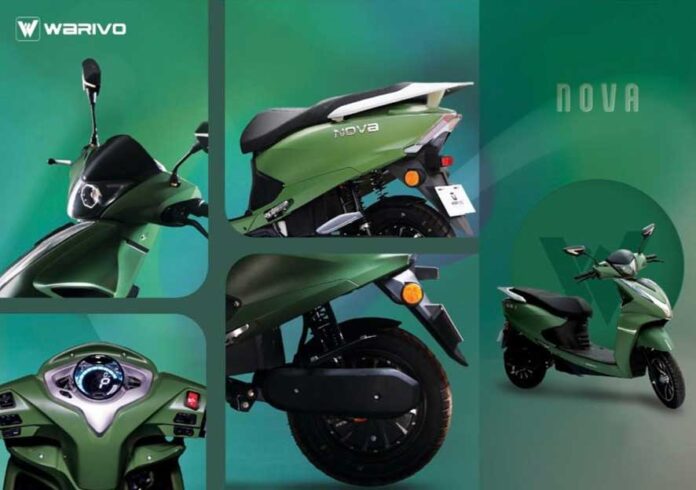
One of India’s fastest growing electric two-wheeler manufacturers, Warivo Motors India has launched six new electric scooters in two different series, Nova and Edge, which aims to expand power dynamics in income areas and geographical areas.
New lineup, Rs. 44,999, from urban professionals and students to rural passengers and delivery riders, is designed to meet the needs of a variety of users. With the maximum range of up to 120 km on the same charge, smart app-competent connectivity and 3-year comprehensive warranty, new scooters promise performance, strength and peace of mind.
The Nova series has been developed for customers looking for a premium riding experience with refined aesthetics, advanced features and future riding experiences. The Edge series focuses on reliability and strength, offering strong, no-frills models that are ideal for everyday movement and practical use.
All six models provide 120 km range per charge, mobile app-based smart connectivity, three-year comprehensive warranty and light and ergonomic design that are suitable for all age groups, sexes and areas.
Commenting on the launch of the new range, Warivo Motors India co-founder Yuvraj Garg said, “Electric dynamics should not be a luxury and a choice should be available for all. Our aim is to make EVS a realistic and compelling option for every Indian.
Warivo Motors India also has aggressive retail expansion plans and aims to open 200 new stores across the country by the end of the current financial year. This detail is expected to greatly promote the company’s access to both urban markets and rural areas. The expansion will be supported to ensure better availability of spare parts and dedicated customer aid infrastructure to ensure a spontaneous ownership experience, after the post -sale infrastructure.
The newly launched scooters are now available at the authorized Warivo dealership across the country.
The Ministry of Heavy Industries has issued extensive guidelines for the plan to promote the manufacture of electric passenger cars in India (SPPCI), which provides a clear outline to global vehicle manufacturers to benefit from low import duties in exchange for establishing local construction operations.
Originally announced in March 2024, the scheme is particularly focused on electric passenger vehicles, marking a strategic change for eV-centric policies targeted by comprehensive motor vehicle incentives. To qualify, companies must commit to minimal investment of 4,150 crores (about 500 million USD), within three years of approval. This investment should be directed towards manufacturing and operation of construction facilities for electric passenger cars in India.
The policy aims to attract global motor vehicle players installed instead of startups, in which the eligibility criteria emphasize strong financial capacity and the current appearance in the global motor vehicle sector.
Import duty relief structure
A major feature of the scheme is low customs duty on imported electric vehicles. Approved manufacturers will be allowed to import a fully manufactured EVS at a concessional fee rate of 15%at a price of 35,000 or more, which is much lower than the prevailing rates.
Duty relief is subject to the following conditions:
A maximum of 8,000 vehicles can be imported annually under a low rate. The profit is available for a period of five years, the total fee savings are ₹ 6,484 crore or the actual investment amount-which is less unused annual quota, can be carried forward for later years.
Localization requirements
Companies participating in the scheme require to increase the local price joints in their manufacturing operations progressively:
Get 25% domestic value within three years in addition to 50% domestic value within five years
The purpose of these goals is to ensure that import duty benefits translate into real technology transfer and local supply chain development, rather than serve as permanent subsidies for imported vehicles.
To ensure that companies follow through their commitments, this scheme requires bank guarantee that total fee savings or Rs. 4,150 crores, whichever is more. The guarantee should be valid during the entire scheme period and if companies fail to meet the investment or localization goals, they will be confiscated.
Qualified investment component
Guidelines underline the types that can be counted towards the necessary investment commitment:
Manufacturing equipment and machinery research and development facilities charge infrastructure, capted at 5% of total investment land and buildings, limited to 10% of investment, provided that they are part of core manufacturing facility
The Ministry has planned to launch an online portal for submission and will use existing processes from the PLI automotive scheme to evaluate domestic price joint claims.
Following the protocol installed from other motor vehicle incentive programs, the certification of local content will be controlled by the government approved test agencies.
Market reference
The policy manufactures India’s current automotive incentive framework, but especially focuses on electric passenger cars. Unlike the comprehensive PLI scheme for motor vehicle components, SPMPCI abolished vehicle manufacturing by companies with sufficient global operations.
India’s electric passenger car market is smaller than two-wheelers and three-wheelers, which have adopted rapidly due to low cost and simple charging requirements. The new scheme is designed to accelerate four-wheel adoption by reducing the cost barrier for global manufacturers to test the Indian market by creating local capacity.
Implementation timeline
This plan sets a clear time limit for participants:
Within 3 years: Manufacturing operations should start within 3 years: Get 25% domestic price joint within 5 years: 50% domestic price addition
Policy implication
The scheme highlights the Indian government’s strategy to offer temporary import duty concessions to run long -term manufacturing investment. Instead of cutting permanent tariffs, the policy offers clear performance incentives associated with milestones.
For global vehicle manufacturers, it presents an opportunity to estimate consumer interest in premium electric vehicles while laying groundwork for future local production. The high investment limit indicates the government’s intentions to attract severe, long -term players rather than short -term entry.
By focusing exclusively on electric passenger cars, the initiative supports India’s climate goals. However, its real impact will depend on how many global manufacturers consider the market capacity to be required.
Once the official online portal is launched, the application is expected to open soon.
Ather Energy Limited has announced the appointment of Anjani Kumar, which is effective on May 30. In his new role, Kumar will be responsible for shaping and executing the company’s digital strategy, which takes care of technology infrastructure during product development, manufacturing and customer experience.
The appointment comes at a significant time because Ather Energy makes its product lineup wider and examines the new business model with a strong attention on software integration. Kumar will lead major digital functions including webtech, IT and security, manufacturing execution system, business intelligence and digital engineering.
Bringing 24 years of expertise in digital changes and IT innovation, Kumar has worked in various fields such as motor vehicle, technology, logistics, pharmaceuticals and financial services. Their previous leadership roles distinguish out organizations such as IBM, Nissan, Cognizant, Strides Pharma and Tata AIG.
“We grow rapidly as an outfit, with many products, new business models and deep software integration, the complexity increases naturally,” said Executive Director and CTO Swapnil Jain in Ather Energy. “The construction of a strong system with a backbone to take advantage of AI on top of enterprise data is going to be important for our development.”
Kumar has obtained a post graduate degree in marketing and management from Kelly School of Business, Indiana University and a bachelor’s degree in Mechanical Engineering from NIT Rourkela. He has received leadership awards including ‘Digital Leader of the Year’ and ‘India’s Top CIO’.
Established in 2013 by Tarun Mehta and Swapnil Jain, Ather Energy has two products lines: Ather 450 performance scooter and Ather Rizta Family Scooter. It pioneered India’s first two-wheeler fast charging network, Ather Grid, with 3,611 Chargers established globally till March 2025.
The company has a strong IP portfolio with 309 trademarks, 203 designs and 47 patents worldwide. Posted as a tech-powered electric two-wheeler manufacturer, Ather focuses on digital integration and data-operated operations amidst India’s increasing demand for durable durability.
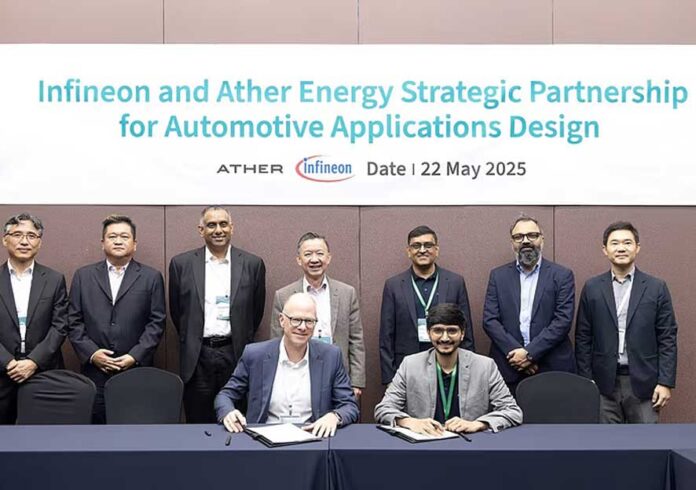
Ather Energy has entered a strategic partnership with Infinon Technologies to pursue semiconductor integration in its electric scooter and charge infrastructure. The MoU signed in Seoul, South Korea, prepares cooperation for the Indian EV market on a series of microcontroller, sensor and power management solutions.
The purpose of the partnership is to increase energy efficiency, accelerate charging speed and improve the reliability of the overall system in two-wheelers of Ather. The infineon will contribute to state-of-the-art technologies including silicon carbide, gallium nitride components and automotive-grade sensors to raise display and safety standards.
Swapnil Jain, Executive Director and CTO of Ather Energy stressed that cooperation aligns with the company’s engineering philosophy of maximizing the system efficiency, reducing the complexity. He highlighted Infinon’s semiconductor expertise as a major environment for charging, safety and progress in core vehicle systems in Ather’s product lineup.
Peter Shefer, Executive Vice President of Infinon, highlighted India’s position as one of the fastest growing electric vehicle markets globally. He said that the partnership would contribute to India’s target of securing 30 percent of the sales for electric vehicles by 2030.
In 2013, the Ather Energy, established by Tarun Mehta and Swapnil Jain, operates two main product lines: Ather 450 series for performing-centered customers and Ather Resetta series for family convenience. The Bangalore-based company established India’s first two-wheele fast charging network called Ather Grid.
As of March 2025, Ather has set 3,611 charging points globally, including 3,578 in India and 33 in Nepal and Sri Lanka. The company has 309 registered trademarks, 203 registered designs and 47 patents, with additional applications pending.
Infineon Technologies, headquartered in Germany, generated a revenue of about 15 billion euros in FY 2024 and employed about 58,060 people worldwide. The company specializes in semiconductor solutions for the power system and the Internet of Things application.
India’s electric two-wheeler market has experienced significant growth as consumers seek an option of traditional petrol scooters amid growing fuel costs and environmental concerns. The government has implemented various incentives to promote the adoption of electric vehicles, including subsidy and tax benefits for manufacturers and buyers.
The partnership represents the continuous expansion of Infinonon in the Asian electric vehicle market, where the company is seeking opportunities to supply semiconductor solutions to local manufacturers. For Ather, cooperation provides access to advanced chip technologies that can help to separate its products rapidly into the competitive market.
The two companies indicated that the partnership would detect sensing and safety innovations to improve the performance and user experience of the vehicle, although the specific time -line for product integration was not disclosed.
With rapid traction of electric mobility in India, EV is emerging as a sports solution for urban travelers on lease. Unlike the ownership of the traditional vehicle – which often requires heavy upfront payments and permanent financing – provides a more economical and adaptable option on a large scale. This model is especially appealing for individuals, fleet operators and final-meal distribution services, allowing electric vehicles to be enabled widely without significant capital investment. As a result, EV leasing is playing an important role in making durable transport more accessible and inclusive in various income groups.
This change is being powered by a new generation platforms that combine technology, innovative financing and partnership with vehicle manufacturers to simplify EV adoption. These solutions often include minimal safety deposits, monthly lease payments, and price-added services such as real-time fleet tracking and maintenance assistance. Some of the largest cost components are addressing one of the largest cost components – batteries – by offering a battery lease model that reduces the financial obstruction for entry.
Others focus on the sewn financing for electric two- and three-wheelers, or provide loans for EVS at particularly competitive rates and with minimal documentation. These approaches not only reduce the cost of ownership, but also intensifies infections in cleaner, greenery cities. As Urban India wants to score its electric mobility efforts, EV leasing is proving to be an important environment of adoption widely.
Full mobility
Alt Mobility is bringing revolution on EV lease with its fleet management solutions in seven cities. Located in Delhi, the startup simplifies the financing for EV-A-Service and Last-Meal delivery, which ends the advance cost. With only a small safety deposit and a monthly lease, business expenses can reduce by up to 20%. Participated with more than eight OEMs including Piazio and Yular Motors, Alt Mobility also provides a state -of -the -art Fleet OS app for real -time vehicle and fleet monitoring, which ensures seamless operations.
to redo
Revfin is a major online consumer loan platform dedicated to increasing financial inclusion in India. Taking advantage of advanced technology and unconventional data analysis, the Revfin provides a spontaneous debt solution, making EV financing more accessible. Recently, the company expanded the 4W EV market via partnership with ZAPPIT to offer the airport pickup services. Additionally, Revphin has made its financing options wider and set up a micro secondary market for EVS by collaborating with various EV manufacturers and leasing firms.
Energy mobility
MTOW Mobility Private Limited is a brand energy mobility, a Delhi-based energy-focused company that is committed to simplifying EV ownership. With the belief that “battery is new fuel,” energy mobility provides a battery lease solution for commercial electric electric electrical vehicles (L2) and three-wheelers (L3, L5). By converting the high upfront battery cost to an affordable monthly lease value (MLV), the company makes EV more cost effective and accessible to businesses.
streamlined
Ekofi is running permanent mobility by offering India’s first green-only NBFC, cheap and hassle-free EV loan. With minimal documentation and competitive interest rates, ECOFY finances up to 90% of an on-road price of a vehicle, making EV ownership more accessible. The company has become a prominent player in EV financing, offering loans at a cost of only 1/6th per kilometer as compared to diesel. Participation with major brands such as Ather, Mahindra, and Ola Electric, Ecofy Electric supports both individual and corporate buyers in two- and three-wheeler classes.
Greaves Finance
Greaves Finance Ltd., through its exclusive Ev-Focused Landing Mote Platform Evfin, India’s only dedicated Ev-concentrated Non-Banking Financial Company (NBFC). A subsidiary of Grievs Cotton Limited, the company, is on a mission to democrats EV ownership with especially tilated innovative financing solutions for electric vehicles, especially for electric vehicles. By providing flexible loan options, Grives Finance is helping accelerating permanent mobility across India.
Wardwizzard Innovation and Mobility Limited (WIML), a major electric vehicle manufacturer, known for his brands ‘Joy E-Way’ and ‘Joy E-Rick’, has signed a strategic memorandum with Xicon International Ltd., a Mumbai-based engineering and manufacturing firms and a subsidiary of the manufacturing firms and a subsidiary of Caesar Corporation.
As part of the agreement, Xicon will lease a 7,500 electric scooter from Wardwizard to support its forest in electric mobility space, focusing on final-meal distribution solutions. This partnership not only marks the entry of XICON’s EV segment, but also strengthens its diverse portfolio, which spreads power, telecom and infrastructure sectors.
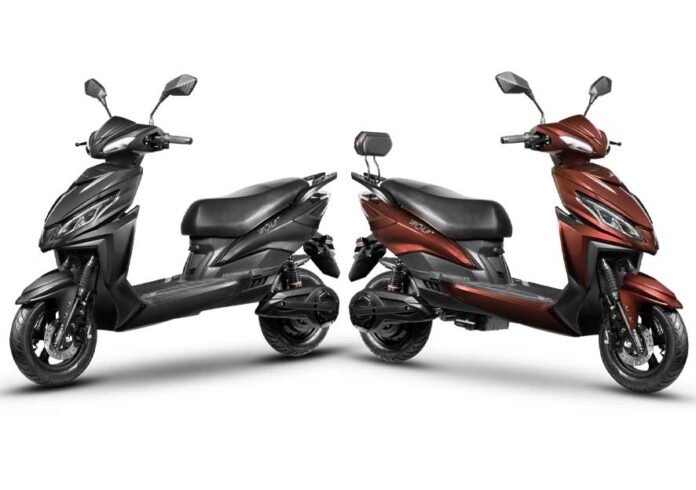
Under the agreement, Xicon has ordered to lease 7,500 units of Wolf+ model of Wardwizard for the financial years 2025–26 and 2026-27. This mass deployment will begin in major metropolitan cities including Mumbai, Ahmedabad, Delhi and Pune, placing to expand other areas as the operation scale. The MoU outlined a wide outline for the signs, operations and maintenance of electric scooters, which focuses on increasing distribution efficiency by promoting environmentally friendly transport. This initiative has been designed to integrate smart, environmentally friendly and cost-effective mobility solutions within the increasing operation of Xicon in urban logistics, especially targeting the last-meal distribution area.
As part of the agreement, the wardwizard will lease the scooter to Xicon and ensure an uptime assurance for all vehicles. Wardwizard will also set up service-cum-charging stations and manage all necessary spare parts, batteries and technical support.
Mr. Yatin Gupte, Chairman and Managing Director, Wardwizard Innovation and Mobility Limited, said, “In Wardwizard, we are committed to accelerating the adoption of power in India through strategic participation and innovative business models. Put contribution to India’s big goal of sustainable urban dynamics.
Talking about the association, Ms. Lyla Mehta, director of XICON International Limited, said, “With wardword, this MoU marks a significant moment for the creation of more durable and effective distribution systems in our mission. Through this association, Xicon is actively electrifying its fleet and is contributing to those signs of continuity. Cheap option for miles.
Operationally, Xicon will manage vehicle allocation, third-party distribution tie-up, app development and marketing initiative to ensure maximum use. Rider training will be done jointly by both companies. In terms of branding, all service centers and stores will be co-branded, and wardwizard innovation and mobility will provide demo units for promotional activities. In addition, wardwizard innovation will ensure all the scooters on lease and will oversee any claim process.
This participation takes forward an important step in view of creating a strong electric mobility ecosystem of wardwizard and confirms the company’s commitment to provide clean, skilled and scalable EV solutions across India.
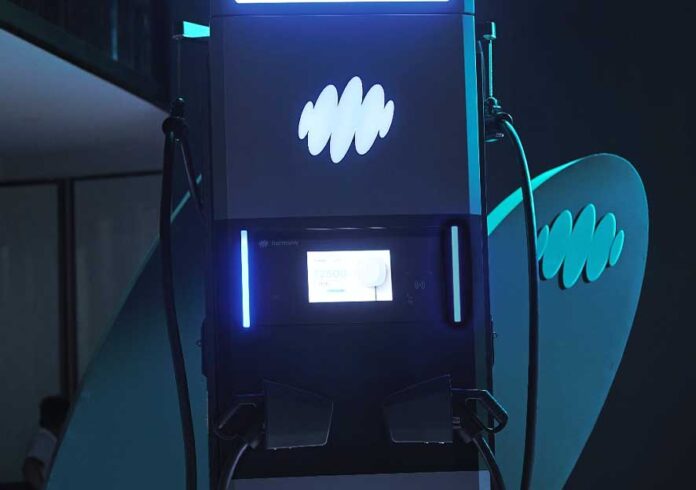
A prominent name in India’s EV charging and critical power solutions sector has officially launched the Harmony Direct 2.0-its next generation DC Fast Charger. Engineer for unmatched reliability, increased operational efficiency, and an elevated user experience, Harmony Direct 2.0 is designed to solve important challenges in EV adoption.
Charger was introduced in 2.0, a high-energy industry phenomenon, organized by Exicom, indicating a major jump in India’s EV charging scenario. With the smart station focusing its focus on economics and future performances, the Harmony is an important milestone in the direct 2.0 country trip to a strong and scalable EV infrastructure.
Harmony is the first indigenously developed charger operating system in the heart of the Hormony Direct 2.0, India’s first indigenous developed. Harmony gives intelligence information in the OS core, which automatically automatically automatically for charger-to-car-to-cloud interaction for unmatched control, adaptation and confidence. The charger is specificly equipped with A-S) hormony connect to sensor-based diagnostics and remote charger management, which minimizes downtime and maximizes the reliability of the station.
“The reliability and trusts are central to accelerate EV adoption in India,” Anant Nahta, Managing Director and CEO, said Akikom. “With the Harmony Direct 2.0, we have engineered a product that transferred traditional charging solutions, and determines a new standard for user experience with the strength of the infrastructure, operational economics and intuitive knowledge. This product reflects our deep understanding of global technology trends and local market demands, which strengthens our commitment to our ecosystems of India, which strengthens our evil understanding of India’s Eve Ecostermism. Is.”
While further highlighting the technology, Anhanuman Divyeshu, CEO, EVSE Business, Axicom, said, “Hormony Direct 2.0 is carefully designed to give extraordinary efficiency and operational intelligence, which bring the characteristics that bring out the characteristics and fleet operators that will help them the most. This product will help them.”
Harmony introduces groundbreaking efficiency through dynamic load sharing between direct 2.0 plugs. Through smart power handling, the charger also deal with the issue of reactive damage, thus significantly reduces energy costs. Additionally, it debuts Peerless Harmony Net Technology, and intelligent in many chargers enables sharing real -time power, which enhances flexibility and scalance for charge point operators. Additionally, its multi-stack charging functionality takes smart charging at the next level, enabling several fine logics. Built around the user feature, it has a spontaneous, smartphone-like user interface, coupled with ergonomic cable and connector design, which ensures spontaneous handling for all users, including fleet operators and individual EV drivers.
As India increasingly moves towards achieving its ambitious EV adoption goals, infrastructure credibility will be a definite way of success. With Harmony Direct 2.0, Exicom is at the forefront of this change, provides a infrastructure solution that not only meets today’s requirements, but is also ready for tomorrow’s challenges.
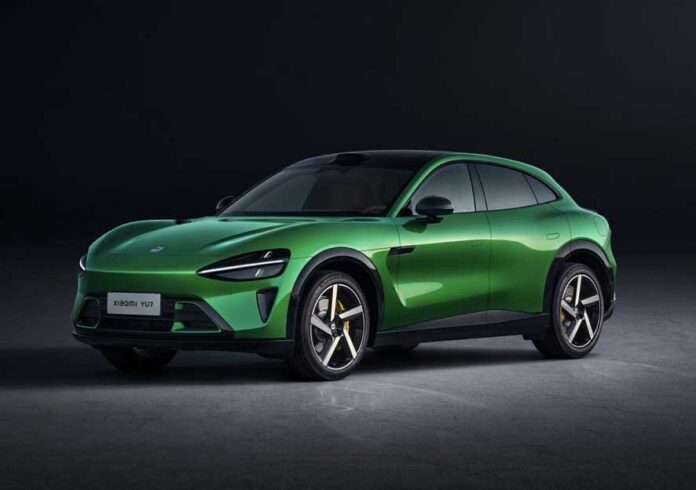
Xiaomi EV has unveiled its first SUV, Xiaomi Yu7. Located as a high-demonstration luxury SUV, the U7 is designed for independent, confidence and dynamic individuals. Unlike having just a long version of Xiaomi SU7, Yu7 is a fully re -designed SUV manufactured from the ground. Although it shares the same evolutionary design language as the SU7, Yu7 stands out with its own bold identity – elegant style with the magnificent interior room, powerful performance and a gampering of premium comfort. Additionally, it incorporates state -of -the -art intelligent technology, providing a refreshing experience in design, cabin comfort, safety and smart features. Xiaomi Yu7 releases a unique attraction that separates it in its section.
As the second model of Xiaomi Ev and the first SUV, Xiaomi Yu7 has inherited the brand’s commitment to “beauty” as a main product gene. While maintaining the family design language and elegant attitude of the Xiaomi SU7, Xiaomi Yu7 enhances its excellent appeal, ensuring that it stands with its extraordinary appearance easily in the urban landscape.
Xiaomi Yu7 is a middle-to-middle SUV measuring 4999 mm (length) × 1996 mm (width) × 1600 mm (height) with 3000 mm walbase. This reflects the dedication of the brand for the correct ratio, with a 3: 1 wheel-to-body ratio, a 2.1: 1 wheel-to-hit ratio, and 1.25: 1 width-to-height ratio, which captures the classic low-lightening stones of high-performing SUVs. Luxury highlights include an ultra-superak 1: 3 head-to-body ratio and a 680 mm L113 measurement (distance from front wheel center to brake pedal), a hallmark of motor vehicle elegance developed in a century. After comprehensive refinement, 3.11 the chlamyshell aluminum hood (1960 × 1587 mm)-is originally integrated into the largest-body among vehicles produced on a large scale. Below, a 141-liter electric front trunk provides up to eight different opening mode. Alternative 275 mm rear wide tires added to sporty wheel arches further enhance the dynamic and high-demonstration looks of the SUV.
Xiaomi Yu7 shows the design of a sophisticated family, with standout features with “waterdrop headlights” such as innovative hollow-out air channels, characterized by hood vents for increased lighting and a sharp, more aggressively connected. Its halo taillights have been updated with a cleaner, scalpted design and downward-angled corners, emphasizing a muscle rear profile with premium ultra-red lighting for better night visibility. The SUV also introduces an advanced electric-flush door handle system that remains flush with the body for better aerodynamics and aesthetics, automatically expands as users’ approaches and retracts smoothly after entry, expands both convenience and style.
The Xiaomi Yu7 features advanced aerodynamic engineering inherited from SU7, with 10-powered air channels, 19 customized vents, and more than 40 airflow treatment areas. Major elements such as a hollow spiiler, an active grill with 100 adjustable louver contribute to a low drag coefficient of a spontaneous chlameshell hood CD 0.245 – promoting the CLTC range by 59 km and setting up a benchmark between sports SUVs.
It also debuts three vibrant paint options: Emerald Green, Titanium Silver and Lava Orange. Highlight, Emerald is inspired by Green, Colombian Emeralds, uses a dual-layer system with ultra-fun aluminum flakes and adds a transitial pearl coat to make dynamic, light-north-color innings, a transitial pearl coat, SUV’s thunder adds to the design design.
The interior of Xiaomi Yu7 is designed for a combination of vastness, luxury and advanced techniques under its bold exterior, “dual-zone surround luxury cabin” concept. For this, the Central Industry-First Xiaomi is a hypervision panoramic display, which provides a visually refined and immersive technical experience. The cabin has dual zero-gurutvakarshan front seats and power-adjustable rear seats for top-level rest. Designed for space and openness, interior uses 100% soft-touch material, eco-conscious finish, and Oeko-Tex class 1 certified material for security security. Nappa leather seats with a sophisticated rock-grain texture are premium, touch.
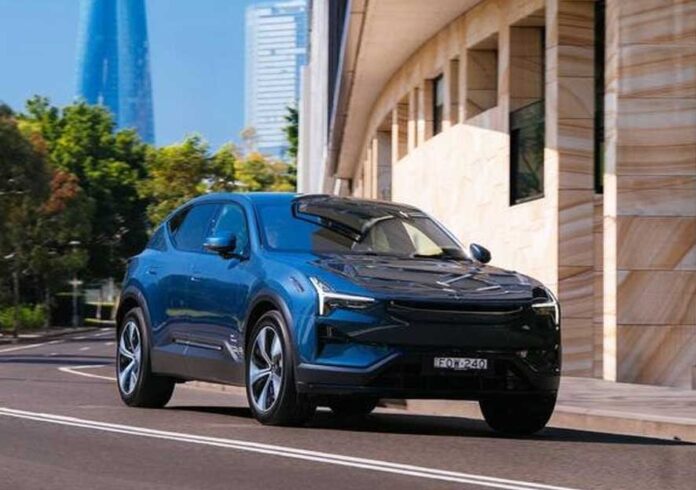
Polstar 3 has earned global recognition, recently won the year luxury car by chasing the best EV SUV and cars from the top gear of the BBC. These praise follow its 5-star Euro NCAP security rating, where it sets new benchmarks for hair safety.
It is observed for its striking designs, state-of-the-art EV technology, premium features, permanent materials and performance, Postar 3 has been continuously praised by the media since the beginning of 2024.
Earlier this month, at the top gear’s 2025 Electric Awards, where the editorial team selects the best EVS in the world, the magazine praised it for the best EV SUV, its technique, state -of -the -art solution, beautiful design, driving dynamics and purposes.
And this week, Polstar 3 crushed the entire SUV of his 2025 luxury car, chasing cars with Australian title in its trophy cabinet. Chasing the judges of the cars said: “Simply say, Postar 3 is a good electric vehicle, but a great luxury vehicle. It is one of the best performance SUVs on the market – full break – and easily one of the best new car release of 2025.”
Michael Lohsaler, CEO of Polesteer, says: “Appreciation for Poleste 3 only underlined the media and customers, just underlining our performance SUV. Design, technology, performance, safety and stability, Polstar 3 continues to set new standards in 3 segments and strengthens these latest awards.”
In April 2025, the Polstar 3 was awarded the 5-Star Safety Rating by the Euro NCAP, where it set new standards for child safety. The head SUV of the brand secured 93%score in the child protection category – the highest score of any passenger car tested by the Euro NCAP in the last nine years – and an adult living score of 90%, 79%to the weak road users, and the security aid system 83%.
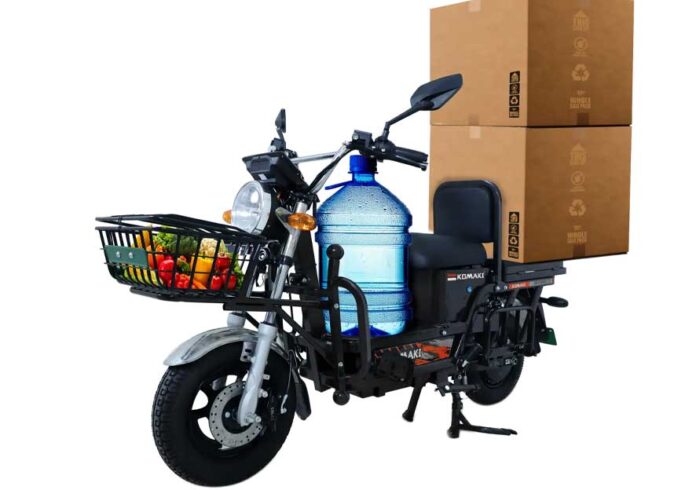
Komki Electric, a major EV brand, has its latest model, The Cat 2.0 Eco- an advanced and inexpensive electric utility scooter priced at INR 69,999. Modern India is designed to meet the growing transport and distribution demands, the purpose is to meet the needs of new-age riders with efficiency and innovation.
Designed as a rugged electric utility scooter, the vehicle has been introduced to redefine practical commuting and cargo transport in urban and rural scenarios. Covering a range of 110+ km, it promotes smart, durable and cost-effective final-meal distribution solutions. For food distribution, e-commerce logistics and catering for local business use needs, it comes with the advantage of ergonomic and strong design. It supports a well -reinforced frame and giant rear rack to carry heavy load safely.
CAT 2.0 Eco Houses Advanced LifePo4 Smart Batteryforce ensures quick recharge bicycles and long -lasting performances to ensure an extended battery lifestyle. In addition, the model also has a provision for economy mode, which is used for consumption of optimizingpower with the aim of covering long routes without compromising on performance. To further strengthen the offering, the vehicle has included a spontaneous digital interface to provide real -time updates on battery health, speed and trip matrix with the help of a smart display console.
Especially gig workers, small businesses and distribution fleets were launched, it requires low operating costs and is very easy to maintain at the same time. In addition, being committed to zero emissions, it has the least impact on the environment that does not compromise on reliability.
Speaking on the occasion, Gunjan Malhotra, co-founder of Komaki electric vehicles, said, “In Komaki, we have always admitted that the electric mobility should be accessible to all-from the computer to the hardworking delivery agent. Every lifestyle and livelihood.”
Komaki Cat 2.0 ECO can be purchased from authorized coma dealership and online Shop.komaki.in,