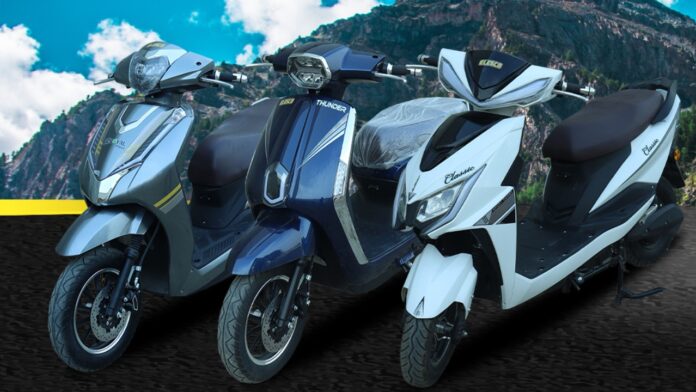
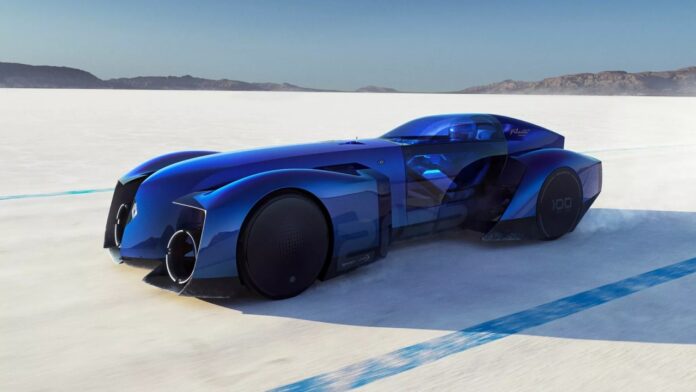
The Future On Delhi’s Roads Elesco’s High Speed Electric Scooter Has Boosted The Pulse Of The Ev Market – The Future On Delhi’s Roads: Elesco’s High-Speed Electric Scooter Has Boosted The Pulse Of The EV Market.
Hindi News »
automobile »
The Future On Delhis Roads Elescos High Speed Electric Scooter Has Boosted The Pulse Of The Ev Market
Currently, Tata Motors has 250,000 electric vehicles on the road, accounting for about 65% of the Indian electric vehicle market. These vehicles have traveled a total of 12 billion kilometers and reduced 1.7 million tons of carbon dioxide emissions, which is equivalent to planting 80 million trees.
Author: T. Mulally
Tata Motors has reached a landmark moment in the history of electric vehicles in India: more than 250,000 Tata electric vehicles are now on the road, a milestone that shows how far the company and the country have come. Mr. Shailesh Chandra, Managing Director and Chief Executive Officer, Tata Motors Passenger Vehicles Limited, said what is truly significant about this moment is not just the numbers but what it represents – moving electric vehicles from the fringes of the market to the core of the mainstream in India.
Speaking at a roundtable yesterday, Mr Chandra said OEMs’ electric journey did not begin in a market that was ready for electric vehicles. It started in 2018 and asked a pertinent question: Can India move to electric vehicles when the ecosystem doesn’t exist? At the time, there were no mass-market electric vehicles, only 200 public chargers, very high battery costs, low customer confidence and no supporting supply chain.
For most Indian households, buying a car is the second most important decision, and in such a pragmatic, value-focused market, asking customers to opt for new technology at a higher price seems impossible. However, Tata Motors decided to take the first step not because of market needs, but because of national needs.
Alleviating a range of challenges
India’s fight against pollution, oil dependence and climate change requires zero-emission transport. The government has a bold plan to reach 30% electric vehicle penetration by 2030, backed by tax breaks, incentives and clear policy direction. Still, most in the industry are hesitant. The business case seems unclear. That’s when the Tata Group took a joint decision to pioneer electric vehicles, not with one company but through a collective ecosystem approach called ‘Tata Universe’.
Tata Power started building early charging networks, Tata AutoComp started localizing EV components, Tata Elxsi and TCS worked on developing advanced software, and Tata Motors Finance helped early fleet adoption. At the center of all this is Tata Motors, which has taken on the responsibility of designing its own electric vehicles.
The starting point is the Indian consumer. Through a special nationwide study, the automaker spoke to households across India. Customers explain that they will only consider electric vehicles if they offer at least 200 kilometers of real-world range, simple and guaranteed home charging, a reassuring 8-year battery warranty and a price that is no more than 20-25% higher than an internal combustion engine car.
It was with this clarity that Tata Motors built Nexon.ev in a record time of 16 months. When it was launched in January 2020, it became India’s first truly mainstream electric car. It offers long range, advanced features, a lifetime warranty, fast charging, a unique driving feel and, for the first time ever, a complete home charger installation to make owning an electric car like charging a smartphone, he said.
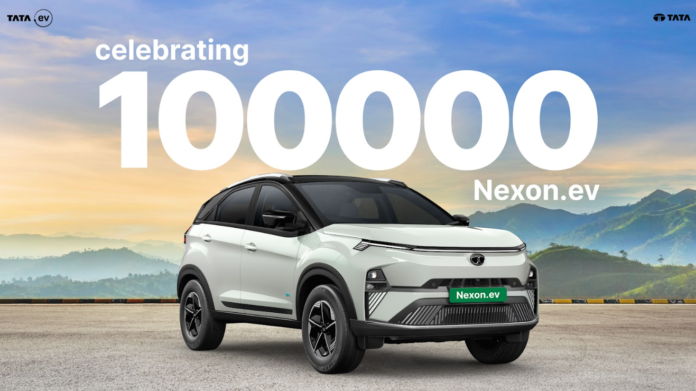
Early buyers became evangelists. Their confidence and word of mouth transformed the category. Nexon.ev sales increased from 300 units per month to 3,000 units per month. As India’s expectations have changed, the car has evolved – from an actual range of over 230 kilometers to a certified range of 375 kilometers, while narrowing the price gap with the ICE. This year, it also became the first electric car in India with cumulative sales exceeding 100,000 units.
Expand product portfolio
But one car cannot start a movement. Tata Motors has expanded its electric vehicle portfolio across segments, from the entry-level Tiago.ev, which costs less than mid-range cars in India, to the high-performance Harrier.ev AWD and XPRES-T for fleets. At the same time, the company is committed to busting myths about electric vehicles, shipping them across the country and testing them in harsh terrain and challenging water and rock obstacles to show customers that electric vehicles are not flimsy urban toys.
The company has also built India’s largest electric vehicle retail and service network, including nearly 1,200 outlets, 600 service centers and more than 5,000 trained electric vehicle technicians, reaching customers in more than 1,000 cities and towns. At the same time, Tata Motors and global partners have helped localize key electric vehicle components such as battery packs and motors, bringing domestic value added to more than 50% and spawning a new supply chain.
EV ecosystem
One of the most serious challenges is public charging. In the beginning, the ecosystem suffered from a classic chicken-and-egg problem. Tata Motors is approaching this problem in phases, first working with Tata Power to build an early network, then working openly with all major charge point operators to leverage Tata’s EV driving data to advise them on charging hotspots, and finally rolling out large charging centers with ultra-fast charging capabilities, TATA.ev verified chargers for reliability, and customer service desks to assist EV owners throughout their journey. Today, India has over 200,000 Tata home chargers, over 20,000 public chargers aggregated through open collaboration, 4,000 community chargers and over 500 verified chargers, and every part of the ecosystem is open to all OEMs, he said.
Mr. Chandra said the impact of the journey has been transformative. In six years, annual demand for electric vehicles has grown from 2,000 to nearly 200,000. The penetration rate of electric vehicles has risen from almost zero to about 5% of national sales. Currently, more than 90% of national highways have fast charging coverage within 50 kilometers. Currently, Tata Motors has 250,000 electric vehicles on the road, accounting for about 65% of the Indian electric vehicle market. These vehicles have traveled a total of 12 billion kilometers and reduced 1.7 million tons of carbon dioxide emissions, which is equivalent to planting 80 million trees. Most importantly, people’s opinions about electric vehicles have changed. For 84% of Tata.ev owners, electric vehicles have become the main vehicle in the family. One in four is a first-time car buyer. Mr. Chandra noted that more than 50,000 electric vehicle owners completed long-distance intercity journeys of more than 400 kilometers last year.
go ahead
As Tata Motors celebrates this milestone, it is already looking towards the future. By 2026, the company will launch Sierra EV, update Punch.ev and introduce the premium Avinya series. By fiscal 2030, the OEM plans to launch five new EV nameplates and make multiple updates to existing models. The company will also expand charging infrastructure to 1,000,000 charging points, including 100,000 public chargers, while establishing a circular ecosystem for reusing batteries. Capital expenditure of Rs 16,000-18,000 crore will support this long-term strategy and Tata Motors expects to maintain 45-50% EV market share even in a highly competitive environment.
FlixBus, the global leader in intercity e-mobility services, has announced the signing of a memorandum of understanding (MoU) with Vertelo, a provider of bespoke e-mobility ecosystem solutions that offer innovative leasing and financing options designed to ease the transition to fleet electrification. This cooperation aims to jointly deploy 500 electric intercity long-distance buses in India to support the country’s vision of greener and more sustainable travel.
FlixBus currently connects over 200 cities in India, providing affordable and eco-friendly intercity travel through a digital-first booking platform. The company is known for its enhanced passenger comfort and industry-leading safety features that make sustainable travel more accessible across the country. The new partnership with Vertelo builds on a shared commitment to accelerate the adoption of electric vehicle solutions.
Vertelo will provide customized financing and leasing options for electric buses, develop robust charging infrastructure and work with original equipment manufacturers (OEMs) to ensure the deployment of the right electric bus models. FlixBus will use its platform to manage demand generation for intercity electric bus routes. Additionally, FlixBus will identify and define key intercity routes suitable for electric bus deployment.
Highlighting the importance of this partnership, Mr. Surya Khurana, Managing Director, FlixBus India, said, “This partnership with Vertelo marks a significant step towards greener and more sustainable intercity travel in India. By combining FlixBus’ extensive network and customer reach with Vertelo’s expertise in EV financing and operations, we are committed to providing convenient and efficient eco-friendly travel to millions of travelers.”
Commenting on the partnership, Mr. Sandeep Gambhir, CEO of Vertelo, added: “Our alliance with FlixBus reflects our shared vision of a cleaner planet through innovative electric mobility solutions. This partnership will facilitate customized financing and leasing solutions and facilitate the creation of a sustainable ecosystem, making electric mobility a natural choice for commercial bus fleet operators. We are delighted to partner with FlixBus Working with fleet operators to enable them to have product-market fit and bring capabilities beyond traditional leasing and financing solutions, including charging infrastructure and energy management will drive the future of sustainable mobility in India.”
The partnership also supports FlixBus’ pan-India expansion plans and aims to create a strong ecosystem that provides advanced technology and services to operating partners. The collaboration is expected to increase employment opportunities in the electric vehicle sector and strengthen the infrastructure required for large-scale electric bus operations. Through the association, FlixBus plans to further expand its network, connecting more cities and communities across the country, while contributing through an ecosystem of leasing and financing solutions and creating the necessary infrastructure to facilitate this, thereby solidifying Vertelo’s position as a trusted enabler of electric vehicle adoption.
Mr. Yetender Sharma, Managing Director, Supertech EV Limited
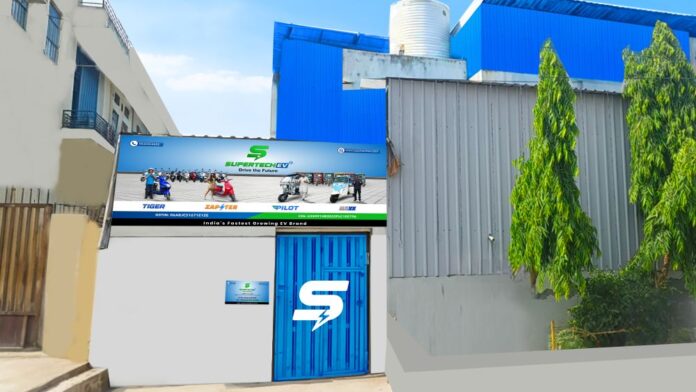
Supertech EV Limited, one of India’s fastest growing electric vehicle manufacturers, today announced several key developments as part of its aggressive expansion strategy in the electric vehicle market.
Launch of MAXX – Passenger and cargo L5 vehicle Supertech EV Limited officially enters the rapidly growing L5 electric vehicle sector Launch of MAXX series. Available in both passenger and cargo MAXX variants, these vehicles are designed to meet the growing demand for clean, cost-effective last-mile mobility solutions in urban and semi-urban India.
MAXX vehicles’ higher load capacity, durable performance and lower running costs make them an attractive alternative to conventional CNG and diesel vehicles, especially for passenger transport operators and last-mile delivery companies. MAXX can be quickly charged in just 4-5 hours, has a range of 120-140 kilometers, and can reach a top speed of 45 kilometers per hour.
Introduction to Zapster High-Speed Electric Scooter Supertech EV launches new high-speed electric scooter under its popular Zapster brand With a top speed of 65 km/h, a cruising range of 120-140 km per charge, and a charging time of only 4-5 hours, it is best in class.
Available in 2 models – Zapster and Zapster Pro and in 5 colors, the Zapster range features a removable lithium-ion battery that requires no additional charger, allowing customers to easily charge their vehicles at home or work. Stylish, functional and environmentally friendly, Zapster is designed to appeal to young people and professionals looking for affordable, sustainable and reliable mobility.
New two-wheeler manufacturing plant in Bahadurgarh To meet the growing demand, Supertech EV has opened a state-of-the-art electric two-wheeler manufacturing plant in Bahadurgarh with an annual production capacity of 36,500 units.
This new facility will play a vital role in catering to our expanding customer base, In particular, Supertech has strengthened its presence in western and southern India and established new distribution partners in Maharashtra, Gujarat and Karnataka.
Technology upgrades for comfort and performance Supertech EV also announced new technological upgrades to its two-wheeler and three-wheeler portfolio. The company introduces an independent differential system in its Pilot Series e- Rickshaws provide passengers with a smoother ride and greater comfort. An independent differential system enhances damping, ensuring excellent suspension and providing comfort in all road conditions.
Continued investment in R&D will further enhance the performance, durability and cost-efficiency of Supertech’s electric vehicles, solidifying the company’s position as a trusted electric vehicle innovator.
leadership speech Commenting on the announcements, Mr. Yetender Sharma, Managing Director, Supertech EV Limited, said, “At Supertech EV, our mission is to provide sustainable mobility services to every Indian customer, be it daily commute, passenger transport or last-mile cargo transportation. With the launch of MAXX, expansion of Zapster and our new manufacturing capabilities, we are ready to accelerate growth and meet our evolving needs.” Customers all over the country. “
No More Worries About Selling Your Ev Drive It For 5 Years And Return The Vehicle To The Company – No More Worries About Selling EV! Return the car to the company after driving it for 5 years.
Hindi News »
automobile »
No More Worries About Selling Your Ev Drive It For 5 Years And Return The Vehicle To The Company
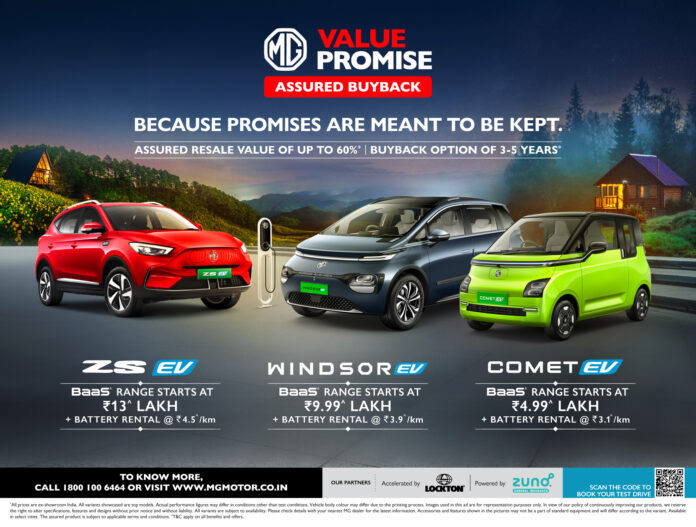
JSW MG Motor India has announced an industry-first initiative to make electric vehicle ownership more predictable and stress-free, becoming the first automotive brand in the country to extend the guaranteed buyback period for electric vehicles to five years from the existing three years. The new ‘Guaranteed Buyback’ scheme guarantees a fixed resale value at the end of a selected ownership period, addressing one of the biggest concerns for potential EV buyers – long-term value and depreciation.
Under the enhanced plan, MG EV customers can now opt for guaranteed resale value after three, four or five years depending on the chosen plan. This builds on the company’s previous commitment to buy back 60% of the shares after three years and operates independently of any financial or lending programs. Even existing MG ZS EV owners are eligible, as long as their vehicle is not more than three years old or the mileage is within the stipulated annual limit, a first in the country.
Speaking on the initiative, Mr. Anurag Mehrotra, Managing Director, JSW MG Motor India said that the plan reflects the brand’s continued focus on customer-centric innovation. He noted that resale value remains a key hesitation issue for many EV buyers, and the MG Value Promise program gives customers peace of mind by allowing them to choose a tenure of three to five years with a guaranteed resale value. The initiative is expected to enhance trust in electric vehicles and support wider adoption of electric vehicles in India, he added.
The program provides customers with the flexibility at the end of the tenure to choose to keep the vehicle, surrender the vehicle or upgrade to a new MG model. By reducing the uncertainty of depreciation, the initiative also makes it easier for customers to plan for future upgrades while enjoying greater financial predictability during ownership.
The guaranteed buyback scheme is promoted by Lockton India Insurance Broking and Advisory Ltd in partnership with Zuno General Insurance. Shanai Ghosh, Managing Director and CEO of Zuno General Insurance, said the partnership is in line with the insurance company’s vision to build a future-proof, digital-first EV insurance portfolio that simplifies and secures long-term EV ownership.
Mr. Sandeep Dadia, CEO and Country Head, Lockton India said that as EV adoption accelerates, customers are looking for greater clarity and confidence in ownership outcomes. The extended guaranteed buyback program is designed to deliver predictable value in a transparent manner, helping customers plan their EV journeys with greater certainty, he added.
As India’s EV ecosystem continues to evolve, supported by improved infrastructure, technological advancements and rising consumer awareness, initiatives such as MG’s extended guaranteed buyback are expected to play a key role in lowering barriers to EV adoption and boosting confidence in EVs in India.
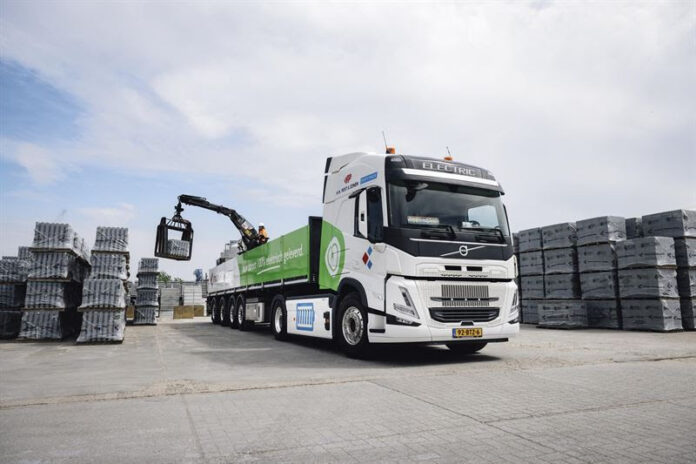
Volvo Trucks has delivered more than 5,000 fully electric trucks to customers in 50 countries around the world. With eight electric trucks now in production, Volvo’s leadership in electric trucks is stronger than ever.
Volvo Trucks has offered electric trucks since 2019, and since then, customers in 50 countries around the world have switched to electric transport and driven nearly 170 million kilometers in commercial operations. The trucks reduce CO2 emissions and traffic noise levels, while also improving the working environment for drivers.
“It is gratifying to see transport companies continue to enjoy the benefits of electric trucks across a wide range of transport sectors,” said Volvo Trucks President Roger Alm. “Volvo’s battery-electric trucks are now available, providing our customers and transport buyers with a more sustainable and commercially sensible alternative, with many of our customers returning to us to grow their electric fleets.”
Volvo’s current range of electric trucks is tailored to meet the needs of urban and regional distribution as well as the construction and waste management sectors. The company’s top five markets for electric trucks are Germany, the Netherlands, the United States, Norway and Sweden.
Electrical expertise
Volvo was an early entrant into electric trucks and has established unique expertise in electric, zero-emission transport. The benefits of electric trucks go beyond environmental benefits – drivers experience a significantly better working environment with significantly reduced noise and vibration levels. Volvo has also built capabilities in optimizing the use of installed energy, financing, charging and servicing of electric trucks.
Here are the Volvo electric truck models currently available:
Volvo FL electric car Volvo FE electric car Volvo FM electric car Volvo FM low entry car Volvo FMX electric car Volvo FH electric car (International Truck of the Year 2024) Volvo FH aviation electric car Volvo VNR electric car
Volvo’s three-path strategy to achieve zero emissions
Volvo Trucks adopts a three-path technology strategy to decarbonize transportation and achieve net-zero emissions by 2040. This approach is based on battery-electric, fuel-cell electric and internal combustion engines that use renewable fuels such as green hydrogen (produced by splitting water into hydrogen and oxygen using renewable electricity), biogas (bio-liquefied natural gas) or biodiesel and HVO (hydrotreated vegetable oil).
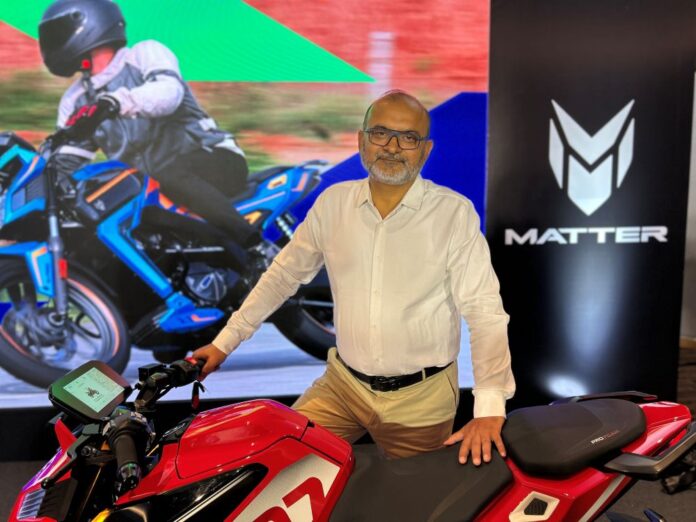
Arun Pratap Singh, Co-Founder and Group COO of MATTER
In an industry littered with incremental updates and recycled templates, MATTER is positioning itself as a company trying to rewrite the foundations of electric vehicles. At the heart of this ambition is AERA, India’s first geared electric motorcycle, a machine not only designed to be an EV retrofit but a radical invention built for Indian roads, usage and climate realities.
In an exclusive interaction, MATTER Co-Founder and Group COO Arun Pratap Singh spoke extensively about the engineering breakthroughs behind AERA and its performance philosophy.
Making India’s first geared electric motorcycle
Developing a motorcycle with a transmission, integrated on-board charger and liquid-cooled powertrain is an unusual engineering path for electric vehicles. But the decision wasn’t about being different, but about building a machine that would truly suit the Indian rider.
“AERA is the country’s first geared electric motorcycle. We started in January 2019 and from day one, the challenge was clear that India needed a motorcycle designed for its heat, roads and charging realities. We built our own liquid cooling system, integrated on-board charger because India needs anytime, anywhere charging, and proven the bike on narrow country roads and rough terrain. We have filed over 400 patents, of which over 85 projects have been approved, including two international patents,” he explained.
With temperatures reaching 48–50°C in places like Ahmedabad or Jaisalmer, thermal management becomes a serious performance impediment for electric vehicles.
“You can’t tell customers that because it’s electric, the power will drop at high temperatures. That’s unacceptable. So we designed a liquid cooling system, not borrowed, but designed and patented by us, to ensure consistent performance even at high temperatures of 45-48°C,” he emphasizes.
This engineering approach underscores MATTER’s belief that the future of mobility in India depends on understanding real-world usage, rather than ideal testing conditions.
AERATHON: How 25,000 kilometers validated the vision
On-board chargers in particular have emerged as a strategic differentiator. During MATTER’s 25,000-km AERATHON ride across India, the motorcycles were charged at local shops, eateries, temples, village kiosks and homes, validating the assumption that AERA can fit seamlessly into India’s fragmented charging environment.
“During AERATHON, we realized that India is ahead of our imagination. We even discovered an all-electric village in Gujarat, which we thought would only happen in Indian cities. This proves that India is ready, as long as the products are designed for Indian realities,” he said.
Manufacturing and network expansion
MATTER’s first large-scale manufacturing facility in Changodhar, Ahmedabad was inaugurated earlier this year. With an annual production capacity of 120,000 units, it is one of the largest electric motorcycle factories in India.
“In March this year, we had only one dealership. As December approaches, we have 25 dealerships operating and our target is to reach 50 by March. Based on traction and network expansion, we believe we can sell close to 25,000 vehicles next year. After FY27, we will start seriously considering exports to Southeast Asia, Africa and South America, and negotiations with several international potential customers are already underway,” he said.
Arun noted that with the exception of the cells, magnets, and semiconductors, everything in AERA was engineered, engineered, and verified in-house, a statement he considers central to MATTER’s technology sovereignty philosophy.
Designed like a motorcycle, not a scooter
One of the recurring criticisms in the electric two-wheeler space is that many vehicles are essentially “glorified scooters” with motorcycle styling. Matter wants to break this image decisively.
“We wanted a real motorcycle, not a pretend scooter. The AERA has the gear, performance, liquid-cooled powertrain and riding characteristics of a motorcycle. Since motorcycles should also have features, we added maps, navigation, Bluetooth connectivity, remote key access, and other features that are usually reserved for cars. Our goal is simple: electric motorcycles should feel like the next generation of motorcycles, without compromising,” he said.
MATTER’s expansion strategy is structured with a service-first approach.
“We would not open a dealership without service support. AERA is a connected device so we can monitor the health of the vehicle remotely. If the motorcycle is not charging properly, we usually alert the customer or resolve the complaint remotely. The idea is to give EV customers the confidence they have been missing in the two-wheeler market,” he added.
This connectivity backbone is also expected to play a key role in predictive maintenance and OTA updates.
Mapping MATTER’s EV ambitions
With rapid expansion in Chennai, Hyderabad, Bihar and Uttar Pradesh, MATTER is moving from a West India-focused business to an all-India presence. MATTER’s identity has always been built on engineering, not superficial branding.
MATTER’s AERA represents a rare engineering-first approach to the Indian electric two-wheeler segment, with differentiation coming not from design tweaks but from rethinking the powertrain, charging experience, thermal management and riding characteristics of electric motorcycles.
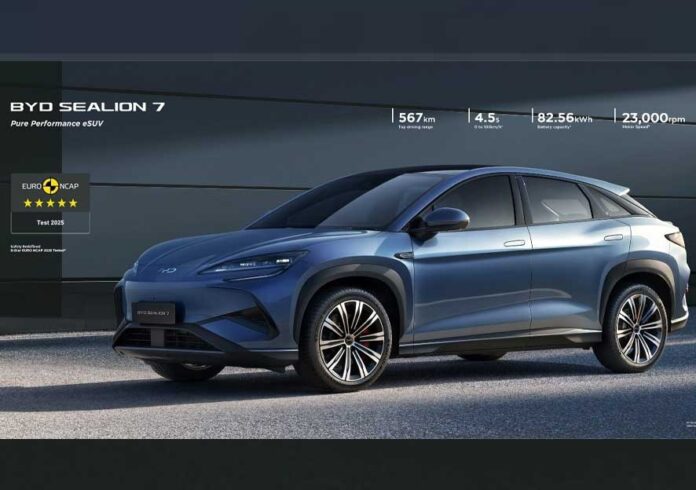
BYD India, a subsidiary of BYD, the world’s leading New Energy Vehicle (NEV) manufacturer, has announced a price increase of ₹50,000 for the BYD SEALION 7 Premium Edition, effective January 1, 2026. The Performance edition will continue at its current price, with no revisions announced.
To ensure transparency and provide plan certainty to customers, BYD India has confirmed that all bookings made on or before December 31, 2025, will be honored at the prevailing ex-showroom prices. This gives potential buyers an opportunity to secure the BYD SEALION 7 before the price revision.
New ex-showroom prices effective from January 1, 2026
The price adjustment reflects continued investment in technology, security and customer experience infrastructure while strengthening long-term product value for customers.
Mr. Rajeev Chauhan, Head of Electric Passenger Vehicle (EPV) Business at BYD India, said, “The updated pricing reflects the emerging cost dynamics while providing an attractive premium electric SUV proposition to customers. BYD SEALION 7 remains a strong value offering, supported by its advanced electric architecture, high performance and comprehensive safety package. Since launch, BYD SEALION 7 has crossed 2,300 units in sales across India, reinforcing the growing acceptance and demand. is in the market for a premium electric SUV.”
Further strengthening its premium position, BYD India has been recognized for excellence in battery technology by Motoring World, highlighting BYD’s leadership in advanced and safe EV battery innovation. BYD SEALION 7 has also been awarded the Luxury Mid-Size SUV – The One That Matters (TOTM) award by Eko Drive, reinforcing its strong appeal among discerning premium electric SUV customers in India.
Built on BYD’s cell-to-body (CTB) architecture and powered by a blade battery, BYD SEALION 7 offers advanced structural safety, cabin space and driving dynamics. The model has an 82.56 kWh battery pack, and has a 5-star Euro NCAP safety rating. The Performance variant produces 390 kW of power and 690 Nm of torque, which accelerates from 0-100 km/h in 4.5 seconds. The premium version produces 230 kW and 380 Nm with 0-100 km/h acceleration in 6.7 seconds. The certified range figures rise to 567 km (NEDC) on a full charge.
Along with the pricing update, BYD India continues its customer-centric program – One BYD Infinite Connections, a unique customer satisfaction initiative that offers select winners an opportunity to visit BYD’s NEV innovation and testing facilities in Zhengzhou, China. The program reinforces BYD’s focus on building long-term customer relationships and rewarding loyalty.
BYD India currently provides sales, service and charging guidance to customers through an expanded national network of 47 showrooms across 40 cities.
Globally, BYD has sold more than 15 million NEVs, reducing more than 121 billion kilograms of CO₂ emissions by 30 November 2025 – equivalent to the emissions absorbed by approximately 2.03 billion trees in a year. The company’s leadership in sustainable mobility is reflected in its inclusion among the top 10 most valuable global automotive brands by Kantar BrandZ and ranking at #91 on the 2025 Fortune Global 500 with a brand value of US$14.4 billion.
As BYD India moves forward, the company is committed to accelerating electric vehicle adoption, reducing environmental impact and keeping customers at the center of its growth strategy.
Renault Filante Record 2025 Has Made History Setting A New Ev Range Record By Traveling 1008 Km On A Single Charge – Renault Filante Record 2025 Has Made History Setting A New Ev Range Record By Traveling 1,008 Km On A Single Charge.
Hindi News »
automobile »
Renault Filante Record 2025 Has Made History Setting A New Ev Range Record By Traveling 1008 Km On A Single Charge