Home Blog Page 19

Tata Motors and Jaguar Land Rover open new Panapakkam plant; first made-in-India Range Rover Evoque launched –

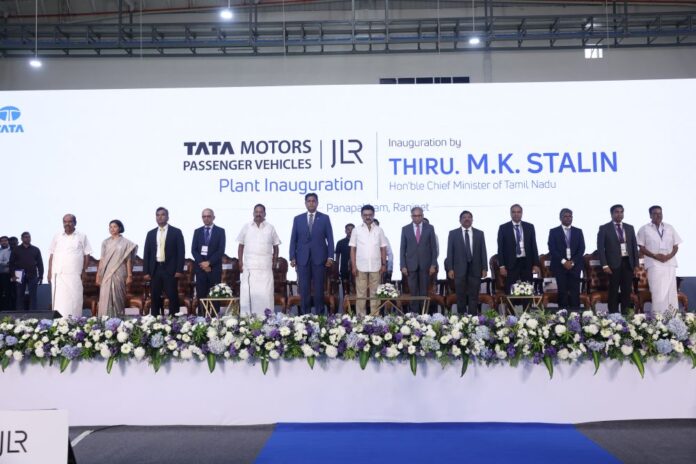
Tata Motors Passenger Vehicles Ltd. and its subsidiary Jaguar Land Rover Automobiles Ltd. The new manufacturing facility at Panapakkam in Ranipet district of Tamil Nadu has started operations, marking a major milestone in the Indian automotive industry. The new plant, designed to produce the next generation of vehicles, including electric vehicles for both brands, has now launched its first model – the locally built Range Rover Evoque, which is globally renowned for its luxurious appeal and refined craftsmanship.

The plant was inaugurated by Mr. MK Stalin, Chief Minister of Tamil Nadu and Mr. N. Chandrasekaran, Chairman of Tata Sons and Tata Motors Passenger Cars, in the presence of ministers of state, senior officials and leadership of Tata Motors, Jaguar Land Rover and Tata Group.

Speaking at the inauguration ceremony, the Chief Minister said that Tata Group has played a key role in nation-building and has a deep partnership with Tamil Nadu. He added that the launch of the first Range Rover Evoque in Panapakam cements Tamil Nadu’s position as India’s leading manufacturing and transportation hub and offers promising employment opportunities, innovation and economic growth.

Mr. N. Chandrasekaran described the Panapakkam plant as an important step for the Tata Group in strengthening India’s leadership in sustainable and future-oriented manufacturing. He emphasized that the plant will produce vehicles of superior quality and technology for customers in the Indian and global markets, deepening the group’s long-term partnership with Tamil Nadu.

Panapakkam factory interior

The Panapakkam facility combines advanced manufacturing technology with a skilled, diverse workforce from across Tamil Nadu. Many shop technicians are participants in Tata Motors’ Lakshya scheme, a ‘learn while you earn’ scheme that enables polytechnic graduates to pursue a company-sponsored B.Tech degree while working. Selected through a rigorous statewide process and trained for five months at Jaguar Land Rover facilities, the young technicians now possess global standard technical and operational proficiency.

The plan highlights how focused skills and local talent development can support advanced vehicle manufacturing while delivering economic and social development to local communities.

It has been put into production and will gradually expand its production scale in the next 5-7 years to reach an annual production capacity of 250,000 complete vehicles to serve the domestic and international markets. Overall, Tata Motors Passenger Vehicles Ltd plans to invest around Rs 9,000 crore to develop the site into a cutting-edge facility to support its long-term growth plans. The project is expected to create more than 5,000 direct and indirect jobs while strengthening the regional automotive supplier ecosystem.

Sustainable development at the core

The Panapakkam facility has been designed with sustainability first. The plant aims to run entirely on renewable energy, operate on a hydro model and adhere to strict global environmental standards. It uses efficient systems and low-emission processes to set the benchmark for green vehicle manufacturing in India.

With its advanced capabilities, focus on sustainability and dual-brand production strategy, the Panapakkam plant marks a major leap in India’s automotive manufacturing ambitions. If you prefer, I can also prepare a concise LinkedIn post or a shorter news version.
Euler Motors partners with Jio-bp to strengthen EV charging infrastructure for commercial vehicles in India AutoguideIndia

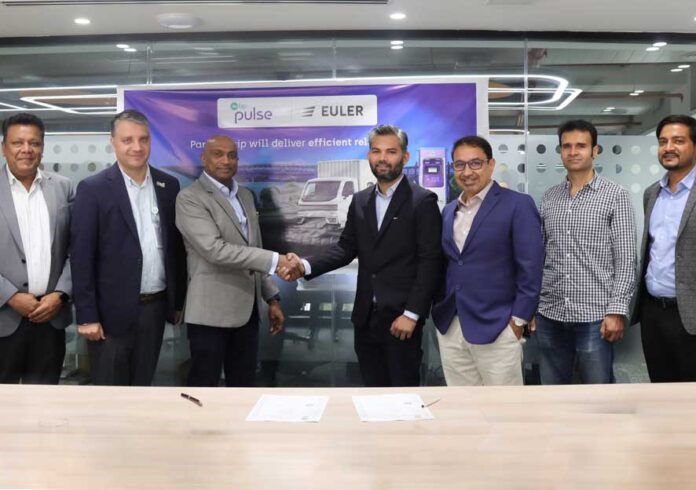
Euler Motors, a major player in India’s electric commercial vehicle sector, has entered into a strategic partnership with Jio-BP, the operating brand of Reliance BP Mobility Ltd, a joint venture between Reliance Industries and BP, to accelerate the expansion of EV charging infrastructure across key logistics hubs in the country.

The collaboration, formalized through a Memorandum of Understanding (MoU), aims to enhance charging access and convenience for electric commercial vehicle fleet operators and users, thereby facilitating faster adoption of electric mobility in India’s commercial transportation sector.

The MoU was signed on 6 February 2026 by Rubin Pather, Head – Electric Mobility, Jio-BP, and Ashish Tandon, Global Head – Customer Excellence, Euler Motors, in the presence of senior leadership from both the organizations. The partnership will focus on deploying charging solutions at high-demand locations, enabling seamless operations for electric fleets across the country.

As Euler Motors increases deployment of its newly launched Euler Turbo EV 1000 Fast Charge and Euler Storm EV Fast Charge models, access to reliable and widespread charging infrastructure has become essential to maximize fleet efficiency and asset utilization. With approximately 7,000 charge points across over 1,000 locations, Jio-bp is India’s widest, fastest and most reliable charge point operator, including the country’s first 480 kW charger with liquid-cooled gun. Therefore, with this partnership both the companies aim to bridge the infrastructure gap, accelerate the adoption of electric commercial vehicles and advance India’s clean mobility goals.

Geo-BP and Euler Motors will jointly focus on the following areas:

Identify business hubs for commercial EV deployment – ​​Develop key insights and data that identify potentially logistics and fleet-heavy locations with high EV charging demand to prioritize the deployment of charging infrastructure. Facilitating Customer Engagement – ​​Euler Motors will offer Jio-bp to existing and potential fleet customers (“Site Hosts”) interested in hosting EV charging stations, allowing faster discussions on site feasibility and deployment. Geo-BP will leverage its robust Trans-Connect platform to introduce Euler Motors to its fleet customer base and facilitate faster adoption of the energy transition and Euler Motors offerings. This collaboration is designed to strengthen the EV ecosystem in India by ensuring targeted deployment of charging infrastructure where it is needed most, benefiting commercial fleet customers and accelerating EV adoption.

Sarthak Behuria, Chairman, Jio-BP said, “India’s transition towards sustainable mobility requires strong collaboration between vehicle innovation and energy infrastructure. Our partnership with Euler Motors represents a shared commitment to accelerate the electrification of commercial logistics, a segment that will play a decisive role in reducing urban emissions and improving freight efficiency. Jio-BP’s growing EV charging ecosystem will be supported by Euler Motors’ purpose-built electric cargo vehicles. By connecting with India, we aim to support India’s growing mobility needs while making a meaningful contribution to the country’s low-carbon future.”

Additionally, Akshay Wadhwa, CEO of Jio-BP, said, “At Jio-BP, we are focused on building a reliable, high-performance charging network that supports the operational realities of commercial EV fleets. Our collaboration with Euler Motors allows us to align the Jio-BP pulse charging infrastructure with specialized electric cargo mobility solutions that are increasingly used in urban logistics. Together, we will provide reliable charging access, optimized “By providing uptime and increased operating efficiency, enabling fleet operators to confidently transition to electric mobility, further strengthening India’s EV ecosystem.”

Ashish Tandon, Global Head of Customer Excellence, Euler Motors, said, “This MoU brings together two committed partners focused on addressing the key challenges of charging access for commercial EVs. Through shared insights and coordinated efforts, we aim to provide impactful business solutions for our customers and contribute to strengthening the EV ecosystem.”

Gaurav Kumar, Director – Board, Euler Motors said, “Accelerating electric mobility in the commercial vehicle segment requires charging infrastructure in step with vehicle deployment. For fleet operators, access to fast, reliable charging at high-demand logistics hubs directly impacts uptime, asset utilization and operational economics. Our partnership with Jio-BP reflects the shared focus on building this critical infrastructure, which will enable fleet operators to meet the needs of the entire “Enables India to transition to electric mobility with greater confidence and efficiency.”

Greaves Cotton delivers strong Q3 and 9M FY26 performance on broad-based execution |

Greaves Cotton Limited, India’s leading diversified engineering company, reported a strong financial performance for the quarter and nine months ended December 31, 2025, driven by healthy demand across its core businesses, growing momentum in international markets and disciplined execution across operations.

On a consolidated basis, revenue for Q3 FY26 grew 17% year-on-year to ₹875 crore. EBITDA grew sharply by 57% to ₹62 crore, while profit before tax (PBT) stood at ₹37 crore. For the nine-month period ending December 2025, consolidated revenues grew 16% year-on-year to ₹2,436 crore, supported by EBITDA of ₹171 crore and PBT of ₹111 crore.

During the third quarter, the company’s standalone operations recorded revenue of ₹575 crore, EBITDA of ₹78 crore and PBT of ₹74 crore. Standalone revenue increased 14% year-over-year, EBITDA increased 18%, reflecting improved operating leverage.

For the nine-month period, standalone revenue reached ₹1,667 crore, while EBITDA and PBT stood at ₹232 crore and ₹226 crore, respectively. PBT recorded a strong growth of 33% year-on-year due to strong export performance, a well-established aftersales network and continued operational efficiency and cost optimization initiatives under the company’s new strategic framework.

Commenting on the performance, Mr. Parag Satpute, MD & Group CEO, Greaves Cotton Limited, said: “Greaves Cotton’s strong performance in Q3FY26 reflects strong execution across all our businesses. We are seeing continued demand across our energy, mobility and industrial solutions, supported by momentum in international business, aftermarket growth and application-based innovation. I am pleased to report that we remain firmly on track for our strategic priorities. And through GREAVES.NEXT, we are strengthening our operations, building strong client partnerships and making selective investments to build a future-ready engineering company.

business performance

Core businesses continued strong growth during the quarter, reflecting Greaves Cotton’s application-led approach and strong execution.

• Energy Solutions revenue grew 21% in 9M FY26 and 6% in 3QFY26, supported by continued genset demand and strong momentum in the aftermarket business. The spares and service segment grew 40% year-on-year during the same period.

The company strengthened execution through a new regional structure integrating sales, service and parts and launched a retail annual maintenance contract to enhance customer response, value and service access. Going forward, energy solutions will become a major part of the portfolio.

• Mobility Solutions recorded a strong performance driven by strong export demand for Euro V+ compliant diesel engines and healthy domestic volumes. Mobility Solutions delivered 15% YoY revenue growth in 9M FY26 and 18% for the quarter.

Engineered Components business Excel ControlEngage delivered healthy domestic growth, supported by new product launches and expansion of its offerings and applications in the automotive, agricultural and industrial sectors.

• Industrial solutions supported by demanding defence, marine and special purpose engine applications are continuously progressing. While the business saw flat revenue growth, the company won new defense orders and expanded its marine engine portfolio.

International business, a key growth lever across our businesses, accounted for 14% of revenues in 9M FY26, indicating continued traction in global markets through strong customer relationships such as Ligier in Europe.

investee business

GEML – VAHAN volumes for E-2W grew 40% quarter-on-quarter to over 18k units in Q3 FY26, driven by new product launches and network expansion, resulting in market share increasing from 4.1% in Q2 to 5.0% in Q3. This is a result of growing customer acceptance, continuous dealer network expansion and showroom renovation in key markets, thereby strengthening our retail presence.

GFL – Expanded to 74 locations, served more than 51,000 customers, and launched EV-focused financing and insurance products. Managed AUM as of December 31 stood at ~₹445 crore, while cumulative disbursements crossed ~₹640 crore.

The company received two prestigious awards, the Best Governed Company in the ‘Listed Segment: Emerging Category’ by the Institute of Company Secretaries of India, and the Best Process Control Award from Stanley Black & Decker among its global suppliers in recognition of strong governance standards and process excellence.

strategic progress

During the quarter, GREAVES Cotton continued to execute GREAVES.NEXT, its multi-year strategy to build a trusted, innovative and future-ready engineering company. Under this strategy, we have outlined a medium-term investment plan of ₹500-700 crore to strengthen core capabilities and support new product development in line with long-term growth priorities. We continue to make targeted investments in R&D and manufacturing, including fuel-agnostic engines, advanced gensets and rare-earth-free motors. With international business being a key strategic priority, we have established a dedicated international team and are strengthening client relationships and staying close to customer needs.

Progress under GREAVES.NEXT remains steady, with a clear path to achieve 16-20% CAGR by accelerating core strengths, adding new capabilities and selectively expanding into adjacent areas. A disciplined operating system and governance cadence ensure clear goals and accountability.

outlook

Looking ahead, Greaves Cotton remains cautiously optimistic, supported by industrial and infrastructure-led demand, the growing need for reliable power solutions and expanding global opportunities. The company will continue to focus on execution, margin improvement and capital efficiency to drive sustainable long-term value creation.

Transforming agriculture through electric vehicles –

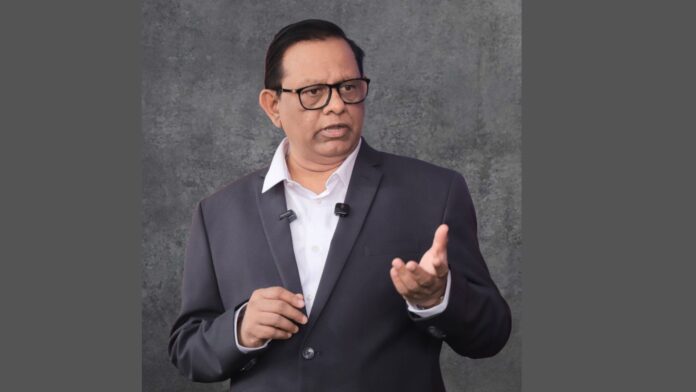
By Harish Chandra Prasad K, CEO, Montra Electric Tractors Division

Agriculture remains the cornerstone of India’s economic and social structure, feeding nearly 42% of the population and contributing approximately 18% to the country’s GDP. Beyond the economy, it sustains livelihoods, ensures food security, and maintains stability in most villages. At the same time, Indian agriculture is at a critical crossroads in the process of mechanization. Mechanization, mainly driven by tractors, has played an important role in increasing productivity, with millions of tractors in operation across the country. However, this growth brings new challenges as the industry’s heavy reliance on diesel-powered machinery increases operating costs and environmental pressures.

According to estimates, the diesel consumed by tractors accounts for about 7.4% of my country’s annual diesel consumption and 60% of the total agricultural oil consumption. Furthermore, their PM2.5 and NOx emissions are likely to increase to 4-5 times their current levels over the next two decades. While internal combustion engine (ICE) tractors have powered rural prosperity for decades, they now conflict with India’s sustainable development goals and net-zero emissions roadmap. As global and national climate commitments continue to gain momentum, the need for cleaner, more cost-effective agricultural alternatives has never been more urgent.

Electric tractors: practical solutions

Electric tractors emerged as the perfect solution, solving several challenges simultaneously. They simultaneously reduce operating costs, minimize emissions and reduce overall reliability in volatile fossil fuel markets. More importantly, they symbolize a tectonic shift from traditional mechanization to smart, sustainable agricultural mobility. This shift is aligned with national priorities under PM e-DRIVE, FAME-III and the National Bioenergy Plan, reinforcing India’s broader net zero emissions commitment by 2070.

Electric tractors are a combination of agricultural productivity and green innovation. The high-torque electric drivetrain delivers instant power, ideal for quiet and powerful plowing, seeding and hauling. Digital integration through IoT dashboards enables real-time monitoring, remote diagnostics and proactive maintenance. Together, these technologies increase agricultural efficiency while reducing the physical stress and fatigue associated with diesel engines.

Field trials by manufacturers have consistently shown higher cost savings per hectare compared to diesel models, mainly due to lower energy and maintenance costs. When powered by decentralized renewable systems such as solar microgrids, electric tractors can not only drive field work, but also help build self-sufficient, low-carbon rural ecosystems, turning villages into clean energy producers rather than just consumers.

Policy Imperative: Closing the Adoption Gap

Despite the promise, initial pricing for electric tractors remains a hurdle. For small and marginal farmers, the upfront costs outweigh the long-term savings. Closing this economic gap will require aggressive policy intervention and financing innovation, as India has achieved with solar energy adoption.

India’s broader EV ecosystem is already benefiting from strong policy support. Extending these benefits to agricultural vehicles through central subsidy schemes and complementary state incentives could significantly reduce the cost of entry. Meanwhile, Department of Agriculture advocacy initiatives are helping farmers understand the lifetime value, reliability and environmental benefits of electric vehicles.

However, financial incentives alone are not enough. To achieve mass adoption, policies must also enable universal adoption through targeted subsidies, low-interest financing and rural charging infrastructure development. Electric mechanization should not be seen as a subsidy to farmers but as a national investment that can increase productivity, enhance energy security and reduce the carbon intensity of India’s entire agricultural value chain.

Looking to the future: from innovation to standardized practice

India’s transition to electric agricultural transportation is steadily gaining traction. Battery technology is improving, charging infrastructure is expanding, and data deployed in the field is helping manufacturers improve performance and durability. Each new season of pilot projects brings more evidence that electrification is possible not just in theory, but in the soil and sweat of everyday agricultural work.

Electric tractors directly contribute to decarbonization and significantly reduce agriculture’s carbon footprint by replacing fossil fuels with clean electricity. Beyond the environmental benefits, the economic logic is compelling: electricity replaces diesel, reduces import bills, stabilizes farmers’ incomes, and saves foreign exchange.

However, broad-based success will depend on a holistic ecosystem approach, including ongoing research and development, strong after-sales support, farmer training and long-term financing models. Over time, as battery costs fall and rural energy systems mature, electric tractors will move from being viewed as innovative products to becoming standard agricultural tools.

Ultimately, the future of Indian agriculture will be determined not by the horsepower of machines, but by the sustainability of energy. Electric tractors offer a unique opportunity to responsibly power the nation’s farmland, ensuring economic growth, productivity and environmental stewardship advance together.

SLEEK EV secures US$8.5 million Series A first close led by KYMCO Capital AutoguideIndia

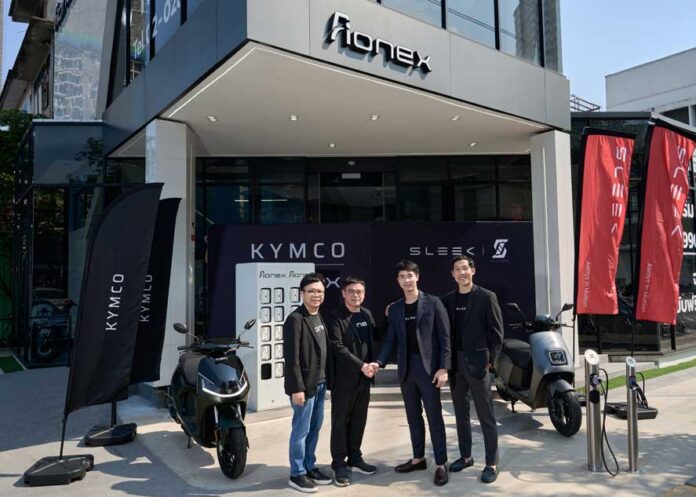
SLEEK EV, a leading technology manufacturer and innovator in vehicle electrification – primarily focused on electric scooters – has announced the first closing of its Series A funding round, raising US$8.5 million.

The round was led by KYMCO Capital, a private equity fund backed by global powersports leader Kwang Yang Motor Co., Ltd. (KYMCO), with participation from more than 20 supply chain partners in Taiwan and China. Existing investors January Capital, Krungsri Finovate and Orzon Ventures also participated in the round.

The funding marks a major milestone as SLEEK EV accelerates its pan-Thailand expansion and furthers its ambition to establish Thailand as a regional hub for electric motorcycles in Southeast Asia.

Scaling production, technology and charging infrastructure

Proceeds from the first closing of the Series A will be deployed across several strategic priorities:

Manufacturing Expansion: Expanding production capacity through an expanded facility located along Thailand’s Eastern Economic Corridor (EEC). Advanced R&D: Accelerating product development by focusing on AI-powered software and intelligent AI agents to enhance rider experience and operational efficiency. Network growth: Expanding Sleek’s EV S-Charge infrastructure by more than seven times, strengthening charging and battery-swapping access across the country.

Strengthening partnerships and ecosystem leadership

Building on established partnerships with PTT OR, Krungsri Auto, Toyota Tsusho and Grab, Sleek will continue to form new strategic alliances with EV dealers, ecosystem partners and national regulatory bodies. The company aims to drive strong market adoption, improve delivery scale, and set new regional standards for safety, quality and operational efficiency in electric motorcycle charging and battery swapping.

With this funding, SLEEK EV is set to play a decisive role in shaping the next phase of Southeast Asia’s electric two-wheeler ecosystem.

Sleek EV’s long-term ambition is to become APAC’s trusted full stack EV motorcycle operating system, where partners collaborate, data compound and actions converge into a new way of urban mobility. KYMCO Capital, a strategic partner and investor, will bring 60 years of two-wheeler industry experience to SLEEK EV and support in the effort to optimize supply chains, synergize the proliferation of battery and charging/swapping technologies, and supercharge its distribution in Southeast Asia.

“This investment from KYMCO Capital is a strategic investment. It validates our technology and our ability to compete in global markets. Sleek EV is not just an electric motorcycle manufacturer. We are redefining vehicle electrification with an end-to-end ecosystem solution – manufacturing, charging infrastructure and an integrated software that ties everything together. Our goal is simple. We want to make Thailand the electric motorcycle hub of ASEAN. Our goal is to be #1 in Thailand To become an EV motorcycle brand by end-2026.” said Kantinan Tunveenukoon (Ben), CEO and co-founder of Sleek EV. “With KYMCO Capital, we are doubling down on the EV ecosystem with quality products, strong technology stack and like-minded stakeholders who can take it forward with us.”

Gary Ting, Managing Partner of KYMCO Capital, shared that “KYMCO Capital is committed to supporting the Thai electric vehicle ecosystem, building on what we have built in Taiwan and China. This investment in Sleek EV exemplifies our ecosystem in Southeast Asian markets. This partnership symbolizes the next generation of urban infrastructure transformation through vehicle electrification. With KYMCO’s deep capabilities coupled with Sleek EV offerings, we see ourselves in all Empowering businesses and governments to go electric, we strongly believe that a sleek EV ecosystem approach will play a vital role in building a green future.

ZF and BMW sign multi-billion-euro deal to advance future drive systems –


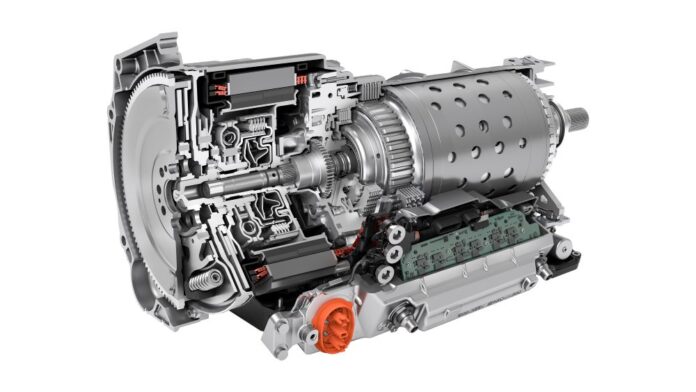
ZF Friedrichshafen AG and the BMW Group have reached a long-term agreement for the supply and continued development of ZF’s renowned 8-speed automatic transmission (8HP). The multi-billion dollar partnership will last until the late 2030s and will play a key role in supporting both companies in enabling open technology, low-emission mobility.

ZF CEO Mathias Miedreich said the agreement is a strong signal for innovation and sustainable development at a time when the global automotive industry is undergoing rapid change. As part of the collaboration, ZF will continue to improve the 8HP gearbox to meet the needs of future drive systems, making it more efficient and more suitable for new propulsion technologies.

Mr. Sebastian Schmitt, head of ZF’s electrified drive technology division, said that long-term planning gives the two companies clarity and stability as they prepare the next generation 8HP to meet future performance and efficiency needs.

The collaboration strengthens ZF’s position as a global systems supplier, providing both companies with greater visibility and reduced risk in a rapidly growing market. The agreement also creates a solid foundation to support the transition to low-emission mobility solutions in the coming years.


Mercedes-Benz opens new luxury showroom in Raipur, expands nationwide retail network –

Mercedes-Benz India has strengthened its retail presence in Chhattisgarh with the opening of a new luxury showroom in Raipur. The facility, set up by City Star, is part of the company’s wider strategy to get closer to customers by expanding its presence in emerging markets.

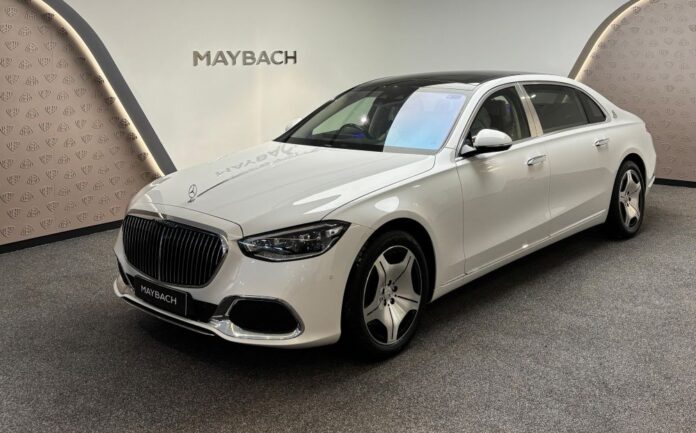
The new showroom in Telibandha houses Raipur’s first dedicated Maybach section, reflecting the growing demand for high-end luxury vehicles in the region. The facility has a total floor area of ​​5,300 square feet and includes 3,500 square feet of covered showroom space, offering personalized consultations, curated lifestyle experiences and a dedicated delivery area equipped with a digital Key Presenter system. It is supported by a team of approximately 30 professionals.

Mr. Brendon Sissing, Vice President, Sales and Marketing, Mercedes-Benz India, said that following a record revenue year in 2025, the brand is entering 2026 with strong momentum. He pointed out that the company will launch 12 new products this year, while strengthening manufacturing operations, establishing the MB.Charge public charging ecosystem and entering more markets.

Mr. Sunil Madhyani, Managing Director, City Star, said the new showroom brings a modern, boutique style luxury experience to Raipur with a focus on high-end vehicles and personalized customer interaction.

To support Mercedes-Benz’s electric vehicle plans, the Raipur plant is equipped with a 120 kW fast charger and two charging stations to meet the growing demand of pure electric vehicle customers. The site also benefits from its location in a busy commercial hub, making it easily accessible to the city’s large number of existing and potential luxury buyers.

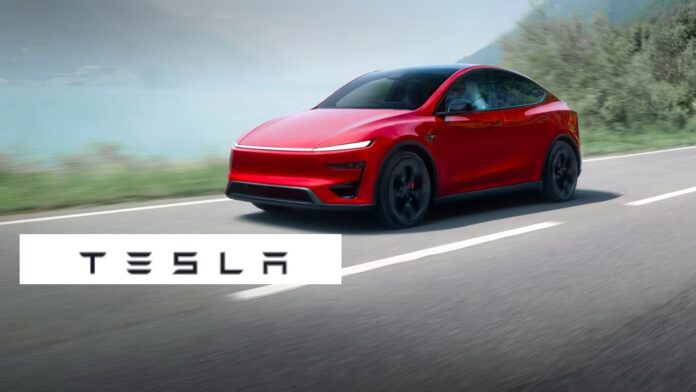
Now buying Tesla has become easy, you will get luxury electric car for 49,000 EMI, there will be huge savings every month.

Tesla Is Now Easier Than Ever Get The Luxury Electric Car With Emis Starting At 49k

Hindi News »

automobile »

Tesla Is Now Easier Than Ever Get The Luxury Electric Car With Emissions Starting At 49k

MG Cyberster – The electric sports car that makes every day feel like the weekend –

Combining nostalgia with modern excitement, the Cyberster combines performance and practicality to make it fun for both workday commutes and weekend getaways.

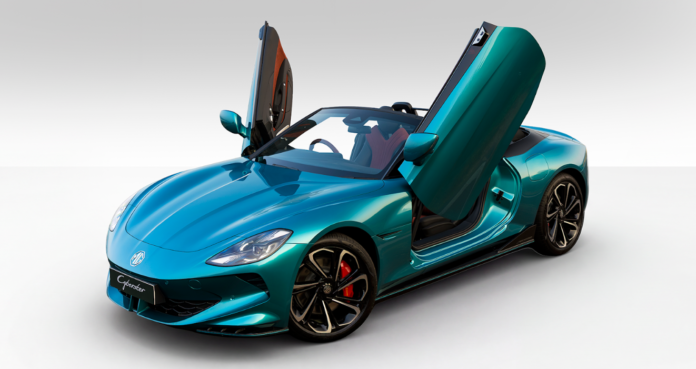
JSW MG Motor India’s electric Cyberster has made a splash in the high-performance electric vehicle segment by topping the Indian sports car charts in 2025. In just six months, sales of the model crossed 500 units, a remarkable feat that also propelled the brand’s premium channel MG SELECT to the second position in the Indian luxury electric vehicle segment. Riding this wave of enthusiasm, the company recently introduced a striking new color, Iris Teal, designed to accentuate the car’s flowing lines and boldly sculpted styling. This led me to check out the new shading options.

On a warm, sunny afternoon, I walked into MG SELECT in Chennai to check out the new Iris Cyan color of the MG Cyberster – the color that everyone was talking about. Before I could explain why I was there, two ladies from the showroom team greeted me with a smile and immediately offered me a menu of hot and cold drinks – cappuccino, Americano, etc. – almost like walking into a boutique hotel rather than a car dealership. This little gesture sets the tone. The place feels less like a typical showroom and more like a curated experience for people who like attention to detail. In many ways, MG SELECT appears to be redefining the face of premium car retail in India, balancing everyday practicality with a sense of luxury.

When people approach the MG Cyberster for the first time, they may not think they are looking at a brand new car. For many car enthusiasts, it feels more like encountering an old name from another era—one they’ve heard in stories or seen in classic photos. Cyberster carries on this tradition without shouting about it. Inspired by the iconic MG Roadster of the 1960s, it brings these memories into the new century, now incorporating power, sharp styling and modern technology.

The first thing that struck me as I walked around the car was how unmistakably modern it looked. The new shade adds a touch of glamor and quietly stands out with its unique, attractive color. Designed by Marco Fainello, whose past work includes designing cars for Michael Schumacher’s Ferrari team, the Cyberster is a masterclass in turning aerodynamics into art. The trunk features a flowing ‘Kammback’ design that replaces the rear spoiler, with clean yet sporty lines, and a deep piano black finish that runs seamlessly across the entire surface, giving the car a unified, sculpted appearance. With an aerodynamic drag coefficient of just 0.269 Cd, it feels like it’s cutting through the air even when stationary.

Then came the moment everyone was talking about: the door. The Cyberster is the only car in India to feature fully electric scissor doors that open in a dramatic way that makes people stop and stare. Whether triggered by the key fob or internal button, they rise quietly and gracefully. You can even adjust the angle and height – you won’t realize how addictive it is until you start using it. But there’s also practicality: a built-in manual override for emergencies.

Walking inside, the mood changes from excitement to pure concentration. The cabin feels like a cockpit – three digital screens arc across the driver’s field of view, with clear navigation, car statistics and 360-degree cameras popping up effortlessly. The high-end trim features vegan leather and Dinamica suede seats that feel softer than expected in a sports car and feature memory functions and lumbar support, making daily driving surprisingly comfortable.

The convertible top adds an extra layer of glamor. Even at speeds up to 45 km/h, it folds up quickly in just 12 seconds. Despite being a soft top, it’s fully waterproof, courtesy of premium stitching developed for heavy rains – which helps cope with India’s unpredictable weather. More practical is the 360-litre boot, whose capacity remains the same whether the roof is up or down, thanks to its dedicated storage panels.

But at its heart, Cyberster is still an electric sports car. Beneath the stylish casing is a dual-motor unit that delivers 510 hp and 725 Nm of torque. Power is distributed rearward in a 60:40 ratio, providing the right balance for spirited driving. A 50:50 weight distribution keeps the vehicle stable under hard braking or cornering, and the Pirelli P Zero tires with asymmetrical tread patterns (245 wide at the front, 275 wide at the rear) control the road with confidence, improving braking performance and enhancing handling and control. Although the ground clearance is only 116mm, the short wheelbase helps it crawl over speed bumps without scratching.

On the open road, Sport mode sharpens things up, while Super Sport on the steering wheel unlocks launch control for instant surges of power. There’s also a neat feature: the Kinetic Energy Recovery System (KERS). Every time you slow down, it charges the battery, converting motion into electricity. It adds more range, saves brake pads and feels like it came straight out of a race car. At the other end of the driving spectrum, one-pedal drive makes crawling through traffic a breeze.

Charging is equally easy: a full charge takes about 8 to 9 hours with a 7.4 kW home charger, while a 140 kW DC fast charger can charge the battery from 10 to 80 percent in just 35-40 minutes. The battery itself is backed by a 15-year warranty and has built-in features to optimize charging cycles and maintain long-term health. In addition to the mandatory safety features, the sports car also comes with Level 2 ADAS, real-time driver monitoring and a full suite of braking and stability systems.

A BOSE 8-speaker sound system, dual-zone climate control, heated and ventilated seats, a heated steering wheel and dozens of ambient lighting combinations make the cabin feel more premium than a traditional roadster.

After spending some time with the Cyberster – opening the doors, exploring the cockpit, switching modes and testing its comfort – it’s clear that the JSW MG isn’t just reviving an old name. It redefines the definition of a modern two-seat sports electric vehicle.

Kia India kicks off 2026 with 10.3% year-on-year sales growth in January, reaching 27,603 units –

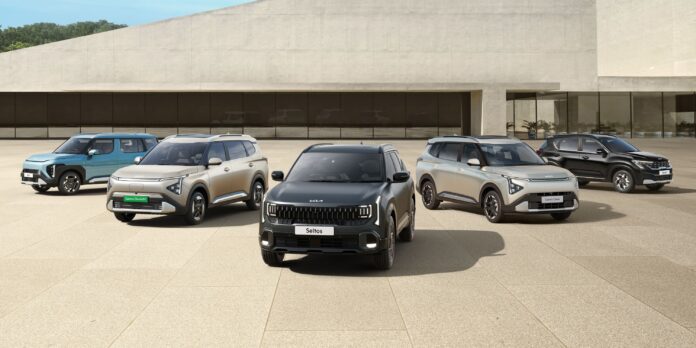
Kia India, one of India’s leading mass premium carmakers, has started 2026 on a positive note, reporting total sales of 27,603 units in January. Sales in January 2025 reached 25,025 units, a year-on-year increase of 10.3%. This performance reflects the company’s continued growth, strong demand in key segments and Indian consumers’ increasing preference for Kia’s differentiated products.

The company’s sales momentum in January was driven by sustained demand for its product portfolio, encouraging market response to the all-new Kia Seltos, continued performance of the Kia Sonet, and continued customer traction for the Kia Carens Clavis and Clavis EV. While the new-gen Seltos continues its legacy as one of India’s most influential mid-size SUVs and is poised to play a key role in the next phase of Kia India’s growth, the Sonet continues to build on the brand’s strong foundation in the high-volume compact SUV segment. At the same time, the Carens range strengthens Kia’s presence in the recreational vehicle and electric vehicle segments, reflecting growing customer preference for versatile and future-proof mobility solutions.

Commenting on the monthly results, Mr. Atul Sood, Senior Vice President, Sales and Marketing, Kia India, said, “The encouraging start to 2026 reflects customers’ continued trust in the Kia brand. The positive response to the new generation Seltos, steady demand for the Sonet and the growing popularity of the Carens Clavis and Clavis EV underline the strength and balance of our product portfolio. This performance reinforces our focus on delivering differentiated, future-proof products across segments while continuously enhancing the overall ownership experience”

Kia’s product portfolio continues to be differentiated by a strong focus on design, technology and safety. While the new generation Seltos and Sonet offer advanced connectivity and driver assistance features in their respective segments, the Carens Clavis stands out with flexible 6- and 7-seater configurations and a versatile three-row cabin, while the Clavis EV (Kia’s first Indian-made electric vehicle) brings a practical seven-seater electric vehicle with connected technology and a strong emphasis on comfort, safety and daily usability.

With a balanced product portfolio, Kia India remains well-positioned to sustain growth momentum in the coming months. The company remains firmly committed to responding to evolving customer expectations through timely product enhancements supported by a customer-centric approach that enriches the overall brand experience.

Kia India’s growing network of 841 touch points across 376 cities brings the Kia brand closer to customers across the country, ensuring easy access to sales, service and ownership support in metros and emerging markets. It is supported by 122 certified second-hand stores, ensuring seamless exchanges, instant payments and hassle-free ownership transfers for customers.