Tag: SUV

  • Honda Cars India launches six new cars, gearing up for busiest year yet –

    Honda Cars India launches six new cars, gearing up for busiest year yet –

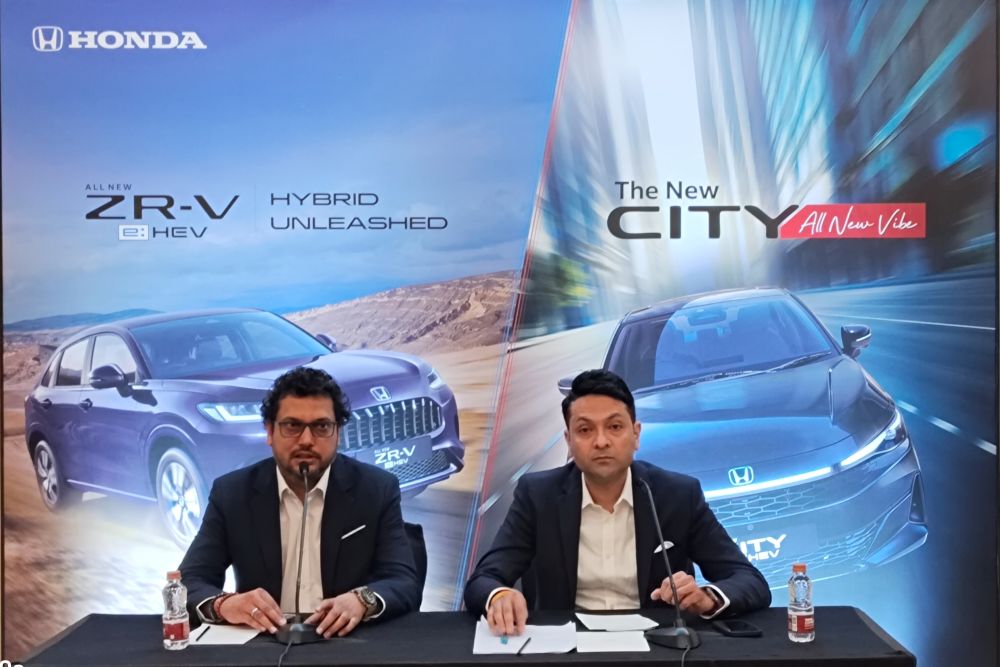
    Honda Cars India is embarking on its most ambitious product offensive in years. There will be six launches this calendar year, two of which have already been launched. The highlight – an electric SUV measuring over four meters – will be launched in the second half of this financial year. The vehicle was showcased to a global audience at the Japan Mobility Show and has been undergoing road testing in India since April.

    Mr. Kunal Behl, Vice President, Marketing and Sales, Honda Cars India Ltd. said that as part of its preparations for the launch of electric vehicles, the company is currently building a charging ecosystem around it, partnering with multiple charge point operators instead of investing in its own charging infrastructure.

    Electric cars don’t exist in isolation. The OEM has announced plans to launch more than a dozen products in India by 2030, with a clear focus on the SUV segment. A sub-four-meter SUV has been confirmed for launch in 2028, with multiple powertrain options, and at least one more SUV over four meters is also planned. He said the reason is that the five-year compound annual growth rate of the sub-4-meter and above-4-meter SUV segments both exceeds 20%, while the hatchback segment shrinks by about 4% annually. Honda has identified where the market is going and is positioning itself accordingly.

    When it comes to powertrains, Honda prefers hybrid over turbocharging as the hybrid system offers performance comparable to that of a turbocharged engine, with the city hybrid producing 253 Nm of torque while offering significantly higher efficiency. The new hybrid engine will be launched globally by 2027 and India is expected to benefit from it. When it comes to electric vehicles, the automaker is taking a collaborative approach – seeking technology and resource partnerships to reduce development time and costs and stay competitive in a market where domestic players are offering feature-rich products at aggressive prices.

    He acknowledged that Honda’s current market share of about 1.3% to 1.4% reflects the segments and powertrains it chooses to participate in, rather than a measure of the quality of its products. In the pure gasoline segment of the Elevate category, the company holds about 5% stake. The company does not pursue market share targets. Instead, it believes that as the product lineup expands into segments where it has not previously competed, share will follow naturally.

    Automatic transmissions currently account for 52% of Amaze sales, 61% of City sales and 72% of Elevate sales. Indian buyers are increasingly focusing on value rather than price, looking for features, driving pleasure and a powertrain that suits their needs. After years of operating in a relatively tight space, Honda is now gearing up to enter the market more ambitiously – and the next few years will tell whether that strategy works.

    Supporting the product rollout is Honda Financial India, a wholly-owned subsidiary of Honda established last year. It is expected to start its consumer financing business this financial year, offering solutions such as lower EMIs and one-time payment options. The focus, Bell explained, is Honda’s huge two-wheeler loyalists looking to upgrade to four-wheelers, and these buyers need flexible financing to make the switch.

    Manufacturing is currently concentrated at the Tapukara plant in Rajasthan, which has an installed capacity of 180,000 units and a utilization rate of 60% to 75%. The Greater Noida plant was closed in 2020 and has yet to resume production. The company will evaluate expansion options as sales grow, but has not yet committed to specific plans.

    Tamil Nadu leads the way

    According to him, Tamil Nadu is Honda’s strongest market in India, ranking sixth in the entire industry in the country, but Honda ranks first – this is due to the state’s strong preference for petrol and CVT cars, which perfectly matches Honda’s product advantages. Passenger car penetration in Tamil Nadu stands at 250 vehicles per 1,000 people, while the national average is only 34 vehicles per 1,000 people. Honda is currently deepening its presence in tier-II and tier-III towns in the south, where growth rates are 22 to 24 per cent compared to large cities.

    Digitization

    Digitally, the entire sales and service channel is now online – from booking and payment to test drives and service appointments. AI-assisted call centers operate around the clock, and AI is also used in sales team training. Digital infrastructure is crucial, he said, adding that its systems have advantages over other manufacturers in terms of ease of navigation and customer experience, he concluded.
  • Tata launches Sierra.ev, calls it ‘the only car a family needs’ –

    Tata launches Sierra.ev, calls it ‘the only car a family needs’ –

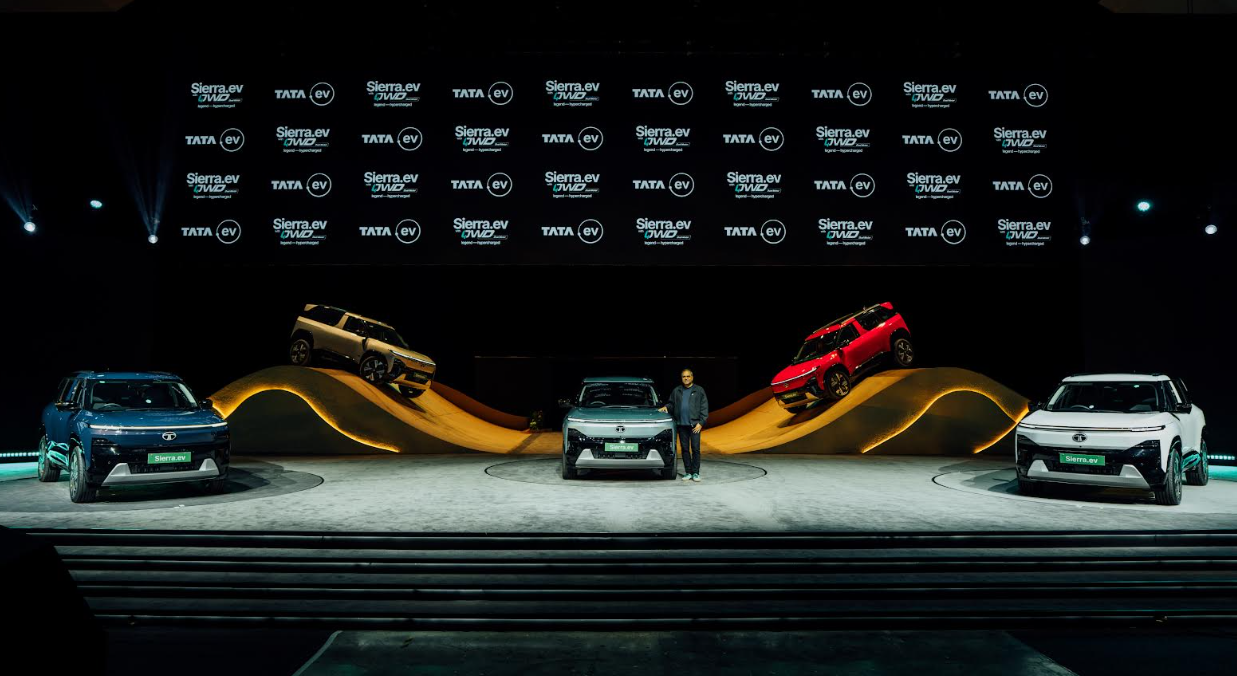
    Tata Motors has revived an iconic nameplate with the all-electric Sierra.ev, which has a real-world range of more than 500 kilometers, sprints from 0 to 100 kilometers in 5.8 seconds and an interior that feels more like a living room than a car. Bookings are now open with prices starting at Rs 18.79 lakh.

    Tata Motors has revived one of its most popular names and given it a thoroughly modern electric heart. When the new Sierra.ev was launched, the company described it as the most advanced and desirable version of its SUV to date. Bookings for the SUV are now open and deliveries will begin on July 15, 2026, with an introductory price of Rs 18.79 lakh.

    Tata believes that electric vehicles in India are at an inflection point, transforming from a niche option for early adopters to a more mainstream option, helped by growing customer confidence, lower total cost of ownership and rapidly improving charging infrastructure. Mr. Shailesh Chandra, Managing Director and CEO, Tata Motors Passenger Vehicles, sees Sierra.ev as a new chapter for a brand that has always stood for more than just transportation – first as a sign of the times, then as an SUV in India’s premium mid-size SUV segment when it was relaunched, and now as Tata’s answer to what a premium electric SUV should be. His core message is that customers don’t have to choose between going electric and having everything they expect from a high-end SUV.

    This commitment is based on three pillars. First up is the cabin experience, which Tata calls a “luxury living space”. Instead of a traditional dashboard, the Sierra.ev features a three-screen Theater Pro setup with a Horizon View display, paired with Dolby Atmos sound, a 12-speaker JBL system, and an additional soundbar for richer audio. There is even in-car gaming available via smartphone via AirConsole, a first for a car sold in India. A head-up display projects 19 different augmented reality visual effects onto the windshield, the suspension automatically adjusts to road conditions, and the panoramic sunroof creates what Tata calls a greenhouse feel. Practical details include a 622-litre boot (the largest in its class), with an electric, gesture-operated tailgate, and an app-based valet system that can park itself or summon it from a car park.

    The second pillar is range and charging, and the automaker is keen to go beyond lab test figures and talk about real-world performance. Sierra.ev’s 75 kWh battery provides over 500 kilometers of real-world range, and fast charging can add approximately 263 kilometers in just 15 minutes, taking the battery charge from 20% to 80% in approximately 26 minutes. The car also supports vehicle-to-load and vehicle-to-vehicle charging, meaning it can power external devices or even another electric car.

    Software plays an important role here too. A smart route planner built into Android Auto helps plan trips around charging stations, an in-car UPI system called DrivePay handles payments, and the car receives continuous over-the-air software updates. It also comes with 22 driver assistance features and a lifetime warranty on the high-voltage battery.

    The third pillar is capability – the idea that electric SUVs don’t have to be soft or limited to cities. Sierra.ev uses a dual-motor all-wheel drive unit that produces 504 Nm of torque and can accelerate from 0 to 100 km/h in about 5.8 seconds with Boost mode enabled. Six terrain modes cover everything from snow to sand to rock crawling, there is a dedicated off-road assist system and the car offers around 205mm of ground clearance and the ability to restart on slopes steeper than 50%. A 540-degree camera system and “Transparency Mode”, which allows the driver to effectively see through the car in difficult terrain, complete the visibility capabilities.

    Sierra.ev is available in seven colors, including a new shade called Rishikesh Rapids and the exclusive Nainital Nocturne reserved for the top-spec Empowered A QWD model. All in all, Tata aims to deliver an electric SUV that’s adequate for weekend off-road excursions, comfortable enough for daily commuting, and fast enough to be truly exciting to drive.

  • Xiaomi EV unveiled the U7 SUV, sales sets to start from this July. Vampire

    Xiaomi EV unveiled the U7 SUV, sales sets to start from this July. Vampire

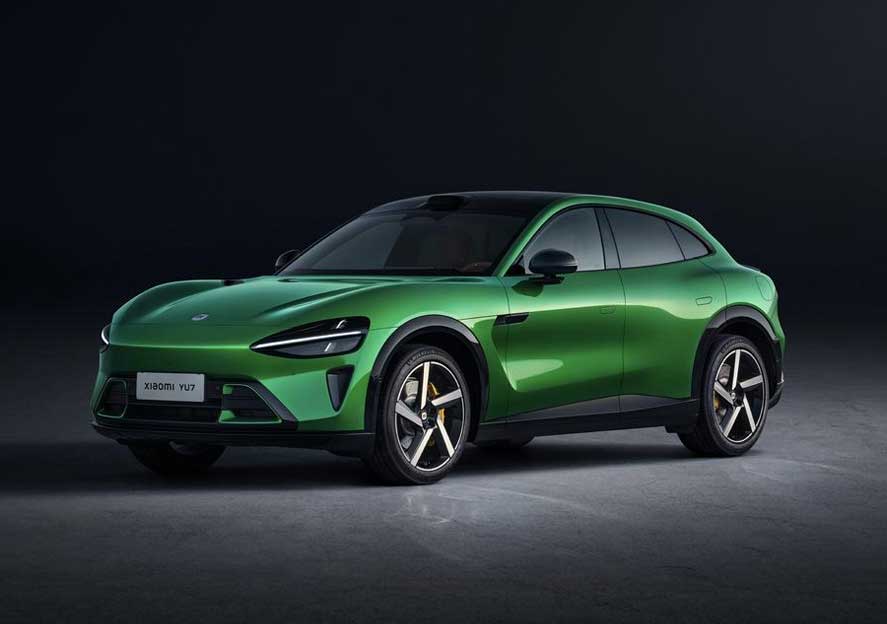
    Xiaomi EV has unveiled its first SUV, Xiaomi Yu7. Located as a high-demonstration luxury SUV, the U7 is designed for independent, confidence and dynamic individuals. Unlike having just a long version of Xiaomi SU7, Yu7 is a fully re -designed SUV manufactured from the ground. Although it shares the same evolutionary design language as the SU7, Yu7 stands out with its own bold identity – elegant style with the magnificent interior room, powerful performance and a gampering of premium comfort. Additionally, it incorporates state -of -the -art intelligent technology, providing a refreshing experience in design, cabin comfort, safety and smart features. Xiaomi Yu7 releases a unique attraction that separates it in its section.

    As the second model of Xiaomi Ev and the first SUV, Xiaomi Yu7 has inherited the brand’s commitment to “beauty” as a main product gene. While maintaining the family design language and elegant attitude of the Xiaomi SU7, Xiaomi Yu7 enhances its excellent appeal, ensuring that it stands with its extraordinary appearance easily in the urban landscape.

    Xiaomi Yu7 is a middle-to-middle SUV measuring 4999 mm (length) × 1996 mm (width) × 1600 mm (height) with 3000 mm walbase. This reflects the dedication of the brand for the correct ratio, with a 3: 1 wheel-to-body ratio, a 2.1: 1 wheel-to-hit ratio, and 1.25: 1 width-to-height ratio, which captures the classic low-lightening stones of high-performing SUVs. Luxury highlights include an ultra-superak 1: 3 head-to-body ratio and a 680 mm L113 measurement (distance from front wheel center to brake pedal), a hallmark of motor vehicle elegance developed in a century. After comprehensive refinement, 3.11 the chlamyshell aluminum hood (1960 × 1587 mm)-is originally integrated into the largest-body among vehicles produced on a large scale. Below, a 141-liter electric front trunk provides up to eight different opening mode. Alternative 275 mm rear wide tires added to sporty wheel arches further enhance the dynamic and high-demonstration looks of the SUV.

    Xiaomi Yu7 shows the design of a sophisticated family, with standout features with “waterdrop headlights” such as innovative hollow-out air channels, characterized by hood vents for increased lighting and a sharp, more aggressively connected. Its halo taillights have been updated with a cleaner, scalpted design and downward-angled corners, emphasizing a muscle rear profile with premium ultra-red lighting for better night visibility. The SUV also introduces an advanced electric-flush door handle system that remains flush with the body for better aerodynamics and aesthetics, automatically expands as users’ approaches and retracts smoothly after entry, expands both convenience and style.

    The Xiaomi Yu7 features advanced aerodynamic engineering inherited from SU7, with 10-powered air channels, 19 customized vents, and more than 40 airflow treatment areas. Major elements such as a hollow spiiler, an active grill with 100 adjustable louver contribute to a low drag coefficient of a spontaneous chlameshell hood CD 0.245 – promoting the CLTC range by 59 km and setting up a benchmark between sports SUVs.

    It also debuts three vibrant paint options: Emerald Green, Titanium Silver and Lava Orange. Highlight, Emerald is inspired by Green, Colombian Emeralds, uses a dual-layer system with ultra-fun aluminum flakes and adds a transitial pearl coat to make dynamic, light-north-color innings, a transitial pearl coat, SUV’s thunder adds to the design design.

    The interior of Xiaomi Yu7 is designed for a combination of vastness, luxury and advanced techniques under its bold exterior, “dual-zone surround luxury cabin” concept. For this, the Central Industry-First Xiaomi is a hypervision panoramic display, which provides a visually refined and immersive technical experience. The cabin has dual zero-gurutvakarshan front seats and power-adjustable rear seats for top-level rest. Designed for space and openness, interior uses 100% soft-touch material, eco-conscious finish, and Oeko-Tex class 1 certified material for security security. Nappa leather seats with a sophisticated rock-grain texture are premium, touch.