Tag: off-highway

  • Sonalika launches India’s first field-ready electric tractor –

    Sonalika launches India’s first field-ready electric tractor –

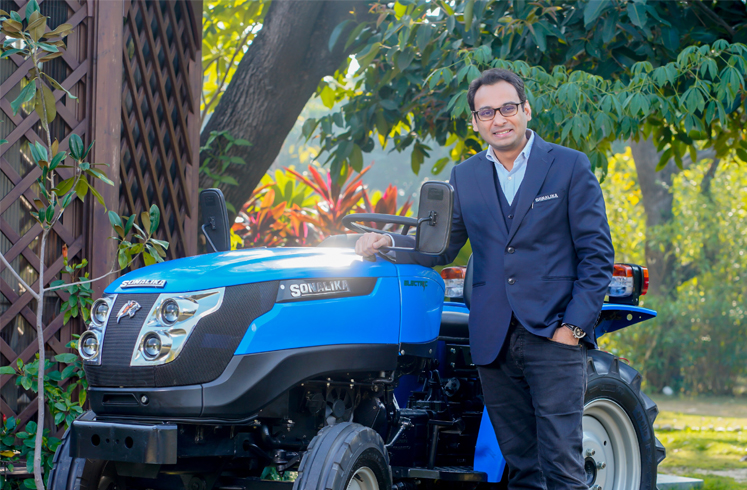
    Sonalika Group – Mr. Raman Mittal, Executive Director, Tiger Electric

    Tiger Electric, the latest technological wonder from Sonalika, India’s fastest growing tractor brand, is designed in Europe and developed using global technology solutions to provide Indian farmers with seamless power, easy home charging, zero carbon footprint and noise-free farming

    Sonalika, India’s fastest growing tractor brand and the number one export brand in Europe, America, Africa and over 130 countries, has ushered in a new era of agricultural innovation with India’s first operational electric tractor ‘Tiger Electric’. The farmer-centric brand’s latest technological marvel has been designed in Europe and developed in-house using proven aggregates to provide seamless power and emission-free, noise-free farming in India and globally. With the vision of “Leading Change in Agriculture”, Sonalika Tractor drives global agricultural mechanization with its customization and technological footprint, which is a true embodiment of “Made in India” and Made for the World.

    Sonalika Tiger Electric is India’s first field-ready electric tractor, creating a new technology benchmark in the tractor industry. It is powered by a state-of-the-art IP67 compliant 25.5 kW naturally cooled compact battery, ensuring running costs are only one-fourth of conventional diesel engines. The innovative high-quality battery of Tiger electric tractor can be fully charged in just 10 hours using an ordinary household charging pile, reducing the trouble of frequent trips to gas stations for refueling. Tiger Electric’s energy-efficient Etrac motors feature high power density and high peak torque at zero rpm for optimal performance.

    The German-designed motor ensures 100% torque 100% of the time, powering the tractor for the fastest start under any load condition. The tractor is now available for booking at an introductory price of Rs 5.99 lakh (ex-showroom). Sharing his views on the company’s path towards innovation, Raman Mittal, Executive Director, Sonalika Group said, “Sonalika tractors have always been at the forefront of innovation and continue to provide best-in-class technology to farmers across the globe, especially in Europe and the US. Tiger Electric’s commitment to every Indian farmer is to continuously provide technological advancements to enhance farm productivity and profitability.

    “In this product, we bridge the gap between concept and field readiness while keeping pace with global benchmarks in agricultural mechanization technology. It is built on Sonalika’s proven tractor platform, ensuring farmer friendliness and remaining easy to use as we move towards an emission-free, green tomorrow. Tiger Electric The operation is no different from a regular tractor, making it farmer-friendly while reducing fuel costs. As a customer-centric brand, we are constantly developing new products for India. Tiger Electric has the same global technological wonders that it offers to farmers in Europe and the United States,” he added.

    Mittal further said, “As the world is moving in a greener direction, electric vehicles across sectors are keenly considered as an alternative to fossil fuel vehicles. Sonalika’s Tiger Electric tractor is our commitment to accelerate India towards a green tomorrow and is in line with the Indian government’s ambitious move to launch electric vehicles by 2030.” The additional torque across the Tiger Electric’s operating range provides more power, maximizing farmers’ performance in the fields without fatigue. The tractor ensures better comfort for farmers as the engine does not transfer heat and the lower number of parts ensures less vibration in the tractor, ensuring less product downtime and zero maintenance costs.

    Equipped with the proven Sonalika gearbox, the Tiger Electric can reach a top speed of 24.93 km/h and has a battery backup time of up to 8 hours when operating on a 2-ton trolley. As an option, the company also offers a fast charging system that can fully charge the Tiger Electric in just four hours. The tractor is manufactured at the company’s state-of-the-art vertically integrated tractor manufacturing facility at Hoshiarpur plant in Punjab. The factory is powered by robotics and automation technology and rolls out a new tractor in a two-minute takt time.
  • Building electrification: When does it start helping decarbonisation? – Electric vehicle technology news

    Building electrification: When does it start helping decarbonisation? – Electric vehicle technology news

    By Martin Kunz, President and CEO, Concentric AB

    Construction equipment manufacturers face a complex challenge: They need to control emissions and reduce their reliance on diesel, and they need to do it quickly. Is the electrification of construction vehicles a viable step in the right direction? If so, how can this process be accelerated?

    Electrification of Construction Vehicles: A Perspective

    Independent market research firm IDTechEx said in its report titled “Electric Vehicles in Construction 2022-2042” that the decarbonization of the construction industry will play a key role in countries around the world meeting their commitments under the 2015 Paris Agreement, and the electrification of construction vehicles such as excavators, loaders, cranes and telehandlers will be key to helping construction organizations achieve their environmental goals.

    The report details that “construction machinery emits approximately 400 metric tons of CO2 per year, accounting for approximately 1.1% of global CO2 emissions,” and further states that while the off-road electric construction vehicle market is at an earlier stage of development than the on-road electric vehicle industry, there is a growing effort to provide zero-emission solutions in the field, with an increasing number of prototypes.

    What we are currently seeing is that the electrification of construction vehicles is being led by smaller, more compact machines such as mini excavators, compact wheel loaders and dump trucks. This is primarily because these machines are deployed in urban environments, where cities are increasingly looking to reduce emissions and noise, and electric construction equipment has the added benefit of Low Noise Zone compliance. This in turn provides employees with a safer and more comfortable working environment as noise and vibration from electrical equipment is reduced, reducing the chance of hearing loss and fatigue.

    Additionally, because they are used on smaller projects, the daily duty cycle and corresponding power requirements of small machines are lower than that of larger machines. Therefore, a standard eight-hour working day for small equipment can be met using practical-sized lithium-ion batteries (less than 50kWh) and electric motors (less than 20kW).

    While this in itself is good news for the industry, it is even more encouraging to see that heavy construction machinery, which contributes more to the industry’s CO2 emissions, is also starting to adopt low-emission solutions. The question is: why?

    According to McKinsey, total cost of ownership (TCO) is likely to be the main driver of the electric heavy machinery market. The global management consulting firm predicts that by 2023, the TCO of heavy-duty electrified machinery could be 21% lower than similar internal combustion engine (ICE) equipment. This is due to lower fuel consumption, a simpler drivetrain, fewer moving parts and less maintenance requirements, resulting in a 40% to 60% reduction in operating costs.

    The role of power supply

    As the pace of electrification of the construction market accelerates, organizations like Concentric – which have long supported OEM customers in the industry with technologically advanced, powerful and reliable solutions – will play an increasingly important role as major manufacturers such as Volvo, Wacker Neuson, Caterpillar, JCB and Bobcat introduce electric alternatives to traditional diesel-powered construction equipment.

    As pressure on construction companies to adopt more efficient solutions increases, so does the requirement to incorporate electric pump (e-pump) technology in hybrid or fully electric machinery. In line with this, the company has A range of electric pump solutions have been developed to assist in improving building reliability, fuel economy, control and emissions reduction.

    Developed specifically for the cooling of batteries and power electronics in hybrid and electric vehicles, the electronic pump is designed to meet the challenges of heavy commercial vehicles, including installation vibration, dust and water resistance.

    Concentric is currently developing products capable of operating with high-voltage power supplies, including pumps and fans, providing durable, powerful, efficient and space-saving solutions. Currently, we are the only company in the industry offering high-voltage fans.

    With its global footprint and extensive industry experience in conventional pumps, Concentric is currently in conversations with several leading blue-chip OEMs within the construction industry to support their electrification journey, deploying multiple pilot projects.

    For example, Concentric recently received a new development contract to supply high-pressure electric coolant pumps for battery-electric mining machines. The customer, a global construction OEM, will use electric pumps to cool batteries and power electronics on large all-electric mining machines.

    Battery electric powertrains will be one of the key technology enablers for zero emissions in off-highway machinery and this new agreement is another innovative milestone in the development of Concentric electronic pumps.

    As a leader and innovator in flow control and fluid power, Concentric is committed to a sustainable and carbon-neutral future, continuing to invest in technologies that meet the rapidly changing needs of the market and actively supporting organizations in their electrification journeys.