Tag: Navghati

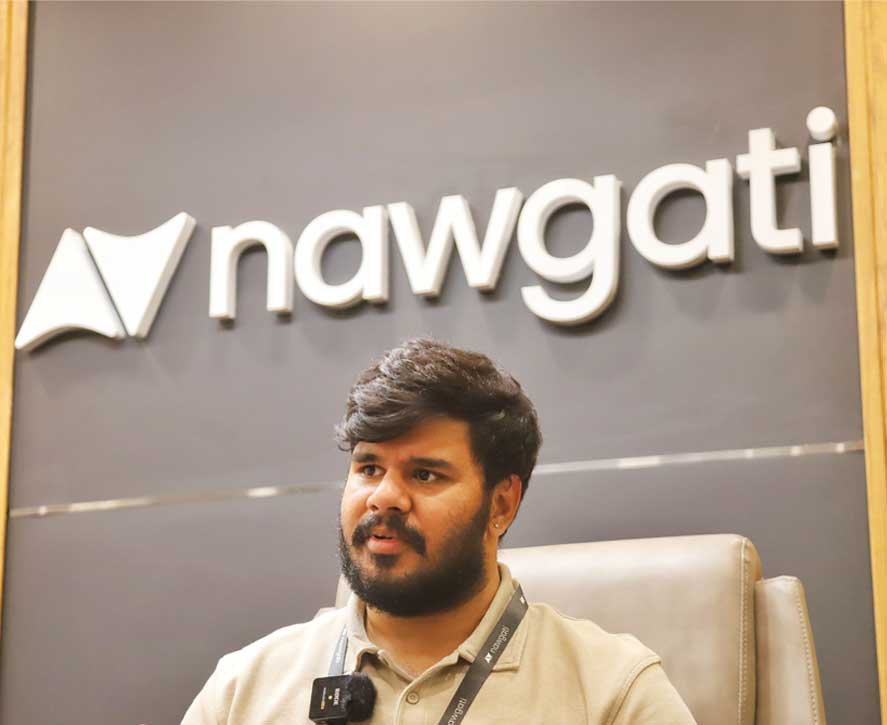
  • From petrol pumps to mobility nodes: The future of India’s fuel stations: Mr. Vaibhav Kaushik, Co-Founder & CEO, Navgati |

    From petrol pumps to mobility nodes: The future of India’s fuel stations: Mr. Vaibhav Kaushik, Co-Founder & CEO, Navgati |

    We live in a digital age, yet a trip to any fuel station across the country looks very similar: cars and bikes waiting in line, drivers guessing which queue will move more quickly, and attendants doing their best to handle rush hours. The system works, but is slow. With mobility increasing so rapidly, India can no longer afford this kind of inefficiency.

    Electrification, digital payments, new expressways, and rapid growth of fleet and last-mile delivery are changing how people get energy on the go. Traditional petrol pumps are becoming something much more important: connected, smart mobility nodes that fit into a larger transportation network.

    This change is not for the future. This is already happening.

    There are more than 1,00,000 fuel retail outlets in India that service millions of vehicles every day. At the same time, EV adoption is increasing, highways are expanding rapidly, and commercial fleets need to move faster. Still, there is a bigger issue: the infrastructure exists, but visibility and usage is fragmented.

    Drivers still don’t know at which stations the lines are short. Fleet managers cannot include real-time congestion information at fuel stations when planning routes. EV users often arrive only to discover that a charger is not available. Some stations are packed while some are empty. This leads to fuel wastage, loss of time, excess emissions and unpredictable operation.

    India’s next step in mobility isn’t just about building more fuel stations or chargers. It’s about making those stations smarter, easier to find and better able to work together.

    Fuel stations are shifting from simple pit stops to intelligent mobility nodes.

    Fuel stations have always been seen as physical points on a map. But in today’s digital world, location alone is not enough. Now, real-time information is all that matters.

    By converting existing fuel centers into mobility nodes, we can create a seamless experience for people, so that they can get all types of fuel under one roof, whether petrol, diesel, CNG, or electric. It needs to become a digital service point that provides real-time updates on availability, waiting time and service capacity.

    It’s not just about convenience. It’s about improving the entire system. Even small reductions in waiting times, when multiplied across millions of vehicles, can lead to huge economic savings and lower emissions. Mobility nodes can help by making better use of what we already have rather than simply building more.

    Why is time important?

    Time is now as valuable as money, and three major changes have made this change urgent.

    First, EV rollout is accelerating in India, but charger adoption remains uneven. Many users feel worried not only because chargers are in short supply, but also because they cannot check whether chargers are available or working.

    Second, fleet economics are becoming tighter. Delivery times have shortened, fuel prices fluctuate and profit margins are shrinking. Waiting at stations is no longer a minor hassle; It now causes real, measurable business losses.

    Third, India’s highway expansion is occurring at a record pace. New expressways and economic corridors are transforming intercity travel, making everything more accessible in less time. But without integrated data, we risk replicating old inefficiencies on new infrastructure.

    Therefore, as the physical infrastructure is growing rapidly, the digital side also needs to keep pace.

    What can’t we forget?

    India has done well in building roads, promoting clean mobility and supporting digital payments. However, fuel and energy access is largely separate from broader mobility intelligence systems.

    Today, a driver can easily make a payment through UPI, but cannot get reliable, standardized information on wait times, dispenser availability, or expected service duration. This difference may seem small, but at a national level it adds up to significant disutility.

    Without visibility, infrastructure cannot reach its full potential.

    What can the government do next?

    The next big step doesn’t require huge investments, because we already have the physical infrastructure, and startups are inventing technologies that can bridge the digital divide. Therefore, there is a need for a policy, supported by the government, that encourages and supports digital integration. Some targeted orders from the government can accelerate change, such as:

    Standardized data protocols: By establishing interoperable standards for fuel stations and EV chargers to share and enforce anonymous availability and service metrics across platforms, the government can make it easier for systems to share information and alert service providers to upcoming traffic. Digital incentives: Encouraging stations to adopt real-time monitoring and visibility systems, similar to earlier incentives that supported physical EV deployment, can simplify operations and speed up decision making, as stations now have access to information that can help retailers make faster decisions. Mobility Data Exchange: Creating frameworks where aggregated, privacy-compliant infrastructure data can inform route optimization, congestion management, and urban planning. With the government’s direction, opening up mobility data exchange between fuel retailers and EV charging facilities will help users access real-time information and make hassle-free decisions.

    These measures will unlock value from existing assets without having to build everything from scratch, and empower fuel retailers, end consumers and fleet managers to make informed decisions to save resources.

    the way forward

    India’s future of mobility Switching from petrol to electric won’t be easy, as millions have yet to buy their first car, and EVs are not budget-friendly. Therefore, in the next decade, we can expect different energy sources to co-exist. Passenger vehicles, two-wheelers, commercial fleets and freight corridors will all be changing at the same time.

    In this new environment, fuel stations cannot simply remain passive refueling points. They need to become intelligent mobility nodes that reduce uncertainty, make things more predictable, and fit easily into digital mobility systems.

    The real opportunity now is to connect the dots so that every fuel station in India is more than just a stop and plays an active, intelligent role in the country’s mobility transformation.
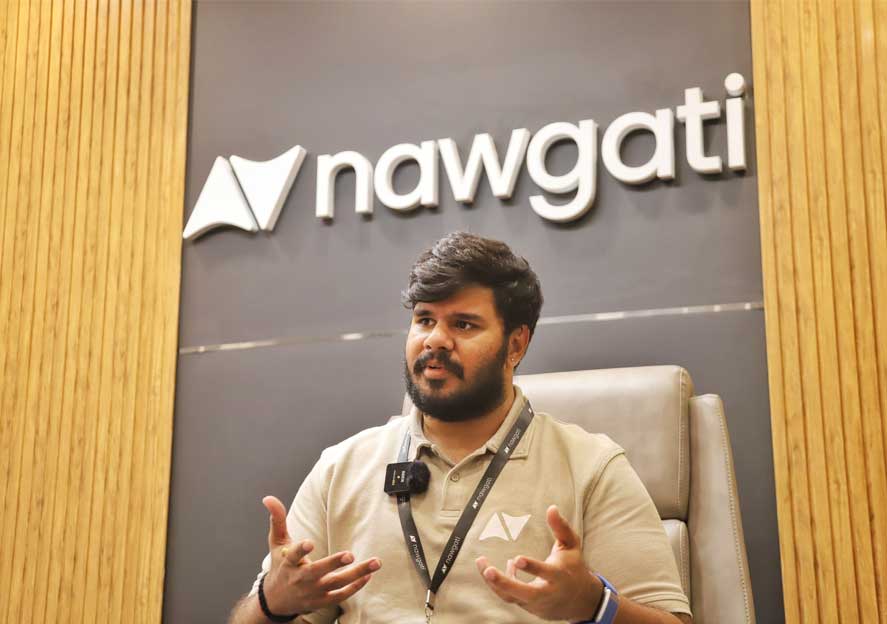
  • Fuel-agnostic and future-ready: Navgati’s vision for India’s clean, connected and smart mobility ecosystem.

    Fuel-agnostic and future-ready: Navgati’s vision for India’s clean, connected and smart mobility ecosystem.

    As the global mobility landscape shifts towards electric vehicles and sustainable fuels, the need for adaptable and forward-thinking solutions has never been greater. Navgati, which started its journey with CNG, has transformed itself into a fuel-agnostic platform, designed to tackle inefficiencies at fuel stations and streamline operations across energy types. In an exclusive interaction, CEO and Co-Founder Mr. Vaibhav Kaushik explained how this flexible approach enables the company and its partners to be future-ready, ensuring seamless integration with emerging technologies without constant reinvestment.

    Navgati started its journey with CNG, but today, you call yourself a fuel-agnostic platform. In a world rapidly moving toward EVs and sustainable fuels, how does this approach help you prepare for the future?

    When we started with CNG, our focus was never limited to one type of fuel. The mission was always about solving the huge problem of inefficiency, congestion and lack of visibility at fuel stations. Be it CNG, petrol, diesel, or EV charging, the core operational and customer challenges remain the same: long queues, unpredictable wait times, and absence of real-time data.

    The technology we designed can adapt to any energy source, meaning we can adapt our algorithms that power a CNG station today to easily integrate with an EV charger or hydrogen dispenser tomorrow. This flexibility is allowing us to make fuel smarter and more efficient now, and will help our partners and customers stay ready and agile for the next phase of mobility without having to reinvest in new technology every few years.

    At the pace we are growing, with millions of vehicles sold a year, being fuel-agnostic will not be an added advantage; Rather, it will make us relevant and indispensable in the future.

    Your partnership with MGL is seen as one of the first startup collaborations in fuel retail digitalization. What are the biggest lessons from this experience, and how might it inspire similar alliances in EV charging or other clean fuels?

    Our collaboration with Mahanagar Gas Limited (MGL) has been one of the most defining chapters in our journey. This is one of the first large-scale efforts to digitally transform fuel retail in Maharashtra, bringing together the agility and scale of startups. We started with a pilot project at MGL’s Khopat CNG station in Thane in 2022, where we tested whether the technology could bring real-time visibility into fuel retail, tracking queues, attendants and transactions, as well as allowing fleet operators to book their slots in advance and refuel at a time of their choice. The pilot was successful and gave us confidence to move forward.

    The biggest learning during this project was building trust through collaboration. Working with MGL means ensuring that our solutions not only deliver technological innovation but also meet the highest standards of safety, compliance and reliability. Together, we achieved tangible results, reducing congestion at outlets, improving customer flow and enabling real-time station monitoring.

    This experience also sets a precedent for how such collaborations can shape the next generation of clean energy infrastructure. As India moves towards EVs and hydrogen, this model of co-production can accelerate the digital transformation in clean fuels as well.

    There is a lot of discussion about AI and IoT in mobility. How exactly is Navgati using these technologies to transform fueling and charging stations into smarter, more connected hubs?

    At Navgati, our core focus is to drive real-world change through technology, and we have integrated our platforms with IoT sensors, data analytics and connected systems to gather live data from stations, vehicle flow, queue length, delivery speed and idle time. Our AI models then analyze this data to provide predictive insights, such as predicting congestion or detecting unusual patterns in operations.

    For retailers and station operators, this means they can make informed decisions in real time, whether it’s deploying more staff, optimizing dispenser usage, or predicting peak-hour demand. For consumers, this results in a seamless experience, which means less wait, transparent updates and smart routing to the nearest available station.

    We are experimenting with various features and technologies that will enable us to support load balancing at EV chargers, predictive maintenance and energy forecasting as the energy mix diversifies, turning every station into a smart, connected hub in the broader mobility ecosystem.

    Digital transformation often feels like it’s designed for the big players. How are you ensuring that Navgati’s solutions remain practical and accessible to small operators as well as everyday consumers?

    One of the core beliefs that drives us is that digitalization should be inclusive, not exclusive. Our products, be it Aveg for station operators or the innovative fueling app for consumers, are designed to be scalable, easy to implement and user-friendly.

    We’re building technology that can be used by small or single-operator businesses without having to improve their infrastructure or hire technical staff to go digital. Aveg can integrate with minimal setup and start providing insights from day one, monitoring queues, resource allocation and customer flow in real-time. On the consumer side, our app lets people find the nearest station without having to navigate complex interfaces.

    When it comes to refueling or charging, for most people things like trust, reliability and transparency matter as much as convenience. How is innovation reshaping that day-to-day experience for users?

    We realized early on that the refueling experience in India is often unpredictable, and customers never know how long they will have to wait outside the pump or whether a station is even operational (especially on highways). We are addressing this uncertainty by bringing transparency and predictability to the process by including fuel stations on our platform. To date, we have onboarded 1500+ fuel stations on our platform, and we are currently onboarding stations in tier 2 and tier 3 cities.

    Through the Navgati Fueling app, users can locate nearby stations, check real-time queue status and view the facilities available at each station before stopping. They can also make secure digital payments with Navgati Billing App, reducing physical contact and improving efficiency.

    This end-to-end visibility is helping us build trust not only between customers and stations, but across the entire fuel ecosystem. Over time, we want refueling to feel as seamless, transparent and reliable as ordering a cab or food delivery online.

    India’s clean mobility journey will not be just about EVs – it will include CNG, EVs, hydrogen and other vehicles that will co-exist over the years. How does your platform support this type of layered transition rather than taking a one-track approach?

    India’s energy transition will be layered and gradual, not a sudden change, and we can see it today. CNG, EV, petrol, diesel and LPG will all co-exist in the near future, with the entry of hydrogen and biofuels into the ecosystem, and each will have its own challenges. We have created a platform keeping this reality in mind.

    We are continuously onboarding petrol, diesel, CNG outlets to ensure that users find what they are looking for, and are in the process of onboarding EV charging stations for the growing EV penetration in the country. We want to ensure that we provide an integrated digital framework that supports multi-fuel operations. This approach allows fuel retailers to diversify their energy offerings without having to connect multiple systems.

    Additionally, it can also benefit policymakers, energy providers, and other relevant stakeholders who can view cross-fuel data and demand patterns through a single lens. In short, we are helping India transition smoothly, not by forcing a shift to one energy type, but by enabling a connected ecosystem where all can co-exist and grow together.

    As cities become smarter, mobility data is becoming part of larger urban planning and energy conversations. Where do you see Navgati fitting into this larger smart city ecosystem?

    We believe we will become a key enabler in India’s smart city framework, because the data we generate at the ground level, be it traffic flow in stations, maximum refueling hours or energy demand distribution, can all provide valuable insights for urban mobility planning, traffic congestion reduction and energy grid management.

    As cities evolve, mobility data will increasingly influence decisions related to road infrastructure, public transportation, and even energy zoning. Our connected platform will make this possible by converting fuel data into actionable intelligence.

    We envision a future where every fuel or charging station will become a node in a connected city, communicating with vehicles and public systems in real time. This is how we see ourselves contributing, not just as a platform for stations, but as an integral part of the smart, data-driven cities of tomorrow.

    Additionally, smart cities only become smart when people work together with the government, and our platforms, the innovative Fueling App and Aveg, will empower anyone who wants to make smart, efficient choices while contributing to the smart city ecosystem.

    Unlike many western countries, which are only pushing for EV adoption, India is moving towards multi-fuel models. Do you think the Navgati story can become a blueprint for other emerging economies to follow the same path?

    We are a country with a diverse economic background, and moving towards full EV adoption would be financially unviable for the public. Therefore, the government is encouraging people to choose EVs along with cleaner fuels like CNG and ensuring their last mile access.

    Furthermore, emerging economies like ours, Indonesia, and Nigeria share similar characteristics: diverse vehicle mix, inconsistent infrastructure, and coexistence of multiple fuels. An EV-only model is not immediately practical for these markets.

    The innovation provides a scalable, adaptive framework that modernizes the existing fuel ecosystem while making room for new energy types. It’s about building digital infrastructure that keeps pace with the market rather than dictating it.

    Our journey shows that innovation does not mean replacement; This could mean change. And this is a lesson that many other developing countries can learn from India’s mobility developments.

    Looking ahead, what is your long-term vision for the role of innovation in shaping the next decade of India’s clean, connected and fuel-agnostic mobility ecosystem?

    We are growing faster than ever before and with it the need for comfort and convenience is also increasing. Therefore, the next decade will be about redefining the way India refuels, charges and operates. In this, our role will be to connect the dots between stations, fleets, consumers and energy suppliers to create a single, intelligent layer that powers every refueling or charging interaction.

    We envision a future where every station, regardless of location or fuel type, is connected, predictive and digitally optimized. Through partnerships, technology and data, we want to make refueling as seamless and transparent as possible for every Indian, while also helping operators run more sustainably and profitably.

    Ultimately, Navgati’s vision is to become the digital backbone of India’s energy transformation, connecting today’s traditional fuel networks with tomorrow’s clean and connected mobility infrastructure.