Tag: Mahindra & Mahindra

  • Mahindra Auto’s SUV sales reached 58,021 units in May 2026, total car sales reached 99,636 units –

    Mahindra Auto’s SUV sales reached 58,021 units in May 2026, total car sales reached 99,636 units –

    Mahindra & Mahindra Ltd. (M&M Ltd.) reported total vehicle sales of 99,636 units in May 2026, up 20% year-on-year, including exports.

    The company’s utility vehicle (UV) business continued to drive results, with 58,021 SUVs sold in the domestic market, an increase of 11% from the same period last year. Including exports, total UV sales this month were 59,573 units.

    Mahindra’s commercial vehicle (CV) business also maintained strong momentum, with domestic sales reaching 24,079 units, a year-on-year increase of 19%.

    Commenting on the company’s performance, Nalinikanth Gollagunta, CEO, Automotive Division, Mahindra & Mahindra Ltd. said:

    “In May, our SUV sales were 58,021 units, an increase of 11%, while total vehicle sales were 99,636 units, an increase of 20% year-on-year. Although supply chain challenges remain due to labor shortages at some supplier locations, demand for our product portfolio remains strong.”

    Key sales highlights – May 2026

    Domestic SUV sales: 58,021 units (+11%) Total SUV sales (including exports): 59,573 units Domestic commercial vehicle sales: 24,079 units (+19%) Total exports: 5,000 units (+37%) Total automobile sales (including exports): 99,636 units (+20%)

    Year-to-date performance

    In the first two months of FY27, Mahindra’s domestic utility vehicle sales reached 114,352 units as compared to 104,761 units in the same period of FY26, a growth of 9%.

    The company’s export business also saw strong growth, with cumulative export volume rising 42% to 9,970 units, compared with 7,027 units in the same period last year.

    Note: Total automobile sales of 99,636 units include SUVs, light commercial vehicles (under 3.5 tons), three-wheelers and exports.

  • India’s electric passenger car market transforms, growing 84% in FY2026 –

    India’s electric passenger car market transforms, growing 84% in FY2026 –

    Behind this strong growth, each OEM is charting its own course, developing unique strategies and achieving varying degrees of success.

    The Indian electric passenger vehicle (EV PV) market entered a decisive growth phase in fiscal 2026, with retail sales increasing significantly to nearly 200,000 units, an impressive 83.6% year-on-year growth. At the same time, the penetration of electric vehicles in the passenger car segment increased from 2.6% in fiscal 2024 to 4.2% in fiscal 2025, marking a steady shift towards electrification.

    But behind this strong performance lies the hard work and desire of each OEM, which is forging its own path, with varying degrees of success and strategy.

    Tata Motors Passenger Cars continues to lead the electric vehicle race with retail sales of 78,811 units (57,994 units) in FY26, a growth of 35.9%. The company’s strengths lie in its first-mover advantage, broad product portfolio and strong ecosystem, which continue to solidify its leadership position despite increasing competition.

    JSW MG Motor India has emerged as a strong challenger with sales of 53,089 units (30,569 units), a significant growth of 73.7%. Its focused EV portfolio and aggressive positioning have helped it gain meaningful share, making it one of the fastest-expanding players in the space.

    Mahindra & Mahindra became the biggest disruptor this year, with sales of electric vehicles soaring to 42,721 units (8,426 units), an increase of 407%. This reflects a clear shift in its strategy and is supported by new product launches and strong market acceptance.

    Hyundai Motor India and BYD India are also gaining traction, but at a more cautious pace. Hyundai showed early momentum with sales of 5,885 units (2,477 units), a strong increase of 137.6%, while BYD continued to establish its niche in the premium electric vehicle segment with sales of 5,361 units (3,481 units), a solid increase of 54%.

    Kia India, despite starting from a lower starting point, recorded the highest growth rate of 794%, reaching 3,738 units as compared to 418 units in the same period last year. This shows that the company is entering the electric vehicle space early, but the area may expand further as the product portfolio expands.

    In the luxury segment, BMW India performed strongly, selling 3,537 units (1,580 units), a growth of 123.9%, highlighting the growing demand for premium electric vehicles. However, Mercedes-Benz sales edged down 9.5% to 1,047 units (1,157 units), reflecting a more cautious or transitional phase in its electric vehicle journey.

    New entrants and emerging players are also beginning to emerge. VinFast first launched with sales of 2,390 units, while Tesla India sold 342 units, marking an early stage of activity in the market. Although Maruti Suzuki dominates the internal combustion engine car segment, it has just entered the electric vehicle segment with 1,416 units, indicating a late but potentially significant entry.

    On the other hand, some OEMs are facing headwinds. Stellantis fell sharply by 71.4% to 576 units (2,013 units), while Volvo fell slightly by 5.2% to 382 units (403 units), underlining the challenges of expanding electric vehicle sales.

    Overall, the market is clearly expanding, but the competitive landscape is also becoming more dynamic. While leaders such as Tata Motors continue to dominate, challengers such as MG and Mahindra are rapidly closing the gap. At the same time, global players and new entrants are testing the waters, further adding to the market’s complexity.

    The bigger takeaway is obvious – India’s EV transition is no longer a wave of the future; it’s actively underway. As the OEM strategy evolves, the next phase of growth will depend not only on volume, but also on innovation, positioning and the ability to sustainably expand.
  • Mahindra LMM tops electric commercial vehicle market for fourth consecutive year –

    Mahindra LMM tops electric commercial vehicle market for fourth consecutive year –


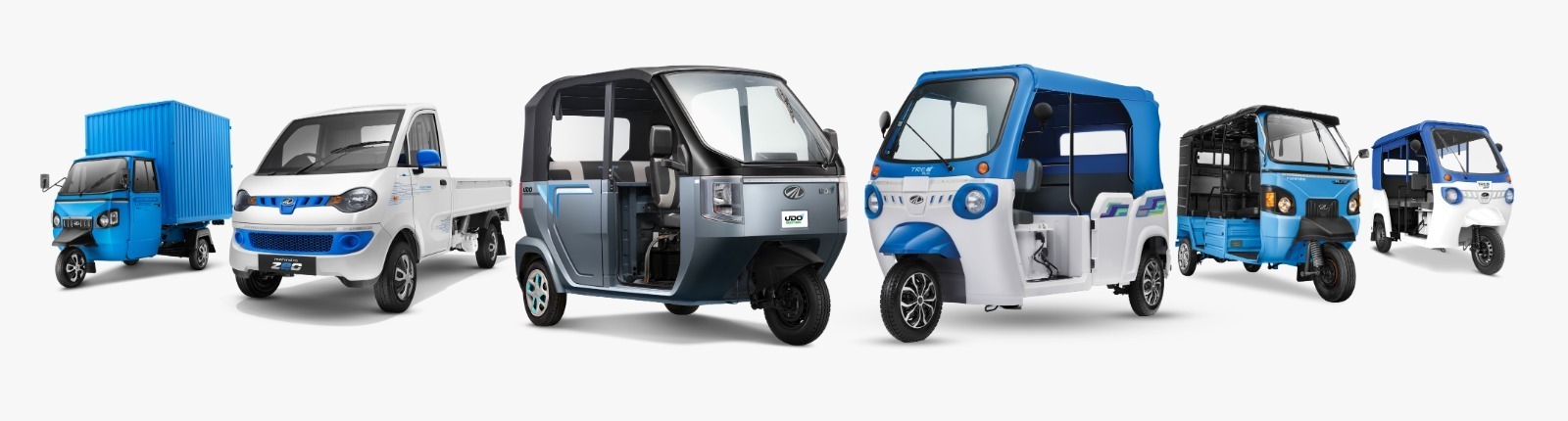
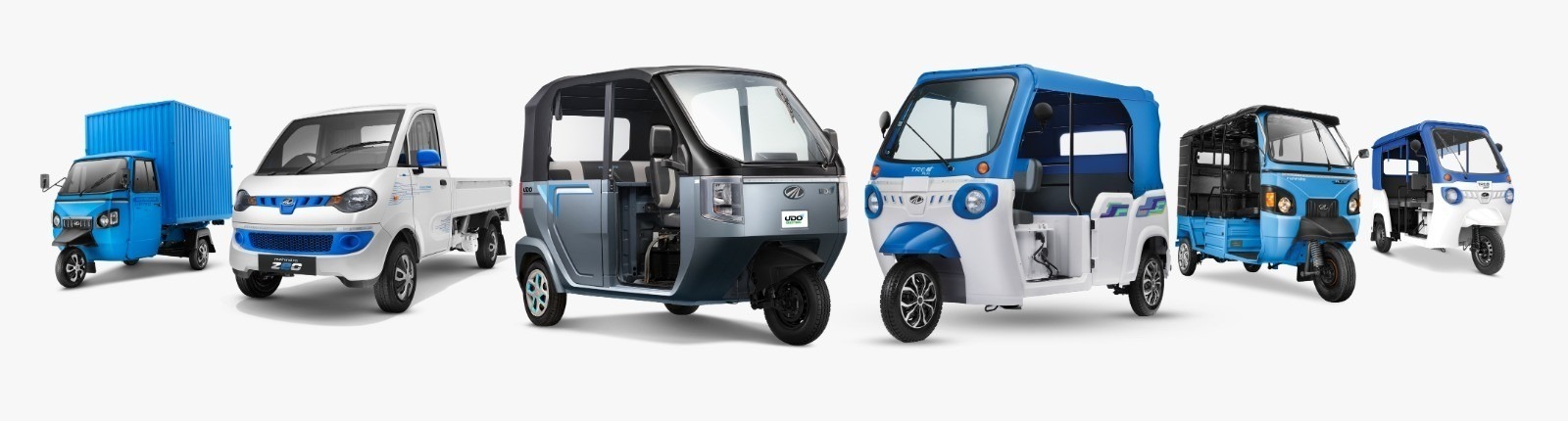
    Mahindra Last Mile Mobility Limited (MLMML), India’s leading electric commercial vehicle manufacturer, continued its strong market leadership in FY26, consolidating its position as India’s number one electric commercial vehicle manufacturer for the fourth consecutive fiscal year.

    This milestone reflects the trust of the many drivers and fleet owners who have chosen to embark on their entrepreneurial journey with MLMML. The company also crossed the milestone of 100,000 electric vehicle sales in a financial year. To date, MLMML has sold more than 340,000 electric vehicles.

    MLMML has a strong presence in the L5 category with a market share of 39.7%. The company achieved several notable milestones in FY26, including:

    • Electric vehicle sales exceeded 100,000 units in FY26, becoming the first commercial vehicle manufacturer to achieve this milestone
    • Completed over 6 billion kilometers cumulatively, reducing carbon emissions by approximately 240 metric tons, supporting India’s sustainable development goals

    In FY26, MLMML expanded its product portfolio with the launch of the new Mahindra UDO. Developed based on customer insights, UDO features segment-first innovative features such as reverse throttle, aerodynamic design and a real-world driving range of 200 kilometers.

    MLMML’s continued focus on innovation, reliability and sustainability puts it at the forefront of India’s last-mile electric mobility transformation.


  • Mahindra opens bookings for XEV 9S and XUV 7XO with nearly 94,000 orders worth Rs 20,500 crore –

    Mahindra opens bookings for XEV 9S and XUV 7XO with nearly 94,000 orders worth Rs 20,500 crore –


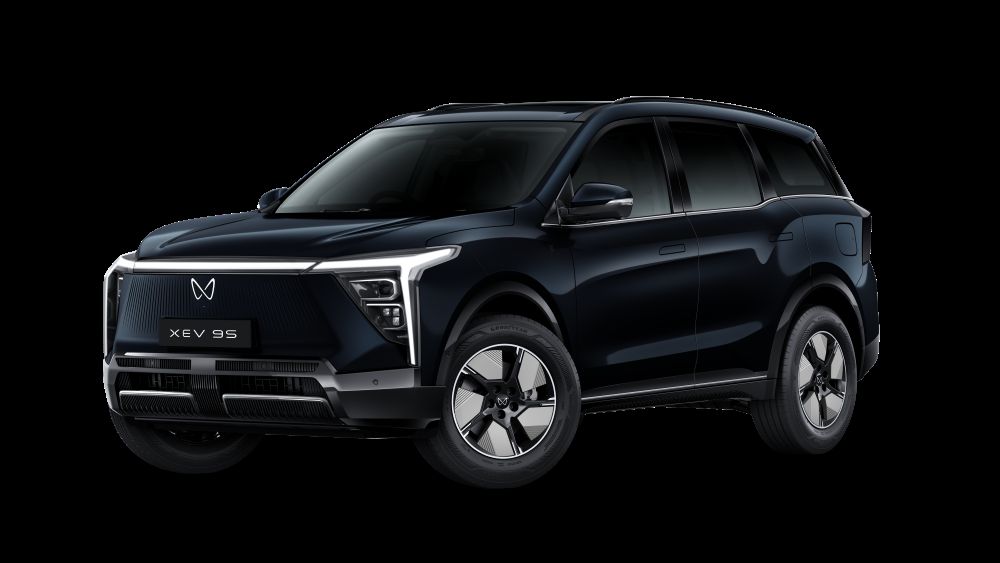
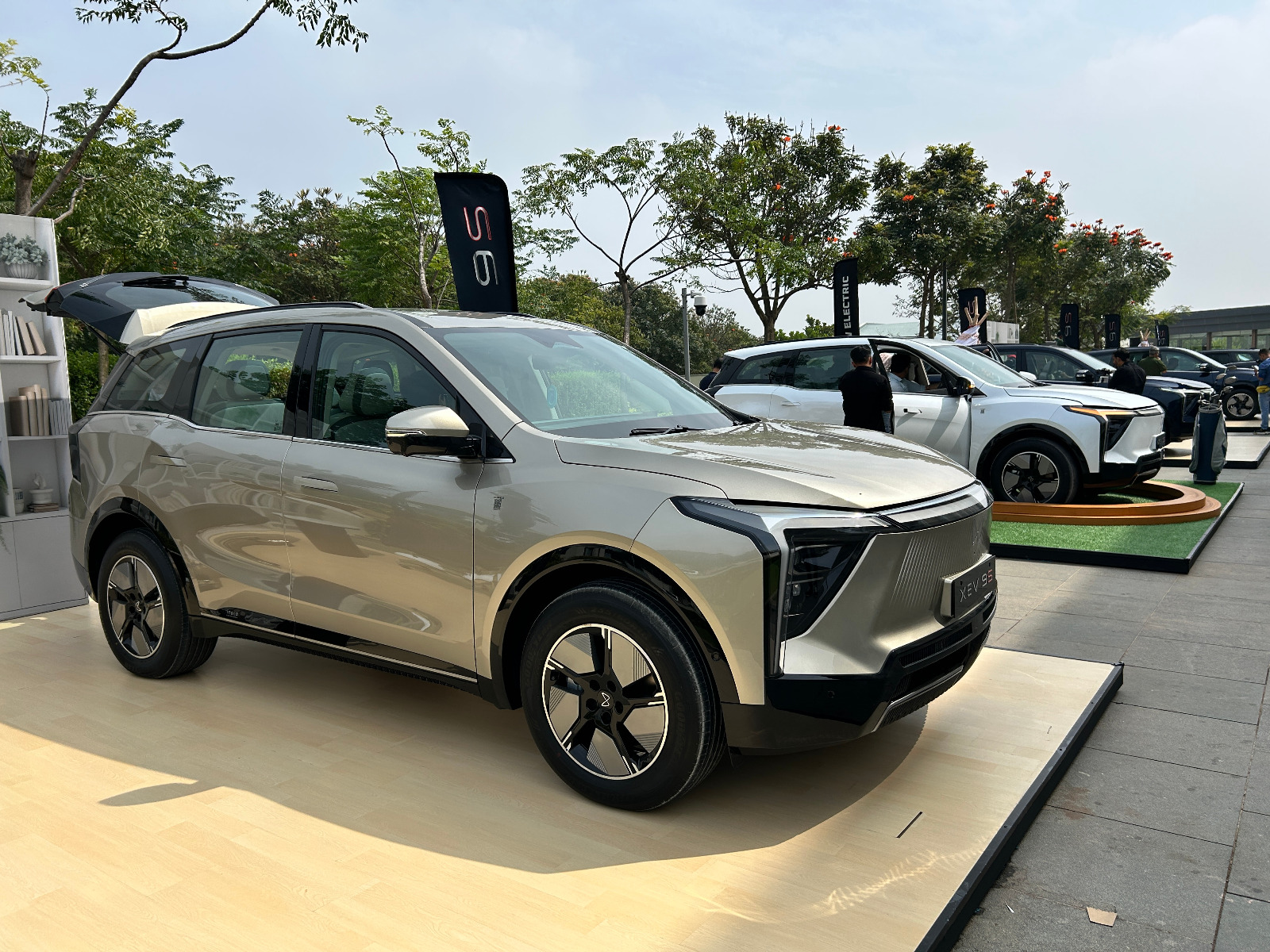
    Mahindra & Mahindra on Tuesday announced the start of bookings for its latest SUVs, XEV 9S and XUV 7XO, marking another important milestone in the company’s SUV growth journey. As of 2 pm on January 14, 2026, Mahindra’s combined bookings for both models have reached 93,689 units, with a booking value of over Rs 20,500 crore at ex-showroom prices.

    The strong response highlights Mahindra’s continued momentum in the Indian SUV market, with the company establishing a leadership position in category-defining products through scale, manufacturing prowess and continued product innovation. With the launch of XEV 9S and XUV 7XO, Mahindra has further expanded its product portfolio to offer customers multiple powertrain options including electric, diesel and petrol to cater to different usage patterns and evolving customer preferences in the pure SUV segment.

    Mahindra said deliveries of the two models will be rolled out in a phased manner across dealerships. Deliveries of the XUV 7XO have begun today, while deliveries of the all-electric XEV 9S are scheduled to begin the week of January 26, 2026.

    The company noted that the strong booking momentum reflects growing customer confidence in Mahindra’s SUV offerings and its ability to offer a blend of performance, technology and design across both combustion engine and electric vehicle platforms.


  • Mahindra’s large SUV strategy: One strategy, per segment, maximum impact –

    Mahindra’s large SUV strategy: One strategy, per segment, maximum impact –

    The OEM’s multi-tiered strategy is clear: from value-for-money family SUVs to luxury, technology-rich flagships, the brand now offers a vehicle for every kind of buyer, and often delivers beyond expectations.

    Author: T. Mulally

    Mahindra is rewriting the rules of the SUV game with a clear and bold strategy: to enter every major price range of the “core SUV” market with powerful products, richer features and sharp pricing. Rather than limiting itself to the premium segment, Mahindra has built a product portfolio that spans customer needs, from value seekers to luxury buyers, while ensuring that every product is a step above its competitors.

    Mr. Nalinikanth Gollagunta, CEO, Automotive Division, Mahindra & Mahindra Ltd. and Executive Director, Mahindra Electric Automobile Ltd., said the company is targeting the core of India’s SUV demand: vehicles over 4 meters in length and priced above Rs 20 lakh alone account for 30 per cent of the UV market, or nearly 70,000 units per month.

    Within this segment, the biggest impact was in the Rs 20 lakh to Rs 24 lakh segment, which accounted for 45% of buyers. Another 25% of customers are in the bracket of Rs 24 lakh and Rs 28 lakh, while the top 30% spend more than Rs 28 lakh. Mahindra’s plan is simple – have all three, Mr. Goragonta explained.

    “What stands out about this strategy is the range of features Mahindra offers from the base model. Even the entry-level model comes with a panoramic sunroof, three 12.3-inch screens (with the option to add two more screens in the second row), a seven-seat layout with sliding second-row seats, a huge 150-litre front storage bin, class-leading torque and 180 kW fast charging for select battery options that can jump from 20 to 80 per cent in just 20 seconds. These features are usually reserved for rival SUVs The higher configurations in the range are retained and form the basis for the entire variant range.”

    In line with this strategy, the company launched four variants of the XEV 9S. Targeting the Rs 20 lakh to Rs 24 lakh segment, the Pack One variant is designed as a ‘chocolate chunk’ of value – dense, rich and generously loaded. It retains all standard features and has a larger battery capacity than the typical 59 kW or 79 kW competitors. He pointed out that in comparison, a similar MPV in Maharashtra is priced at close to Rs 23.40 lakh, making Mahindra’s package extremely attractive.

    Two steps into the Rs 24-28 lakh range, it is designed for buyers who want more comfort and technology. This variant adds premium touches like alloy wheels, a 16-speaker Harman Kardon system, electrically adjustable ventilated seats, and a Level 2 ADAS setup with a single radar. He mentioned that it has also launched a new 70 kW battery option, giving customers more choice and range flexibility.

    The third pack enters the premium segment worth over Rs 28 lakh and is designed for those who prefer chauffeur-driven driving. Luxury moves to the second row with features like Boss mode, second-row ventilated seats, ambient lighting, advanced ADAS with five radars, AQI control, VR filter and adaptive suspension.

    Above it is the Pack Three Below variant, an ultra-premium offering designed to compete with SUVs priced up to Rs 80 lakh. The series comes with autonomous parking, 360-degree cameras, haptic touch controls, AR heads-up display and driver-facing monitoring system, all powered by the Snapdragon 8295 chip. He said that the model is priced at Rs 29.45 lakh and has been carefully designed for a psychological price point of less than Rs 30 lakh.

    With this layered strategy, Mahindra is sending a clear message: Whether buyers want an affordable family SUV, a feature-packed mid-range model, a luxury chauffeur-driven model or a tech-heavy flagship, the company has a vehicle that meets and often exceeds expectations. By offering premium features as standard and ensuring competitive pricing at every step, Mahindra is positioning itself to take on the established E-SUVs, E-MPVs and hybrids head-on and reshape customer expectations across the SUV segment, he added.

  • Mahindra sets sights on segment value leadership: Rajesh Jejurikar –

    Mahindra sets sights on segment value leadership: Rajesh Jejurikar –

    Backed by deep investments in products, people and infrastructure, the company is building a future-proof portfolio designed to compete with confidence on the global stage.

    Author: T. Mulally

    Mahindra is undergoing a major transformation from its traditional mass market image to a brand that can play comfortably in value-driven and premium segments. The shift is largely driven by its electric vehicle strategy, where products like the XUV9 launched in Bengaluru on November 27 showcase a new and aspirational design and technology direction, even as popular brands like Bolero continue to serve core rural and semi-urban customers.

    Speaking at the roundtable, Rajesh Jejurikar, Executive Director and CEO of Mahindra & Mahindra Ltd, said that at the core of this evolution is the company’s belief in providing the right value proposition for each segment. Its electric vehicle journey has not only reshaped its product vision, but also strengthened its internal capabilities – growing its electric vehicle team from 1,000 people to more than 6,000 people in just three years, largely through internal training. He said this rapid expansion reflects both the company’s commitment and the depth of Indian engineering talent that is driving the development of its future-proof platform.

    While the EV market is grappling with issues like range anxiety, Mahindra noted that real-world customer behavior tells a different story. Nearly a third of its 30,000 electric vehicle users drive 400 kilometers a day, and its models often have an actual range of more than 500 kilometers. Even the seven-seater XUV9 retains this range – a configuration that the OEM believes is in line with Indian preferences for flexibility and ‘just in case’ seating.

    Talking about charging infrastructure, Mr. Nalinikanth Gollagunta, CEO, Automotive Division of Mahindra Ltd. and Executive Director, Mahindra Electric Vehicles Ltd., said that the company has set up two 180 kW fast charging stations with an average charging time of 18 minutes. By 2027, the company plans to deploy 1,000 chargers on 65 busy highways, complete with dining and rest facilities. The stations will be open to all electric vehicles and have real-time status integrated into Mahindra’s app to address the visibility gap that has frustrated many urban users.

    Mahindra’s approach to product development is increasingly insights-driven. Jejurikar said Batman Special Edition, born out of social media ears and launched in just three months, has been a success and the company is redoubling its efforts to connect consumer sentiment with rapid product innovation. He also emphasized that the obsolescence of electric vehicles is often exaggerated: while software develops quickly, core hardware such as batteries and motors change slowly, making OTA updates and strong processing power even more important.

    On the operational front, Mahindra is gearing up for the entire life cycle of electric vehicle ownership. Backed by its experience with three-wheelers, the company is actively establishing a battery recycling process and continues to offer India’s first battery lifetime warranty.

    With electric vehicles already accounting for 8.7% of its SUV sales (Q2FY26), higher than the industry average of 5.5%, Mahindra expects this to rise to 20-25% by 2027 or 2028. Its electric SUV manufacturing capacity is expected to increase to 8,000 units per month by March 2026. Meanwhile, combustion engine vehicles with both powertrains will remain a key pillar, based on the coexistence of customer preferences and regulatory dynamics, he said.

    Mahindra is also protecting its supply chain through proprietary de-risking strategies for batteries and rare earth materials, ensuring stable production amid global uncertainty. Its pricing philosophy remains transparent – growth will only be driven by real input cost rises rather than profit expansion, especially as the company acknowledges the government’s GST support for electric vehicles.

    To support growth, Mahindra is expanding its sales and service network at a rate of 15-20% annually, Mr. Gollagunta said. While integrated showrooms for internal combustion and electric vehicles remain the preferred method of keeping customers within the brand, dedicated pure electric vehicle stores may be piloted in selected markets. In essence, Mahindra is not just preparing for an electric future, but building it. Mr. Jejurikar added that with significant investments in products, people, infrastructure and processes, the company is building a portfolio designed to compete confidently on the global stage, driven by innovation, agility and deep understanding of Indian customers.