
Tag: Indian auto industry

  • Euler Motors partners with Jio-bp to strengthen EV charging infrastructure for commercial vehicles in India AutoguideIndia

    Euler Motors partners with Jio-bp to strengthen EV charging infrastructure for commercial vehicles in India AutoguideIndia

    Euler Motors, a major player in India’s electric commercial vehicle sector, has entered into a strategic partnership with Jio-BP, the operating brand of Reliance BP Mobility Ltd, a joint venture between Reliance Industries and BP, to accelerate the expansion of EV charging infrastructure across key logistics hubs in the country.

    The collaboration, formalized through a Memorandum of Understanding (MoU), aims to enhance charging access and convenience for electric commercial vehicle fleet operators and users, thereby facilitating faster adoption of electric mobility in India’s commercial transportation sector.

    The MoU was signed on 6 February 2026 by Rubin Pather, Head – Electric Mobility, Jio-BP, and Ashish Tandon, Global Head – Customer Excellence, Euler Motors, in the presence of senior leadership from both the organizations. The partnership will focus on deploying charging solutions at high-demand locations, enabling seamless operations for electric fleets across the country.

    As Euler Motors increases deployment of its newly launched Euler Turbo EV 1000 Fast Charge and Euler Storm EV Fast Charge models, access to reliable and widespread charging infrastructure has become essential to maximize fleet efficiency and asset utilization. With approximately 7,000 charge points across over 1,000 locations, Jio-bp is India’s widest, fastest and most reliable charge point operator, including the country’s first 480 kW charger with liquid-cooled gun. Therefore, with this partnership both the companies aim to bridge the infrastructure gap, accelerate the adoption of electric commercial vehicles and advance India’s clean mobility goals.

    Geo-BP and Euler Motors will jointly focus on the following areas:

    Identify business hubs for commercial EV deployment – ​​Develop key insights and data that identify potentially logistics and fleet-heavy locations with high EV charging demand to prioritize the deployment of charging infrastructure. Facilitating Customer Engagement – ​​Euler Motors will offer Jio-bp to existing and potential fleet customers (“Site Hosts”) interested in hosting EV charging stations, allowing faster discussions on site feasibility and deployment. Geo-BP will leverage its robust Trans-Connect platform to introduce Euler Motors to its fleet customer base and facilitate faster adoption of the energy transition and Euler Motors offerings. This collaboration is designed to strengthen the EV ecosystem in India by ensuring targeted deployment of charging infrastructure where it is needed most, benefiting commercial fleet customers and accelerating EV adoption.

    Sarthak Behuria, Chairman, Jio-BP said, “India’s transition towards sustainable mobility requires strong collaboration between vehicle innovation and energy infrastructure. Our partnership with Euler Motors represents a shared commitment to accelerate the electrification of commercial logistics, a segment that will play a decisive role in reducing urban emissions and improving freight efficiency. Jio-BP’s growing EV charging ecosystem will be supported by Euler Motors’ purpose-built electric cargo vehicles. By connecting with India, we aim to support India’s growing mobility needs while making a meaningful contribution to the country’s low-carbon future.”

    Additionally, Akshay Wadhwa, CEO of Jio-BP, said, “At Jio-BP, we are focused on building a reliable, high-performance charging network that supports the operational realities of commercial EV fleets. Our collaboration with Euler Motors allows us to align the Jio-BP pulse charging infrastructure with specialized electric cargo mobility solutions that are increasingly used in urban logistics. Together, we will provide reliable charging access, optimized “By providing uptime and increased operating efficiency, enabling fleet operators to confidently transition to electric mobility, further strengthening India’s EV ecosystem.”

    Ashish Tandon, Global Head of Customer Excellence, Euler Motors, said, “This MoU brings together two committed partners focused on addressing the key challenges of charging access for commercial EVs. Through shared insights and coordinated efforts, we aim to provide impactful business solutions for our customers and contribute to strengthening the EV ecosystem.”

    Gaurav Kumar, Director – Board, Euler Motors said, “Accelerating electric mobility in the commercial vehicle segment requires charging infrastructure in step with vehicle deployment. For fleet operators, access to fast, reliable charging at high-demand logistics hubs directly impacts uptime, asset utilization and operational economics. Our partnership with Jio-BP reflects the shared focus on building this critical infrastructure, which will enable fleet operators to meet the needs of the entire “Enables India to transition to electric mobility with greater confidence and efficiency.”
  • Sona Comstar reports best ever quarter in Q3FY26 driven by strong EV growth |

    Sona Comstar reports best ever quarter in Q3FY26 driven by strong EV growth |

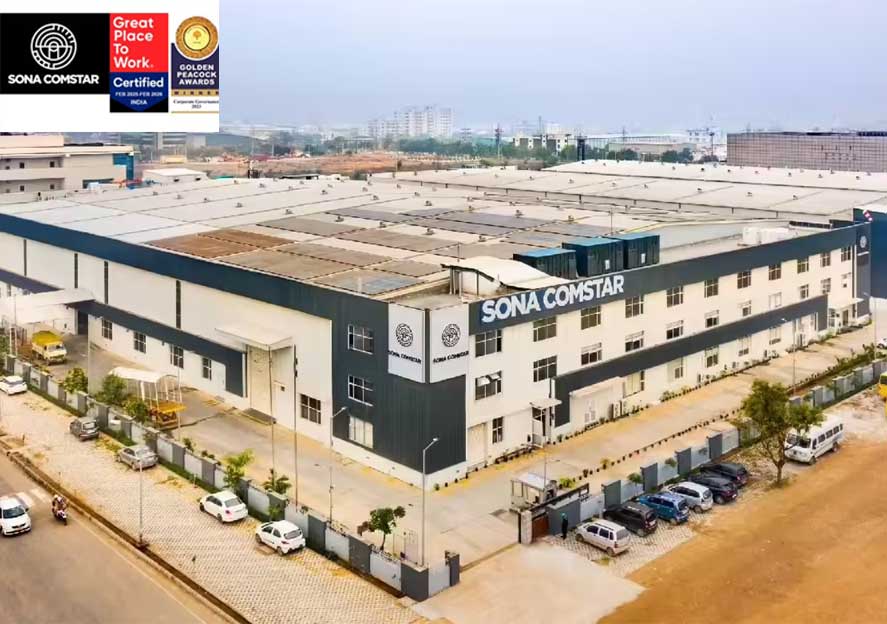
    Sona BLW Precision Forgings Ltd (Sona Comstar) on Friday reported 20 per cent year-on-year (YoY) rise in net profit to ₹181 crore for the October-December quarter of FY26 due to strong growth in its electric vehicle (EV) traction motor and railway businesses in India.

    The Gurugram-based mobility technology supplier reported revenue of ₹1,209 crore in Q3FY26, registering a strong growth of 39 per cent year-on-year. EBITDA for the quarter grew 30 per cent to ₹305 crore, margins remained healthy.

    Battery electric vehicle (BEV) programs accounted for 38 percent of total automotive product sales during the quarter. However, BEV revenue declined marginally by 3 per cent to Rs 329.1 crore compared to Rs 320.2 crore in the previous quarter of FY26. “Our total revenues grew 39 percent during the quarter, while BEV revenues accounted for 38 percent of total automotive product sales,” the company said.

    Commenting on the performance, Managing Director and Group CEO Vivek Vikram Singh said, “We achieved our highest ever quarterly revenue, EBITDA and adjusted net profit in Q3FY26. The growth was primarily driven by the expansion of our EV traction motor and railway business in India. We continue to add new EV customers and win new programs from existing customers.”

    EV business picks up pace

    EV programs contributed 71 per cent to Sona Comstar’s net order book for the nine months ending December 2025, with the total order book at ₹23,500 crore. During the first nine months of FY26, the company added six new EV programs, taking the total number of awarded EV programs to 64 across 33 global customers.

    New products and localization initiatives

    During the quarter, Sona Comstar commercialized a hydraulic motor controller for electric farm equipment vehicles, thereby entering a new application segment beyond core automotive offerings. The company also began sample production of in-cabin radar sensors at its Chennai facility, making it one of the few automotive radar manufacturers in India with local surface-mount technology (SMT) manufacturing capability. Serial production is expected to begin in the second half of calendar year 2027.

    nine months performance

    For the nine months ended December 31, 2025, Sona Comstar reported revenue of ₹3,203 crore, up 19 per cent year-on-year. EBITDA stood at ₹796 crore, while adjusted profit after tax increased to ₹478 crore. EBITDA margin remained stable at around 25 percent.

    Management attributed the steady growth to the expansion of EV traction motor programs and growing demand from the railway sector as well as the continued growth of global OEM customers. Sona Comstar supplies driveline, traction motor and sensor solutions to global mobility OEMs and operates manufacturing and R&D facilities in India, the US, Europe, Mexico and China.

  • EV Sales CY2025: Maharashtra tops demand for electric cars and SUVs.

    EV Sales CY2025: Maharashtra tops demand for electric cars and SUVs.

    Maharashtra has retained its position as India’s leading state for electric passenger vehicle (e-PV) adoption, registering the highest demand for electric cars, SUVs and MPVs in CY2025. The state has more than doubled its electric passenger vehicle sales year-on-year, led by strong growth in the country’s financial capital Mumbai.

    In CY2025, Maharashtra recorded retail sales of 30,596 electric passenger vehicles, a strong growth of 103% year-on-year compared to 15,038 units sold in CY2024. This performance translated into a record 17% share in India’s e-PV sales during the year, up from 15% share in the previous calendar year.

    Apart from passenger vehicles, Maharashtra continued to dominate other key electric mobility segments. The state remained India’s largest market for electric two-wheelers with retail sales of 216,148 units, registering a growth of 3% year-on-year and accounting for 17% share of the national e-2W market. It also retained the top spot in electric commercial vehicle sales, registering 3,971 units – up 72% year-on-year – and a 25% share in the e-CV segment.

    However, Maharashtra lagged behind in the electric three-wheeler category. With sales of 15,792 units in CY2025, up 10% year-on-year, the state has only 2% share in the national e-3W market, ranking 10th overall, far behind Uttar Pradesh, which continues to dominate the segment.

    Overall, Maharashtra recorded total EV retail sales of 266,524 units in CY2025 across all four segments – two-wheelers, three-wheelers, passenger vehicles and commercial vehicles. This gave the state a 12% share in India’s overall EV market and ranked second nationally behind Uttar Pradesh, which led the country with 404,908 EV sales, mainly driven by its strong presence in the E-3W sector.

    According to retail data from the vehicle portal (as of January 7, 2026), India sold a total of 177,054 electric cars, SUVs and MPVs in CY2025, excluding Telangana due to unavailability of data. This represents a strong annual growth of 77% compared to sales of 99,844 units in CY2024, with most of the leading electric passenger vehicle manufacturers reporting significant annual gains.

    Top 7 states and Delhi account for 77% of retail sales

    Among the states/UTs covered by the vehicle, Tripura is the only state that saw a year-on-year decline in sales: 38 units, down 3% year-on-year. All but a couple have registered high double-digit growth (see detailed vehicle-sourced state/UT sales table below).

    Top 7 states and Delhi account for 77% of EV retail sales

    Among the states and union territories covered in the vehicle database, Tripura was the only region to record a year-on-year decline in retail EV sales, with volumes falling 3% year-on-year to 38 units. In contrast, almost all other states and union territories recorded positive growth during this period.

    Barring a few exceptions, most regions recorded strong double-digit growth year-on-year, underscoring the rapid pace of EV adoption across the country.

    A close examination of the state and union territory-wise retail sales data obtained from the vehicle reveals a high level of market concentration at the top. The seven leading states for electric passenger vehicle (e-PV) sales – Maharashtra, Karnataka, Kerala, Tamil Nadu, Uttar Pradesh, Gujarat and Rajasthan – along with Delhi (ranked fifth), each recorded sales of more than 11,000 units in CY2025.

    Collectively, these eight markets contributed 137,339 electric cars, SUVs and MPVs during the year, representing a major share of 77% in India’s total e-PV sales in CY2025.

    Apart from this leading group, West Bengal and Andhra Pradesh are ranked ninth and tenth with retail sales of 6,046 units and 4,941 units respectively, reflecting a sharp decline in volumes after the peak of the e-PV markets.

    After Maharashtra, three southern states – Karnataka, Kerala and Tamil Nadu – occupy the next three ranks. However, with its sales doubling in Maharashtra, the state has eaten into the market shares of other states. While Karnataka, the No. 2 state (20,977 units, 48%) is up, its e-PV share is expected to decline from 14% to 12% in CY2024. Kerala (19,158 units, up 73%) has retained its 11% share, and Tamil Nadu (15,185 units, up 95%) has seen its e-PV share increase from 8% to 9% in CY2024.

    Delhi (14,828 units, up 126%, 8% share) ranked fifth followed by Uttar Pradesh (13,718 units, up 99%, 7% share), Gujarat (11,584 units, up 85%, 6.5% share), Rajasthan (11,293 units, up 83%, 6% share), West Bengal (6,046 units, up 78%, up 3% share). Andhra Pradesh (4,941 units, 2.79% share, up 21%).

    In CY2025, Tata Motors, JSW MG Motor and Mahindra sold 25,577 e-PVs in Maharashtra, accounting for 17% of the record 176,876 e-PVs sold in India.

    Revealed: How Maharashtra ranks for 16 electric car and SUV OEMs

    A closer analysis of state-wise retail sales highlights the growing importance of Maharashtra as a key market for India’s 16 electric passenger vehicle manufacturers. The state is playing a key role in increasing volumes among major OEMs.

    Market leader Tata Motors eyes 15% of its record electric passenger vehicle sales in CY2025 from Maharashtra. The company sold 10,493 electric cars and SUVs in the state during the year, a year-on-year growth of 26%, out of total e-PV sales of 70,091 units nationwide.

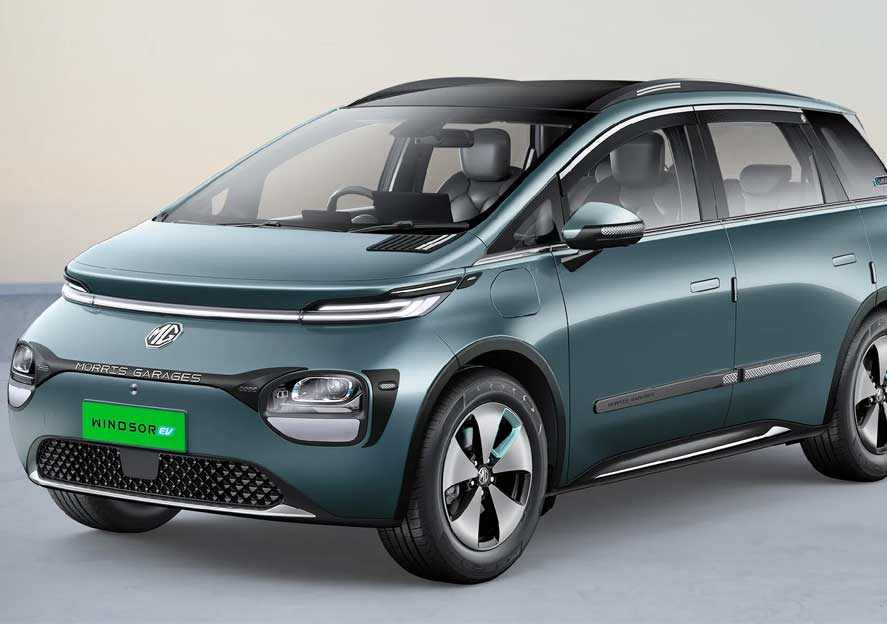
    JSW MG Motor India saw its highest-ever e-PV sales at 51,486 units, up 8,573 units and an impressive 124% YoY growth, with state share at 17%. Mahindra & Mahindra, which is riding on strong demand for its BE6 and The combined sales of these top three OEMs in Maharashtra at 25,577 units, up 94% YoY (CY2024: 13,195 units), clearly reflects the strategic importance of the state.

    Same is the case for almost all the other 13 players. The above comprehensive data table shows that Hyundai Motor India sold 1,533 units of its e-SUV in the state, mostly the Creta EV. Meanwhile, BYD India sold 1,159 units (21%) of its 5,409 e-PVs in Maharashtra.

    Maharashtra also drove strong sales for two new EV makers that entered the Indian market last year: Tesla and VinFast. Tesla sold 140 units of its Model Y in Maharashtra at a price of Rs 60 lakh, which was 62% of its total sales of 226 Model Y in India. And VinFast India saw sales of 144 units of its two e-SUVs – VF6 and VF7 – in the state, which is 17% of its all-India sales of 828 units last year.

    For the eight luxury car manufacturers, Maharashtra remains a key growth driver. In CY2025, EV buyers in the state took delivery of 1,415 luxury cars, SUVs and MPVs, up 76% year-on-year (CY2024: 802 units). This is 28% and one-fourth of the all-India sales of 5,124 e-PVs last year.

    With competition intensifying in the electric passenger vehicle market – especially between the top three OEMs, Tata Motors, JSW MG Motor India and Mahindra & Mahindra – and more than 10 new electric passenger vehicles scheduled to be launched in CY2026, starting with the Maruti Suzuki e-Vitara, state and UT-wise EV sales performance data provides valuable insights.