Tag: green transportation

  • Big change in Delhi, electric vehicles will become cheaper with EV Policy 2.0, women can get more subsidy.

    Big change in Delhi, electric vehicles will become cheaper with EV Policy 2.0, women can get more subsidy.

    Major Change In Delhi Ev Policy 20 Will Make Electric Vehicles Cheaper Women May Get More Subsidy – Major change in Delhi, electric vehicles will be cheaper with EV Policy 2.0, women may get more subsidy.

    Hindi News »

    automobile »

    Major Change In Delhi Ev Policy 20 Will Make Electric Vehicles Cheaper Women May Get More Subsidy

  • How EV rental players are redefining corporate mobility solutions: Shivam Sisodia, Co-Founder & CEO, Bizliride |

    How EV rental players are redefining corporate mobility solutions: Shivam Sisodia, Co-Founder & CEO, Bizliride |

    Corporate dynamics in India are undergoing a quiet but decisive transformation. Electric two-wheelers are replacing traditional fuel-powered fleets for applications ranging from inter-office commuting to last-mile and intra-city operations. What initially started as a sustainability-based initiative has now evolved into a strategic operational option for businesses focused on efficiency, cost optimization and ESG alignment.

    EV rental players are at the forefront of this change, seeing strong growth in the domestic and international mobility markets. By offering flexible, asset-light access to electric vehicles, these companies are enabling enterprises to transition to clean mobility without the complexity of ownership, maintenance or upfront capital investment.

    Compared to traditional commuting models, electric vehicles offer a uniquely technology-enabled and future-ready alternative. App-based booking, real-time fleet monitoring, low operating costs and low emissions have made EV rental an increasingly attractive proposition for corporate users. As adoption accelerates across sectors, EV rental platforms are increasingly becoming an integral part of everyday corporate mobility – providing quieter, more comfortable and environmentally responsible rides for the modern workforce.

    Why has sustainable mobility gained prominence in the corporate sector?

    Sustainability has emerged as a wide-ranging mandate in the corporate world. Employee mobility and business travel are now major contributors to carbon emissions. This can be attributed to the net-zero targets being set by corporations. As more and more conventional vehicles contribute to Scope 1 and 3 emissions, companies are now rethinking their fleet options.

    Hence, they are now switching to green mobility with EV rentals. By opting for electric vehicles on rental basis, they can easily reduce emissions. This simple method does not require complex cost planning, making it suitable for every organization. There are various green commuting incentives, ESG-compliant procurement strategies, low-emission mobility programs and carbon-neutral corporate travel, which are making it easier for companies to adopt this sustainable technology.

    How do EV rentals add flexibility to corporate models?

    In today’s hybrid work model, flexibility has become an important aspect of the process. Companies are now eliminating the rigid cost structures, multi-year leases and fixed vehicle allocations that were offered by traditional modes of transportation. With the EV rental system, they can get the following benefits:

    Hybrid and remote workforce mobility

    Companies are now in a position to introduce car-pooling systems, shared mobility and electric vehicles for employee’s occasional journeys to work.

    Choose between short-term and long-term rental

    Companies are able to achieve unmatched flexibility with EV rentals, offering packages ranging from one day to month-long.

    optimized mobility options

    Companies have the freedom to choose between electric SUVs for corporate travel to compact electric vehicles aimed at local commuting.

    Better allocation for seasonal demand

    Whenever companies face a temporary workforce expansion, a new team project, or a looming sales campaign, EV rentals can come to their rescue. Companies will also not have to make long-term commitments.

    Two-wheeler EV rental allows corporates to rapidly increase mobility, whether it’s enabling delivery associates during seasonal peaks or deploying shared scooters across teams for inter-campus commuting. With flexible plans ranging from 24-hour to long-term rental, organizations are helped to match fleet size with real-time demand.

    Traditional commuting models are not able to provide the benefits listed above. EV rental systems have become more affordable and flexible for corporate setups.

    How are EV rentals bringing cost-efficiency to the mobility sector?

    Inflation and rising fuel prices have always put pressure on corporate budgets. In this economic environment, companies are constantly working on ways to reduce expenses on travel budgets. The EV rental system has significantly helped these companies reduce costs in the following ways:

    fewer mechanical failures

    To ensure operational productivity, the EV rental industry is able to maintain high vehicle availability with its fast maintenance. Therefore, its downtime is also reduced.

    No heavy upfront investment

    Traditional methods of transportation require large capital investments. The rental industry helps address this challenge.

    low operating costs

    The EV industry requires less maintenance capital than fuel-powered vehicles. They also do not require oil changes and engine maintenance.

    Better Pricing Model

    Packages offered by the EV rental industry often include insurance costs, roadside assistance, servicing and maintenance costs. This helps companies avoid unexpected expenses and also simplifies the budgeting process.

    How is corporate mobility integrating the latest technology?

    The modern mobility experience is powered by the latest technology models and EV rental system. Companies are now able to operate with utmost ease and transparency with the integration of IoT-enabled systems and digital models. Companies are making full use of the following facilities:

    Integrated Cost Control and Billing System

    Finance processes have been streamlined by making full use of digital invoicing, charge tracking and consolidated billing cycles.

    Better visibility of the fleet

    With the availability of maintenance alerts, GPS tracking and battery health monitoring, corporates are able to make better decisions.

    full automation

    Customers can book electric vehicles and two-wheelers through their mobile app. Companies are also able to customize usage limits, billing, and travel access rules.

    A corporate mobility strategy is only as strong as its on-the-ground implementation. With 24×7 breakdown support, on-road battery delivery and preventive maintenance checks, the startup ensures that every ride – whether for employees or delivery partners – remains seamless, safe and sustainable. This is the real value.

    How are they able to improve the user experience?

    The EV rental industry has enabled companies to create better and greener mobility incentives. The rides offered by the company are now quieter, cleaner and more comfortable. Companies are now able to promote the adoption of EV-rental in their recruitment processes, ESG reports and employee engagement campaigns. This has also helped them improve their image as a responsible and future-ready employer.

    What is the future of EV rental in the corporate world?

    EV rentals are no longer transactional suppliers. They have emerged as strategic business promoters. With the integration of technology, we will see AI-powered fleet optimization tools, expansion of EV rental networks, increased government support for the EV industry, and a greater integration of renewable energy. The number of specialized EVs designed for corporate use will also increase. The EV industry will be able to supercharge the corporate sector with digital management, shared access and electrification of available resources.

    Electric vehicle rental systems have already redefined corporate mobility networks. It is able to combine digital capabilities with flexibility, cost-effectiveness and sustainability. They have given corporates a way forward by enhancing the overall travel experience of employees. They will soon establish themselves as leaders in the future-ready world of mobility.


  • FlixBus India and ETO Motor launch first electric bus on Hyderabad-Vijayawada route –

    FlixBus India and ETO Motor launch first electric bus on Hyderabad-Vijayawada route –

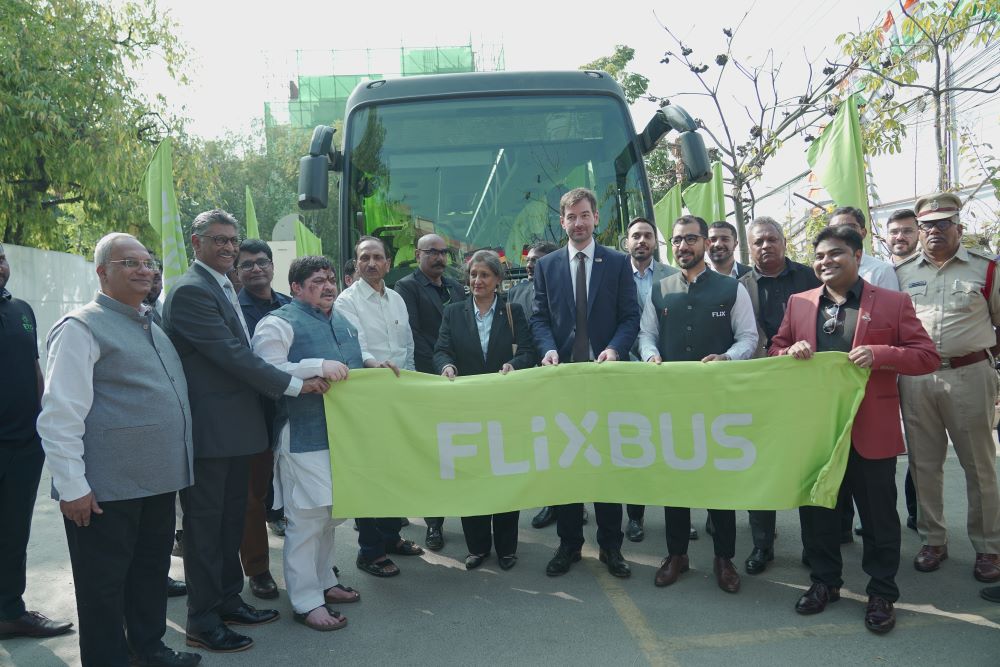
    Global travel technology leader FlixBus India celebrates its first anniversary with the launch of the first electric bus route in India, marking a major step forward in its commitment to reducing CO2 emissions and promoting sustainable transportation.

    (From left) Shri. Ponnam Prabhakar, Minister of Transport and BC Welfare, Government of Telangana; Dr. PS. Prasad, ETO Automotive; Amita Desai, Honorary Consul of Germany in Hyderabad; Alexander Reck, Digital and Transport Counselor, Embassy of Germany in New Delhi; Surya Khurana, Managing Director, FlixBus India; and Rajeev YSR, CEO, Thunder Plus and Group Chief Marketing Officer, ETO Group

    The launch of FlixBus India’s electric bus business in partnership with ETO Motors was held at ITC Kakatiya, Hyderabad, and was chaired by Shri Ponnam Prabhakar, Minister, Transport and Welfare Department, Government of Telangana State. The event was also attended by Mr. Alexander Reck, Counselor for Digital and Transport, Embassy of Germany in New Delhi; Mr. Rajeev YSR, CEO, Thunder Plus and Chief Marketing Officer, ETO Group; and Mr. Surya Khurana, Managing Director, FlixBus India

    Shri Ponnam Prabhakar, Transport Minister, Government of Telangana, congratulated FlixBus India and ETO Motors on the launch, saying, “Together, FlixBus and ETO Motors will address the long-distance sustainable travel needs of people in Telangana and southern regions through technology-driven alternatives. We wish both companies success and hope they contribute in accelerating the adoption of electric buses across the country.”

    Electric vehicle pilot project: a step towards green intercity mobility
    The electric vehicle pilot project will be launched on the Hyderabad-Vijayawada route with four electric buses and aims to assess feasibility and scale up through a hub-and-spoke model. A two-week trial run will be conducted before official operations begin at the end of February, followed by a 12-week evaluation of key metrics such as battery performance and passenger booking patterns.

    To support these operations, Thunder Plus will provide garage-cum-opportunity charging stations equipped with 240 kW fast chargers, ensuring optimal efficiency while preventing battery overheating. The fleet of advanced electric vehicles will also be equipped with dash cams, GPS, ADAS and other safety enhancements to ensure a seamless and safe travel experience for passengers.

    Commenting on this milestone, Surya Khurana, MD, FlixBus India said, “FlixBus India has become a trailblazer in its first year of launch, connecting 200 countries across the country with technology-driven, efficient, affordable and comfortable bus services. multiple cities. Now, we are furthering our commitment to sustainable mobility with the introduction of four electric buses as part of our diversified and technology-neutral strategy to explore alternative fuels and reduce carbon emissions. This pilot project underscores FlixBus India’s efforts to align with our country’s sustainability goals while addressing India’s unique transportation challenges.”

    Rajeev YSR, Group Chief Marketing Officer, ETO Motors, added: “Our partnership with FlixBus India marks an important step towards revolutionizing inter-city mobility with sustainable mobility solutions. With our expertise in electric vehicle technology and FlixBus With an extensive network, we aim to set a new benchmark in green transportation. With this partnership, we now serve commuters across the entire journey – from the first and last mile to intercity (middle mile) travel. This strategic alliance reflects our shared vision of creating a cleaner, greener future.”

    FlixBus India success story
    In its first year of operation, FlixBus India has successfully connected more than 200 cities, including more than 75 cities in southern India and more than 140 cities in northern India, providing more than 400 routes in the south and more than 500 routes in the north. Popular and highly rated routes include Bangalore – Hyderabad, Bangalore – Chennai, Chennai – Madurai, Delhi – Lucknow, Delhi – Manali and Dehradun – Delhi.

    Over the past year, FlixBus has grown its monthly ridership six-fold and continues to enhance its services through strategic partnerships with local bus operators. The company provides proprietary technology and tools that enable small and medium-sized operators to better manage and scale their businesses. Through network planning, revenue management and yield optimization, FlixBus ensures high quality service, safety and an exceptional travel experience for passengers.

    Going forward, FlixBus aims to expand its network and strengthen its pan-India travel ecosystem, driving sustainable travel growth for operators and passengers.

  • FlixBus and Vertelo partner to launch 500 electric intercity buses in India –

    FlixBus and Vertelo partner to launch 500 electric intercity buses in India –

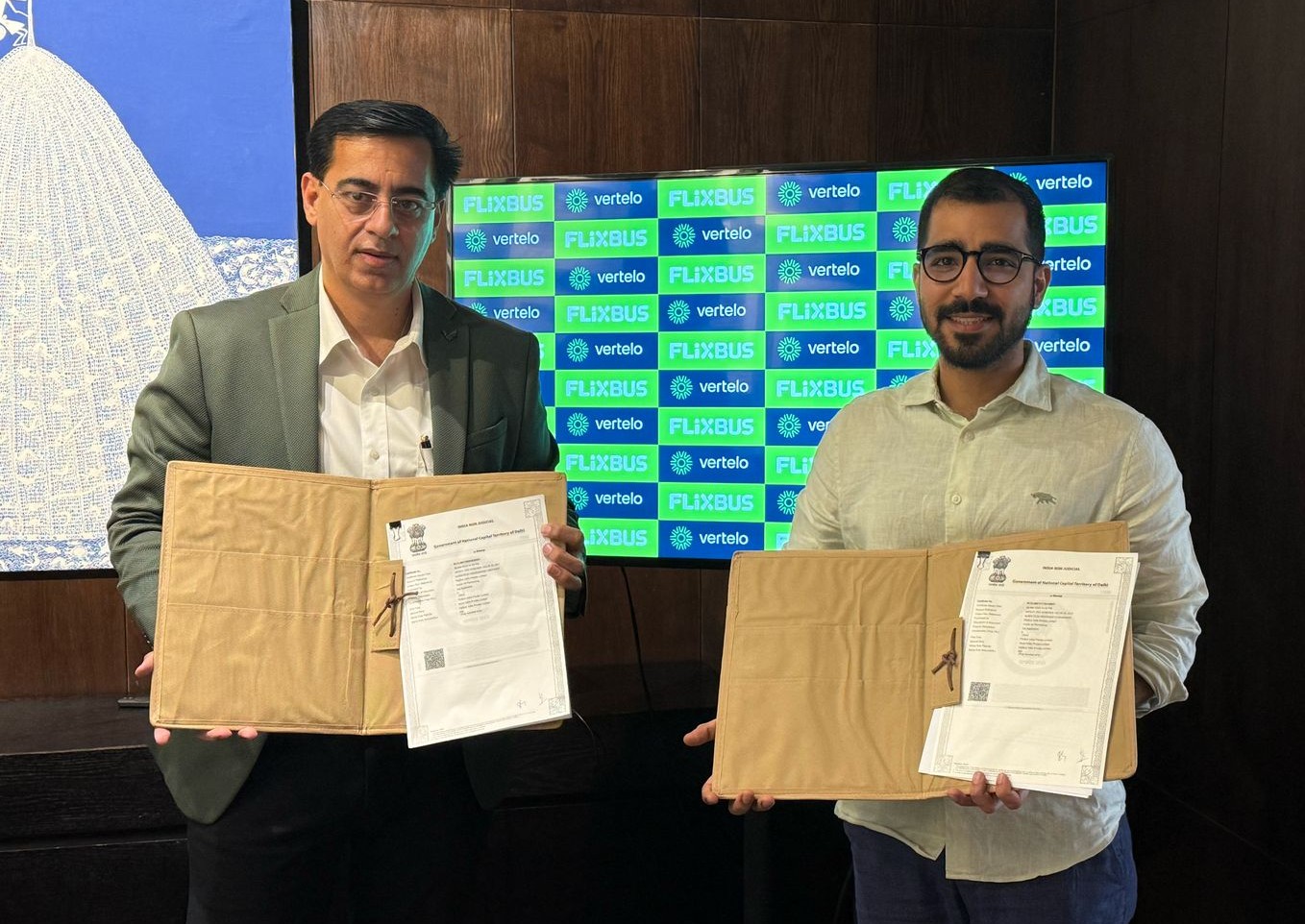
    FlixBus, the global leader in intercity e-mobility services, has announced the signing of a memorandum of understanding (MoU) with Vertelo, a provider of bespoke e-mobility ecosystem solutions that offer innovative leasing and financing options designed to ease the transition to fleet electrification. This cooperation aims to jointly deploy 500 electric intercity long-distance buses in India to support the country’s vision of greener and more sustainable travel.

    FlixBus currently connects over 200 cities in India, providing affordable and eco-friendly intercity travel through a digital-first booking platform. The company is known for its enhanced passenger comfort and industry-leading safety features that make sustainable travel more accessible across the country. The new partnership with Vertelo builds on a shared commitment to accelerate the adoption of electric vehicle solutions.

    Vertelo will provide customized financing and leasing options for electric buses, develop robust charging infrastructure and work with original equipment manufacturers (OEMs) to ensure the deployment of the right electric bus models. FlixBus will use its platform to manage demand generation for intercity electric bus routes. Additionally, FlixBus will identify and define key intercity routes suitable for electric bus deployment.

    Highlighting the importance of this partnership, Mr. Surya Khurana, Managing Director, FlixBus India, said, “This partnership with Vertelo marks a significant step towards greener and more sustainable intercity travel in India. By combining FlixBus’ extensive network and customer reach with Vertelo’s expertise in EV financing and operations, we are committed to providing convenient and efficient eco-friendly travel to millions of travelers.”

    Commenting on the partnership, Mr. Sandeep Gambhir, CEO of Vertelo, added: “Our alliance with FlixBus reflects our shared vision of a cleaner planet through innovative electric mobility solutions. This partnership will facilitate customized financing and leasing solutions and facilitate the creation of a sustainable ecosystem, making electric mobility a natural choice for commercial bus fleet operators. We are delighted to partner with FlixBus Working with fleet operators to enable them to have product-market fit and bring capabilities beyond traditional leasing and financing solutions, including charging infrastructure and energy management will drive the future of sustainable mobility in India.”

    The partnership also supports FlixBus’ pan-India expansion plans and aims to create a strong ecosystem that provides advanced technology and services to operating partners. The collaboration is expected to increase employment opportunities in the electric vehicle sector and strengthen the infrastructure required for large-scale electric bus operations. Through the association, FlixBus plans to further expand its network, connecting more cities and communities across the country, while contributing through an ecosystem of leasing and financing solutions and creating the necessary infrastructure to facilitate this, thereby solidifying Vertelo’s position as a trusted enabler of electric vehicle adoption.

  • Komaki Electric launches MX16 Pro electric cruiser at Rs 1,69,999.00

    Komaki Electric launches MX16 Pro electric cruiser at Rs 1,69,999.00

    Komaki Electric has launched the MX16 Pro, a stylish electric cruiser motorcycle that is positioned as an affordable option in the premium electric two-wheeler segment. Priced at Rs 1,69,999.00, the MX16 Pro combines performance, style and efficiency for modern riders.

    The bike has a reinforced metal body, powered by a 5 kW BLDC hub motor along with a 4.5 kWh battery pack, offering a claimed range of 160-220 km per charge. It can reach a maximum speed of 80 kmph, making it suitable for both city commuting and leisure travel.

    Komaki highlights the extremely low running costs of the bike: operating expenses for 200 km are estimated at only Rs 15-20, compared to around Rs 700 for a petrol motorcycle – almost five times less.

    Safety and ride comfort is ensured with a triple disc brake system and adjustable suspension. Riders also benefit from modern features like full-color TFT display, Bluetooth connectivity, cruise control, reverse assist, regenerative braking and park assist.

    The MX16 Pro comes in dual-tone and jet black color options, featuring a stretched frame design and wide seating configuration for added comfort and style.

    Komaki Electric is an Indian electric vehicle manufacturer that has experienced significant growth, registering an overall growth rate of 1200 percent within 20 months of its inception in May 2020, achieving a turnover of Rs 301 crore by March 2022. The company’s growth has been entirely organic, operating without dependence on government subsidies, bank loans or funding from financial institutions.

    The company serves over 200,000 satisfied customers through a network of over 1,000 dealers across India. Komaki manufactures various electric vehicle ranges including electric scooters and electric bikes. Their product lineup includes models like the Ranger and M16 electric cruiser bikes, SE high-range scooters, MG Pro family scooters and the CAT series of commercial electric scooters designed for delivery businesses.

    Komaki has completed more than 100,000 lithium battery installations, providing power solutions for electric vehicles, solar power systems and industrial applications. The company focuses on producing vehicles engineered for power, comfort and sustainability, targeting various market segments ranging from individual urban commuters to commercial delivery operations.

  • Five key innovations driving India’s next-generation EV charging revolution

    Five key innovations driving India’s next-generation EV charging revolution

    India’s transition towards large-scale electric mobility is being fueled by policy and approach as well as cutting-edge EV charging technology. EV charging infrastructure in India has progressed from isolated stations to a connected, scalable and reliable ecosystem designed for maximum convenience. From grid-resilient charging hardware to app-driven user experience, these five innovations are shaping the future of EV charging in India and accelerating the country’s transition to sustainable mobility.

    Fast Charging Innovation: Fast charging is set to lay the foundation for mass EV adoption in India, with many manufacturers and technology providers working to drive the industry forward. High-power fast charging can reduce charging time from hours to minutes, directly combating range anxiety for EV drivers and supporting the future of long-distance highway travel. Among the leading innovators, Exicom’s Harmony Direct 2.0 stands out for its high-power charging capabilities of up to 400 kW, enabled by advanced features such as predictive maintenance. Harmony 2.0’s scalable and modular design allows multiple vehicles to rapidly charge simultaneously, supporting both urban and highway sites while maintaining high throughput and reliability.

    Other Indian and global players are also making advances in modular, battery-backed fast chargers that focus on grid flexibility and user productivity, making fast charging an industry standard for a reliable and accessible EV ecosystem.

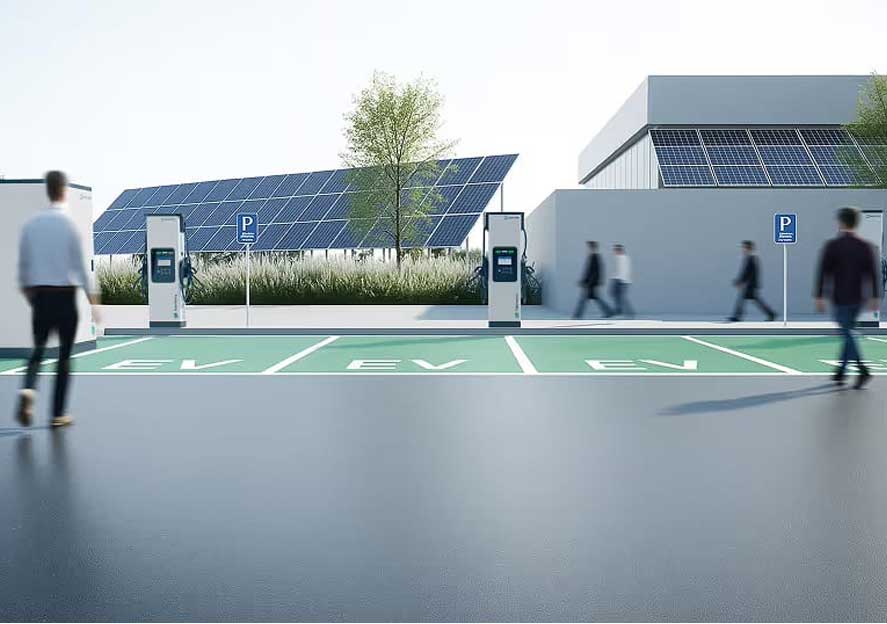
    Grid-Resilient Charging: Renewable Integration and Dynamic Load Management: Grid-resilient charging solutions are emerging to ensure that India’s EV infrastructure remains stable and sustainable even as demand increases. A new wave of charging stations integrate on-site renewable energy and battery storage to supplement the grid, provide reliable power, and improve resiliency. For example, India’s first solar-powered EV charging hub near Bengaluru airport combines a 45kW rooftop solar array with a 100kWh battery system, enabling 24/7 charging at 23 points while reducing pressure on the local grid. Such setups draw maximum energy from solar panels during the day and use stored electricity at night or during peak hours, which improves sustainability and grid resiliency by integrating renewable energy with high-capacity charging infrastructure.

    In parallel, smart charging networks are deploying advanced energy management systems to dynamically balance EV load with grid capacity in real time. Specifically, Fortum’s Charge & Drive India piloted a load balancing project in New Delhi, which regulates EV charging demand to match steady supply from the local utility.

    Remote Monitoring Systems: Intelligence and Reliability at Large Scale: Remote monitoring systems are changing the way India’s EV charging stations are managed, enabling real-time inspection, diagnostics and performance optimization across thousands of network sites. Major industry players like ChargeZone and Bolt.earth have integrated cloud-based dashboards and IoT-enabled technology, allowing operators to monitor charger status, energy consumption and uptime from anywhere.

    These intelligent systems provide active fault detection, predictive maintenance and remote troubleshooting, significantly reducing downtime and operating costs. Remote monitoring is now the backbone of reliable, efficient and customer-friendly EV infrastructure, supporting India’s effort towards a smart, data-driven charging ecosystem.

    Smart Network Interoperability: Seamlessly Connected: Interoperability ensures that all chargers, software and networks communicate and function seamlessly. This is essential for a unified EV charging ecosystem in India, addressing the common frustration of incompatible connectors and multiple proprietary apps. Platforms like Tata Power Easy Charge, ChargeZone, Glida and Bolt.earth are adopting open standards like OCPP and ISO 15118 to enable greater interoperability in charging networks. This standardization across hardware, communication protocols and payment systems simplifies the user experience, promotes seamless roaming and supports large-scale EV adoption. Collaborative efforts across government bodies, manufacturers and network operators are accelerating interoperability, transforming India’s fragmented charging landscape into a connected, accessible national grid. Connected Charging Experience: User-Centric Design: As India’s electric vehicle market grows rapidly, app-based services have become important to enhance the EV charging experience. These digital platforms address critical challenges faced by EV users, such as locating available chargers, real-time functionality confirmation, seamless payments, and route planning with charging stops. Without user-friendly apps, EV drivers often struggle to find the right charger, finding out too late that it is non-functional, and managing fragmented payment systems. Intelligent charging apps simplify this complexity, improve charger usage, and build user trust, thereby accelerating the transition towards clean mobility in India.

    JSW MG Motor India’s eHub app exemplifies this new wave of user-centric solutions by integrating station discovery, live updates, navigation and payments into a single platform. With over 12,500 fast chargers and partnerships with 33 operators. According to media reports, since its launch, the app has crossed 1,00,000 downloads, which is a testament to the growing demand for the application and its range among EV customers in India.

    the way forward

    These innovations represent a significant leap forward in how India is building its EV future, balancing speed, reliability, intelligence and user experience. As the country aims to achieve 30 per cent EV adoption by 2030, its charging revolution is no longer about playing catch-up – it is about setting global standards in a scalable, customer-centric energy ecosystem.

  • Jupiter Electric Mobility expands national presence with five new showrooms across India.

    Jupiter Electric Mobility expands national presence with five new showrooms across India.

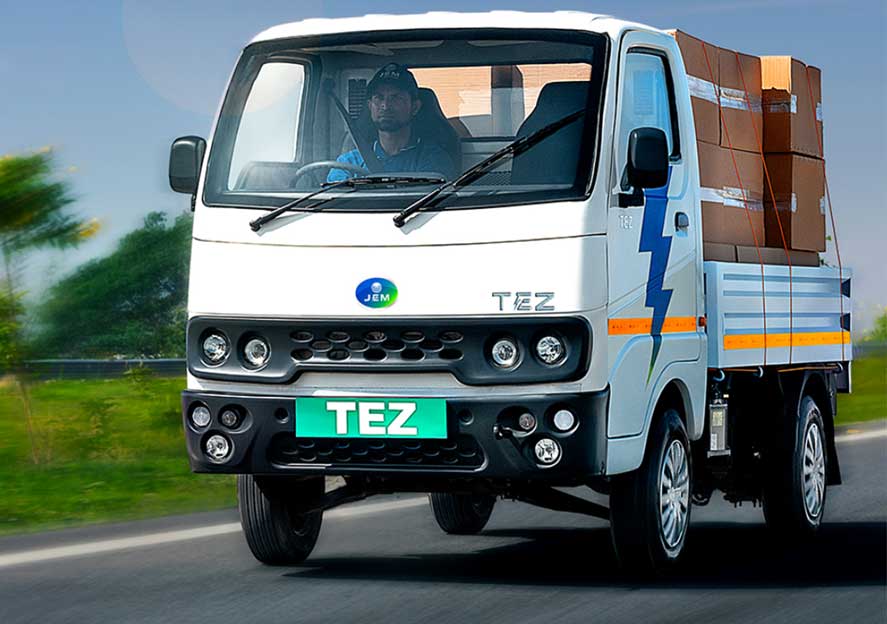
    Jupiter Electric Mobility Pvt. Ltd. (GEM) has strengthened its presence in the electric commercial vehicle segment by opening five new showrooms across major Indian cities, bringing its flagship JEM TEZ electric light commercial vehicle closer to customers across the country.

    The expansion campaign, which ran from November 3-7, 2025, introduced showrooms in New Delhi, Ghaziabad, Trivandrum, Ahmedabad and Pune, which was attended by local dignitaries and GEM leadership, including Jupiter Group Deputy Managing Director Vikas Lohia.

    Strategic expansion in key markets

    The new showrooms are strategically located to serve diverse regional markets:

    Delhi and Ghaziabad: Targeting logistics operators under Delhi’s EV Policy 2.0, which aims to achieve 95% electric vehicle adoption by 2027. Pune and Ahmedabad: Located in the industrial corridors of Maharashtra and Gujarat, account for 22.1% of India’s commercial vehicle market. Trivandrum: Strengthening GeM’s presence in Kerala, where over 235,000 electric vehicles are registered, representing 11.33% market share.

    JEM TEZ – designed for modern logistics

    Each showroom offers personal consultation, test drives and expert guidance from trained product experts. JEM TEZ, a 1.05-tonne electric light commercial vehicle, boasts:

    Certified Range: Over 300 km per charge Peak Motor Power: 80 kW Gradeability: 23%
    Ideal for intra-city freight, last-mile delivery and distribution operations, the vehicle is tailored to suit the needs of fleet operators and logistics companies.

    Vivek Lohia, Managing Director, Jupiter Group, said, “Our national expansion reflects GEM’s commitment to building a strong presence in the electric commercial vehicle sector.” “The selected cities meet diverse logistics requirements and policy environments that support EV adoption.”

    Strong manufacturing and partnerships

    Backed by parent company Jupiter Wagons Limited, GEM Railways leverages decades of expertise in goods wagon production. Every JEM TEZ vehicle undergoes rigorous testing to meet Indian commercial operating standards.

    To create a comprehensive EV ecosystem, GEM has partnered with Porter, Pulse Energy, Batwheel, Automobil and Tapfin, offering customers:

    Charging infrastructure access Financing solutions After sales service Business support through GEM Udan program

    National footprint and future plans

    With the five new additions, JEM now operates seven showrooms across the country in Bangalore, Hyderabad, New Delhi, Ghaziabad, Pune, Ahmedabad and Thiruvananthapuram. Plans are underway to further expand to Chennai, Kolkata and Mumbai.

    JEM is a subsidiary of Jupiter Wagons Limited, a mobility solutions provider with operations in freight wagons, locomotives, commercial vehicles and components, supported by manufacturing facilities in Kolkata, Jamshedpur, Indore, Jabalpur and Aurangabad with global partnerships across Europe.

    Fleet operators and logistics companies interested in JEM TEZ can visit the showroom during operating hours or contact the company jupiterelectricmobile.com,