Author: Ravichandran Srinivasan
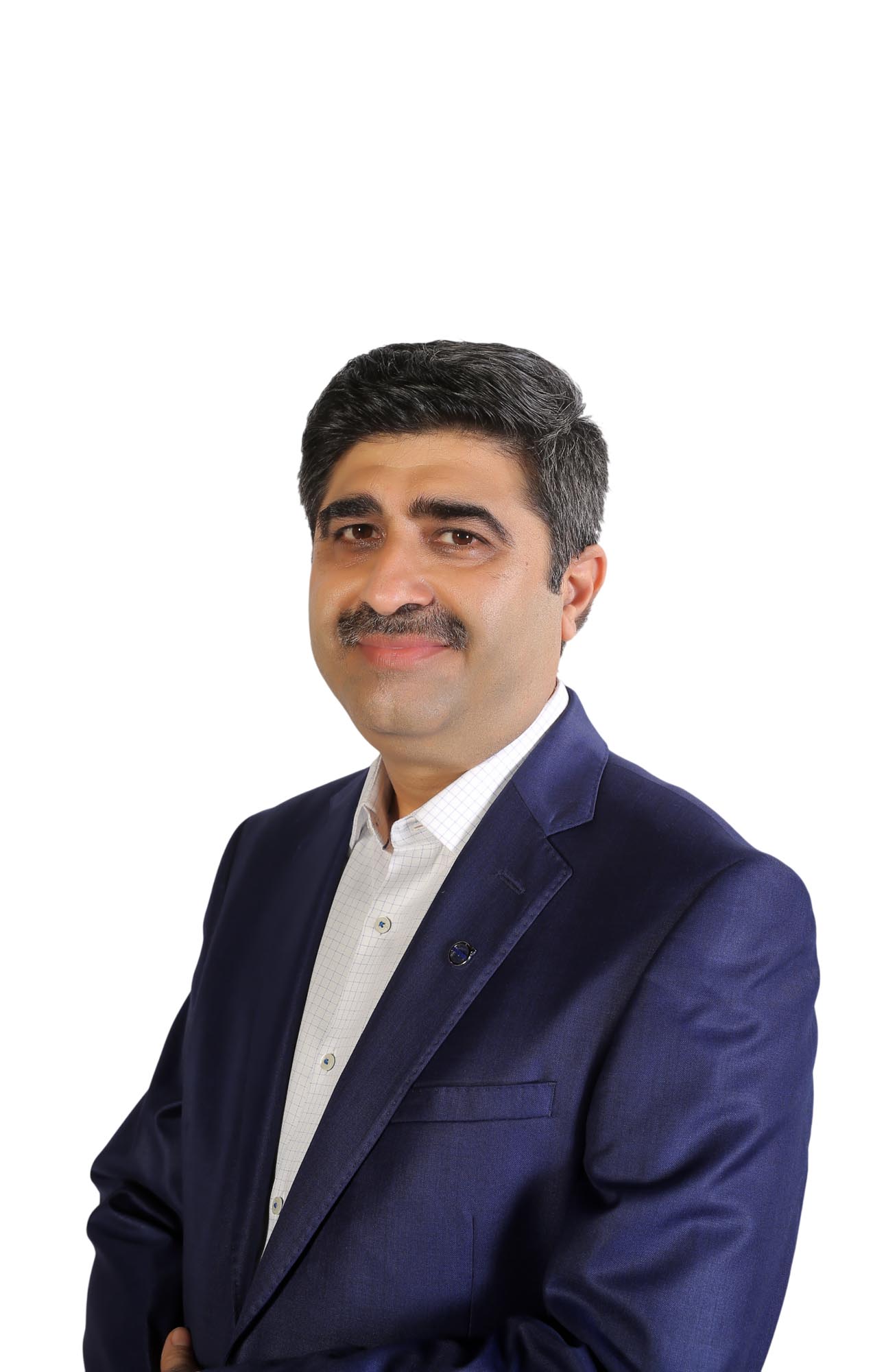
Jyoti Malhotra, Managing Director, Volvo Cars India
For Volvo Cars, India represents more than just another growth market. As the luxury automotive segment evolves from traditional combustion engine vehicles to electric vehicles, the Swedish luxury automaker is positioning itself at the intersection of safety, sustainability, premium customer experience and digital transformation.
At the helm of this transformation is Jyoti Malhotra, who has worked in the automotive industry for nearly three decades with companies such as Motherson Sumi, Fiat India, Maruti Suzuki and Mahindra & Mahindra before taking over as the first India managing director of Volvo Cars India.
Looking back on his career, Malhotra said his career was shaped by exposure to vastly different operating environments, which helped him understand the strategic and execution aspects of the automotive business. “I have worked in the automotive industry for 30 years and my goals align perfectly with Volvo’s goals, beyond mobility, as we work to build a safer, cleaner and more sustainable future,” he said.
He added that his experience in regions such as Delhi, Chandigarh, Kerala and Mumbai helped him understand India’s demographic and cultural complexities, a must-have for leading businesses in the country. “At Volvo Cars India, our focus is on strengthening our position as a leader in safety and sustainability while accelerating the transition to electrification and unlocking the brand’s long-term growth potential in India,” he noted.
Strengthening luxury footprint in India
Volvo Car India currently has 23 showrooms and 25 workshops across the country and is steadily expanding its footprint in line with future growth plans. Malhotra said the network expansion is entirely business-driven and in line with the company’s long-term vision in India.
The broader luxury car market itself is expected to grow significantly over the next five years. “Currently, the luxury car market is very small, around 50,000 vehicles per year. It is likely to double in the next five years as the number of HNI and UHNI customers grows rapidly and aspirations match rising incomes,” he explained.
Electrification is expected to play an important role in this evolution. Even as Volvo Cars globally recalibrates its earlier target of becoming a 100% electric car company by 2030 to electrify 80-90% of its sales, the company remains firmly committed to expanding its electric vehicle business in India.
“In India, we have committed to launch a new electric vehicle model every year and we have kept that promise. This year we will also launch two new electric vehicle models,” Malhotra said. At the same time, he clarified that Volvo’s internal combustion engine products will continue to remain relevant to Indian customers. “Our beloved internal combustion engine vehicles will continue to provide consumers with best-in-class comfort and luxury because that’s what they want.”
The company is also evaluating plug-in hybrid technology for the Indian market. “We are actively involved in EV and ICE automotive products in the form of MHEV, and we are exploring future PHEVs,” he revealed.
Safety remains Volvo’s strongest differentiator
Despite growing competition in India’s luxury car market from established German rivals and emerging electric car brands, Volvo continues to position itself around its strongest historical pillar – safety.
“Safety is in our DNA and at the core of our philosophy and we strongly advocate ‘safety puts people first’, both inside and outside the vehicle,” said Malhotra.
He noted that Volvo’s contribution to automotive safety extends beyond its own vehicles. “By sharing our patented three-point safety harness, we have helped save more than a million lives. Our ambition is to save millions more lives. It is this commitment that sets us apart.”
According to him, Volvo’s Scandinavian design philosophy combined with sustainability and electrification creates a differentiated image in the luxury car segment. He added: “Volvo Cars stands out with a clear focus on safety, sustainability and Scandinavian design, supported by a strong electrification roadmap.”
Interestingly, Malhotra said real-world customer experience will continue to influence the company’s strategy going forward. “The second impact comes from the powerful stories our customers share after surviving serious accidents. Hearing again and again how Volvo saved their lives reinforces the seriousness of the work we do,” he said.
“These stories remind the management team that safety is not just a feature, it is our primary strength and a significant responsibility.”
Building confidence in the Indian EV ecosystem
One of the biggest concerns for EV adoption in India remains charging infrastructure, especially for long-distance travel. Malhotra acknowledges that the EV ecosystem is still evolving, but believes the progress is encouraging.
“Electric vehicles are a relatively new technology and, like the introduction of any new technology, it takes time for the ecosystem to develop. The same goes for charging infrastructure,” he said.
He noted that urban charging infrastructure has improved significantly, with charging stations becoming increasingly visible in residential areas, workplaces and public spaces. At the same time, highway toll collection is also advancing steadily.
“Regarding highway charging infrastructure, the progress over the past few years has been very encouraging,” he observed.
Volvo Cars India is also directly investing in charging infrastructure development through partnerships. The company recently partnered with CHARGE ZONE to set up a 360 kW ultra-fast charging station on the Nashik-Mumbai highway near Igatpuri.
“This is our first step in delivering a world-class charging experience in India, ensuring that our customers not only enjoy the luxury and performance of Volvo electric vehicles but also have access to reliable and worry-free charging infrastructure,” said Malhotra.
Importantly, Volvo sees charging infrastructure as more than just a marketing exercise. “Charging infrastructure is first and foremost a core part of having an experience and after-sales ecosystem, and its role as a brand or marketing signal is secondary,” he explains.
Reshaping after-sales service in the electric era
As electric vehicles gain popularity, after-sales business models are also undergoing major changes, as electric vehicles generally require less mechanical maintenance than traditional vehicles.
Volvo Cars India is actively adapting to this transformation while ensuring that dealer profitability is protected. Malhotra said keeping vehicles within the company’s service ecosystem remains critical.
“Preserving car ownership is key to business sustainability and providing a one-stop solution enables our dealers to effectively respond to this shift in car ownership,” he said.
The company also helps dealers diversify shop floor capabilities. “We are building smart repair capabilities in dealer workshops while providing them with new business opportunities,” he added.
To improve uptime and shorten repair cycles, Volvo established a local parts distribution center in 2018 and recently expanded production capacity. “Currently, our parts supply service rate remains above 90%,” Malhotra said.
Digital and connected car technologies are also becoming the core of Volvo’s aftersales strategy. “We deliver world-class software-defined cars that intelligently communicate service needs to customers through vehicle clusters and timely notifications in the Volvo Cars app,” he explains.
According to him, customer feedback on these connected service features has been very positive. “We’ve received tremendous positive feedback and many success stories from our customers.”
Enhancing customer experience through “Scandinavian hospitality”
Customer experience is another area where Volvo believes it can stand out in a crowded luxury car market.
“Our customer experience is rooted in Volvo’s customer experience principles of personalization, ease and respect,” said Malhotra.
Instead of relying on one dramatic “wow” moment, Volvo focuses on consistency throughout ownership. “We believe that excellence is not about one moment, but about consistently delivering meaningful, seamless interactions at every touchpoint,” he explains.
As luxury car discovery increasingly moves online, the role of brick-and-mortar dealers is changing rapidly. Malhotra believes dealers are evolving from traditional sales outlets to customer engagement and assurance centers.
“When customers walk into a dealership today, they already know a lot and have higher expectations,” he said.
“The showroom is no longer the starting point of discovery, but a space where brand belief is reinforced.”
He further explained that dealers now act as a “human translation layer” to help customers simplify their final decision-making while deepening their emotional connection with the brand.
Volvo is also gearing up to meet growing demand for luxury goods outside metropolitan areas. “Our focus is on ensuring timely and seamless service to our customers,” Malhotra said. “We are actively working to optimize our service infrastructure and facility footprint to effectively meet changing customer needs.”
Sustainability throughout operations
Volvo Cars India said sustainability goes far beyond vehicle electrification and is deeply integrated into its aftersales ecosystem.
“Our network focuses on solar energy utilization, water recycling and responsible waste management practices,” Malhotra said.
The company has implemented a number of sustainability initiatives at its dealerships and workshops, including installing solar panels, using green energy, sewage treatment plants, improving greening and reducing plastic use.
“Our commitment to the environment dates back to the 1940s and is stronger today than ever,” he said.
Prepare for the next generation of automotive workforce
As vehicles become increasingly software-defined and electrified, skills development on the shop floor becomes equally important.
“We ensure that all technicians are trained to operate electric vehicles as a mandatory requirement and part of the basic training,” Malhotra said.
Volvo has also launched a dedicated certification program for dealers for high-voltage diagnostics and battery handling. “We also provide each dealer’s technicians with specialized high-voltage diagnostics and high-voltage battery handling certifications,” he added.
Interestingly, Malhotra believes Volvo’s own leadership team has undergone a similar shift as it embraces electrification.
“To truly spearhead the electric revolution in India, our management team has made a collective decision to switch to driving Volvo electric vehicles every day,” he revealed.
“This is more than just a corporate event; it’s about practicing the technology we preach.”
This shift in internal culture helped electrification move from a business mission to a deeply personal organizational mission, he said.
“Our strategy is now clear – driven by the real-world experience of our team, we are moving towards an all-electric future and built on a heritage of safety, which remains our ultimate commitment to our customers in India.”