Tag: Electrical mobility

  • East MOVINE co-founder launched Trusterra, India’s first AI-operated EV Platform | Vampire

    East MOVINE co-founder launched Trusterra, India’s first AI-operated EV Platform | Vampire

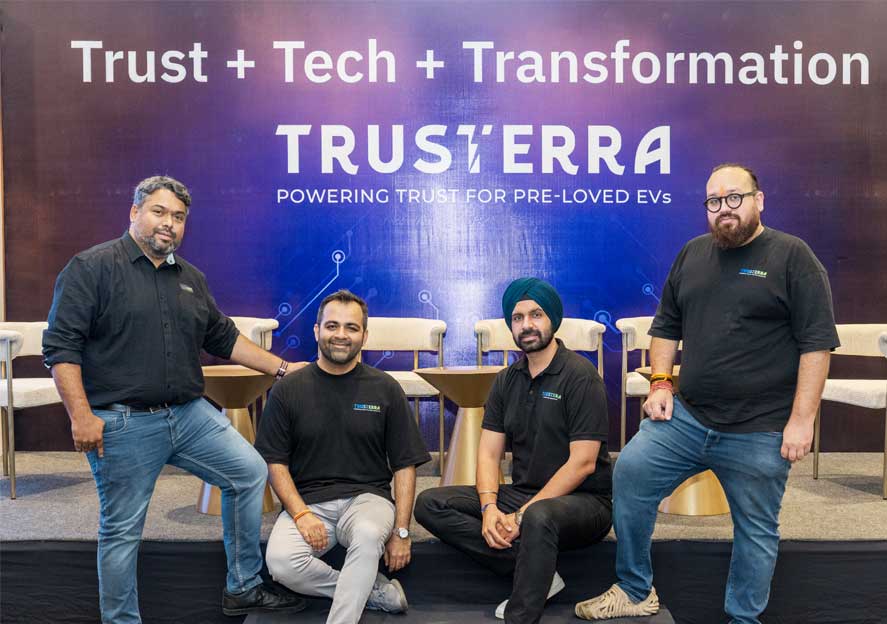
    Maving’s co-founder and top executive, Tanveer Singh, has launched a trust with co-founder Saurabh Arora, Madhu Reddy and Chanakya Aggarwal, marking a major lead for India’s fast growing electric mobility sector. Posted as the country’s first AI-operated platform for pre-owned EVS, Trustra wants to solve the major challenges of trust, standardization and resale value in the EV market used by Trust.

    India’s EV region is estimated to cross an annual sales of 10 million units by 2030, yet the resale penetration is less than 2%. This difference has created confusion for buyers, heavy depreciation for vendors, and to be hesitated with dealers to engage in the section. Trustra is designed to close this difference with a transparent, data-powered and standardized evaluation framework that makes EV transactions reliable and liquid.

    Trustra co-founder Tanveer Singh said, “EVS is not a side market, they are markets.” “To electrify economically, a reliable resale backbone is important for India. We are building backbones to ensure that each EV owner can unlock the reasonable price, making backbones to ensure that each dealer can trade with confidence, and each buyer can buy with confidence.”

    Electric’s founder Avinash Sharma said, “Lack of a reliable resale structure has been one of the biggest obstacles for widespread EV adoption in India.” “Trustra’s AI-supported approach with Truevy Score ™ has the ability to unlock both the consumer and the dealer, and the EV will play an important role in strengthening the ecosystem.”

    Trusterra has Truev Score ™ in the heart, an ownership AI-driven evaluation system that measures EV’s battery health, range stability and the remaining useful life (rul). Like the credit score for EVS, it ensures proper pricing, strengthens the buyer’s confidence, and creates clarity for dealers and financial institutions. Applying the score is two powerful solutions: Terrakash ™, a rapid clinical and liquidity service that allows EV owners to immediately assess the health of his vehicle and receive bids with payment within 24 hours, and Teribid ™, a certified dealer auction platform that offers only quality EVS in the market, offering extended warrants, offering extended warrants only, Also affects.

    The company is already engaged to validate its AI-supported diagnostic and scoring approaches with the already leading EV OEMs, NBFCs, insurers and dealer networks and displays Truevic Score ™ in action.

    Initially focusing on Delhi NCR, Trustra plans to expand to major EV hubs like Bengaluru, Pune and Hyderabad. The platform will serve both B2C customers (including individual owners and buyers, Gig workers) and B2B clients (fleet, dealers, banks, leasing companies). Over the next 3-5 years, Trustra aims to facilitate 1 million pre-east-pasted EV transactions, while targeting the market cap of 500 crores within the first two years of operation. This ambition reflects both the confidence of the team in the creation of opportunity in the EV ecosystem used in the ecosystem and the rebellion spine of India for electric mobility.

  • Planet’s power players: 5 Indian companies are running a green revolution in 2025

    Planet’s power players: 5 Indian companies are running a green revolution in 2025

    With climate concerns that intensify global change towards stability, India’s green transition is being led by further-thinking companies, creating scalable, technical-powered solutions. From advancing power dynamics to dealing with water conservation and e-waste deficiency, these trailblazers are not only innovation-they are providing real effects. By July 2025, five Indian companies here are leading the green change of the country.

    1. Exicom Tele-Systems: Accelerating India’s EV charging backbone

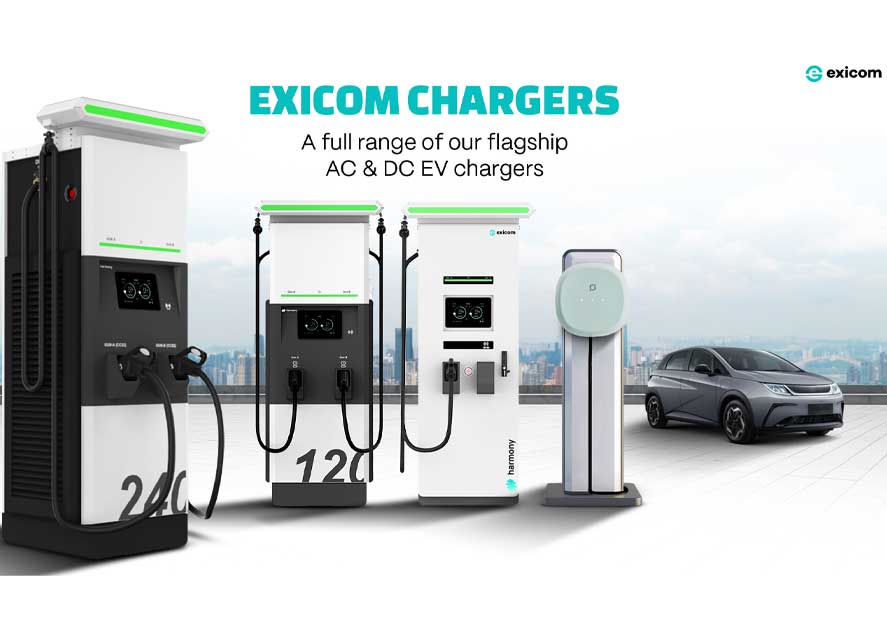
    India, with running towards electrifying its transport sector, the need for a strong and intelligent charging infrastructure has never been more necessary. Headquarters, Exicom, this challenge in Gurugram is being found as a prominent player in both residential and public EV charging, with over 175,000 chargers deployed.

    With a recent acquisition of the tritium, a global leader in DC fast charging, Exicom now operates one of the world’s most advanced EV charging manufacturing setup. The IP65-rated, liquid-cooled chargers and a Tennessy plant of the tritium that are capable of producing 30,000 fast chargers, which strengthen the global ambitions of Acient annually.

    Prasad of the company charges from home and fleet to highway infrastructure, supported by strong R&D and engineering teams across India, Australia and America.

    The latest innovation of Exicom, The Harmony Direct 2.0, is a next generation DC fast charger designed for rock-solid reliability, smart station economics and better user experience. Earlier this year, the company launched the Harmony Boost, an EV charger that combines solar energy, grid support and intelligent battery storage, providing charging speed up to 600 kW per plug – the first for India.

    It has stability in its systems-tie-tuned thoughts, software and integrated platform to separate adicom. With operations spread over more than 15 countries, the company is not only building chargers; It is creating a infrastructure for Net-zero dynamics beyond India and from it.

    2. Tata Power Solar: Law of renewable energy on scale

    Leading in India’s clean energy journey, Tata Power Solar has played an important role in adopting solar in homes, businesses and public infrastructure. Supported by the scale and Reach of the Tata Group, the company has established more than 1.5 GW ceiling capacity by 2025 and continued innovation in solar modules and storage.

    Integrated approach to Tata Power Solar- As part of its national level contribution (NDC) under the Paris Agreement from EPC and O&M, as part of its national level, supports India’s commitment to more than 40% of electricity from non-givash fuel by 2030.

    3. Vegot Utility Solutions: Creating Every Drop Count

    Established in Chennai, Vegot is solving one of the most challenges in urban India – lack of water. Its IOT-operated water meter and leak detection systems are now deployed in over 60,000 homes and commercial places, which helps users to monitor consumption in real time and reduce wastage by up to 50%.

    By 2025, Wegot is working with municipal bodies and green building projects in Bengaluru, Hyderabad and Pune to enable data-operated water conservation. The company’s vision has been aligned with India’s Water Life Mission and SDG 6 goals of clean water and hygiene.

    4. Auro Recycling: Leader of India in circular technology

    Attero Recycling is quietly giving strength to a revolution in the recovery of e-waste. The operation of one of the largest integrated features in Asia, the Noida-based firm processes more than 1.44 lakh tonnes of e-waste and lithium-ion battery annually.

    Using proprietary hydromatalgical technology, attains 98.5% extraction rate and 99.99% purity for important ingredients such as Attoro cobalt, lithium and gold – makes it a strategic player in India’s growing energy storage and EV construction price chain.

    In a symbolic milestone, the recycled metals of the Auro were used to craft medals for National Sports 2025, explaining how the waste could be converted into national pride. The company’s digital platforms, metalmandi and salesmarts, are also digitizing collection and recycling logistics for enterprises and individuals.

    5. Ninjacart: Construction of India’s Green Food Supply Chain

    At the intersection of agriculture and stability, the Bengaluru-based Agri-Tech Pioneer, which is re-organizing India’s farm-to-retail logistics, is located. Through a technology-operated cold chain and direct farmer partnership, the ninjacart helps eliminate middlemen, reduces food malfunction by 30%, and cuts transportation-related emissions.

    Its platform now serves over 200,000 farmers and over 60,000 retailers, while Tier 1 and Tier 2 enables traced, efficient and low-uptated supply chains in cities. The model of Ninjaccart has equally interested in global food logistics players and policy makers, especially India prepares for a climate-flexible agricultural future.

    Ahead road

    India’s Green Economy is no longer a vision-this is a rapid growing reality. Whether it is electrification transport, mainstream solar, managing urban water, closing e-waste loops, or ensuring sustainable food systems, these companies are shaping India’s foundation ready for the future.

    Their collective efforts represent more than only the stories of development. They symbolize a deep commitment to nation-building through stability, innovation and climate responsibility.

  • Leading green shifts: Shri Harry Bajaj to carry forward permanent mobility and clean energy solutions. Vampire

    Leading green shifts: Shri Harry Bajaj to carry forward permanent mobility and clean energy solutions. Vampire

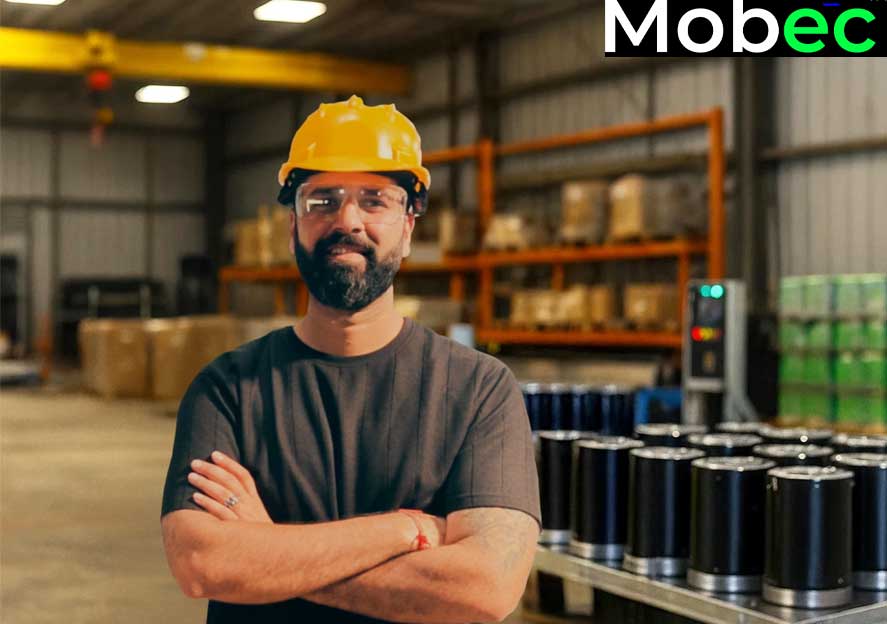
    As the global speed towards global speed and the speed of clean transport gains, industry trailblazer stability, innovation and reaches the future of mobility with a strong emphasis on access. In this special interview, we are attached to Mobec founder and CEO Mr. Harry Bajaj to reveal our vision and leadership in shaping India’s electric dynamics landscape.

    This conversation looks deeply on the EV ecosystem to develop, exploring important topics such as electric mobility adoption, mobile EV charging innovation, battery recycling, infrastructure development and renewable energy integration. Mr. Bajaj shares the overall approach of Combake to enable a smart, cleaner and more connected transport future.

    By addressing the range of range with portable charging solutions to support national net-zero ambitions through battery circulatory and resource recovery, Mr. Bajaj has highlighted how innovation innovated under the influence of the real world can run an inclusive and permanent dynamics revolution.

    Vision and leadership

    What did you inspire power dynamics and renewable energy sector?

    In fact, inspired me to enter the power dynamics and renewable energy sector, which was a deep urge to challenge the status quo and bring real, tangible changes. We saw a clear difference in India’s EV ecosystem range concern, accessible charging infrastructure deficiency and high -existence on imports for critical battery materials. These were not just technical issues; They were preventing wide EV adoption.

    Mobec started by solving one of the most immediate problems. We developed easy-to-use for businesses, portable fast chargers and Comback Mini Backup generators to ensure uninterrupted power, which can be easily used for portable charging, diagnostics, sales and support, Mobility-e-Service (MAAS), Fleet Support Services, and more.

    We felt that true stability is beyond charging, this requires reducing our dependence on imported materials and embrace a circular economy. This inspired us to set up our own battery recycling plant, where we now recover important elements such as lithium, cobalt, nickel and rare earth metals. This not only contributes to resource efficiency, but also aligns India’s vision for self -sufficiency in clean energy.

    Ultimately, my inspiration comes from the belief that innovation should solve real problems. Mobec’s commitment to make EV charging easier and reliable as filling petrol, accelerates changes in clean, permanent mobility for all.

    As the founder and CEO, how would you define the main mission of your company in terms of sustainable mobility?

    Our main mission is to redefine India’s way of running – clean, connected and convenient dynamics not only as a privilege, but as the primary form of permanent movement. We are building portable EV charging solutions, creating a flexible circular economic ecosystem that supports transition to permanent energy. By combining energy storage, real -time dynamics services, energy dispensing solutions, innovation in other life applications and circular battery practices, we aim to eliminate range anxiety, reduce infrastructure dependence on infrastructure and really enable the green future for dynamics.

    EV battery infrastructure

    What are important challenges in setting up a reliable EV battery infrastructure in India?

    Establishing a strong EV battery infrastructure in India is a versatile challenge. One of the primary barriers is particularly high capital requirement for mobile EV charging units that demand significant investment in battery storage systems and rapid changing techniques. Additionally, the absence of integrated charging standards and the complexity of integrating with the existing power grid makes the deployment even more difficult.

    Regulatory uncertainty and ups and downs energy tariff further reduced the speed of infrastructure expansion. In many areas, access to the power grid is limited, and where it is present, the slow charging speed reduces the overall efficiency of the system.

    There are also soft challenges to consider: less public awareness, slow users adopt, and a skilled workforce for management of logistics and operations. Training and maintaining such talent is often ignored but seriously important.

    To address these issues, India needs further policies, aggressive innovation in batteries and charging technologies, clever grid integration and adequate private sector investment. Only then can we create an EV infrastructure which is scalable, inexpensive and durable.

    How to meet the issues related to energy distribution standardization, safety and swapping activities to meet your organization supply and demands?

    We take a structured, three-step approach, which is to remove the major concerns to balance the energy dispensing standardization, safety, and demand with demand.

    Before any product takes size, we focus too much on resource inspection, availability and capacity – ensuring that the foundation of our development is strong, scalable and reliable.

    During product development, our team invests deeply in widespread R&D, where each component is tested for endurance and safety in real world conditions. We also find out many solutions to the same challenge, so we do not boxing in one approach – this flexibility allows us to meet the needs of different customers in areas and vehicle types.

    Once the product is out, we do not stop. We actively collect the response and use a recurring model such as a waterfall or spiral life cycle, which means that each version of our product is part of a continuous cycle of improvement – from planning and processing to output, reaction and purification.

    Each step taken by us is designed to ensure safe, clever and more standardized energy distribution for a permanent EV ecosystem.

    Future of permanent mobility

    What role do policy and government incentives play in accelerating adoption?

    Policy and government incentives play an important role in accelerating EV adoption by creating a favorable environment for manufacturers and consumers. By reducing import duties on major materials such as subsidy, tax profit, and cobalt and lithium-ion battery scraps, as the Union Budget is seen in 2025 governments, makes EVS more cheap and accessible. These measure low production costs, encourage battery recycling, and strengthen overall EV ecosystems. We see such an initiative as important steps towards advancing clean, skilled and durable dynamics in India.

    How is your company aligning with national or global stability goals, such as carbon neutrality or net-zero goals?

    The mission of Mobec is firmly associated with the stability goals of India and the global community, including carbon neutrality and net-zero goals. Through our innovative green dynamics and energy solutions, we are actively lowering the environmental impact in the battery life cycle.

    Our battery uses state -of -the -art technology to recycling initiatives, lithium, cobalt, nickel, copper, and virgin resources to recover significant materials to reduce dependence on virgin resources. With processes such as blackmas and mineral extraction, we support the manufacture of a high-demonstration battery from recycled materials, strengthening a circular economy.

    Additionally, we focus on batteries renewal and second-life applications, ensuring that the battery used is tested, upgraded, and renovated for home and commercial energy storage, which reduces waste and maximizes the battery life.

    Renewable energy integration

    How is renewable energy integrated into your energy dispensing, ESS and power backup generation solutions?

    For us, renewable energy is one of the main columns of our products. We actively integrate solar energy technology to create a multi-channel approach for clean energy distribution in our energy dispensing units, ESS (energy storage systems), and power backup solutions.

    This means that our products are designed not only to attract electricity from the traditional grid, but also wherever possible, solar energy is also exploited – to ensure that we can meet growing energy demands by reducing our carbon footprint. By enabling hybrid energy sourcing, we provide users a route for flexibility, reliability and most importantly, reliable energy access.

    Concluding reflection

    What would you recommend startups and entrepreneurs to create an impression in clean technology and dynamics?

    For those entering this place, it is necessary to think beyond short -term victory. Pay attention to the construction solutions that are scalable, efficient and really durable. Surround yourself with a team and partners who believe in large objectives, not only the product. Regulatory landscapes may be shift and technologies can develop, but if your foundation is inherent in impact and innovation, you will be ahead. Clean mobility is future and this construction demands patience and accuracy.

    Finally, what heritage do you expect to leave behind in the scope of sustainable transport and energy?

    If Mobec can be remembered as a catalyst that helped eliminate range anxiety, made renewable energy easily accessible, and built a mentality for businesses and communities to use available resources, then, for me, for me, is worth a legacy. It is about to prove that innovation at the same time can be responsible, scalable and deeply human.
  • Top 5 EV Leasing Players Empowering Driving Partner in India | Vampire

    Top 5 EV Leasing Players Empowering Driving Partner in India | Vampire

    Since the electric mobility intensifies worldwide, the lease is emerging as a major promoter in the EV ecosystem-as a flexible, cost-skilled route to build or score your fleet without the heavy burden of ownership. By eliminating standing upfront investment and bundling in essential commodities such as maintenance, insurance and charging solutions, model on the lease simplifies EV adoption by increasing the operational agility.

    Lease not only makes economic understanding, but also aligns with broad corporate stability goals. This allows operators to stay asset-light, react to changing technology quickly and to benefit from developing government incentives-by significantly reducing all risks and operating costs.

    In India, EV leasing is gaining momentum. A survey by GT Bharat found that 39% of the respondents now prefer to lease when they own EVS. Fame II supported by subsidy and state-level encouragement is primary to market development. In 2023, the property leasing under management touched ₹ 5,000 crore, with estimates by 2028 increased to ₹ 36,000 crore-Electric three-wheeleRedseer,

    For businesses working in the final-meal logistics, fleet services, or ride—hiling, EV leasing provides not only strength, but also scalability and flexibility. With integrated assistance services, policy tailwind, and a low -risk financial structure, lease fleet is shaping the foundation stone of electrification and permanent urban dynamics.

    Full mobility

    Alt Mobility is bringing revolution on EV lease with its fleet management solutions in seven cities. Located in Delhi, the startup simplifies the financing for EV-A-Service and Last-Meal delivery, which ends the advance cost. With only a small safety deposit and a monthly lease, business expenses can reduce by up to 20%. Participated with more than eight OEMs including Piazio and Yular Motors, Alt Mobility also provides a state -of -the -art Fleet OS app for real -time vehicle and fleet monitoring, which ensures seamless operations.

    to redo

    Revfin is a major online consumer loan platform dedicated to increasing financial inclusion in India. Taking advantage of advanced technology and unconventional data analysis, the Revfin provides a spontaneous debt solution, making EV financing more accessible. Recently, the company expanded the 4W EV market via partnership with ZAPPIT to offer the airport pickup services. Additionally, Revphin has made its financing options wider and set up a micro secondary market for EVS by collaborating with various EV manufacturers and leasing firms.

    Energy mobility

    MTOW Mobility Private Limited is a brand energy mobility, a Delhi-based energy-focused company that is committed to simplifying EV ownership. With the belief that “battery is new fuel,” energy mobility provides a battery lease solution for commercial electric electric electrical vehicles (L2) and three-wheelers (L3, L5). By converting the high upfront battery cost to an affordable monthly lease value (MLV), the company makes EV more cost effective and accessible to businesses.

    streamlined

    Ekofi is running permanent mobility by offering India’s first green-only NBFC, cheap and hassle-free EV loan. With minimal documentation and competitive interest rates, ECOFY finances up to 90% of an on-road price of a vehicle, making EV ownership more accessible. The company has become a prominent player in EV financing, offering loans at a cost of only 1/6th per kilometer as compared to diesel. Participation with major brands such as Ather, Mahindra, and Ola Electric, Ecofy Electric supports both individual and corporate buyers in two- and three-wheeler classes.

    Greaves Finance

    Greaves Finance Ltd., through its exclusive Ev-Focused Landing Mote Platform Evfin, India’s only dedicated Ev-concentrated Non-Banking Financial Company (NBFC). A subsidiary of Grievs Cotton Limited, the company, is on a mission to democrats EV ownership with especially tilated innovative financing solutions for electric vehicles, especially for electric vehicles. By providing flexible loan options, Grives Finance is helping accelerating permanent mobility across India.

  • Ultraviolette crosses 50,000 pre-bookings two weeks after unveiling. Vampire

    Ultraviolette crosses 50,000 pre-bookings two weeks after unveiling. Vampire

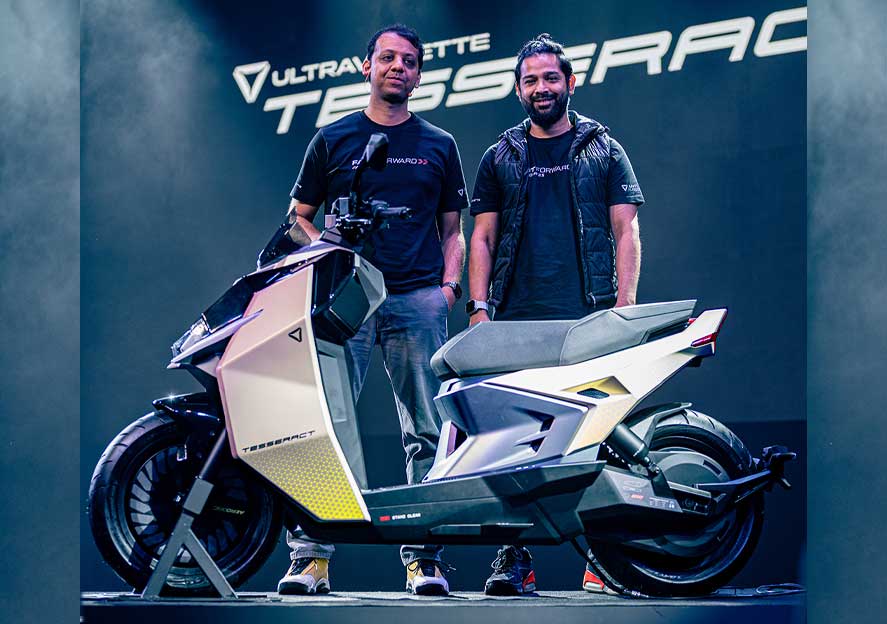
    Leading in Performance Electric Mobility, Ultravolate has achieved a groundbreaking milestone with the world’s most advanced scooter, Tesurect. Within just two weeks of its global unveiling, Tesseract has exceeded 50,000 pre-booking, demonstrated heavy response from consumers and set up a new benchmark in the electric two-wheeler industry.

    This achievement underlines the demand for a future, performance electric scooter that mixes state -of -the -art technology, innovation and better design. Tsseract is set to redefine the dynamics with many of its section-first features, better battery technology and unique riding experience.

    Narayan Subramaniam, CEO and co-founder of Ultraviolet Automotive, commented on this unprecedented demand: “Tsseseract’s response is completely unprecedented to see such enthusiasm and support from all corners of India.

    Tesseract feature a section earlier in the feature of integrated radar and dasatam, which is originally coupled with omnipresent mirrors, providing advanced security technologies such as blindspot detection, lane change, overtaking assist and real-time conflict alert. It is also equipped with traction control and dynamic region to adapt to increased security and energy consumption. In addition, Tsseract claims a 7 ″ touchscreen TFT display, and multi -collectors LED display ORVMS -Further increases the rider awareness and reduces the risk of accidents: every trip is safe and more pleasant.

    With 20bhp (14.7 kw) peak power output, Tesseract provides an impressive inter-city range of up to 261 km (IDC), which ensures exceptional all-round performance. The scooter can be charged up to 80% rapidly in less than an hour, making it perfect for daily traffic and long distance travel.

    Neeraj Rajmohan, co-founder and CTO of Ultraviolet Automotive said: “Terrorct has been engineered to disrupt the status quo, which is one of the most elevated design as well as the most advanced electric vehicles with unique performances. Pre-booking values ​​our beliefs that consumers are ready to have a fundamental change in dynamics.

    Tsseract is available in four separate -color options: desert sand, stealth black, sonic pink and solar white. The pre-booking company’s website for Tsseract is open for ₹ 999.

  • Kia unveiled EV4 and Concept EV2, expanding its core EV lineup. Vampire

    Kia unveiled EV4 and Concept EV2, expanding its core EV lineup. Vampire

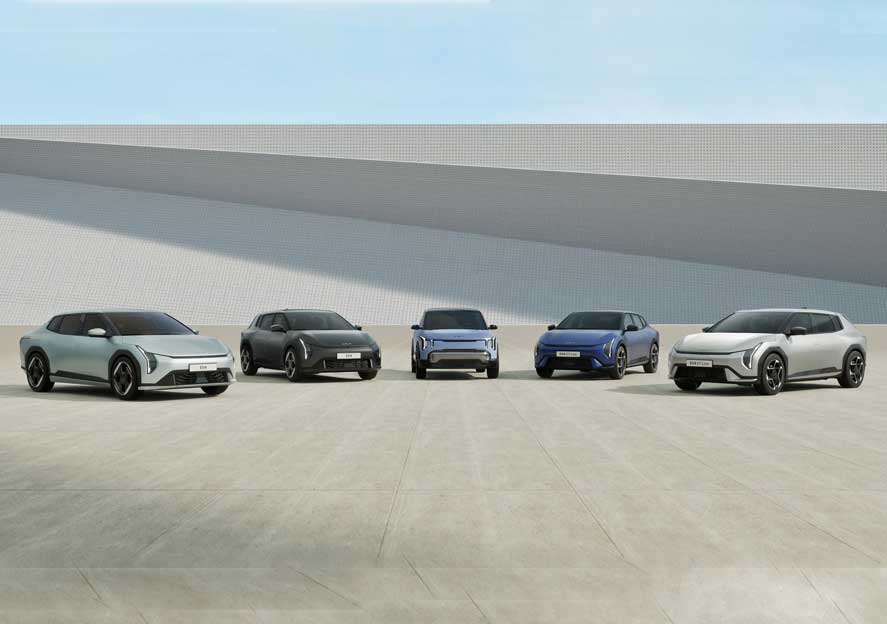
    In Kia EV Day in Spain, Spain in 2025, Kia Corporation launched EV4 and Concept EV2, strengthening its commitment to electric mobility.

    EV4, Kia’s first electrified sedan and hatchback, is a versatile and dynamic model designed for both urban driving and long -range travel. Posted to redefine the C-segment, EV4 mixes innovation with fresh design aesthetics, which carry a bold new on traditional sedans and hatchback styles.

    The slogan of the campaign indicates ‘Your Edge in Motion’, Kia EV4 sedan and a new typology for hatchback. In doing so, Kia is traditionally expanding the choice focused on CUV and SUV in an EV market.

    As a main model, EV4 Kia’s award winner expands the EV lineup and appeals to the ‘Early Majority’ customer segment. It promotes EV adoption through practical and innovative designs, technical reliability and a flexible electric vehicle experience that meets a diverse range of customers’ needs.

    The concept EV2, meanwhile, is an agile B-segment electric SUV that previews an upcoming production model that will enable users to experience urban places in new and more immersive ways. Both vehicles meet lifestyle-powered buyers who are eager to embrace new technology, eventually improving productivity and opening new possibilities, focusing on smart consumption.

    Kia Chairman and CEO, Ho Sung Song said: “Kia EV Day shows our vision for a permanent future where electric mobility is accessible to all. EV4 reflects the vision as a statement of completely innovative design, state -of -the -art technology, and our commitment to a connected driving experience that encourages and inspires. EV4 takes a significant step forward in our electrification journey, offering a choice of body styles for drivers seeking an easy transition for advanced technology and electrical dynamics. ,

    The KIA EV4, standard (58.3 kWh) and long distance (81.4 kWh) made on the 400V Electric Global Modular Platform (E-GMP) offers battery options, which provides electricity to a 150 kw front-mounted motor. It receives 0–100 km/h in 7.4–7.7 seconds with a top speed of 170 km/h.

    With aerodynamic enhancement and 0.23 CD drag coefficient, the EV4 sedan targets 430 km (standard) and 630 km (long distance) per WLTP standards, while the hatchback reaches 590 km. 10–80% charge takes just 31 minutes, supported by 11 kW onboard charger.

    The EV4 has a 3.6 KVA vehicle-to-load (V2L) and 10 KVA vehicle-to-grid (V2G) function, which uses external electricity. A visual position increases a front-fiber charging port feature with indicator.

    The ride and handling is adapted with an EV-spasti-mcFiresne strut front suspension and multi-link rear setup, which integrates the SFD3 frequency-answering valve and hydro G suspension shrub for better comfort and stability. Increased FWD geometry and strengthening the body reduces vibration and improves driving mobility.

  • Flixbus Vampire collaborates with ETO Motors to introduce electric intercity coaches in India

    Flixbus Vampire collaborates with ETO Motors to introduce electric intercity coaches in India

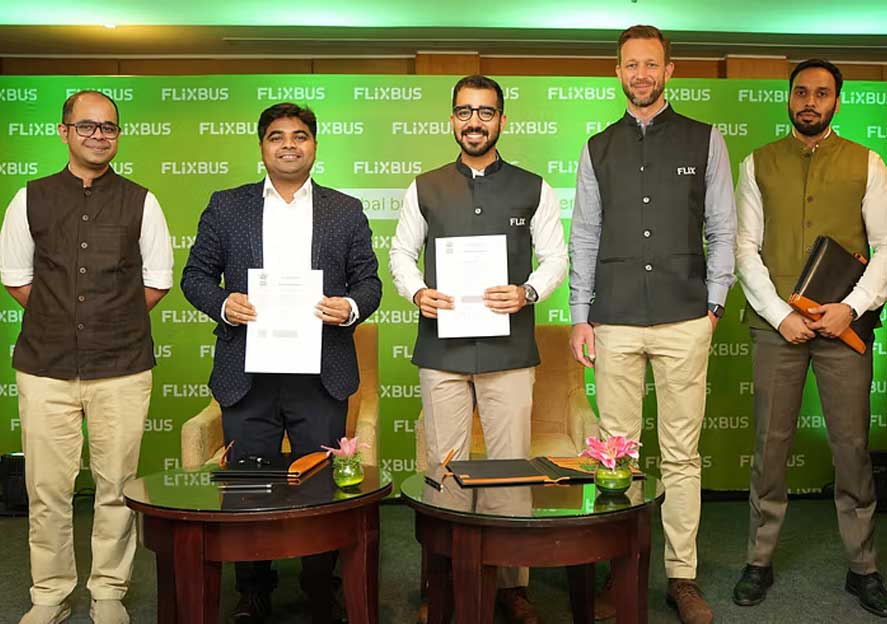
    A global mobility provider, Flixbus, has signed a memorandum (MOU) with ETO Motors to launch electric intercity coaches in India, marking its entry into the country’s expanded EV market. Announced in Bengaluru on January 30, 2025, partnership will initially roll four zero-furnaces luxury coaches, which is ready to start operations next month.

    Cooperation includes the development of a roadmap for charging infrastructure along with Flixbus routes and expansion of electric mobility solutions. While Flixbus brings its international expertise in intercity transportation, ETO Motors will contribute to its experience in electric mobility.

    Surya Khurana, managing director of Flixbus India, said that the initiative aligns with India’s stability goals by promoting green mobility and reducing carbon emissions. Rajiv YSR, CEO of Thunder Plus and Chief Marketing Officer of the group in the ETO Group, emphasized that the partnership would support the first-meal, final-meal and intercity connectivity, while nationwide public charging infrastructure would also provide the facility to expand the infrastructure.

    Flixbus, established in Germany in 2013, has established itself as a major intercity bus service provider in Europe and the United States, known for technology-operated approaches for transportation. The company entered the Indian market in 2024 as part of its global expansion strategy.

    The Indian Electric Mobility Solutions Company ETO Motors is active in the electric vehicle sector from 2018, focusing on permanent transport solutions. The company has earlier launched electric three-wheels and small commercial vehicles in several Indian cities.

    The partnership comes when India pushes electric vehicles to adopt more and more, in which the government has set ambitious targets to reduce carbon emissions. The country is aimed at 30% of private cars and 70% commercial vehicles are electric by 2030.