Tag: Bajaj Auto

  • Big bang of Bajaj on completion of 25 years, new Pulsar will be launched on 12th August, bike segment will change.

    Big bang of Bajaj on completion of 25 years, new Pulsar will be launched on 12th August, bike segment will change.

    Updated On:
    Jul 30, 2026 | 04:34 PM IST

    Summary

    Bajaj Pulsar is a name that has ruled the hearts of people for more than two decades. Now the company is preparing to give the biggest update ever to its iconic bike range.

    Expansion

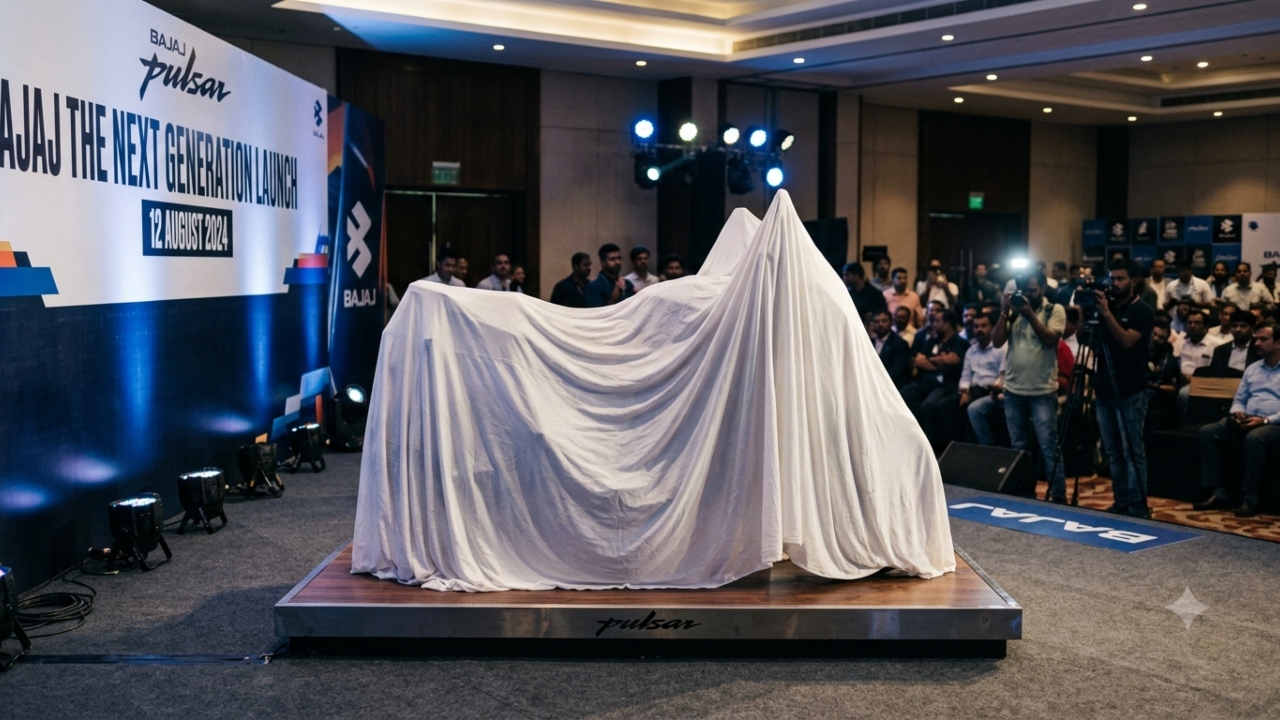
    Bajaj August 12 Launch: Bajaj Pulsar is a name in the Indian two-wheeler market that has ruled the hearts of people for more than two decades. Now the company is preparing to give the biggest update ever to its iconic bike range. Regarding which Bajaj Auto has officially confirmed that the new Pulsar will be unveiled on 12th August. The launch will be a part of the company’s 25th anniversary of the Pulsar brand and the coming months could see 10 new or redesigned Pulsar motorcycles in the 125cc to 160cc segment.

    Which new Pulsar will be launched first?

    For now, it is believed that the next-gen Pulsar 160 may be launched first. But according to reports, the company may also introduce an updated Pulsar N160 or an all-new Pulsar 125. Bajaj has not yet clarified the name of the model but indications are that it will not just be a facelift of the existing bike but will be a major change. The special thing about this is that Pulsar 150, which was launched in 2001 along with Pulsar 180, has been one of the most successful bikes of Bajaj. In such a situation, the company wants to take this legacy forward in a new way.

    Big changes can be found in design and hardware

    It is being said in the information that the new Pulsar is expected to be built on a completely new platform. It can be given a new chassis, updated engine, better suspension and modern cycle parts. The biggest change can be seen in the rear suspension. Due to this, this time there is a possibility of getting a centre-mounted monoshock instead of the long-used twin shock absorber, which can improve both riding and handling.

    related news

    But the bike’s muscular fuel tank and Pulsar’s signature styling are expected to remain intact. The new tank shroud, sporty body panel and all-LED lighting system can make it more attractive than before.

    Also read: Big blow to Tata Motors due to Gujarat rains, supply of Nexon-Tiago may be affected

    There will be a big upgrade in features also

    The new Pulsar is expected to get smart features like fully digital instrument cluster, Bluetooth connectivity, turn-by-turn navigation, call and SMS alerts. Recently, the company’s Joint Managing Director Rakesh Sharma also confirmed major changes in the Pulsar range. Apart from this, Bajaj is also planning to introduce its first electric motorcycle in the next financial year. Initially it will be launched in the export market and later it will be launched in the Indian market.
  • EV two-wheeler penetration reaches record 9.3% in May: FADA |

    EV two-wheeler penetration reaches record 9.3% in May: FADA |

    India’s electric two-wheeler market recorded a strong performance in May 2026, with retail sales growing 62.8% year-on-year to 1,70,733 units, according to data released by the Federation of Automobile Dealers Associations (FADA). The sharp growth took the penetration of electric two-wheelers to a record 9.3% of total two-wheeler retail sales, up from 6.1% in May 2025 and 7.9% in April 2026.

    This milestone marks the highest ever market share achieved by electric two-wheelers in the country, reflecting the growing consumer acceptance of electric mobility amid rising fuel prices and improving EV infrastructure.

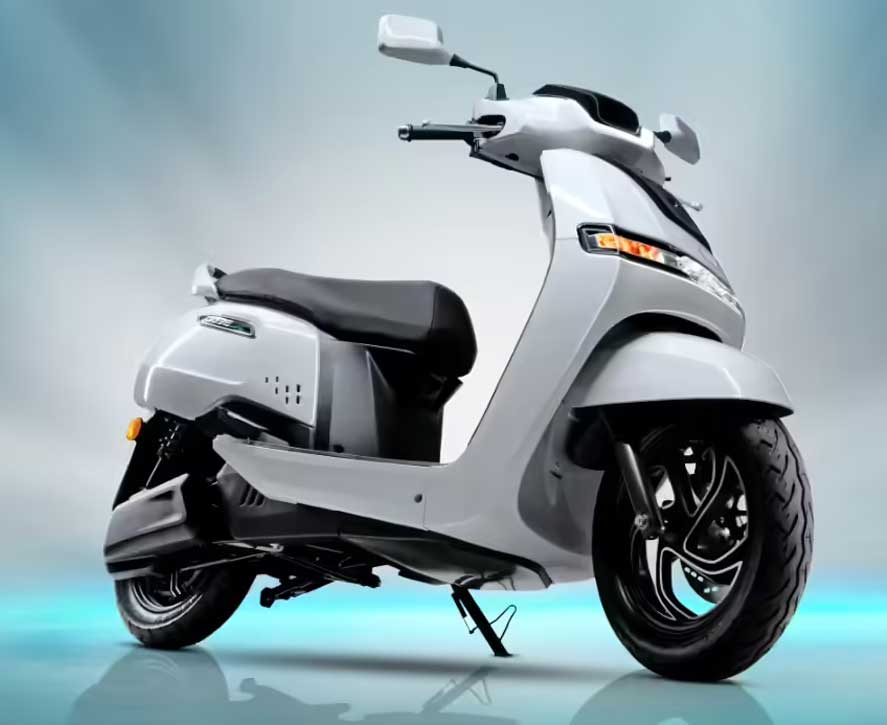
    TVS Motor Company maintained its position as the market leader in the electric two-wheeler segment with retail sales of 42,459 units during the month. Bajaj Auto stood second with 39,202 units, while Ather Energy took the third position with 28,240 units.

    Among major manufacturers, Hero MotoCorp recorded the fastest year-on-year growth with sales rising 158.2% to 19,067 units. Ola Electric sold 15,141 units, registering a decline of 20.2% compared to May 2025. Greaves Electric Mobility sold 7,695 units, while emerging players like River Mobility and Bighaus continued to lead the way, registering strong triple-digit growth on a relatively small base.

    Commenting on the development, FADA President CS Vigneshwar described May 2026 as a landmark month for India’s electric mobility journey.

    “May 26 is a landmark month for India’s mobility transformation and a meaningful step towards the Hon’ble Prime Minister’s vision of adopting electric mobility. For the first time, EVs have crossed 11% of all vehicles retailed, with the industry registering 2,71,682 electric vehicles, showing a growth of 45% year-on-year,” he said.

    Vigneshwar said rising fuel prices during the month played a significant role in influencing consumer purchase decisions, accelerating the shift towards electric vehicles.

    According to FADA, electric two-wheelers have the largest share in the total EV volume, contributing 1,70,733 units. Electric passenger vehicle sales also saw strong momentum, growing 81% year-on-year to 26,682 units. Meanwhile, electric three-wheelers remained the most electrified vehicle category, accounting for 64.4% of all three-wheeler registrations during the month.

    FADA attributed the continued growth in EV adoption to the expansion of domestic manufacturing capabilities, widespread availability of charging infrastructure, and increased consumer awareness of lower operating costs and environmental benefits.

    Electric Two-Wheeler Retail Sales Performance – May 2026

    OEMMay’26Apr’26May’25MoM GrowthYoY GrowthTVS Motor Company42,45940,02025,8046.09%64.54%Bajaj Auto39,20234,55222,64213.46%73.14%Ather Energy28,24028,47914,101-0.84%100.27%Hero MotoCorp19,06715,9057,38519.88%158.19%Ola Electric15,14112,33118,96722.79%-20.17%Greaves Electric Mobility7,6957,0094,3259.79%77.92%River Mobility3,7203,6811,0781.06%245.08%BGOS Auto3,2973,2291,0822.11%204.71%Other11,91212,1089,512-1.62%25.23%Total1,70,7331,57,3141,04,8968.53%62.76%

    Source: FADA

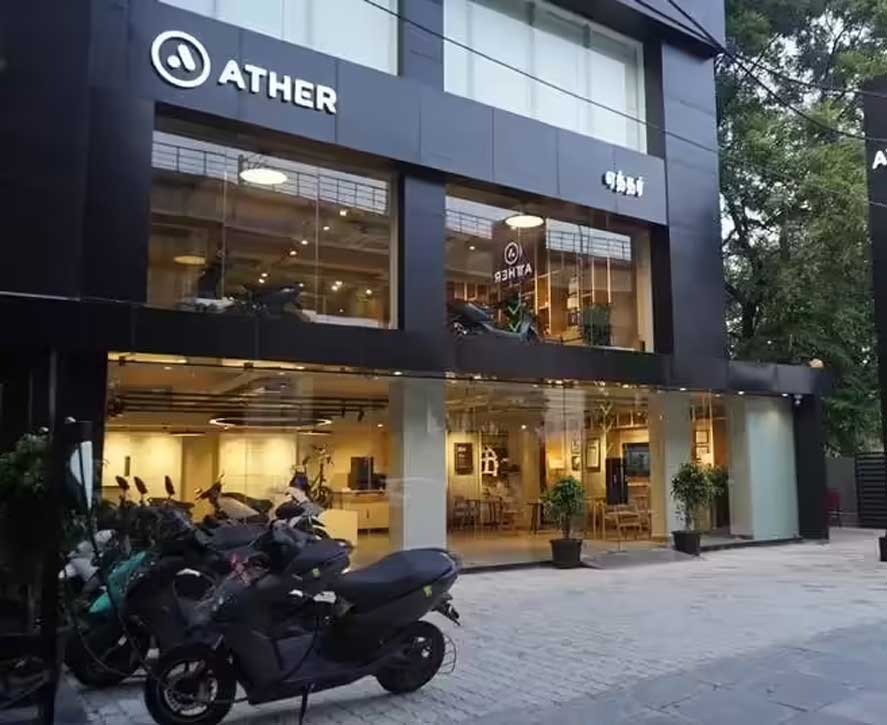
  • Ather Energy allotted ESOPs worth ₹22.4 crore to employees under 2025 plan.

    Ather Energy allotted ESOPs worth ₹22.4 crore to employees under 2025 plan.

    Electric two-wheeler maker Ather Energy has allotted 2.97 lakh equity shares to its employees under the Employee Stock Ownership Plan (ESOP) 2025 following the exercise of stock options, the company said in a regulatory filing.

    Based on Ather Energy’s BSE closing price of ₹753 per share on Monday, the total value of the ESOP allotment is ₹22.4 crore. Indian stock markets remained closed on Tuesday due to public holiday.

    “The shares have been allotted to eligible ESOP holders who have exercised their stock options under the Ather Energy ESOP 2025 Plan,” the company said in its filing.

    Ather Energy strengthens employee ownership

    The Bengaluru-based electric vehicle maker, which made its stock market debut in May last year, continues to expand employee ownership as part of its long-term growth strategy. The ESOP allocation reflects the company’s focus on retaining talent and aligning employee incentives with business performance.

    This is not the first such step of the company. In September 2025, Ather Energy had granted 12.7 lakh ESOPs worth ₹70.9 crore to employees, senior management and key personnel.

    Increasing competition in EV two-wheeler segment

    Ather Energy operates in India’s fast-growing electric two-wheeler market, competing with new-age EV makers like Ola Electric as well as established players like TVS Motor Company and Bajaj Auto. As companies are expanding their product portfolio and producing on a larger scale, competition in this segment has intensified.

    Strong revenue growth in Q3FY26

    Company reports strong financial performance in Q3FY26 due to festive demand and increase in vehicle sales:

    Operating Revenue: ₹953.6 Crore Year-on-Year Growth: 50.2% Highest quarterly revenue for the company

    Despite strong revenue growth, Ather Energy reported a net loss of ₹84.6 crore for the quarter. However, losses narrowed substantially, falling by 57.2% year-on-year, indicating improvement in operating efficiency.

    With growing EV adoption, expanding charging infrastructure and growing product demand, Ather Energy is strengthening its position in India’s electric two-wheeler market by incentivizing employees through equity participation.

  • India’s electric two-wheeler sales hit record in March amid strong growth in FY26.

    India’s electric two-wheeler sales hit record in March amid strong growth in FY26.

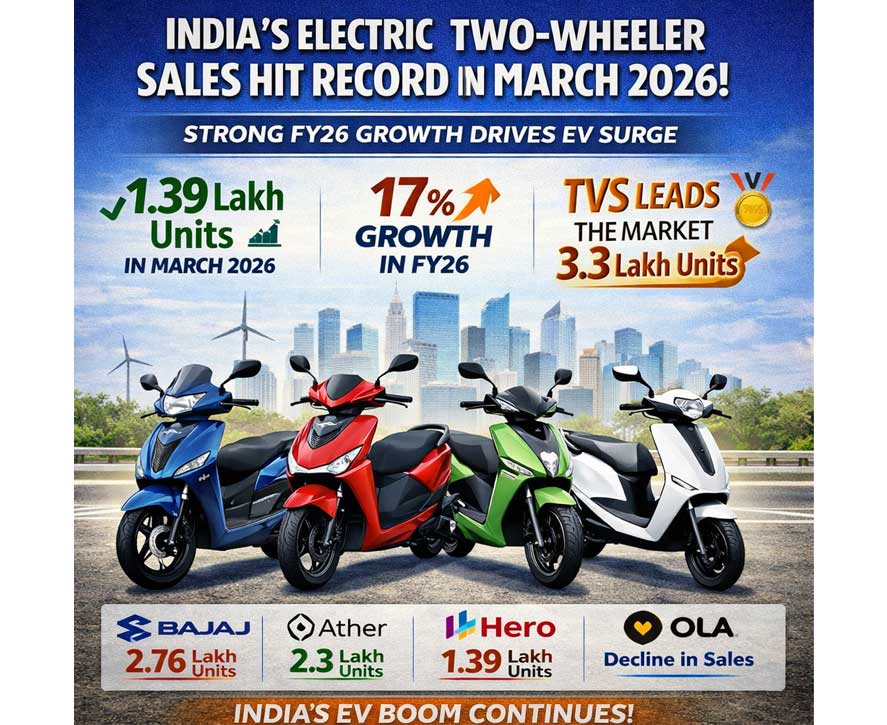
    India’s electric two-wheeler (E2W) market is showing strong momentum despite ongoing geopolitical tensions in West Asia, with March sales on track to set a new monthly record. By March 27, E2W volumes had already reached 1.39 lakh units, surpassing the 1.31 lakh units recorded in March 2025. With manufacturers expected to further boost demand later in the year, total monthly sales are likely to exceed the previous peak of 1.45 lakh units achieved during the festive period in October 2025.

    Manufacturers have also stepped up demand-creation efforts to maintain the momentum. Many companies have introduced special-edition models to suit high-visibility events such as the Indian Premier League (IPL), while others have launched aggressive pricing strategies. Ola Electric, which has been facing declining sales, recently announced entry-level pricing across its portfolio starting at ₹49,999 with benefits of up to ₹50,000, valid till March 31, 2026.

    For FY26, total electric two-wheeler sales grew 17 percent year-on-year to 1.35 million units, compared to 1.15 million units in FY25. This growth has been driven by network expansion, new product launches and attractive purchase schemes launched by manufacturers.

    TVS Motor Company remains the leader in this segment, due to which its gap over Bajaj Auto has further increased. The company has already crossed the one lakh units mark for the March 2026 quarter, while full year FY26 volumes have crossed the 3 lakh milestone, reaching around 3.3 lakh units as of March 27. This makes TVS the first manufacturer to achieve this level in a single year. In comparison, TVS recorded 2.38 lakh units in FY25.

    Bajaj Auto reported electric two-wheeler sales of 2.76 lakh units in FY26, up from 2.31 lakh units in FY25. Ather Energy also recorded strong growth, with volumes rising to around 2.3 lakh units in FY26, significantly higher from 1.31 lakh units in FY25.

    In contrast, Ola Electric saw a decline in volumes, with sales falling to 1.61 lakh units in FY26 from 3.44 lakh units. Meanwhile, Hero MotoCorp recorded the fastest growth in the segment, with sales of electric two-wheelers rising nearly three-fold to 1.39 lakh units in FY2026 from 48,736 units in FY2025.

    The continued growth in India’s electric two-wheeler segment highlights growing consumer acceptance, improved product offerings and expansion of charging and distribution infrastructure, underpinning the strong growth trajectory of the sector.

  • Bajaj Auto launches Chetak C25 electric scooter at ₹91,399

    Bajaj Auto launches Chetak C25 electric scooter at ₹91,399

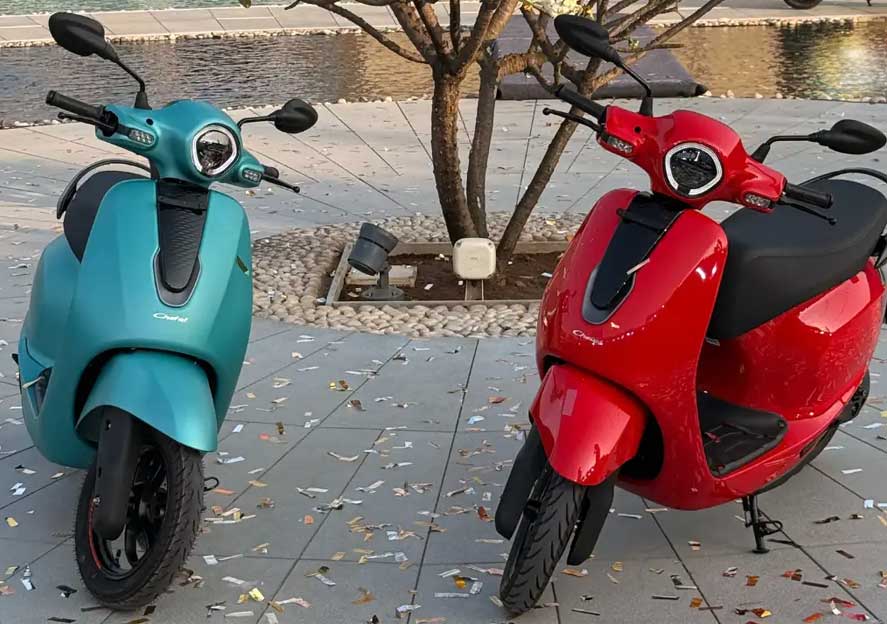
    Bajaj Auto Limited has expanded its mass-market electric two-wheeler portfolio with the launch of Chetak C25, priced at ₹91,399 (ex-showroom, including central government subsidy under the PM e-Drive scheme). Booking for the new model has now started.

    Positioned as the most affordable variant in the Chetak range, the C25 becomes the second electric scooter from Bajaj Auto to be priced under ₹1 lakh. It joins the existing Chetak lineup which includes the 3501, 3502, 3503 and 3001 variants. In the Indian market, Chetak C25 will compete with rivals like TVS Orbiter, TVS iQube 2.2, Hero Vida VX2 Go and Ola S1X.

    The electric scooter is powered by a 2.5 kWh NMC battery pack that offers a claimed range of 113 km on a single charge, paired with a 2.2 kW hub-mounted motor that offers a top speed of 55 km/h. Charging is handled by a 750W off-board charger, which enables the battery to be charged from 0 to 80 percent in 2 hours and 25 minutes.

    Built on a tubular frame, the Chetak C25 offers 25 liters of under-seat storage. According to Bajaj Auto, the new variant is 22 kg lighter than the previous generation model, resulting in improved efficiency and handling. The scooter has a warranty of three years or 50,000 km.

    In terms of sales, the Pune-based manufacturer of e-scooters (Chetak and Yulu) moved up from No. 3 in 2024 to No. 2 spot in 2025. Bajaj Auto sells 269,836 units in 2025, up 39% YoY, crossing both 200,000 and 250,000 units annually for the first time. This gives the company a 21% market share, growing strongly to 17% in 2024 and 8% in 2023.

    Bajaj Auto was crowned the No. 1 e-2W OEM for the first time in February 2025 and followed it up with its best monthly sales (35,214 units) in March 2025. The company’s overall 12-month performance would have been much better had Chetak production not slowed down due to supply chain disruptions of critical rare earth magnets in July and August, impacting retail sales.

    Bajaj Auto continues to expand its Chetak network, which now has 390 exclusive stores and 4,280 sales points across more than 500 cities. It also has more than 4100 service workshops.

    In 2025, out of the total 22,70,425 EVs sold in India across four zero-emission vehicle sub-segments (up 16% YoY), electric scooters, motorcycles and mopeds accounted for 1.28 million units (up 11% YoY) or 56% share. This is down from the 59% share of the E-2W segment in 2024, when it accounted for 1.14 million out of a total of 1.95 million EVs across all segments.

    Importantly, the 11% YoY growth is on the back of a higher base from a year ago and a lower price differential between IC engine two-wheelers and EVs coupled with the sharp cut in GST. With a record 20.29 million two-wheeler sales across India in 2025, e-2W penetration was 6.30% last year, while in 2024 it was 6.07% (18.92 million 2W).

    India’s electric two-wheeler market could have registered strong growth in 2025 had it not been for a sharp slowdown in its former market leader Ola Electric. The company’s sales declined more than 50 percent year-on-year to below 200,000 units, compared to 407,700 units in 2024, impacting overall segment momentum.

    Looking ahead, the competitive intensity in India’s electric scooter market is set to further increase. Bajaj Auto, boosted by the launch of its new mass-market electric scooter, is looking to extend its lead over Ather Energy and Ola Electric, as well as challenge TVS Motor Company for the top spot in the segment.