

VinFast, part of Vingroup, Vietnam’s largest private conglomerate, plans to launch its first electric scooter in India early next year. The Vietnamese automaker has been selling cars here for just over a year. Now it wants a piece of China’s huge two-wheeler market and plans to significantly strengthen its passenger vehicle business.
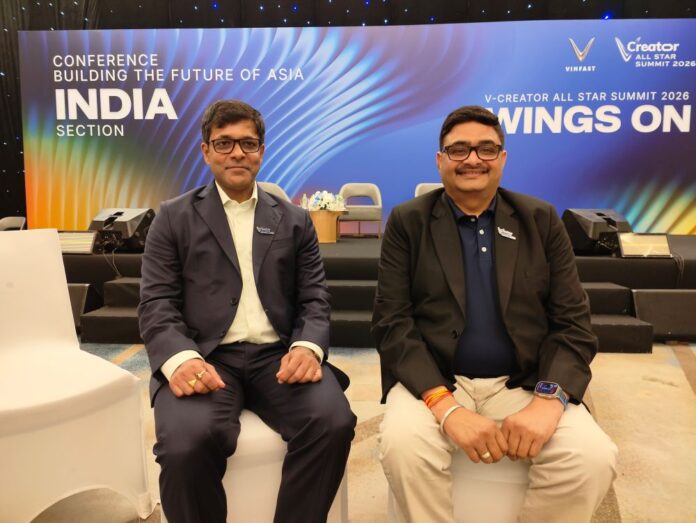
The company is setting up a separate two-wheeler production line at its plant in Thoothukudi, Tamil Nadu. Mr. Tapan Ghosh, CEO of VinFast Asia, said the production line will eventually be able to produce 1 million vehicles per year. He was speaking at the VinFast 2026 V-Creator All-Star Summit, which was held at VinPearl Resort Nha Trang, Vietnam, from November 16-19. However, production will be well below that level. The company will first see how buyers respond and then decide how much money to make.
The appointment of dealers is in the final stages. Mr. Anurag Saxena, Chief Executive Officer, Two-Wheeler Market, VinFast India, said the company has tied up with over 50 dealers in 34 cities across 15 states and their showrooms are under construction. Before selling a scooter, the company hopes to train local employees so buyers have a good experience from day one.
India to get custom clones of global scooters
Three scooters, EVO, KINET and KYO, were exhibited at the summit. Mr. Saxena said VinFast may not launch the same model in India but a version suitable for the local market as India requires “a lot of customization according to the people”. The framework will also change, he added. Since roads, traffic and riders are different in India, the size, space and specifications of the scooters change to suit their needs. To this end, the company conducts customer clinics in India to understand the practical and emotional needs of buyers.
VinFast will start with scooters, as scooters account for about 98% of electric two-wheelers sold in India. It has not ruled out motorcycles but will study that market first. There will be multiple models targeting families, young riders, e-commerce delivery and ride-hailing users. The company did not disclose specific numbers.
The scooters will have batteries that can be replaced and recharged. Mr. Saxena likens it to a petrol pump; “If you can replace the battery when needed, you no longer have to worry about range,” he points out, adding that most riders only cover 25 to 35 kilometers per day, while VinFast’s scooters will offer more functionality.
How the car business grew
VinFast’s scooter initiative followed a strong first year of its cars in India. The company started retailing in September last year and has since launched four models: VF6, VF7, MPV7 and Limo Green.
In the first few months, about 300 cars were registered each month. The number now ranges from 2,500 to 3,000. Mr Ghosh said the growth came from offering cars to different types of buyers. The VF6 and VF7 are SUVs for personal use, the MPV7 is a seven-seater for families, and the Limo Green is for fleet owners.
The company plans to open 75 showrooms by the end of this year. There are currently 77 and the number is expected to reach 80. In addition, there are more than 120 workshops.
VinFast addresses the top five concerns holding back EV buyers
Mr Ghosh said VinFast plans to grow in the region by addressing customer concerns. According to him, people are not avoiding electric vehicles because of their poor performance. He said they were avoiding the issues because of some real concerns, and VinFast had a plan for every issue and presented the approach at the summit, which he called “5 concerns, 5 solutions.” He said that the development of green transportation is unstoppable. What we need is to make this transition simple enough that ordinary people can actually do it.
Why people are still undecided
Ghosh said most people switch from regular phones to smartphones without a second thought, but changing cars is different. EV batteries, performance and software have improved so much that EVs can now match or beat gasoline vehicles in many ways. Still, buyers are hesitant. They want to know how long the battery will last, if they can find a charger if needed, and who will help them if something goes wrong. Mr. Ghosh divided the doubts into five concerns.
Find the right vehicle
The first thing to worry about is finding a car that suits the buyer’s needs. VinFast’s answer is to provide more choices. He said its products range from small city cars such as VF2 and VF3 to SUVs, family MPVs and commercial vehicles, so buyers with different budgets and needs can find suitable models.
ownership concerns
The second concern involves battery quality, the cost of owning an electric car and how much value it loses over time. Mr Ghosh said the company was mitigating this risk in a number of ways. In Indonesia and the Philippines, buyers can subscribe to batteries instead of buying them, which lowers the upfront price. VinFast also offers a long-term battery warranty. In some markets, it guarantees the car’s value when the owner sells it, which can alleviate owners’ concerns about depreciation.
Charging problem
The third worry is not being able to find a charger when needed. In Vietnam, Vingroup’s VinFast and V-Green have invested heavily in charging stations, and the network is now being expanded to other countries. Drivers can find the nearest charger from the car screen or the VinFast app.
technology anxiety
The fourth concern is adapting to new technology. VinFast is building a new electronic system for its cars that uses artificial intelligence and cloud computing. The goal is that the technology can help without the driver having to figure it out. He said the car could alert owners to repairs, suggest safer driving and point out charging stations before the battery runs out of charge.
support gap
A final concern is the lack of basic services and quick help. Ghosh said the company will continue to open showrooms, dealerships and service centers to provide assistance close by, especially if problems arise without any warning.
Advocacy for VinFast goes beyond the cars themselves. The electric car maker is building a wider system covering research, manufacturing, sales, service and charging with V-Green, which operates fast charging stations and battery swap cabinets, and its electric taxi subsidiary GSM (Green and Smart Mobility). The idea, he said, is to make electric mobility part of everyday life rather than a niche option. “A greener planet won’t come from grand promises but from small, real changes in the way people live their daily lives,” he added.
Reduce the risk of first-time electric vehicle purchase
Ghosh said most Indian buyers still don’t know how long electric car batteries last or how much the car will be worth later on. For middle-class families, buying an electric car is a big investment.
To solve this problem, VinFast promises to buy back the car at 75% of the price after two years and 55% of the price after five years. The battery warranty is between eight and ten years, depending on the model, or up to 200,000 kilometers, and is transferable to a second owner. Three years of free maintenance and free charging at V-Green charging stations until March 2029.
steady growth
To date, VinFast has invested approximately $500 million in its Thoothukudi plant. Over several years, it has committed $2 billion, a total that covers cars and two-wheelers. The plant is spread over 450 acres and the company has signed an agreement with the Tamil Nadu government for another 500 acres.
The automobile production line can currently produce 50,000 vehicles per year, which may increase to 150,000 vehicles in the future. Mr Ghosh said the plant was built in just 17 months and he expected the next increase in capacity to come soon.
The company aims to launch about two new cars a year, mostly Vietnamese models customized for India. However, he emphasized that the company does not want to rush. “There’s a difference between fast and rushed,” he said. Plans for electric buses are currently on hold, he added.
localization agenda
Currently, only about 15% of components in VinFast cars are manufactured in India. Mr Ghosh said that number would rise as sales grew and more local suppliers came on board. Exports will come later, starting with right-hand countries.
When asked about market share, he declined to give a specific number, calling it “just a number.” Importantly for the company, he said, electric vehicles now account for about 7% to 8% of passenger car sales, up from about 4% a year ago, and the market is growing every month.