

The real magic is in the quiet upgrades you can’t see. They require no attention, but you’ll feel their impact with every smooth, confident kilometer.
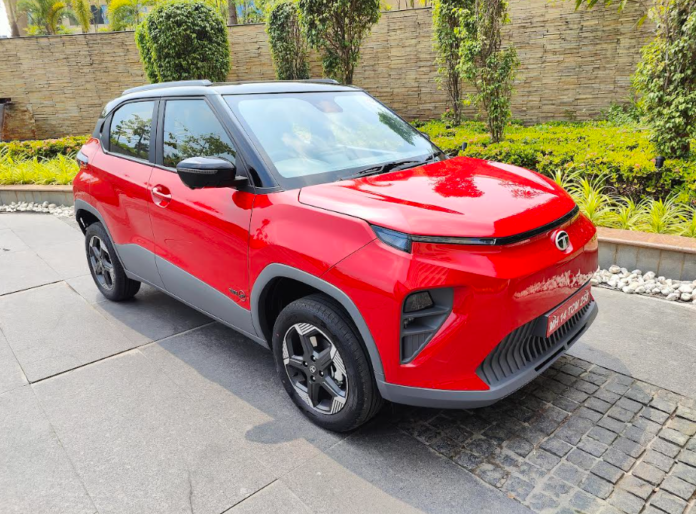
Sometimes, a car surprises you in the simplest of ways—everything is just a little better than you expected. This is exactly how this man feels. It might look familiar from the outside, but the moment I walked inside, it was clear this wasn’t a routine upgrade. It feels like a whole new experience in a small electric SUV. This is the new Tata Punch.ev.
The new Punch.ev will be launched at an introductory price of Rs 9.69 lakh (ex-showroom, Mumbai), bringing the cost of ownership of an electric car very close to the on-road cost of an entry-level petrol car. There is also a ‘battery-as-a-service’ option, with the car priced starting at Rs 6.49 lakh, with the battery paid separately via per-km EMI, giving buyers another flexible way to purchase an electric car. Interestingly, this upgraded version costs slightly less than the outgoing version, even though it offers more power, features, and comfort.
As I sat behind the wheel, the first clue was the way it delivers power. I’ve spent a lot of time looking at previous versions and even recently upgraded ICE versions to see how they generally respond. The person has more confidence in himself. Same weight as earlier versions but more responsive. The way it leaves the line, goes into cruising and responds overall feels smoother and more refined to the touch.
Switching to Sport mode immediately changes the car’s character. Press it and it comes alive. Overtaking is almost effortless, and on a long, empty stretch of road I could easily imagine staying in this mode. This car obviously has more features. The road gave it no room at all.
Eco mode reminds me of the balance every electric car tries to achieve. What impressed me even more was the regenerative braking. It feels natural, consistent, and powerful enough that I barely need regular braking, while still returning energy to the system.
Comfort was another surprise. The driving position feels just right—high enough to feel in control, but comfortable enough to feel relaxed. All controls work exactly as I expected. The air conditioner has a small issue with the mode switch, but otherwise cools down very quickly. Ventilated seats work simply and effectively.
There was silence in the house. With no engine noise, tire noise usually creeps in, but the cabin remains calm. The music system performed very well. The wireless charger, USB port, and Bluetooth all work smoothly with no lag. The new window switch settings felt different for the time being, but once I understood the safety logic, it made sense.
Design, inside and out, ties everything together. The exterior is now smoother, with the bumpers subtly integrated into the body to make the car appear larger and more confident. Inside, the lighter color scheme works surprisingly well. It makes the cabin feel more spacious. The gray cladding on the exterior sidings matches well with most exterior tones.
What struck me most was the thinking about manufacturing. Integrated components, six-into-one powerplants and integrated bumpers are more than just clever engineering. They reduce assembly steps – cycle times, simplify the supply chain, reduce material usage (reducing the length of expensive cables), not only reduce the bill of materials, but also make the manufacturing of cars more sustainable. It shows how much optimization goes on behind the scenes.
One small issue did occur to me – the trunk. It’s a useful space, but I’ve seen people store the wrong types of items in similar EV compartments, causing safety issues. Thankfully, the car’s Electronically Controlled Thermostatic Expansion Valve (ETXV) fine-tunes refrigerant flow for a more precise and efficient thermally controlled cooling system that helps maintain ambient temperatures and reduces risk.
The engineering story became even more interesting as I delved deeper into what was underneath the car I just drove. The team didn’t simply add a bigger battery; They rebuilt the EV side of the car in a completely new way. By opting for long-life LFP cells and switching to a smarter prismatic layout, it managed to fit in a 40 kWh battery pack without making the car feel heavier or larger. The cooling system has also been redesigned, with new plate settings and electronic valves to keep the battery pack stable even during the peak summer months. That’s why the car maintains full fast-charging power without hesitation.
Even more impressive is how they balance everything. The new drive integrates motor, controller and gearbox into a compact module, saving nearly 50 kilograms. The weight reduction offsets the impact of the larger battery, so the car’s overall feel remains light and familiar. It also helps the floors stay tidy, thus increasing the feeling of space inside.
Security also remains solid. Since the basic structure and weight have not changed much, the strong crash performance remains unchanged. Reinforced areas and clean electrical isolation protect the battery, and the new model already achieves the 5-star rating of earlier cars. On the road, this conveys a stable, planted feel. There is little change in the weight balance, which is close to the natural 50:50, meaning no major changes to the body are required.
Adding to the peace of mind is the lifetime warranty on the high-voltage battery, with no mileage limit. For people buying their first electric car, this kind of assurance is important.
Taken together, these quiet engineering upgrades explain why the car feels so composed and confident, rather than shouting about what’s changed. It’s the kind of work you don’t see at first glance, but you feel it every time you drive.
When I returned the keys, my takeaway was simple: it’s more than you’d expect for the price, feels comfortable to drive, and is truly future-proof.