



Currently, Tata Motors has 250,000 electric vehicles on the road, accounting for about 65% of the Indian electric vehicle market. These vehicles have traveled a total of 12 billion kilometers and reduced 1.7 million tons of carbon dioxide emissions, which is equivalent to planting 80 million trees.
Author: T. Mulally
Tata Motors has reached a landmark moment in the history of electric vehicles in India: more than 250,000 Tata electric vehicles are now on the road, a milestone that shows how far the company and the country have come. Mr. Shailesh Chandra, Managing Director and Chief Executive Officer, Tata Motors Passenger Vehicles Limited, said what is truly significant about this moment is not just the numbers but what it represents – moving electric vehicles from the fringes of the market to the core of the mainstream in India.
Speaking at a roundtable yesterday, Mr Chandra said OEMs’ electric journey did not begin in a market that was ready for electric vehicles. It started in 2018 and asked a pertinent question: Can India move to electric vehicles when the ecosystem doesn’t exist? At the time, there were no mass-market electric vehicles, only 200 public chargers, very high battery costs, low customer confidence and no supporting supply chain.
For most Indian households, buying a car is the second most important decision, and in such a pragmatic, value-focused market, asking customers to opt for new technology at a higher price seems impossible. However, Tata Motors decided to take the first step not because of market needs, but because of national needs.
Alleviating a range of challenges
India’s fight against pollution, oil dependence and climate change requires zero-emission transport. The government has a bold plan to reach 30% electric vehicle penetration by 2030, backed by tax breaks, incentives and clear policy direction. Still, most in the industry are hesitant. The business case seems unclear. That’s when the Tata Group took a joint decision to pioneer electric vehicles, not with one company but through a collective ecosystem approach called ‘Tata Universe’.
Tata Power started building early charging networks, Tata AutoComp started localizing EV components, Tata Elxsi and TCS worked on developing advanced software, and Tata Motors Finance helped early fleet adoption. At the center of all this is Tata Motors, which has taken on the responsibility of designing its own electric vehicles.
The starting point is the Indian consumer. Through a special nationwide study, the automaker spoke to households across India. Customers explain that they will only consider electric vehicles if they offer at least 200 kilometers of real-world range, simple and guaranteed home charging, a reassuring 8-year battery warranty and a price that is no more than 20-25% higher than an internal combustion engine car.
It was with this clarity that Tata Motors built Nexon.ev in a record time of 16 months. When it was launched in January 2020, it became India’s first truly mainstream electric car. It offers long range, advanced features, a lifetime warranty, fast charging, a unique driving feel and, for the first time ever, a complete home charger installation to make owning an electric car like charging a smartphone, he said.
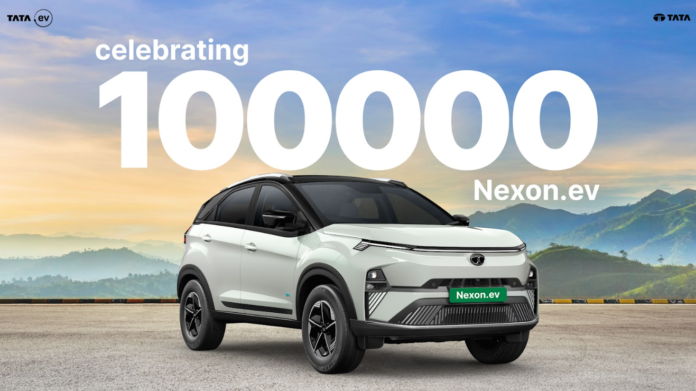
Early buyers became evangelists. Their confidence and word of mouth transformed the category. Nexon.ev sales increased from 300 units per month to 3,000 units per month. As India’s expectations have changed, the car has evolved – from an actual range of over 230 kilometers to a certified range of 375 kilometers, while narrowing the price gap with the ICE. This year, it also became the first electric car in India with cumulative sales exceeding 100,000 units.
Expand product portfolio
But one car cannot start a movement. Tata Motors has expanded its electric vehicle portfolio across segments, from the entry-level Tiago.ev, which costs less than mid-range cars in India, to the high-performance Harrier.ev AWD and XPRES-T for fleets. At the same time, the company is committed to busting myths about electric vehicles, shipping them across the country and testing them in harsh terrain and challenging water and rock obstacles to show customers that electric vehicles are not flimsy urban toys.
The company has also built India’s largest electric vehicle retail and service network, including nearly 1,200 outlets, 600 service centers and more than 5,000 trained electric vehicle technicians, reaching customers in more than 1,000 cities and towns. At the same time, Tata Motors and global partners have helped localize key electric vehicle components such as battery packs and motors, bringing domestic value added to more than 50% and spawning a new supply chain.
EV ecosystem
One of the most serious challenges is public charging. In the beginning, the ecosystem suffered from a classic chicken-and-egg problem. Tata Motors is approaching this problem in phases, first working with Tata Power to build an early network, then working openly with all major charge point operators to leverage Tata’s EV driving data to advise them on charging hotspots, and finally rolling out large charging centers with ultra-fast charging capabilities, TATA.ev verified chargers for reliability, and customer service desks to assist EV owners throughout their journey. Today, India has over 200,000 Tata home chargers, over 20,000 public chargers aggregated through open collaboration, 4,000 community chargers and over 500 verified chargers, and every part of the ecosystem is open to all OEMs, he said.
Mr. Chandra said the impact of the journey has been transformative. In six years, annual demand for electric vehicles has grown from 2,000 to nearly 200,000. The penetration rate of electric vehicles has risen from almost zero to about 5% of national sales. Currently, more than 90% of national highways have fast charging coverage within 50 kilometers. Currently, Tata Motors has 250,000 electric vehicles on the road, accounting for about 65% of the Indian electric vehicle market. These vehicles have traveled a total of 12 billion kilometers and reduced 1.7 million tons of carbon dioxide emissions, which is equivalent to planting 80 million trees. Most importantly, people’s opinions about electric vehicles have changed. For 84% of Tata.ev owners, electric vehicles have become the main vehicle in the family. One in four is a first-time car buyer. Mr. Chandra noted that more than 50,000 electric vehicle owners completed long-distance intercity journeys of more than 400 kilometers last year.
go ahead
As Tata Motors celebrates this milestone, it is already looking towards the future. By 2026, the company will launch Sierra EV, update Punch.ev and introduce the premium Avinya series. By fiscal 2030, the OEM plans to launch five new EV nameplates and make multiple updates to existing models. The company will also expand charging infrastructure to 1,000,000 charging points, including 100,000 public chargers, while establishing a circular ecosystem for reusing batteries. Capital expenditure of Rs 16,000-18,000 crore will support this long-term strategy and Tata Motors expects to maintain 45-50% EV market share even in a highly competitive environment.