
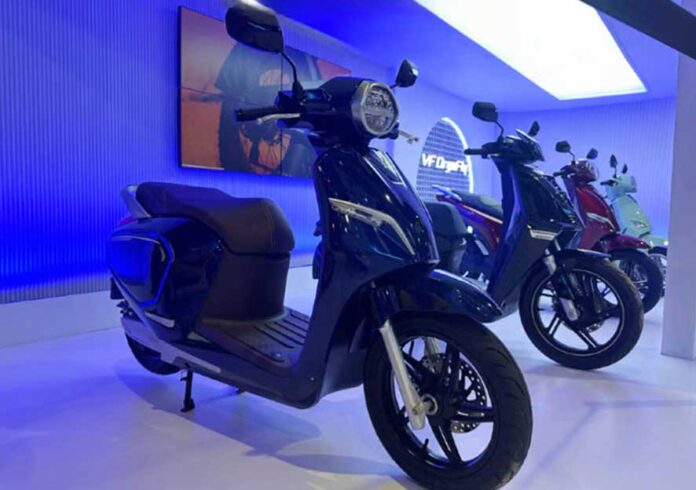

Vietnamese electric vehicle maker Vinfast is set to enter India’s electric two-wheeler market with a range of India-specific electric scooters in the second half of 2026, as well as building a dedicated two-wheeler manufacturing line with a long-term capacity target of one million units, according to Vinfast Asia CEO Pham Sanh Chau.
The two-wheeler program will be housed at Vinfast’s Tamil Nadu manufacturing facility, where the company is expanding infrastructure to support a separate production line for electric two-wheelers, separate from its passenger vehicle operations. “We will definitely come out with two-wheelers in 2026, starting with scooters. These products are being developed specifically for the Indian market,” Chau said. He said India-focused product development is already underway.
VinFast’s entry comes as India’s electric two-wheeler market is entering a phase of consolidation. Established manufacturers like TVS Motor, Bajaj Auto and Hero MotoCorp have strengthened their positions, taking market share from start-ups that initially promoted EV adoption. By the end of 2025, TVS and Bajaj emerged as the top two electric two-wheeler players, followed by Ather, while Ola Electric slipped from the top three amid increasing competition.
Chau said VinFast’s decision to lead with India-specific scooters is based on detailed market research conducted last year. The findings highlighted the importance of designing products based on Indian riding patterns, road conditions, daily commuting needs and price sensitivity rather than adopting global models for local use.
Two-wheelers key to long-term growth strategy
While Vinfast’s four-wheeler plant in India is being expanded to an annual capacity of 150,000 units, the company plans to scale up its two-wheeler business in the long term. “For two-wheelers, we are aiming bigger. Our long-term vision is around 10 lakh units of capacity. This is not a one-year-one target, but it shows how seriously we look at India,” Chau said.
The company did not disclose the timeline for reaching peak two-wheeler capacity or the level of investment planned for the scooter production line.
Localization and supplier engagement ongoing
Vinfast has begun discussions with Indian suppliers to localize key components, including battery systems, to improve cost competitiveness. “Local manufacturing is essential to reduce the bill of materials. We are already connecting with Indian vendors, and some have visited our factory,” Chau said.
The company is also evaluating eligibility for government incentive schemes like PLI and PM e-Drive depending on the scale and timing of its investment.
VinFast’s two-wheeler entry is part of its broader green mobility ecosystem strategy for India, which includes local manufacturing, an expanded dealership and service network, charging infrastructure and future mobility services through V-Green.
Reiterating VinFast’s long-term commitment to the market, Chau said the company is planning a phased rollout approach. “India is a strategic market for us. We don’t launch everything at once. We move step by step – one product every six months,” he said.