
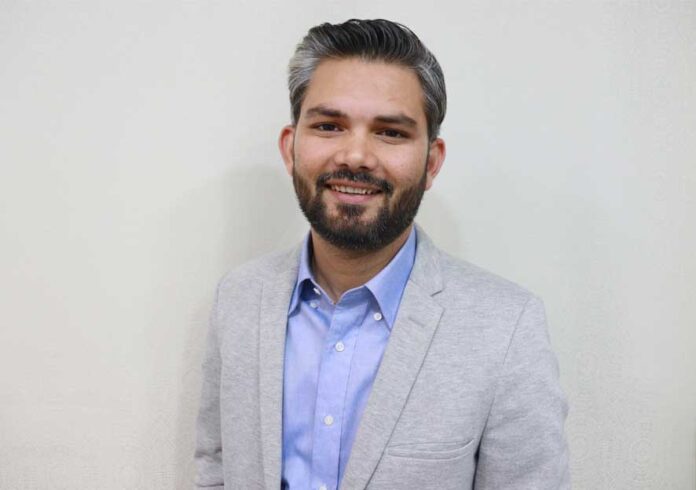

As India’s electric commercial vehicle ecosystem gains momentum, localization and supply chain flexibility are emerging as decisive differentiators for long-term competitiveness. In this exclusive email conversation with Autoguide, Gaurav Kumar, Head of Supply Chain and Manufacturing and Director on the Board of Euler Motors, shares insights on how the company is building a deeply localised, future-ready EV supply chain.
From achieving 95% vehicle-level localization to developing one of India’s most affordable 1-tonne electric commercial vehicles, Kumar explains how strategic supplier partnerships, in-house engineering and disciplined manufacturing processes are enabling Euler Motors to balance cost competitiveness with performance and safety. They also discussed the emerging EV supply chain landscape, alignment with government initiatives and what lies ahead for India’s electric commercial mobility ecosystem.
Euler Motors has often highlighted deep localization as a cornerstone of its growth strategy. How has this approach helped you achieve cost competitiveness while maintaining performance and safety standards?
Localization is not just a strategy for us; This is a core belief. From day one, we have partnered with local suppliers, sharing knowledge and technical expertise to co-manufacture finished components for electric vehicles. Today, 95% of our vehicle components and 90% of battery packs are locally sourced. This significantly reduces the risk of import dependence, logistics costs and global supply chain instability, enabling stronger cost competitiveness at scale.
Also, it allows us to engineer vehicles that are built for Indian operating conditions. For example, our recently launched Turbo EV 1000, a 1 tonne 4W ECV, is one of the most deeply localized electric commercial vehicles in its category, which is not only assembled in India but actually engineered and manufactured here. The battery system is designed to last longer than EMIs, improving total cost of ownership and higher returns for fleet operators, while magnet-free motor technology reduces reliance on rare-earth materials, ensuring cost sustainability without compromising efficiency or durability.
By building critical systems in-house and localizing manufacturing, we have developed commercial EVs that match ICE vehicles in performance, payload capacity and safety standards while remaining commercially competitive.
What were the key challenges in developing a strong domestic supplier base for electric commercial vehicles and how did Euler Motors overcome them?
One of the initial challenges in building a domestic supply base for commercial EVs was that many advanced components were not originally developed in India. Many suppliers had adopted technology from abroad, and EV-specific manufacturing capabilities were still developing. This led to a decrease in initial quality and consistency of the process as localization began.
To address this, we worked closely with suppliers and co-created most of the designs rather than sourcing standard off-the-shelf parts. We supported them in manufacturing these components in-house. To ensure quality and reliability, we implemented structured processes such as DFMEA (Design Failure Mode and Effects Analysis) and PPAP (Production Part Approval Process) along with digital verification and process efficiency checks at supplier facilities. We also adopted a controlled deployment approach, testing components in limited initial production batches to identify problems and resolve them quickly before scaling. Over time, this structured and collaborative approach has helped us build a resilient domestic ecosystem of over 300 local partners who have grown with us, creating a stable and scalable EV supply chain.
Creating the world’s most economical 1 tonne electric mini truck is a significant milestone. What design, sourcing or manufacturing decision played the most important role in achieving this?
The Turbo EV 1000 is a confluence of deep engineering innovation and the practical needs of India’s logistics industry. From a design perspective, one of the most important choices was the chassis architecture. Instead of traditional pressed sheet metal, we adopted a tubular box-section frame, which provides high rigidity and torsional strength, allowing the vehicle to carry a one-tonne payload with an additional 200-300 kg of battery weight without compromising stability or safety. The use of front leaf suspension further improves loadability and serviceability for Indian operating conditions.
It was equally important to build the vehicle from the ground-up rather than retrofit the ICE model. Almost all key systems including battery pack, battery management system, motor controller, vehicle control unit and telematics are designed and manufactured in India. This level of localization and vertical integration enables tight cost control and integration in engineering and production, allowing us to achieve price parity with diesel vehicles while maintaining strength, durability and performance.
How aligned is Euler Motors’ localization roadmap with the Make in India and PLI initiatives of the Government of India for advanced automotive technologies?
Our localization roadmap is completely in line with Make in India and PLI objectives. With approximately 95 percent localization at the vehicle level and approximately 90 percent localization at the battery pack level excluding cells, we have already met and exceeded the current localization threshold. These initiatives encourage exactly the kind of supplier collaboration, in-house capacity building and advanced manufacturing that we have focused on from day one. Policy support has helped accelerate ecosystem development, enable scale, improve supplier maturity and strengthen the long-term competitiveness of India’s EV industry.
How does the EV supply chain differ from traditional ICE commercial vehicles, particularly in areas such as power electronics, batteries and drivetrains?
The EV supply chain differs significantly from traditional ICE commercial vehicles in both component architecture and technical complexity. While ICE supply chains are centered around mechanical systems such as engines, transmissions, fuel systems and exhaust assemblies built over decades, EV supply chains are far more electronics and software-driven.
In EVs, the battery pack becomes the most important and high-value component, integrating cells, battery management system, thermal management and power electronics. The drivetrain shifts from complex mechanical assemblies to electric motors, motor controllers, inverters and vehicle control units. Additionally, EVs demand tighter hardware-software integration and more rigorous safety verification, especially around battery performance and thermal management. As a result, the EV ecosystem requires new supplier capabilities, deeper R&D collaboration, and stronger quality control frameworks than traditional ICE manufacturing.
How does Euler Motors work with suppliers to ensure quality, innovation and long-term capability building rather than just cost optimization?
At Euler Motors, we view suppliers as long-term partners rather than mere vendors. We carefully select suppliers that meet our high standards and work closely with them from the beginning, ensuring alignment on technical requirements. Beyond selection, we implement structured quality frameworks such as DFMEA and PPAP along with digital verification and on-site process audits to maintain high standards of safety and performance.
Throughout production, we rigorously test critical systems such as batteries and power electronics to ensure reliability. Our relationship with suppliers is built on ongoing collaboration, sharing feedback and working together on improvements. This not only ensures high quality components but also long-term reliability and performance in our EVs.
As volumes increase, what strategies are you adopting to balance increasing production with cost control and supply chain stability?
Our focus is on disciplined, phased scaling up rather than sudden surges in capacity. Data-driven demand forecasting enables accurate production planning and prevents inventory stress. Deep localization and in-house development of critical systems gives us tight control over costs and reduces the risk of global supply disruptions as we scale.
On the supply chain side, we strengthen long-term partnerships, implement dual sourcing for critical components where necessary, and closely monitor supplier capacity and quality metrics. At the manufacturing level, automation and process standardization improve efficiency and reduce high volume variability. By combining structured capacity planning, localization, supplier alignment and manufacturing discipline, we ensure that scaling does not compromise cost control, delivery reliability or product performance.
In addition to zero tailpipe emissions, what steps is Euler Motors taking to make its manufacturing and supply chain operations more sustainable?
At Euler Motors, sustainability is more than a goal, it is our responsibility. Our manufacturing plant includes a structured waste management system, a sewage treatment plant and a circular groundwater recharge system to reduce water discharge and improve resource efficiency. We also follow ISO-certified environmental and safety standards to ensure sustainability practices are measurable and continuously monitored.
Our deep localization strategy, with more than 95% of components sourced domestically, helps reduce transportation-related emissions and reduce overall logistics intensity. We also design our battery systems for long life through advanced thermal systems and predictive diagnostics. Once batteries reach the end of their automotive life, we enable second life applications such as stationary energy use. This not only reduces waste but also maximizes battery capacity.
Based on Euler Motors’ journey so far, what key lessons would you share with emerging EV startups aiming to localize and expand in India?
For domestic EV manufacturing, building a strong, collaborative ecosystem is important. Working closely with component manufacturers, identifying parts for localization and ensuring consistent quality standards are important steps. Early supplier engagement and cross-functional teamwork spanning finance, engineering, supply chain and manufacturing ensures smooth operations. Sharing knowledge and technology with suppliers further strengthens local manufacturing capabilities, making the process more efficient and cost-effective.
How do you see India’s electric commercial vehicle supply chain evolving over the next five years, and what role do you expect Euler Motors to play in shaping it?
Over the next five years, India’s electric commercial vehicle supply chain is expected to deepen significantly, with greater localization of batteries, power electronics and drivetrains. As domestic cell manufacturing scale and semiconductor capacity is strengthened, dependence on imports will gradually reduce. We will also see supplier capabilities mature with higher quality standards, better process automation and greater integration between design and manufacturing. This development will make the ecosystem more cost-competitive and resilient.
We are committed to deepening localization and strengthening domestic supplier capabilities, as well as demonstrating that locally manufactured electric commercial vehicles can outperform ICE vehicles in terms of cost, performance and sustainability.