
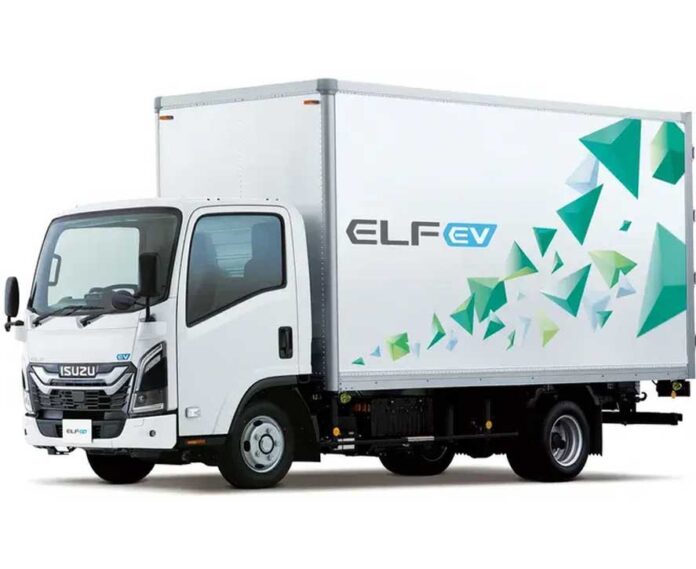

Isuzu Motors Ltd. and Toyota Motor Corporation have announced a collaboration to develop Japan’s first mass-produced next-generation light-duty fuel cell (FC) electric truck, with production targeted for fiscal 2027. The new vehicle will be based on Isuzu’s ELF EV battery electric light-duty truck and integrate Toyota’s third-generation fuel cell system, combining the expertise of both companies to support the transition toward carbon-neutral logistics and a hydrogen-based mobility ecosystem.
The joint development will focus on enhancing performance and durability as well as ensuring system compatibility to meet the demanding operational requirements of commercial vehicles. Both companies aim to advance technologies suitable for high-use situations, in line with their multi-path approach to achieving carbon neutrality.
Light-duty trucks play a vital role in everyday logistics, including deliveries to supermarkets, convenience stores and other essential services. These vehicles often operate for extended hours, cover long distances, and are often equipped with refrigeration systems, making quick energy replenishment critical to maintaining operational efficiency.
Fuel cell electric vehicles (FCEVs) powered by hydrogen offer significant advantages in such applications. Compared to battery electric vehicles (BEVs), FCEVs enable faster refueling and longer driving ranges, making them particularly suitable for intensive commercial operations. Additionally, like BEVs, FCEVs operate with minimal noise and vibration and produce no CO₂ emissions during use, reducing environmental impact.
The new truck will be built on the ELF EV platform to be introduced in 2023 and will be developed using Isuzu’s i-MACS product development platform. It will include Toyota’s next generation fuel cell stack, designed to enhance vehicle durability and extend service life.
Addressing one of the major barriers to fuel cell adoption – high vehicle costs – Isuzu is working to optimize the body structure and refine manufacturing processes. Toyota is also cutting costs through innovations in fuel cell design and production methods.
The collaboration will leverage insights from previous joint initiatives, including the next-generation fuel cell route bus ERGA FCV and the fuel cell light-duty truck demonstration project led by Commercial Japan Partnership Technologies Corporation. These learnings will help enhance control technologies, system integration and overall durability to meet the required reliability standards for commercial vehicles.
As hydrogen adoption initiatives expand across Japan, both companies are also working with local governments and industry partners to accelerate the deployment of hydrogen mobility solutions.
Isuzu aims to expand hydrogen-powered commercial vehicle options and contribute to the creation of a hydrogen society by putting fuel cell technology into practical use. Toyota, which sees hydrogen as a key energy source for the future, continues to invest in hydrogen production, transportation, storage and use through cross-industry partnerships.
Through this collaboration, Isuzu and Toyota aim to accelerate the development and adoption of hydrogen-powered commercial vehicles, while supporting the broader transition toward sustainable, carbon-neutral logistics.