
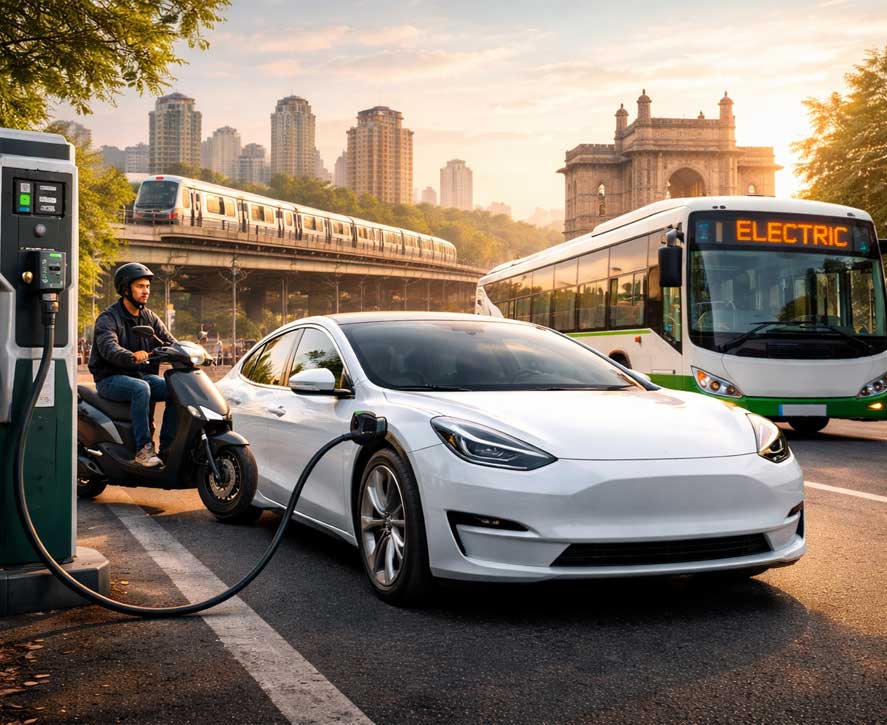
India’s evolving electric vehicle policy is no longer just about accelerating clean mobility – it is fast becoming a test case for how emerging economies balance industrial ambition, global trade rules and strategic technology partnerships. As Tesla’s anticipated entry into India attracts global attention, the country’s EV framework finds itself at the intersection of investment attractiveness, domestic industry protection and WTO commitments. This moment represents more than a policy change; This prompts a broader recalibration of how India manages market access in a rules-based global economy.
In this guest analysis, Aruni R. Srivastava examines how India’s calibrated EV strategy reflects the deep tension between openness and security, and what Tesla’s potential entry reveals about the country’s evolving business architecture. Drawing inspiration from international economic policy, trade law and development strategy, the article explores whether India can successfully align its industrial goals with multilateral trade disciplines – and what this means for the future of electric mobility and global investment flows.
In contemporary trade policy, the central question is no longer whether the state should intervene, but rather how such intervention is structured within an increasingly rules-based global order. India’s growing electric EV infrastructure—particularly in anticipation of Tesla’s entry—reflects this shift with unusual clarity. What is emerging is not a straightforward case of liberalization or protection, but a more deliberate exercise in managing market access under legal and economic constraints.
India’s transition towards electric mobility is driven by the convergence of environmental commitments and industrial ambition. With transportation accounting for a significant portion of emissions and a declared path toward net-zero, a policy emphasis on EV adoption is both necessary and strategic. Recent adjustments in import duties – based on commitments towards domestic manufacturing – reflect an effort to attract leading technology while embedding it within the local production ecosystem. In principle, this is consistent with a familiar developmental logic: leveraging foreign investment to accelerate domestic capacity.
Yet the structure of this approach introduces more complex dynamics. India’s policy does not open the market equally, nor does it protect only domestic producers. Instead, it differentiates between entrants, shaping access through conditional incentives and regulatory discretion. This form of selective market structure may be economically intuitive, but it sits uneasily within the framework of the World Trade Organization (WTO), where the principles of non-discrimination remain fundamental.
The most-favoured-nation (MFN) principle underlying Article I of the General Agreement on Tariffs and Trade (GATT) requires that any advantage given to one trading partner be made available to all. Preferential pathways – whether through tariff concessions, early entry, or tailored incentives – therefore risk being interpreted as discriminatory if not applied equally. The issue is not merely theoretical. WTO jurisprudence has consistently demonstrated that selective treatment, especially when it alters competitive conditions, can invite scrutiny under the dispute settlement mechanism.
India’s situation becomes more complex when viewed alongside its approach to other external actors, particularly Chinese manufacturers. Safeguard provisions under Article XIX of GATT and the Agreement on Safeguards allow temporary protection against import surges, but only under strict conditions: clear injury, transparency and non-discriminatory application. A policy environment that facilitates entry for one global manufacturer while restricting others introduces legal ambiguity. The question is not whether India can deploy safeguards, but whether such measures can be combined with preferential access.
From an economic perspective, this tension reflects a familiar second-best problem. Safeguards and preferential incentives may serve short-term objectives – protecting domestic industry or attracting high-value investment – but they do so by distorting market signals. Selective protection reallocates resources in ways that may not be welfare-enhancing, while regulatory uncertainty increases the costs of entry for both domestic and foreign firms. For potential competitors, the lack of clear, time-bound policy commitments complicates investment decisions and undermines forecasting.
The result is a form of strategic ambiguity. India, on the one hand, wants to establish itself as a reliable destination for advanced manufacturing and technology investment. On the other hand, it is committed to promoting the domestic industry through protective and promotional measures. These objectives are not inherently incompatible. Indeed, many development trajectories have depended on such dual strategies. The difficulty lies in maintaining coherence – ensuring that policy instruments are both economically rational and legally defensible.
This pattern of calibrated openness is not limited to the EV sector. In strategically sensitive industries, there are signs of a broader approach in which market access is mediated through regulatory design rather than granted unconditionally. In the near term domain, the debate around the entry of frontier technologies has reflected the balance between domestic power and external involvement. Although regional dynamics vary, the underlying principle remains consistent: integration without complete liberalization.
In the EV context, Tesla’s potential entry serves as the focal point of these dynamics. The company’s technological capabilities and global positioning make it an attractive partner in India’s transformation. At the same time, its presence gives rise to legitimate concerns among domestic producers regarding competitive asymmetry and market displacement. The policy response – adjusting tariffs, signaling openness to investment, resorting to safeguards – suggests attempting to navigate these competitive pressures without completely resolving them.
The sustainability of this approach depends on its alignment with WTO disciplines. Environmental objectives, including the promotion of clean technologies, may provide legitimate grounds for policy intervention under Article XX of GATT. However, such justifications should be applied consistently and without disguised restrictions on trade. Similarly, safeguard measures must remain temporary, proportionate and non-discriminatory. Any deviation risks legal challenges to the policy, which also impacts trade relations and investor confidence.
A more sustainable route may be to shift the emphasis from entry management to capacity building. Policy instruments that enhance domestic competitiveness – such as targeted research and development support, performance-based incentives and structured technology transfers – provide a means of achieving industrial objectives while remaining broadly consistent with multilateral commitments. These approaches reduce reliance on trade-distorting measures and provide clear signals to market participants.
Ultimately, the significance of Tesla’s entry lies less in the firm itself than in what it says about India’s evolving trade policy. The current framework reflects an attempt to reconcile competing imperatives: development and security, openness and control, ambition and constraint. Whether this harmony proves sustainable will depend on the extent to which policy can move from selective discretion to systematic design.
In this sense, the question of whether Tesla represents disruptive innovation or innovative disruption is secondary. The more consequential issue is whether India’s policy architecture can accommodate such entry without reducing its coherence. If successful, it could offer a model for other developing economies toward similar transformation. If not, risks of legal competition, economic distortions and strategic inconsistency are likely to remain.
Therefore, the challenge is not one of intention, but of execution. In a system where trade rules and economic incentives are increasingly intertwined, the margin for ad hoc intervention is limited. India’s ability to align its industrial strategy with WTO disciplines will determine not only the trajectory of its EV sector, but also its broader credibility within the global trading system.
About the Author: Aruni Srivastava holds an MA in Law and Diplomacy from The Fletcher School (Tufts University) and the Robert D. Hormets Scholar in International Economic Studies. His work focuses on trade, political economy, and development policy, with grassroots experience in rural India as well as academic experience at Harvard Kennedy School and Harvard Law School. An international economic relations scholar specializing in technology, trade and geo-economics, he has also worked in development economics as an advisor to Barefoot College and as a Fellow of the SBI Youth for India Fellowship – bringing a rare blend of policy, academic and grassroots perspectives to India’s emerging EV debate.