According to Manasvi Sharma, CEO, Averta, Averta aims to capture 10-15 per cent of India’s DC charging market within the next two years and plans to start commercial delivery of its DC charging solutions during the second quarter of the current financial year.
Speaking to reporters, Sharma revealed that the company has already started prototype production and is currently completing the certification, testing and validation processes including approval from the Automotive Research Association of India (ARAI).
“We have already started proto production. The products are going through testing and validation processes. Once these are completed, we will start delivering to customers,” Sharma said.
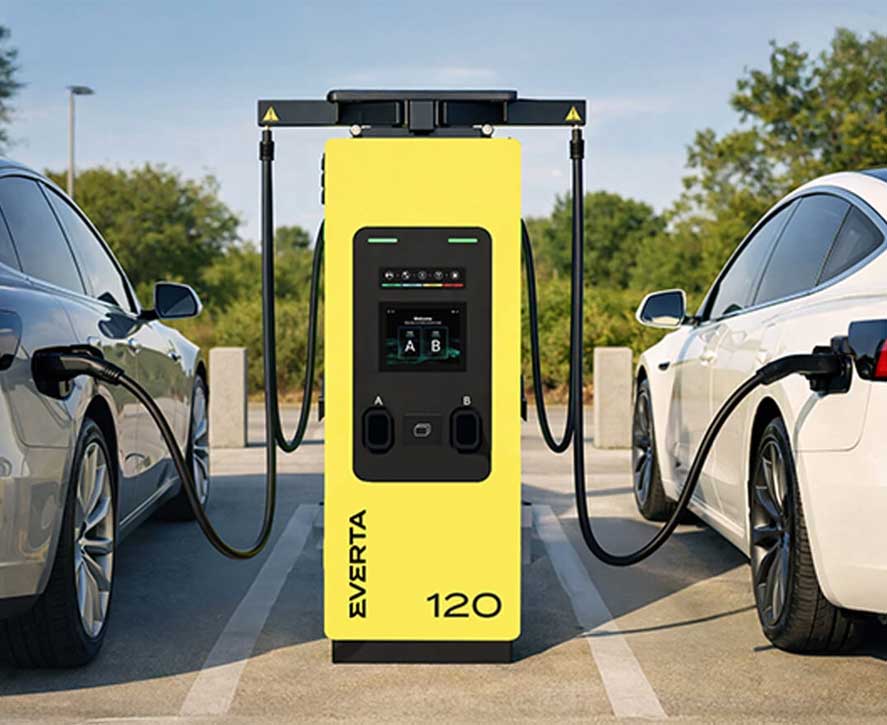
Averta’s initial product lineup will include high-power DC chargers rated at 120 kW, 180 kW, 240 kW and 320 kW. The company intends to focus primarily on charge point operators (CPOs), fleet operators, bus and truck fleets and last-mile logistics providers.
According to Sharma, the company sees significant growth opportunities in the high-power DC charging segment as AC charging infrastructure becomes increasingly common through home charging solutions and other distributed charging options provided by OEMs.
To ensure seamless charging performance, Everta is working closely with vehicle manufacturers to optimize compatibility between chargers and EV platforms. Sharma said charger integration is becoming increasingly important as charging systems directly impact battery health, charging efficiency and long-term vehicle performance.
The company is seeing increasing interest from commercial fleet operators, particularly in the bus and trucking sectors, where charger reliability and uptime are critical to maintaining operational efficiency. As commercial vehicle electrification accelerates, Sharma expects the demand for robust charging infrastructure to increase substantially.
He further said that many fleet operators are evaluating third-party charging networks rather than investing in dedicated captive charging facilities, creating opportunities for charging network providers as well as equipment manufacturers.
Beyond traditional charging solutions, Everta is exploring battery-supported charging systems designed for locations where grid capacity or power quality remains a challenge. These integrated systems combine charging infrastructure with energy storage, improving charger availability while enabling greater use of renewable energy sources.
The company has already deployed a demonstration unit and is currently assessing additional installations with potential customers.
Averta’s manufacturing facility currently has the capacity to produce 10,000 to 12,000 DC chargers annually, with expansion plans available as market demand increases.
Sharma emphasized that localization remains a key long-term objective for the EV charging industry, although advanced power electronics and rectifier technologies are still developing within India’s domestic supply chain ecosystem.
Looking ahead, Averta is focused on the domestic market, supported by Epsilon Group’s extensive presence in battery materials, energy storage and battery recycling.
“We believe there is ample opportunity in India itself. Our immediate focus is on building products and capabilities for the domestic market,” Sharma said.
As commercial deployment begins later this financial year, Everta will prioritize partnerships with charge point operators, fleet operators and commercial charging infrastructure providers to strengthen its presence in India’s rapidly growing EV ecosystem.