Updated On:
Jun 30, 2026 | 01:37 PM IST
Summary
Delhi EV Policy: Delhi government has announced a new EV policy. Under this rule, which will be implemented from July 1, 2026, registration of petrol two-wheelers will be completely stopped from April 1, 2028.
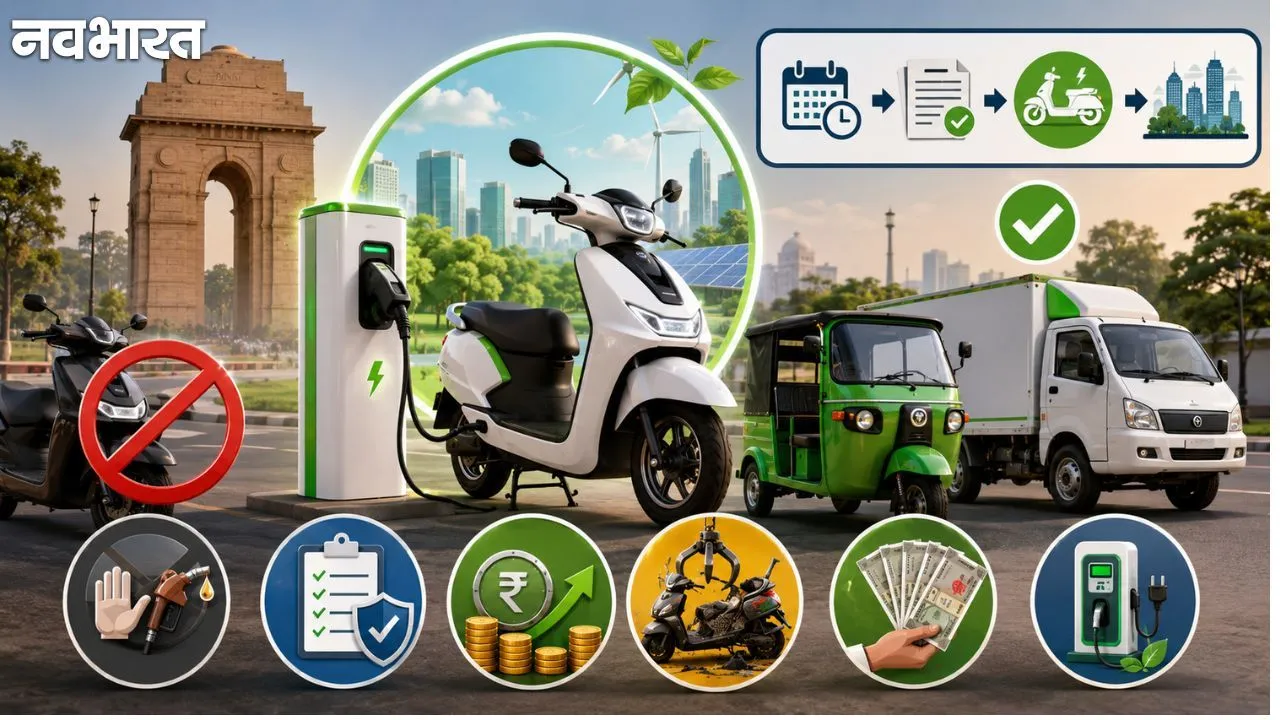
New EV policy of Delhi government (Source-AI Image)
Expansion
New Delhi EV Policy: The government has decided to change the market of petrol two-wheelers in the capital. A new EV policy has been announced to promote electric vehicles. This policy will be implemented from July 1, 2026 and will run till March 31, 2030. This will completely change the purchase of petrol scooters and bikes in the future.
The government will spend a huge budget of about Rs 15,000 crore in the next four years in this scheme. This amount is for subsidy of electric vehicles and road-tax waiver. Apart from this, EV charging infrastructure in Delhi will also be greatly improved. This is going to have a direct impact on two-wheeler and three-wheeler vehicles running on petrol.
New rule from 1 January 2027
The government has also made strict and clear rules for commercial vehicles. A huge change will be seen in the capital Delhi from January 1, 2027. Now only those three-wheeler and N1 category trucks will be registered which will be electric. This scheme will go a long way in reducing the pollution level of Delhi.
related news
Petrol two-wheeler sales stopped
The most important decision for the general public is related to the sale of petrol two-wheelers. The government has clarified that only electric two-wheelers will be registered from April 1, 2028. This means that after this the sale of petrol two-wheelers will stop completely. Due to this, auto companies will have to focus their attention on manufacturing electric vehicles.
You will get big profit on scrapping
The policy also has a provision for attractive scrapping incentives for scrapping old vehicles. There will be benefit in sending old two-wheelers having BS4 or below norms for scrap. The vehicle owner will be given an incentive amount of up to Rs 10,000 from the government. With this, people will be able to easily convert polluting vehicles into electric vehicles.
Also read: Mahindra is bringing 2 such SUVs which will create a stir not only in petrol-diesel but also in electric and hybrid.
Incentives on three-wheelers and trucks
Apart from two-wheelers, commercial vehicles have also been included in this special exemption scheme. On scrapping three-wheeler vehicles, the owner will get a financial benefit of up to Rs 25,000. There is an incentive of up to Rs 50,000 for scrapping N1 category trucks. All these steps have been taken to make the capital clean and pollution free.