
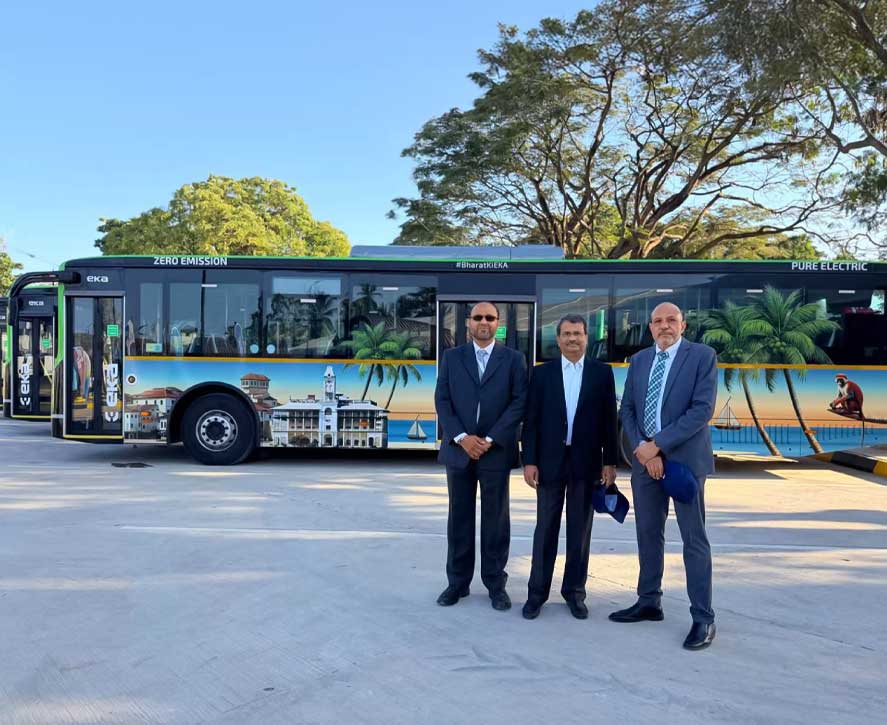
EKA Mobility has entered Zanzibar’s public transport sector by flagging off the island nation’s first fleet of electric buses. The inauguration ceremony was led by Dr. Hussein Ali Mwinini, President of Zanzibar, with commercial operations scheduled to begin on August 1, 2026.
The initial deployment consists of 15 fully electric 12-metre buses, making them the first electric buses to operate in Zanzibar’s public transport network. The rollout is part of a larger electrification programme, with 35 buses already ordered and plans to expand the fleet to 150 electric buses by the end of 2026.
According to EKA Mobility, the initiative aims to support Zanzibar’s transition towards zero-emission public transport while reducing carbon emissions and strengthening sustainable urban mobility.
Speaking on the development, Vijay Yelne, President – Export Marketing and Supply Chain Management, EKA Mobility, said that this deployment highlights the company’s ability to provide Indian-developed electric mobility solutions in international markets. He said the project also reflects the growing importance of Africa in EKA Mobility’s global expansion strategy.
Beyond vehicle deployment, EKA Mobility is partnering with Global Rapid Transport (GRT) to develop a local electric mobility ecosystem. The collaboration includes training programs for local personnel covering vehicle operation, maintenance, software systems and security, helping to establish the technical expertise needed to support the fleet in the long term.
The company also noted that the Zanzibar Social Security Fund (ZSSF) and GRT are contributing to workforce development and operational preparedness as part of the broader partnership.
Built on EKA Mobility’s dedicated electric vehicle platform, the 12-metre buses are designed to deliver zero tailpipe emissions, improved energy efficiency and improved passenger comfort, supporting the island’s shift towards cleaner and more sustainable public transport.