Electric mobility platform BLive has unveiled BLive PRIME, a new four-wheeler electric vehicle franchise model designed to accelerate the adoption of electric mini-trucks in India’s rapidly growing last-mile logistics market.
The launch comes at a time when India’s logistics and delivery ecosystem is witnessing strong growth, driven by the rapid expansion of e-commerce and instant-commerce services. With the last-mile delivery segment projected to grow at a compound annual growth rate (CAGR) of 15-20%, fleet operators are increasingly looking for high-utilization, cost-effective and sustainable transportation solutions, creating significant opportunities for electric cargo vehicles.
Through BLive PRIME, the company aims to enable entrepreneurs and fleet operators to participate in the transition towards electric logistics by offering a structured ownership and fleet management model for electric cargo vehicles.
As part of its expansion strategy, BLive plans to deploy 500 electric cargo vehicles during the current financial year. The rollout will begin in Bengaluru before expanding to other major logistics hubs including Delhi, Chennai and Hyderabad in the coming months.
This initiative is expected to support the growing demand for clean urban freight mobility while helping to reduce operating costs and emissions in the last mile delivery sector. By expanding access to electric cargo fleet ownership, BLive aims to strengthen India’s transition towards sustainable logistics and accelerate the adoption of electric commercial vehicles in key urban markets.
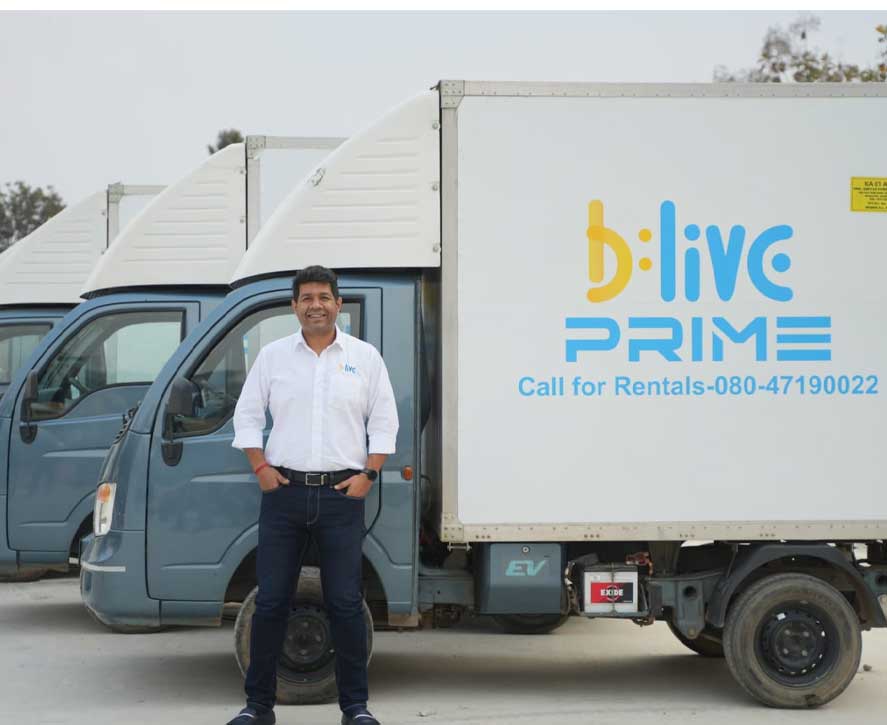
BLive PRIME is designed to bridge the gap between growing fleet demand and access to structured capital, enabling investors to participate in this transition through an asset-backed model. With entry investment starting at ₹50 lakh, the model follows a 100% franchisee-owned, company-operated structure, with investors owning the electric mini-truck fleet, while BLive manages end-to-end operations including deployment, usage and maintenance. BLive’s fleet ecosystem leverages proven commercial EVs like the Tata Ace EV, which is widely used in last-mile logistics for its suitability in urban delivery operations and consistent performance in high-frequency use cases.
Through its existing network, BLive supports deployment across leading logistics and delivery platforms including Hyperpure, Porter and Delhivery, highlighting the strong and continued demand for electric mini trucks in real-world commercial operations.
Commenting on the launch, Sandeep Mukherjee, Co-Founder and CEO, beeLive, said, “India’s EV transition is entering a phase where scale will be driven by business use cases, particularly in last-mile logistics, where demand is predictable, and utilization is high. With beeLive Prime, we are building a model that connects capital with this demand, enabling investors to own EV assets while we manage the operations. manage and ensure their deployment within a growing logistics ecosystem. This approach not only accelerates fleet electrification but also creates a structured, scalable path to participation in India’s EV growth story.
BLive is building an integrated EV ecosystem across fleet deployment, rider enablement and franchisee-led expansion. With the introduction of BLive PRIME, the company is expanding into large-format commercial EV fleets, opening up huge opportunities in urban logistics. The model is designed as follows:
● Enable scalable EV fleet expansion through investor participation
● Support the electrification of high-frequency distribution operations
● Create asset-backed, demand-linked opportunities in the EV ecosystem
As India’s logistics sector evolves, electric mini trucks are expected to play a central role in enabling efficient and sustainable delivery networks. BLive PRIME aims to accelerate this change by aligning demand, infrastructure and capital into a single, scalable model.