

The Australian Automotive Aftermarket Association (AAAA) said that with the rise of Chinese car manufacturers, rising fuel costs and the rapid growth of the electric vehicle market, the Australian automotive aftermarket is entering a period of major change.
AAAA represents approximately 3,000 member companies in Australia’s automotive supply chain, from manufacturers and importers to distributors and retail chains, covering essentially all automotive companies except car manufacturers and dealers.
In an exclusive interview with this publication, AAAA CEO Mr Stuart Charity said the Australian aftermarket is currently growing modestly at 2-3% per annum, with new car sales remaining flat despite cost-of-living pressures causing many households to postpone repairs. Despite this, Australia has one of the highest car ownership rates in the world, with approximately 80% of Australians owning a car. The average age of a car on the road is 12 years. He mentioned that about 60% of the repair services for these vehicles are provided by independent repair shops rather than dealers, which is one of the highest proportions of independent repair work in the world.
The market is also witnessing a huge influx of new entrants. In just two years, the number of car brands sold in Australia has jumped from 60 to 80, driven largely by Chinese manufacturers, although annual new car sales remain at around 1.1 million. “BYD, in particular, has risen from obscurity to become China’s second-best-selling brand after Toyota,” he said.
AAAA does not view these new entrants as a threat but as an opportunity. Many new brands that lack established dealer networks are working directly with large independent repair chains for regular maintenance, as BYD does with mycar Tire & Auto. Likewise, with accessories being a major business in Australia, especially for light trucks, new entrants are turning to established aftermarket players such as Ironman for accessories such as canopies and crash bars.
electric car
Regarding electric vehicles, Mr Charity said adoption of electric vehicles was accelerating rapidly. While electric vehicles still only account for around 2% of Australia’s total car fleet (6-8% including hybrids), they now account for more than half of new car sales, a shift that has occurred almost entirely in the past 12-18 months. According to him, three factors are driving this trend: fuel prices have doubled following the crisis in West Asia, as Australia sources fuel through Singapore, which in turn gets its base oil from the Middle East; Chinese manufacturers are offering high-spec electric vehicles that are now often cheaper than equivalent internal combustion engine vehicles; and he explains that new government vehicle efficiency standards will soon penalize high-emission vehicles while rewarding EV manufacturers with tradable points, further widening the price gap between electric and internal combustion engine vehicles.
However, charging infrastructure remains a challenge, particularly in Australia’s vast remote areas, he said. While many EV owners use rooftop solar to charge at home, a common setup given the widespread adoption of solar in Australia, public charging outside major urban centers remains limited, often resulting in long queues at peak travel times. AAAA is not working directly with OEMs on this issue but continues to lobby for greater government investment, including a $100 million program to encourage workshops to install public charging stations.
The shift to electric vehicles also raises real questions for the independent aftermarket revenue model, given that electric vehicles have fewer moving parts and require significantly less maintenance in the early years. AAAA estimates that electric vehicles generate 25-40% less aftermarket revenue over their lifetime compared to internal combustion engine vehicles. However, early data suggests that electric vehicles may bring their own service needs, including battery health monitoring, cooling system maintenance and addressing electronic and software reliability issues, in addition to the potential need for suspension work due to their heavier weight. Australia’s fleet is still growing at about 300,000 vehicles a year, compared to the traditional fleet of 20 million vehicles, and the association expects ICE services to continue to go a long way in this transformation. Mr Charity said some independent workshops were already positioning themselves as EV specialists, although most large chains currently only dedicate around a fifth or sixth of their service areas to EVs, a number expected to grow as EV fleets age.
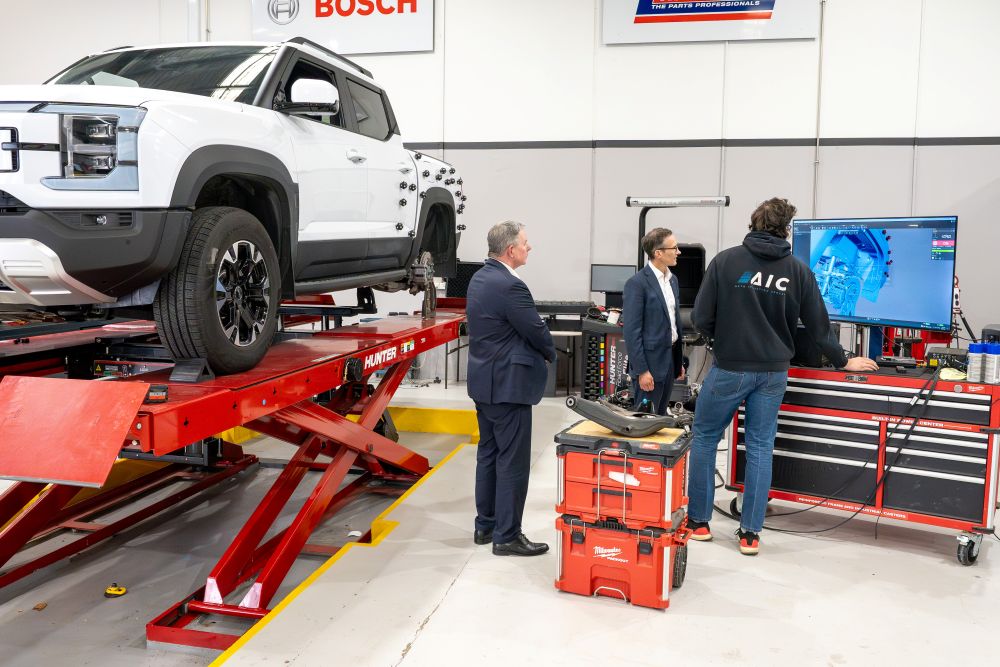
Regarding advanced driver assistance systems (ADAS), which are increasingly requiring careful calibration after repair or modification, he said AAAA has developed the world’s first voluntary industry practice code for ADAS calibration. It was developed in partnership with insurance companies and is currently pushing the government to formally bring it into regulation. The association also operates the Automotive Innovation Center in Melbourne, which uses tools such as steering robots and pedestrian detection robots for dynamic vehicle testing, helping members ensure vehicle modifications remain compatible with safety systems.
In terms of parts distribution, digital ordering remains strongest in accessories and car care products, while core workshop parts distribution remains reliant on established regional networks. The products are capable of same-day delivery and the system remains resilient given the diversity of vehicles on Australian roads and the complexity of accurately matching parts to specific vehicles.
Finally, on the supply chain front, Australia is facing some disruptions related to the West Asia crisis, mainly in fuel and lubricant additives, and AAAA is actively raising this issue with government. However, he said there had been no major disruption to the country’s imports of auto parts, which mainly come from across Asia.
AAAA advocates on behalf of the industry to the government and helped secure Australia’s right-to-repair legislation four years ago, requiring car manufacturers to share repair and service information with independent repair shops on fair terms. He said in addition to advocacy, AAAA also conducted market intelligence, ran technician training programs and organized the country’s major trade show, the Australian Automotive Aftermarket Expo.