
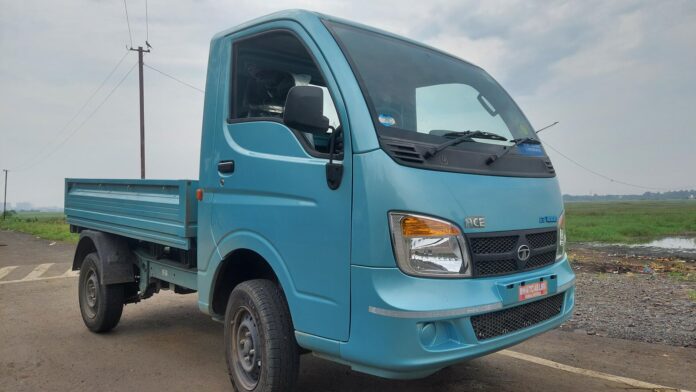

India’s electric commercial vehicle transformation is gathering pace and with improving infrastructure and increasing adoption, it is fast becoming one of the most competitive and fast-growing segments in the industry.
The Indian electric commercial vehicle (CV) market entered a phase of rapid growth in fiscal 2026, with total retail sales more than doubling to 19,454 units, a year-on-year growth of 120.6%, compared with 8,820 F25 units. Electric vehicle penetration in the commercial vehicle segment has also increased from 0.93% in FY2025 to 1.83% in FY2026, indicating a gradual but significant shift towards electrification in freight and passenger travel.
However, the growth story is not uniform. It reflects a dynamic mix of established leaders consolidating their positions and new-age players aggressively expanding.
Tata Motors continues to lead the electric commercial vehicle segment with retail sales of 6,023 units (4,291 units) in FY26, a steady growth of 40.4%. Its leading position is supported by early investment, a strong product lineup and a growing ecosystem, particularly in the small commercial vehicle segment.
Mahindra Group has emerged as a major force in the last financial year, driven mainly by its last-mile mobility business. Mahindra’s total physical sales reached nearly 5,773 units (1,711 units), with Mahindra Last Mile Mobility alone contributing 2,885 units, a growth of over 239%. This highlights Mahindra’s strong focus on electrification of last-mile transportation.
Switch Mobility also attracted attention, with sales reaching 2,255 units (889 units), an increase of 153.7%. Its focus on electric buses and fleet solutions is helping it build a strong presence in the space.
Euler Motors’ performance was the most impressive, with sales increasing significantly to 2,093 units (76), a 27-fold increase, reflecting the rapid adoption of electric freight solutions in urban logistics and e-commerce applications.
PMI Electro Mobility and JBM Auto continued to consolidate their positions in the electric bus segment, with 1,147 units (482 units) and 1,150 units (379 units) respectively, both achieving strong triple-digit growth. Their performance highlights the increasing electrification of public transport.
Olectra Greentech, a major player in electric buses, reported a more modest 21.5% growth with sales of 903 units (743 units), indicating a more stable and mature growth phase.
VE Commercial Vehicles (VECV) performed strongly, with sales reaching 701 units (187 units), an increase of 274.9%, indicating its increasing emphasis on electrification in various market segments.
Among the emerging players, Tivolt electric vehicles stood out with exponential growth reaching 503 units, while Pinnacle Mobility and IPL Tech Electric registered 446 and 233 units respectively, reflecting the entry of specialized and niche players into the market.
Jaidka Power Systems and Energy In Motion are gradually establishing their presence and contributing to the expansion of the competitive landscape, selling 201 and 185 units respectively in the last fiscal year.
Overall, the electric commercial vehicle market in India is growing rapidly. While Tata Motors has maintained its lead, the gap is narrowing as several established and new car companies aggressively expand. This growth is driven by last-mile logistics, electrification of public transportation, and growing demand for cost-effective mobility solutions.
The 3W market continues to deepen as participants grow and diversify
India’s electric three-wheeler (3W) market continues to lead the country’s electric vehicle transformation, with penetration rising from 57.2% in FY2025 to 60.9% in FY2026. Total retail sales increased to 830,000 vehicles (698,000 vehicles), a year-on-year increase of 18.9%.
While the segment is already highly electrified, the latest data shows the competitive landscape is changing, with strong growth from both established players and emerging challengers.
Mahindra Group once again remained the clear market leader, crossing the 100,000-unit mark with 1,01,873 units (69,579 units) and recording a healthy growth of 46.4%. Its dominance has been largely driven by Mahindra Last Mile Mobility, which alone has contributed over 100,000 vehicles, cementing its stronghold in the passenger and cargo last-mile segment.
Bajaj Auto continued to consolidate its position as a major challenger with sales of 89,604 units (50,851 units), a strong growth of 76.2%. Its aggressive push into the electric three-wheeler segment has clearly paid off.
Among traditional players, Piaggio fell 25.8%, indicating pressure from newer, more competitive products. Likewise, YC Electric, Saera Electric and Dilli Electric Auto also posted declines, reflecting increased competition and possible consolidation in the market.
TVS Motor Company, on the other hand, emerged as one of the fastest growing companies with sales surging to 27,831 units (1,696 units) albeit from a low base, a 15-fold increase. This marks a strong entry and rapid expansion in the field.
Zeniak Innovation and Hooghly Motors also posted strong double- and triple-digit growth, highlighting the rising influence of regional and emerging players. Aahana Commerce stands out with a growth of 179%, further increasing the competitive intensity.
Terra Motors and JS Auto reported steady growth, while the likes of Energy Electric Vehicles and Unique International EV posted modest declines, pointing to mixed results for mid-sized manufacturers.
The “Others” category continued to account for a significant share of sales, with over 420,000 units sold, an increase of 9.4%, underscoring the highly fragmented nature of the segment.
Overall, the Indian electric three-wheeler market is no longer just about early adoption, but about scale, competition and consolidation. While leaders like Mahindra continue to dominate, strong growth from Bajaj, TVS and several emerging players is reshaping the competitive landscape.
The key takeaway is that the E3W segment is the most mature EV segment in India, but it is also emerging as one of the most dynamic, with competition intensifying as players compete for the next phase of growth.