

Ahmedabad-based electric mobility and energy technology company Matter took center stage at a closed-door leadership roundtable in New Delhi, establishing itself as a leading voice in the emerging tech-driven mobility landscape.
The roundtable on “Managing Digital Transformation in the Evolving Technological Era” brought together founders, CTOs and senior technology leaders from across the automotive and mobility ecosystem. Discussions focused on the rapid shift towards software-defined vehicles, digitally integrated engineering platforms and next-generation manufacturing systems.
Representing Matter, Founder and Group CEO Mohal Lalbhai shared insights on how emerging electric mobility platforms are redefining product architecture, engineering practices and the overall ride experience with an emphasis on performance and profitability.
Commenting on the ongoing transformation in the automotive sector, Mohal Lalbhai said, “The automotive industry is moving from mechanically defined vehicles to electrically defined platforms and now software-defined mobility. What this really means is that intelligence is moving towards centralized computation, where the vehicle becomes a connected, constantly evolving system rather than a fixed mechanical product.”
Lalbhai also outlined Matter’s vision of what he describes as AI-defined vehicles (AI.DV), where software, sensors and onboard intelligence work on a centralized compute architecture to continuously evolve the vehicle experience. According to Lalbhai, such an approach could significantly simplify hardware complexity while enabling over-the-air upgrades, data-based services and new post-purchase value streams. Over time, he said, this model could allow mobility companies to optimize cost structures while unlocking higher margins through software-driven capabilities.
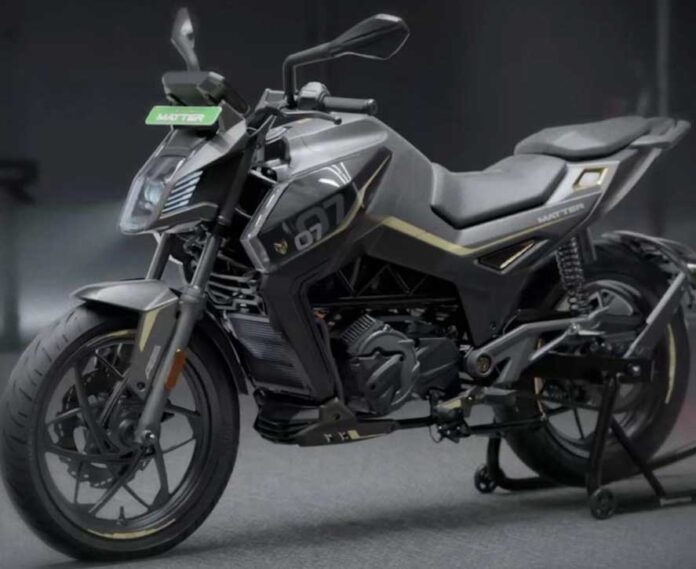
During the discussion, MATTER’s innovation-based approach to electric mobility attracted considerable interest from industry participants, especially in the context of its flagship product AERA, India’s first geared electric motorcycle. As the sector undergoes a fundamental shift from traditional mechanical vehicles to digitally integrated mobility platforms, MATTER’s emphasis on building deeply engineered electric products with proprietary technologies has become an example of how new-age mobility companies are thinking about the future of vehicle design.
Participants discussed how the convergence of advanced powertrain technologies, software intelligence and connected ecosystems is redefining both vehicle capabilities and user expectations.
Reflecting on MATTER’s vision for electric motorcycling, Lalbhai said, “For us, the starting point is always first-principles engineering. The hardware must be strong, because that is the foundation upon which all software innovation sits. With AERA, our goal was to combine that engineering depth with a new generation of intelligent features while preserving the rider engagement that defines motorcycling.”
The roundtable also examined the broader transformation underway across the automotive value chain, including the growing role of digital engineering platforms, model-based design, and industrial IoT in enabling faster product development cycles. Within this emerging landscape, MATTER’s vertically integrated technology stack, spanning proprietary motors, transmission systems, battery management platforms and connected vehicle interfaces, reflects a shift toward building mobility platforms that combine performance engineering with digital intelligence.
The company’s introduction of a geared electric motorcycle demonstrates how traditional motorcycle mobility can be re-imagined through the lens of electric technology and modern vehicle architecture.
Speaking about the role of data and intelligent systems in shaping the future of mobility, Lalbhai said, “Vehicles are increasingly becoming intelligent systems. When software, sensors and data start working together, the vehicle can understand how it is being used, optimize its performance and even anticipate maintenance needs. This shift will redefine how mobility platforms will evolve over the next decade.”
This roundtable serves as a platform for senior industry leaders to explore how automotive organizations can navigate the ongoing shift toward a digital-first mobility ecosystem. MATTER’s participation highlights the growing role of technology-driven mobility companies in shaping the future of the industry, where engineering innovation, software integration and rider-centric design are increasingly coming together to define the next era of electric motorcycling.