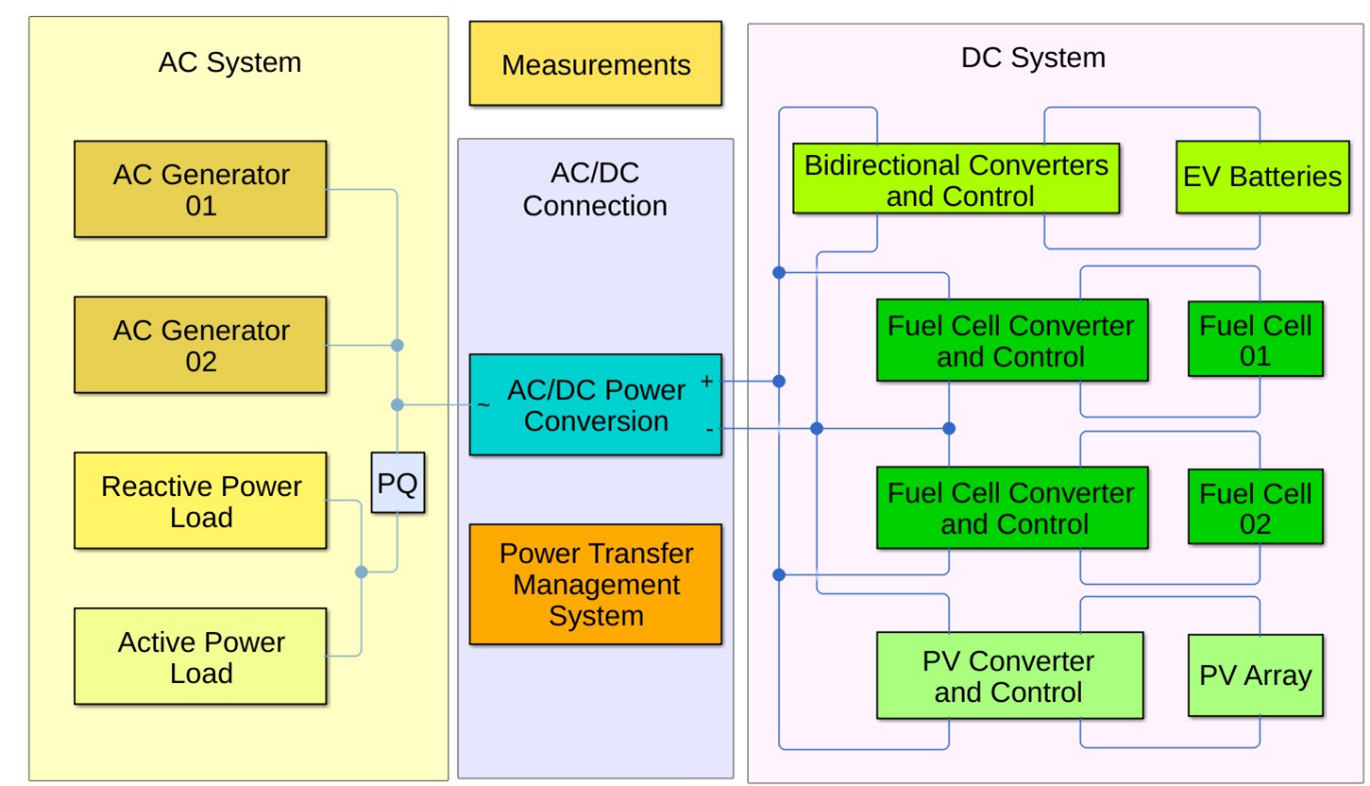
According to MathWorks, bidirectional charging is transforming electric vehicles into flexible energy assets, allowing power to flow in and out of the vehicle. As renewable energy expands, this capability helps the grid store surplus power and intelligently release it when demand peaks.
For years, electric car batteries had only one job: to move the vehicle. Once the vehicle is parked, the powerful battery sits idle. Today, that’s starting to change.
Bidirectional charging is transforming electric vehicles into flexible energy assets. It allows electricity to flow not only into vehicles, but back into homes, buildings, and even the grid. This is important because renewable energy is growing rapidly and the grid needs smart ways to store and release power when demand increases. Graham Dudgeon, senior principal product manager for electrical technology at MathWorks, said electric vehicle batteries can help smooth peak loads, stabilize the grid and even provide emergency backup during power outages.
Mr Dudgeon told the publication that stationary EV batteries were “an unused asset that has real value”. Bidirectional chargers unlock this value by allowing energy to flow in both directions—charging the battery when it’s full and sending it back when it’s needed most. This simple switch transforms chargers into key enablers of vehicle-to-grid systems, accelerating the adoption of clean energy while redefining the uses of electric vehicles beyond the road.
Balancing the grid without delaying drivers
A common concern about vehicle-to-grid systems is simple: What if the car releases too much power and isn’t ready when the driver needs it? After all, people want enough power for short city trips as well as long-distance trips.
This is where scale and intelligent control change the game. When millions of electric vehicles are connected, they act like a virtual power plant. “The goal is not to deplete individual vehicles, but to optimize the system. Power can be fed back to the grid to reduce peak demand, while still ensuring each vehicle is fully charged when unplugged. This balance is achieved through optimization rules built into the charging system, benefiting both the grid and the driver,” he explains.
This is where MathWorks plays a key role. Its strength lies in model-based design, which introduces simulation into the development process from the beginning. Whether engineers are designing a bidirectional charger or managing thousands of electric vehicles as a system, simulation can help answer critical questions early. With system modeling, control design, optimization, and statistical tools, MathWorks enables automakers, power equipment companies, and utilities to intelligently orchestrate electric vehicles and transform complexity into viable, reliable energy solutions.
Designing for India’s real-world grid
Markets like India present a unique set of challenges for bidirectional charging. Grid quality varies from state to state, policies are still evolving, and power parameters such as frequency and voltage must be kept within tight limits to ensure stability. Even small deviations can affect power quality for everyone connected to the grid.
This broad combination of conditions is what engineers call a design space—the real-life environment in which the technology must work. Grid frequency, voltage tolerances, policy rules and infrastructure maturity all become part of this space. “From a global perspective, the design space can look very different in different countries,” and India is at the more complex end of the spectrum, he explains.
This is where MathWorks comes in. Its simulation tools help engineers explore these variables early in the design phase and test how systems behave under different grid conditions. The goal is simple: build confidence that the design will meet power quality requirements and still work reliably in areas with unbalanced infrastructure.
business economics
The same thinking extends to the business side. Investing in bidirectional charging is not just an engineering decision but a techno-economic one. Automakers, charger suppliers, utilities and public stakeholders all need to be involved in this process. Engineers can combine technical models with economic assumptions and use optimization tools to evaluate performance and returns together, rather than guessing at returns. The result, he noted, is not a one-size-fits-all answer, but rather a specific view of the system that works best technically and financially for a given market.
Does bidirectional charging make sense in a multi-fuel future?
India’s electrification story is very different from many global markets. Two-wheelers and three-wheelers are electrifying quickly, while cars will take longer. At the same time, automakers are not betting on one solution. They are developing multiple fuel pathways in parallel – electricity, LNG, biofuels, hydrogen and more – all with one goal: lower emissions.
In this combination, bidirectional charging cannot be viewed in isolation. According to him, from an energy systems perspective, it becomes part of a larger puzzle. Utility and infrastructure planners have to ask not just whether charging can help, but whether it still makes sense in combination with many other technologies. It’s a layered issue, with each technology situated within a broader energy pyramid and having to prove its value alongside other technologies.
Another key issue is battery life. Using EV batteries to support the grid means more charge and discharge cycles, which shortens battery life. But biking is only one factor. Batteries also age with time and heat. This turns the problem into a battery management challenge rather than a deal-breaker, he observed.
With the right controls, impacts can be managed. How much energy is consumed, how quickly it is consumed, and how well the battery cools—these are all important. These variables can be adjusted using optimization methods and smart battery management strategies. MathWorks’ tools allow engineers to study these trade-offs and reduce degradation, ensuring batteries provide value to the grid and users without compromising long-term reliability.
Save time, cost and risk with simulation
Mr Dudgeon said that in complex technologies such as bi-directional charging, errors caught late could be very costly. This, he adds, is a significant advantage of MathWorks. Its core strength is model-based design—introducing simulation into the process from the first stages of development and using simulation throughout. Engineers build a simulation model early and then refine it as the system becomes more complex. The model becomes a shared reference across teams, reducing deviations and rework; because design issues are discovered in simulation, many are resolved before any hardware is built. MathWorks also supports control system development and automatic code generation, allowing tested algorithms to be deployed directly to real processors. The result is faster development, lower costs and lower risk, giving engineers confidence that the system they deliver is the best version possible.
build confidence
The core value of MathWorks is to help engineers make the right decisions early. By using model-based design, simulation becomes the foundation of development rather than an afterthought. A single, evolving model can guide teams from concept to deployment, helping them catch errors before hardware is built, coordinate across functions, and reduce costly late-stage changes.
With support for control design and automatic code generation, ideas tested in simulation can be smoothly transferred to real systems. For companies working on complex technologies like bidirectional charging, this approach can save time, reduce costs, reduce risk and, most importantly, build confidence that the final system will work as expected in the real world.